Hydrogen Hub on Hold
This article is supported, in part, by the Charles M. Rappleye Investigative Journalism Award, a project of the Los Angeles Press Club.
Just hours into his second inauguration on Jan. 20, President Donald Trump signed a sweeping executive order reversing global warming-related energy policies enacted under President Biden’s Inflation Reduction Act, freezing $391 billion in funding from the Department of Energy for key green energy initiatives nationwide. One of the biggest projects was a proposed hydrogen hub terminal at the world’s third largest — and the nation’s most polluted — maritime port in Long Beach.
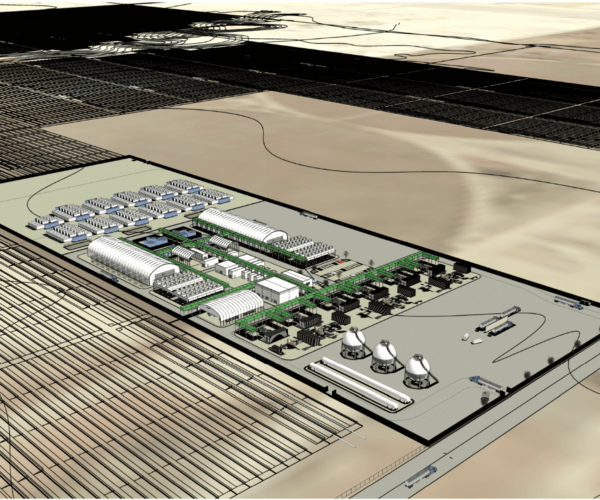
The Long Beach hydrogen hub project is backed by a public-private partnership of state and local agencies, private companies and the University of California. Known as ARCHES, the Accelerating Renewable Clean Hydrogen Energy Supply hydrogen hub is a crucial component of California’s plan to transition to cleaner energy sources and reduce greenhouse gas emissions by 2030. ARCHES would also be the nation’s first major effort to harness and distribute renewable hydrogen, a clean energy source that can significantly reduce dependence on fossil fuels. If successful, it would serve as a model for future projects around the nation.
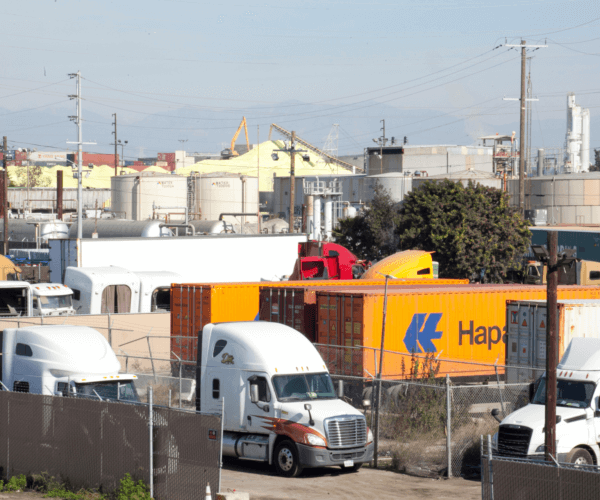
Perhaps more importantly — at least to the residents of Long Beach, Wilmington and other working-class communities adjacent to the Long Beach-San Pedro port complex — is the promise that the hydrogen cell batteries fueled by the hub would replace the heavily-polluting equipment at the port — everything from cranes, truck fleets and rail systems — most of which rely on particulate-heavy diesel fuel. Aside from generating approximately 220,000 new jobs, backers claim the project would reduce port pollution by two million metric tons of carbon emissions annually, equivalent to the emissions produced by 445,000 gasoline-powered vehicles annually.
“We have to invest in our future.”
Now, with Trump’s funding freeze, the project’s future is uncertain, to say the least. Jack Brouwer, a professor of mechanical and aerospace engineering and the director of the UC Irvine Clean Energy Institute, has been a prominent advocate for the ARCHES initiative. “I do think that it is still uncertain what will occur with regard to Congress voting on Trump’s freezing of DOE money,” Brouwer said. “Certainly, there is a pause in any expenditures that can be allocated to these accounts that were established, so people can’t spend money now.”
However, Brouwer expressed optimism that legislators from red and purple states such as Texas, West Virginia and Pennsylvania that were to set receive DOE funding might be able to convince Trump to reverse the freeze, noting that the notoriously anti-electric car president seems more intent on dismantling Biden-era electric vehicle production mandates and wind farms than blocking hydrogen investment. “I understand that there are a couple of dozen or so Republican members of congress that have already expressed support for hydrogen,” said Brouwer, adding that, “This bodes well for this [freeze] to be removed, at least for the hydrogen projects, which is only a small amount of the IRA funding.”
Creating hydrogen fuel involves using electrolysis to split water molecules into hydrogen and oxygen. Some environmental organizations have expressed alarm about the hydrogen hub plan, arguing that the huge expenditure of energy required for producing hydrogen fuel would use up massive amounts of power from the local electricity grid. If that grid is powered by traditional fossil-fuel burning power plants rather than solar farms or wind turbines, they argue, the hubs are only going to add to the nation’s pollution problem.
On Nov. 25 of last year, Earth Justice, a public interest environmental law organization founded in 1971, published a letter outlining hydrogen’s potential environmental dangers. “Hydrogen hubs can pose a major threat to the climate and public health, especially if they perpetuate the use of fossil fuels,” the letter stated. “It’s critical that the federal government only fund hydrogen hub projects that produce truly clean hydrogen, powered by new clean energy sources, and use hydrogen in only hard-to-decarbonize sectors. Our climate progress depends on getting this right.”
The group also called for a nationwide community action campaign to ensure the hubs are required to use clean energy sources like wind and solar to fuel their hydrogen energy operations, noting that the DOE itself has called for each hydrogen hub to develop “Community Guidance Plans” that would require facility developers such as ARCHES to “identify concrete steps to provide benefits and minimize negative impacts to communities, particularly environmental-justice communities.”
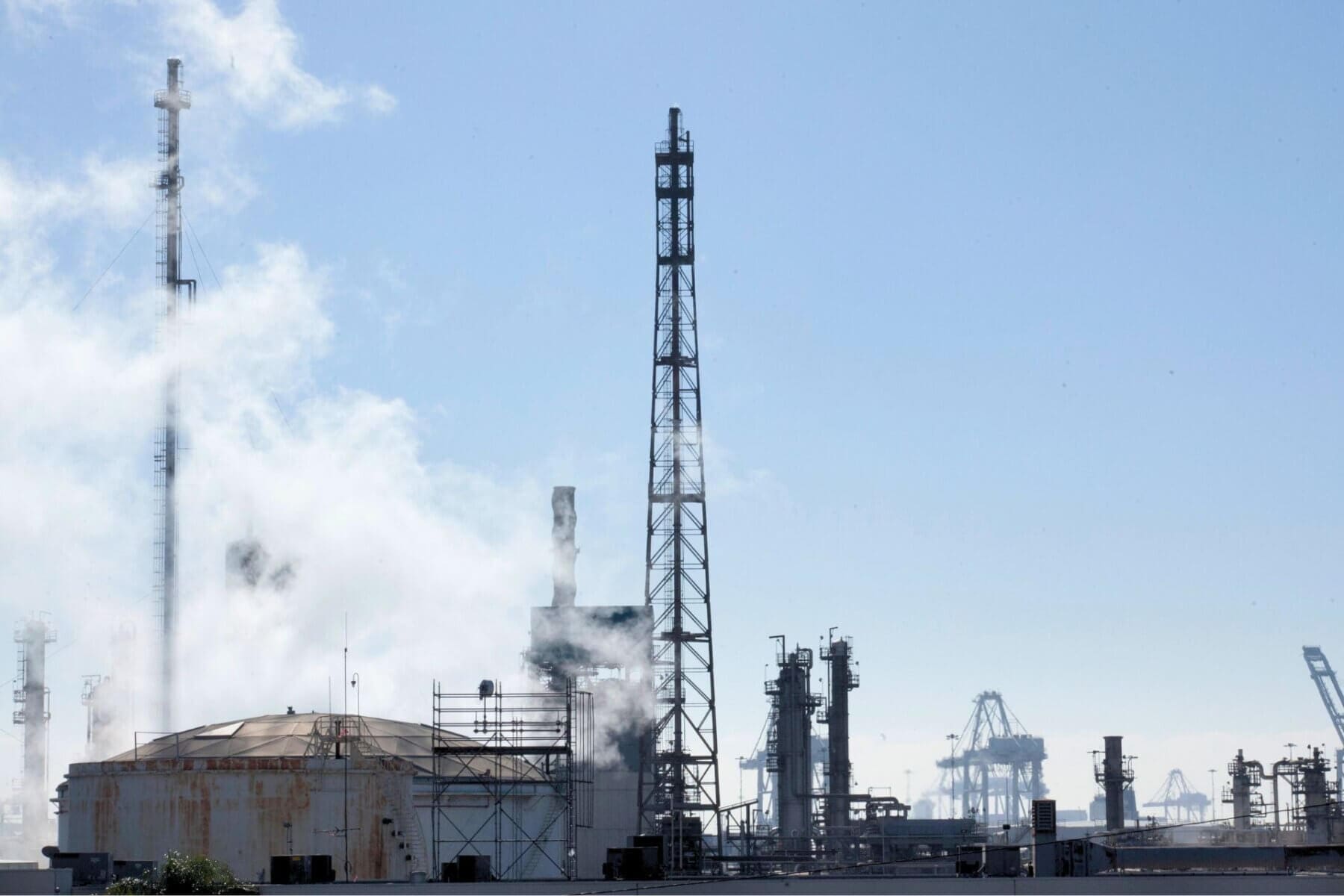
One of those “environmental-justice communities” is West Long Beach, which is bordered by the port complex, various refineries and two congested freeways, making its residents among the most pollution-afflicted people in the nation. The American Lung Association says the area experiences the worst ozone pollution, the ninth-worst 24-hour particulate pollution and the fourth-worst on an annual basis of more than 200 metropolitan areas nationwide.
In an interview last year, Theral Golden, president of the West Long Beach neighborhood association, stated two objections to the ARCHES hub: he fears it would simply add to the industrial footprint at the port, and he doubts the wisdom of storing hydrogen, a highly flammable element, in such a densely populated area. “That type of stuff should not be included in an urban environment,” Golden said. “The port is already too large to be sustainable in an urban environment and you want to add additional things?”
While climate scientists agree that hydrogen offers a path toward decarbonization, concerns persist regarding its environmental impact. Hydrogen itself is not classified as a greenhouse gas; however, its release into the atmosphere can lead to secondary effects that contribute to climate change. Research by Richard Derwent, a British atmospheric chemist, has shown that hydrogen can react with other chemicals in the atmosphere, resulting in the formation of greenhouse gases like ozone. His research underscores the importance of managing hydrogen leaks effectively as the hydrogen economy develops.
Brouwer concedes the validity of such concerns regarding the complexities of hydrogen emissions. “Yes, there are some climate concerns and emission concerns with hydrogen, but similar concerns exist with all other forms of energy,” he said. “There is nothing that is zero emissions.”
That said, the importance of hydrogen as an alternative energy source cannot be overstated. Brouwer noted that hydrogen, when produced from renewable or zero-carbon sources, can be utilized in a variety of applications, drastically reducing emissions from carbon-based fossil fuels which not only cause global warming but are also an anathema to human health in areas like West Long Beach. “If hydrogen is made from biogenic or electrolytic sources and the electricity comes from renewables, then the production of that hydrogen is zero emissions,” Brouwer argued.
“There are some climate concerns and emission concerns with hydrogen, but similar concerns exist with all other forms of energy. There is nothing that is zero emissions.”
In the wake of Trump’s freeze, California Governor Gavin Newsom’s office reaffirmed its support for hydrogen initiatives. “Programmatic reviews are common during any transition to a new administration, and we fully expect ARCHES and the other six [nationwide] hydrogen hubs to move forward,” a Newsom spokesperson said. “They all enjoy bipartisan support because they will deliver substantive benefits to Americans, and we look forward to working with the new administration to build a national hydrogen ecosystem.”
Because the ARCHES project is not just about hydrogen production but also aims to integrate hydrogen within the infrastructure of the Long Beach port, which has a significant energy demand, Brouwer emphasized the importance of collaboration among port operators to meet state-mandated decarbonization goals. “There are requirements placed on them by the California Air Resources Board to decarbonize and de-pollute by certain dates, some in 2040 and 2045,” he said. “Even if we just decarbonize 20 percent of the emissions, that is a lot.”
Despite the hurdles posed by the funding freeze, Brouwer remains optimistic about the future of hydrogen on the energy landscape. “I am 100 percent certain that economies of the future will depend upon lower emission sources of primary energy, primarily sun and wind power all around the world,” he said. “When we do that, we are going to use a lot of batteries and a lot of hydrogen in those heavy-duty shipping and freight markets. It is indispensable; there is no alternative.”
As an expert in global energy production, Brouwer takes a long view of the Trump administration’s abandonment of alternative energy investment in favor of increased oil drilling, which Trump believes will lower costs at the gas pumps. That strategy, Brouwer argues, is shortsighted, and will only lead to dwindling oil supplies. Someday, he pointed out, those pumps are going to run dry.
“We are going to have a hub someday, even if this hub isn’t the one,” Brouwer added. “Even if [hydrogen investment] is slowed down, which will be unfortunate for human health and economic sustainability, if we don’t invest in this alternative to fossil fuels, we will be eventually held over a barrel to pay really high prices for fossil. We have to invest in our future.”
This article is second in a series that examines the politics and science behind California’s renewable energy plans. Read the first article “Hydrogen Bombs” here.
Help us sustain independent journalism...
Our team is working hard every day to bring you compelling, carefully-crafted pieces that shed light on the pressing issues of our time. We rely on caring supporters like you to help us sustain our mission. Your support ensures that we can continue to provide deeply-reported, independent, ad-free journalism without fear, favor or pandering. Support us today and make a lasting investment in the future.

RELATED STORIES

Award Winning



Today’s environmental and social justice challenges are unprecedented, and require an unprecedented collective effort.


Stay updated on our latest features, events and more. Subscribe to our Note From the Nest newsletter!

As a citizen of Southern West Virginia, the land of coal and food stamps, I am appalled at the “progress” of the Hydrogen Hubs being developed here and anywhere. In our region, this “ARCH@” project involves fracturing deep shale gas reserves, injection of highly toxic and radio-active chemicals to release the natural gas, removal and storage of the waste water in huge radioactive sludge ponds, often visited by wildlife and unsuspecting kids at play, refining the gas and shoving the resulting CO2 into “permanent”, “stable” underground reservoirs, and piping the product (H2) through lines designed for natural gas, which are seriously degraded by the introduction of hydrogen. The regional sequestration sites for the CO2 are ,of course in the same areas experiencing earthquakes as a result of fracking. What could go wrong? The H2 molecule is so small, it actually can migrate through the metal pipelines, causing a new host of hazards. If the total practical and environmental cost of this process were considered and appreciated, ARCH2 would be abandoned by any objective analyst.