
Commodifying Nature
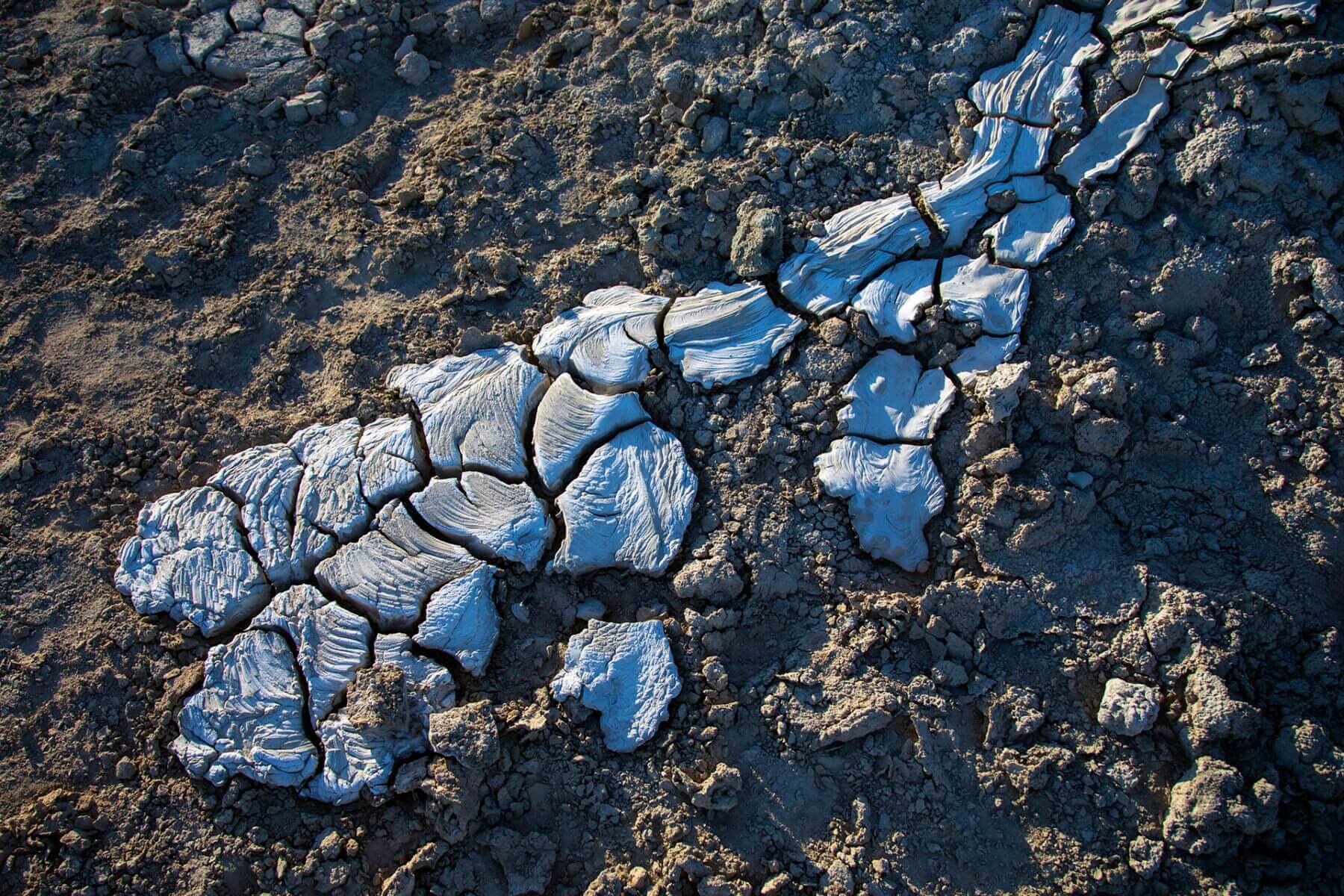

First place, “News Feature Photo Essay,” Los Angeles Press Club’s 2024 SoCal Journalism Awards.
Judges’ note: In tracing the surprising rise and ongoing demise of the Salton Sea, Gute illustrates his excellent essay with troubling, compelling images of its environmental impact.
The Salton Sea, just South of Joshua Tree and half an hour down the 111 Freeway from the Empire Polo Club that hosts Coachella Music Festival, is a man-made accident with toxic consequences. At least, that is the general narrative, though this sentiment lacks the nuance of the tumultuous, century-spanning history of the shallow lake that continues to shrink. Created out of a landscape engineering failure that prevented the Colorado River from reaching Mexico and led to an attempt by American entrepreneurs to seize water rights in the early 1900s, the Salton Sea’s shore has receded significantly in recent years, now only 43 feet at its deepest point, leaving countless acres of toxic playa dust exposed and blowing in the wind.
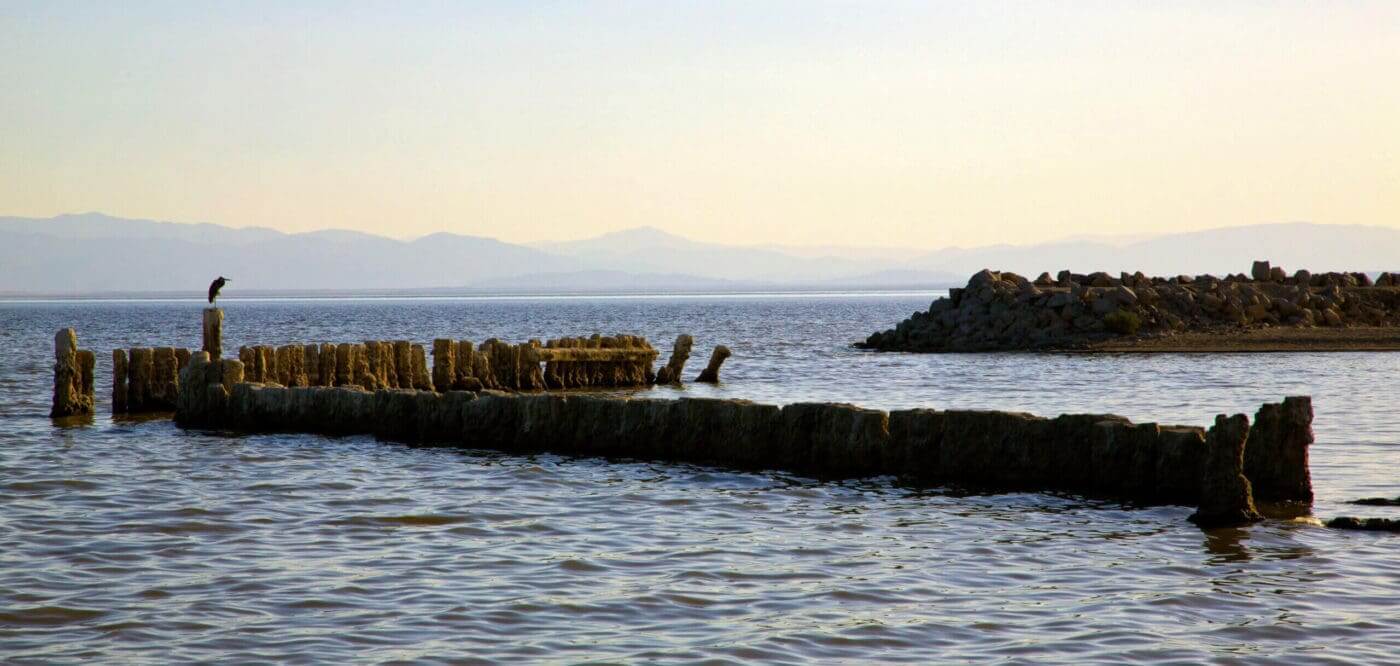
Salton Sea shoreline in 2013, at a water surface elevation annual average of -231 feet below sea level and an annual average salinity of 54.1 ppt, according to the U.S. Bureau of Reclamation. Click here access the full gallery. Photo by Steven Gute

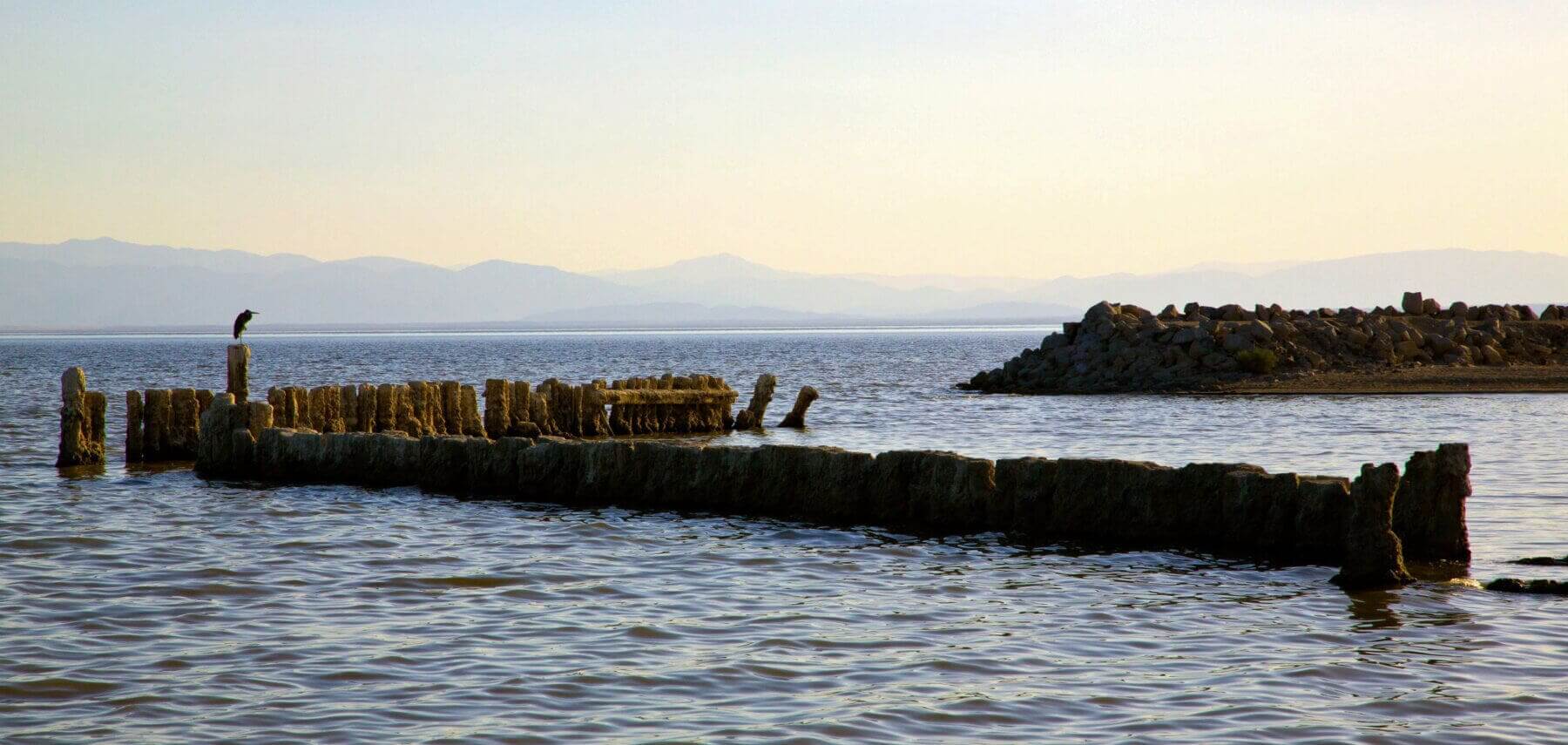
Salton Sea shoreline in 2022, at a water surface elevation of roughly -239 feet below sea level, where it remains today, according to the live data collected by United States Geological Survey and a salinity of 60 ppt according to the most current data from The Salton Sea Authority. Click here access the full gallery. Photo by Steven Gute
From an inland ocean or an arid sink to a lake with indigenous settlements, the area has experienced metamorphosis upon metamorphosis. And, while the Salton Sea may have been an accident, a bigger mistake would be to let it disappear, as the health of the surrounding areas and Southern California as a whole could be affected as the toxic lake’s shoreline disappears.
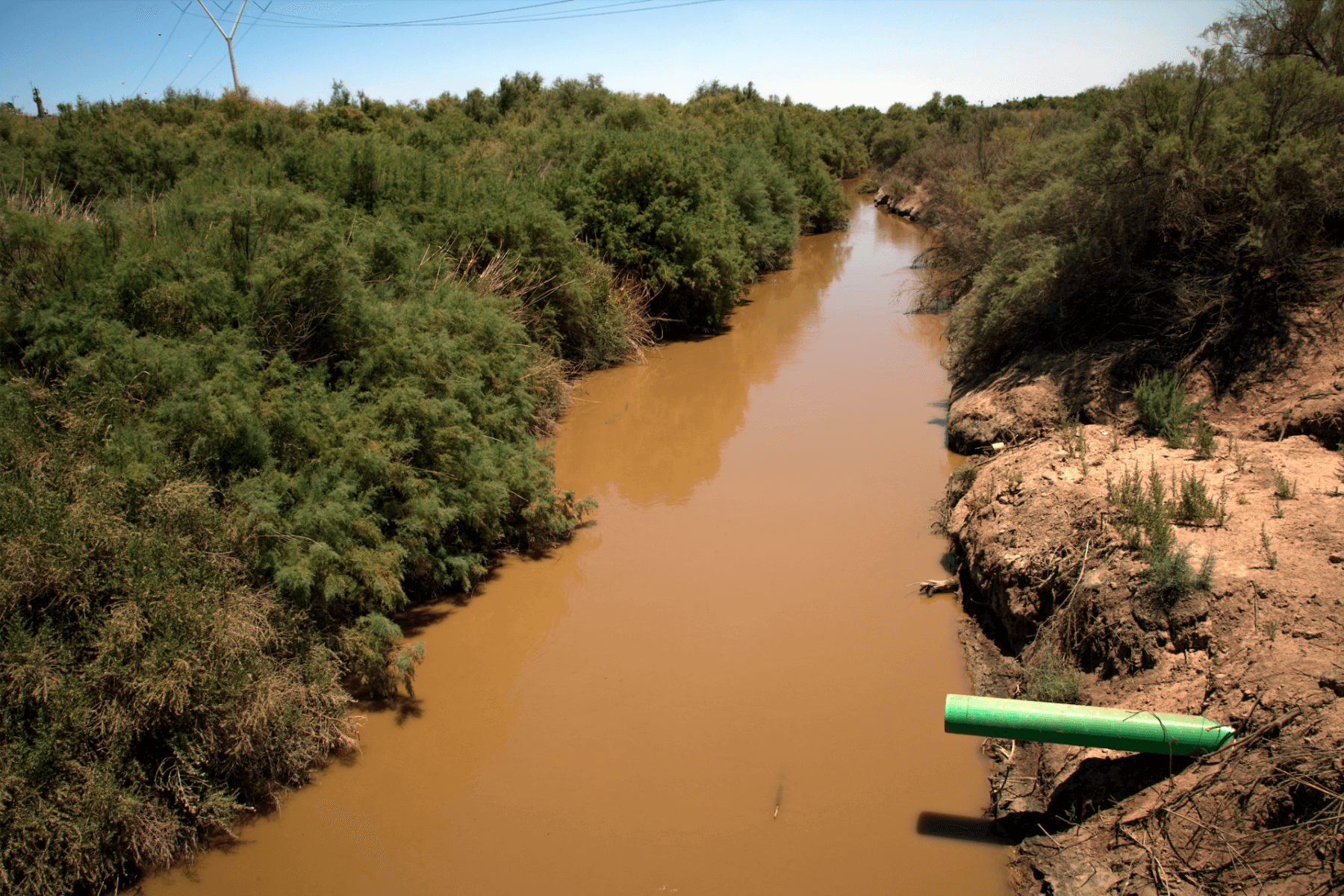
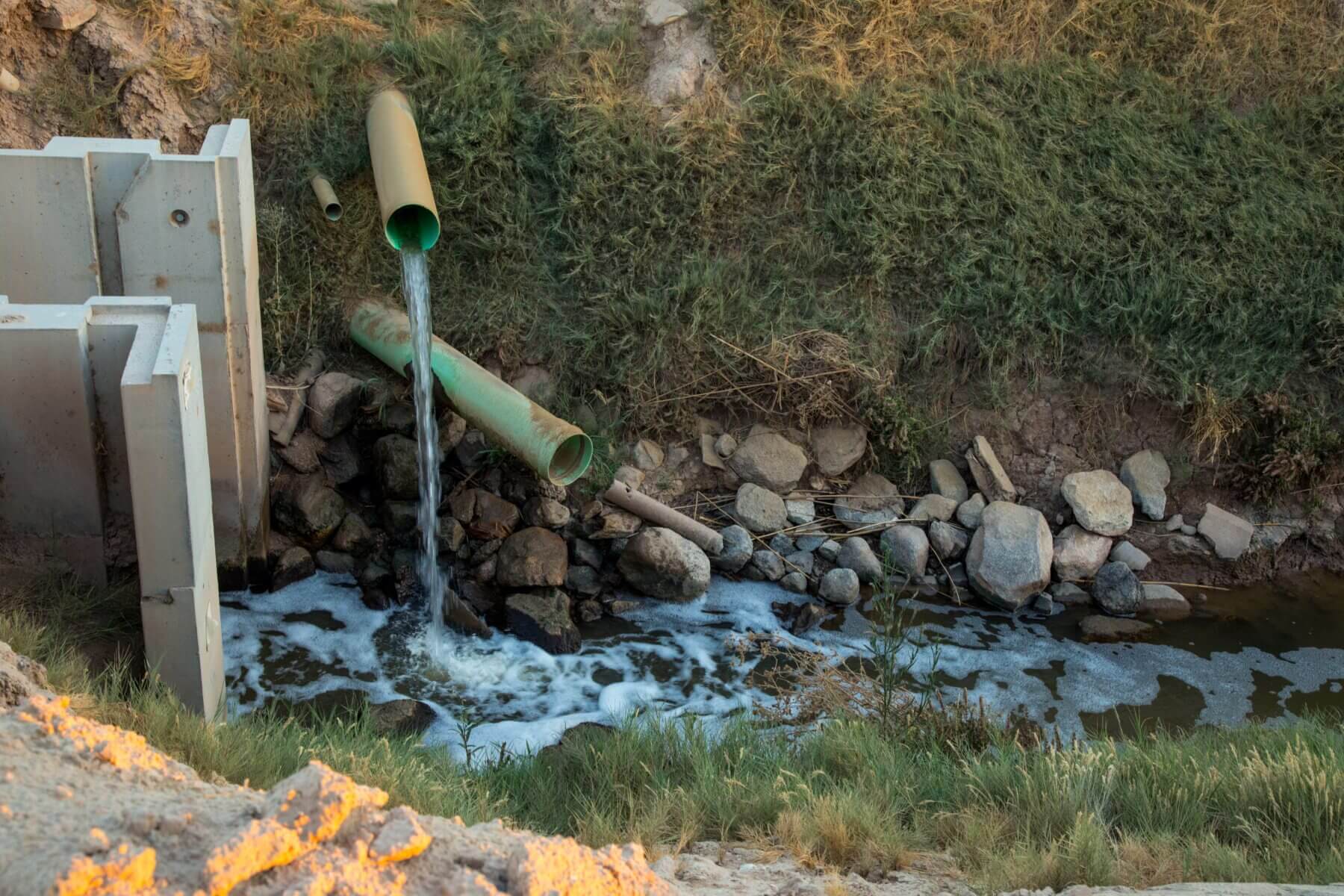
For over a 100 years, pesticides, fertilizers, excrement, and heavy metals have been draining into the lake from regional factories, cattle and farming operations in the Imperial Valley and as far as Mexico, leaving behind a toxic, chemical footprint. Then, due to the lack of consistent incoming fresh water, the Salton Sea turned hypoxic — devoid of oxygen.
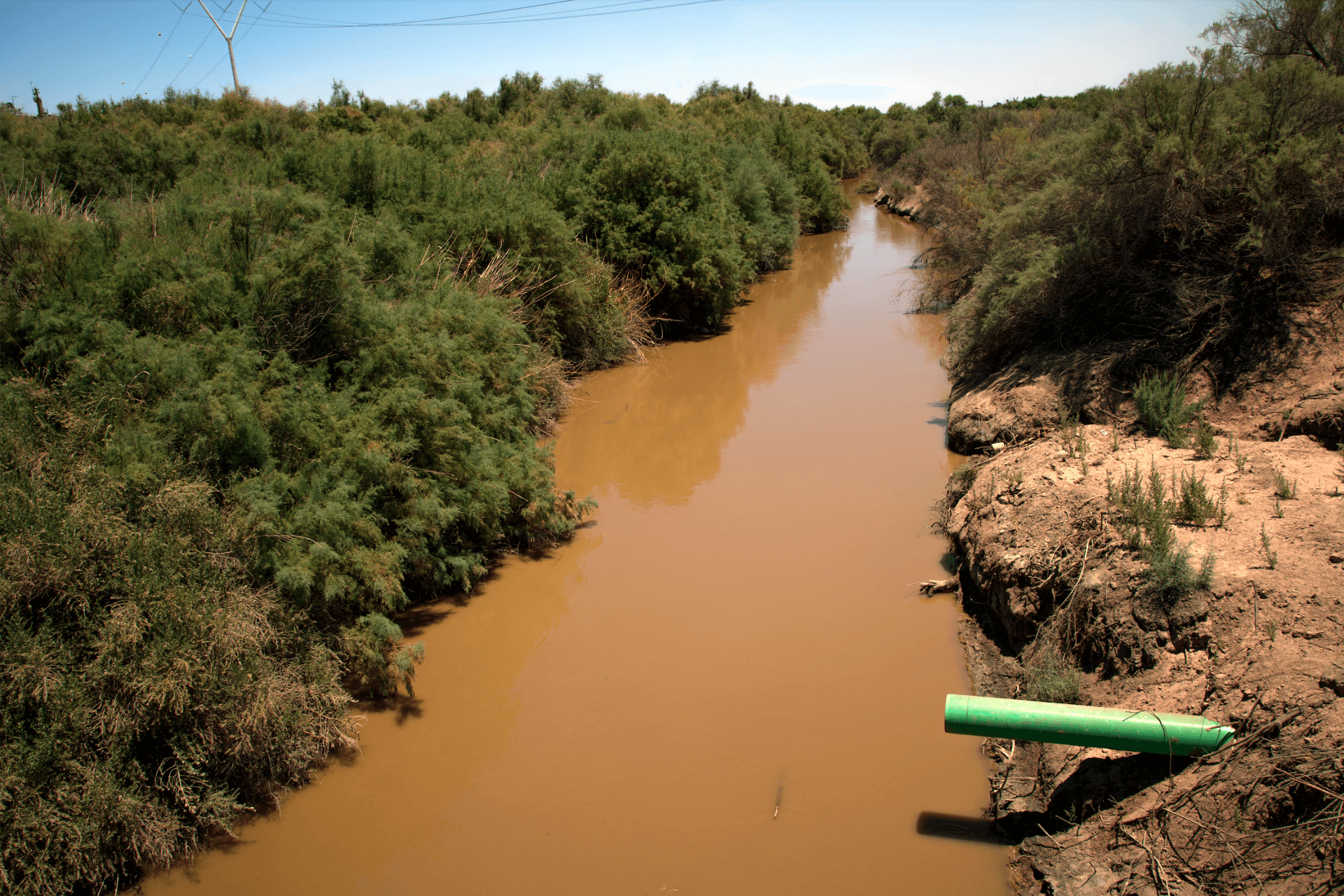
Created as a result of the 1902 divergence catastrophe, the “New River” (pictured here) is now one of the most polluted in California, with contamination from industrial waste from Mexico and cattle and farming operations in the Imperial Valley. Click here access the full gallery. Photo by Steven Gute
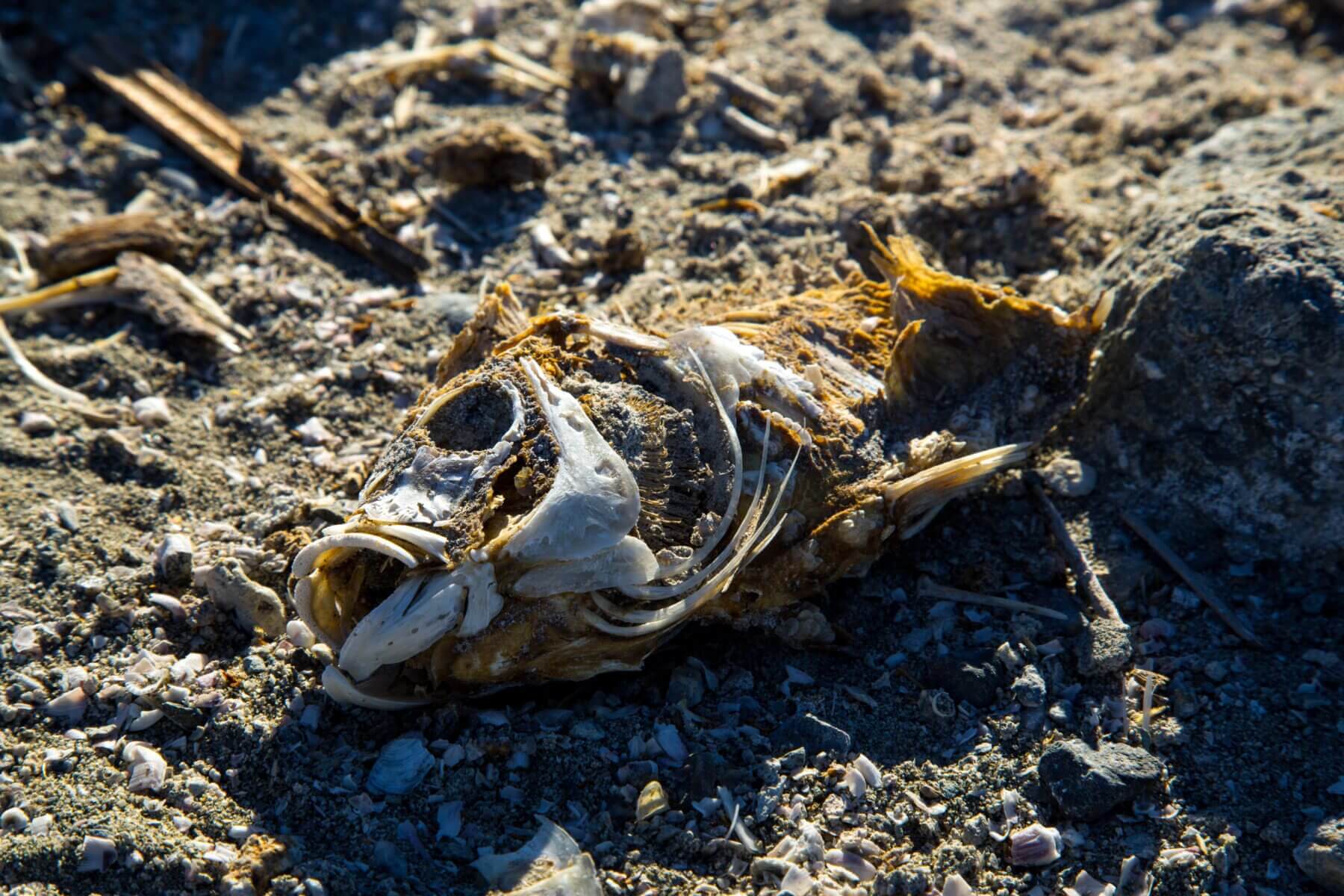
Once enjoyed as a retreat by Hollywood’s Golden Age movie stars and wealthy families, by the 1980s, the accidental oasis had become an abandoned wasteland. As the lake deteriorated, communities dotting the shoreline, such as Bombay Beach, became lined with dilapidated structures and the odd holdouts. The fish began dying and washing ashore, and the birds who relied on the Salton Sea as a navigational hub also started to disappear. Now, the lake’s water has a 50 percent higher salinity score than the ocean.

Due to the lack of oxygen and high saline content of the lake’s water, the fish of the Salton Sea have continued to die and wash ashore in mass for decades. In turn, birds who relied on the Salton Sea as a navigational hub also started to perish from eating the fish. Click here access the full gallery. Photo by Steven Gute
Nuclear Water Ways
The Salton Sea was turned into a bombing range for atomic testing during the 1940s, where pilots who eventually dropped the Fat Man and Little Boy on Japan performed their training exercises. When the Soviet Union attained atomic status, more bases were established along the Salton Sea as the lake became a regular target for flight testing non-explosive atomic dummy bombs, some of which reportedly contained the radioactive nuclear fuel, depleted uranium.
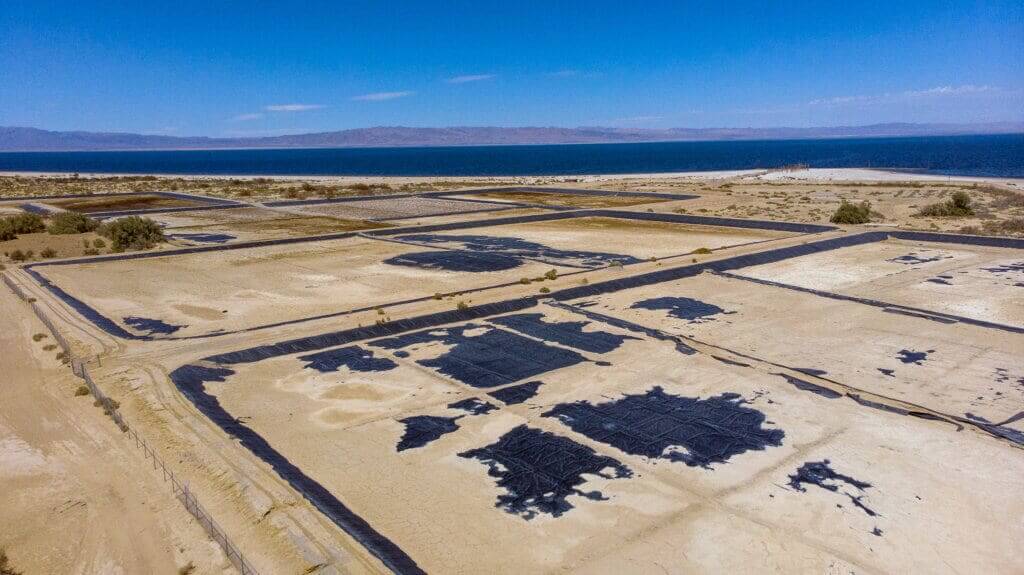
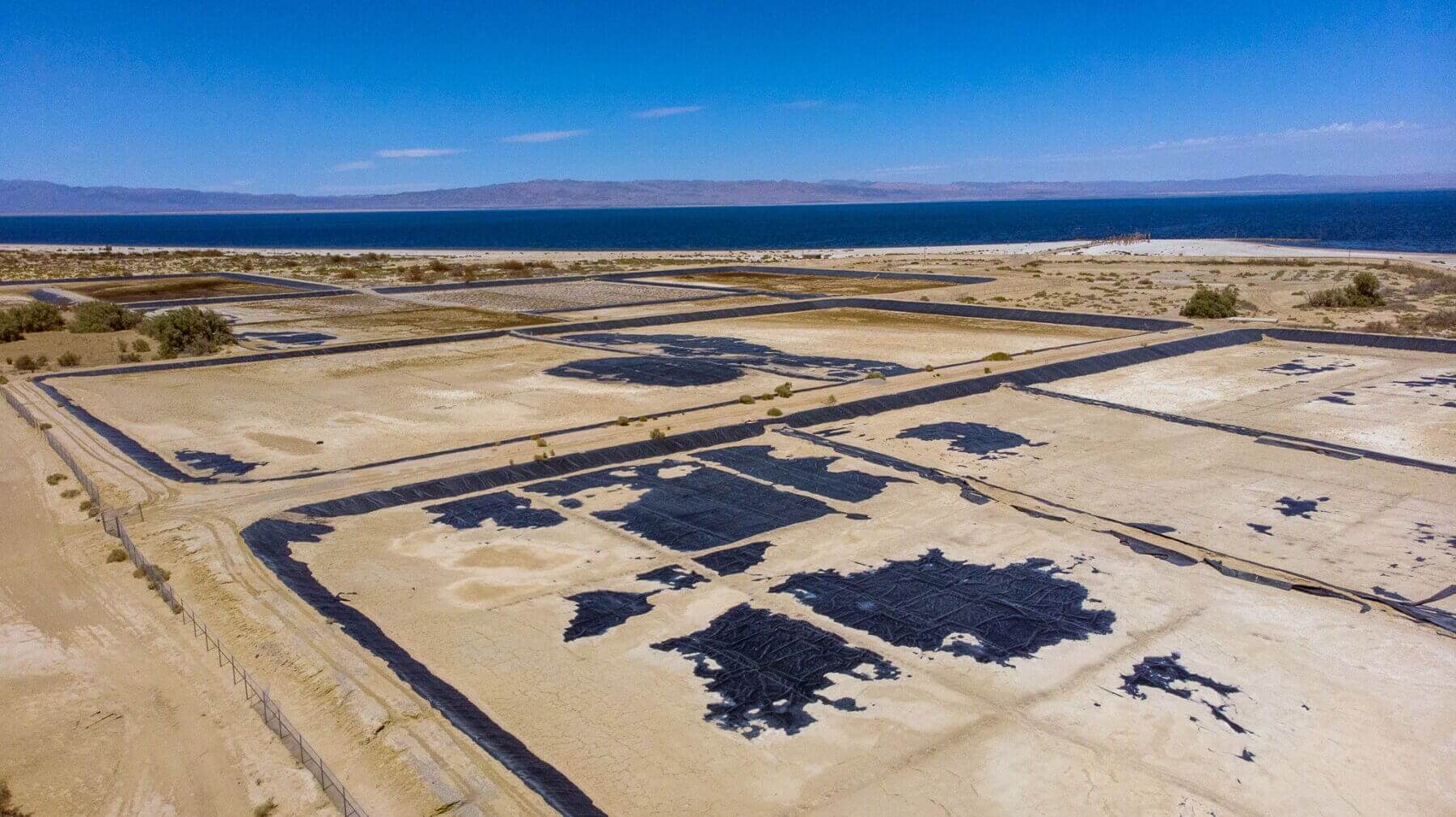
The original WWII era base on the southwest side of the lake was permanently fenced off due to potential radioactive contamination. Sand dunes have emerged covering the roads leading there, the facility partially remediated, its plastic lining a mirage disappearing into the desert. Click here access the full gallery. Photo by Steven Gute
Experimental Energy
The Salton Sea has also been host to electric companies attempting a variety of experimental power methods, which started when the Mesquite Lake Generating Station began using manure from local cattle as a fuel source in the 1980s to now the present testing of biofuel. Current biofuel research test companies include Viridos Inc. (a startup backed by Exxon Mobil) testing the potential of genetically modified algae oil as a fuel source and California Ethanol/Power Sugar Valley Energy attempting biomass as an alternative to more carbon intensive methods.
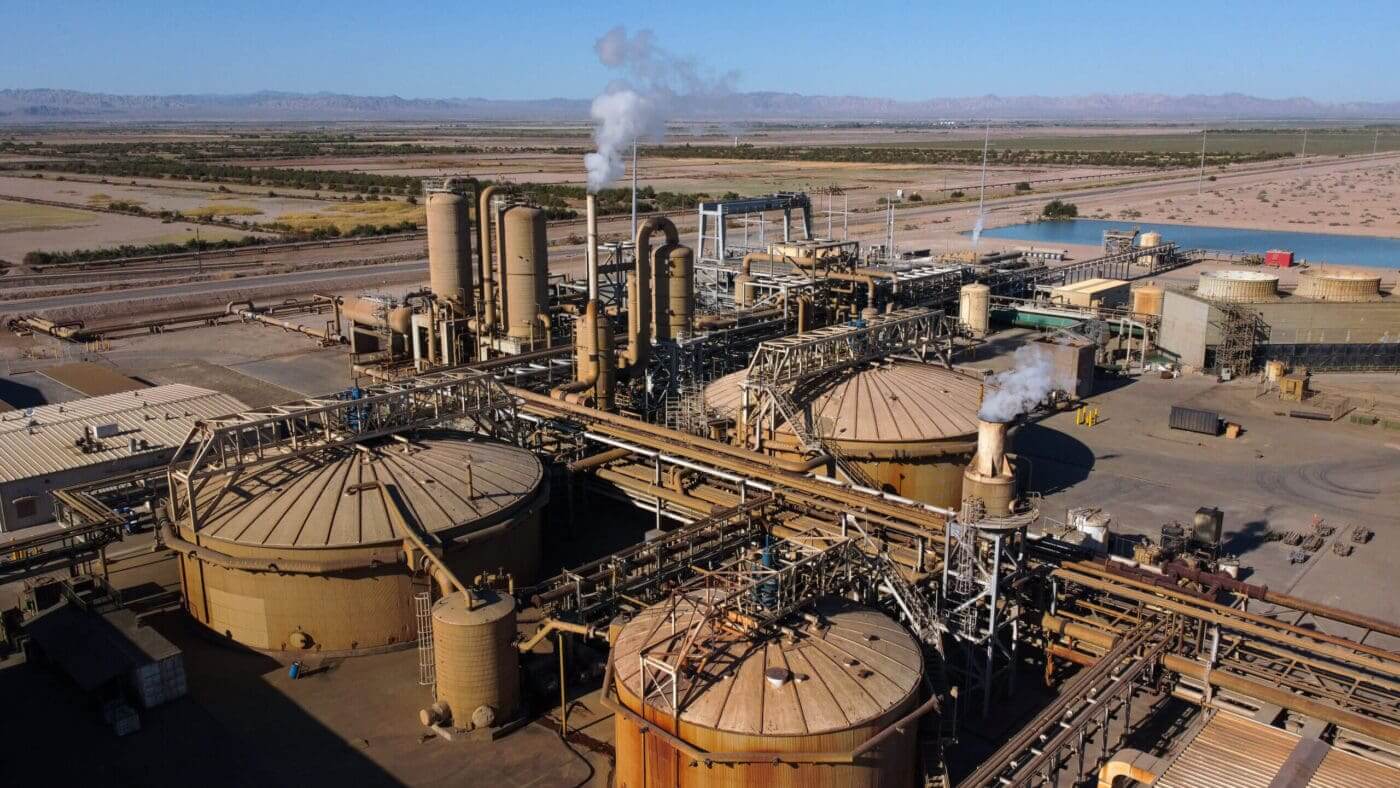
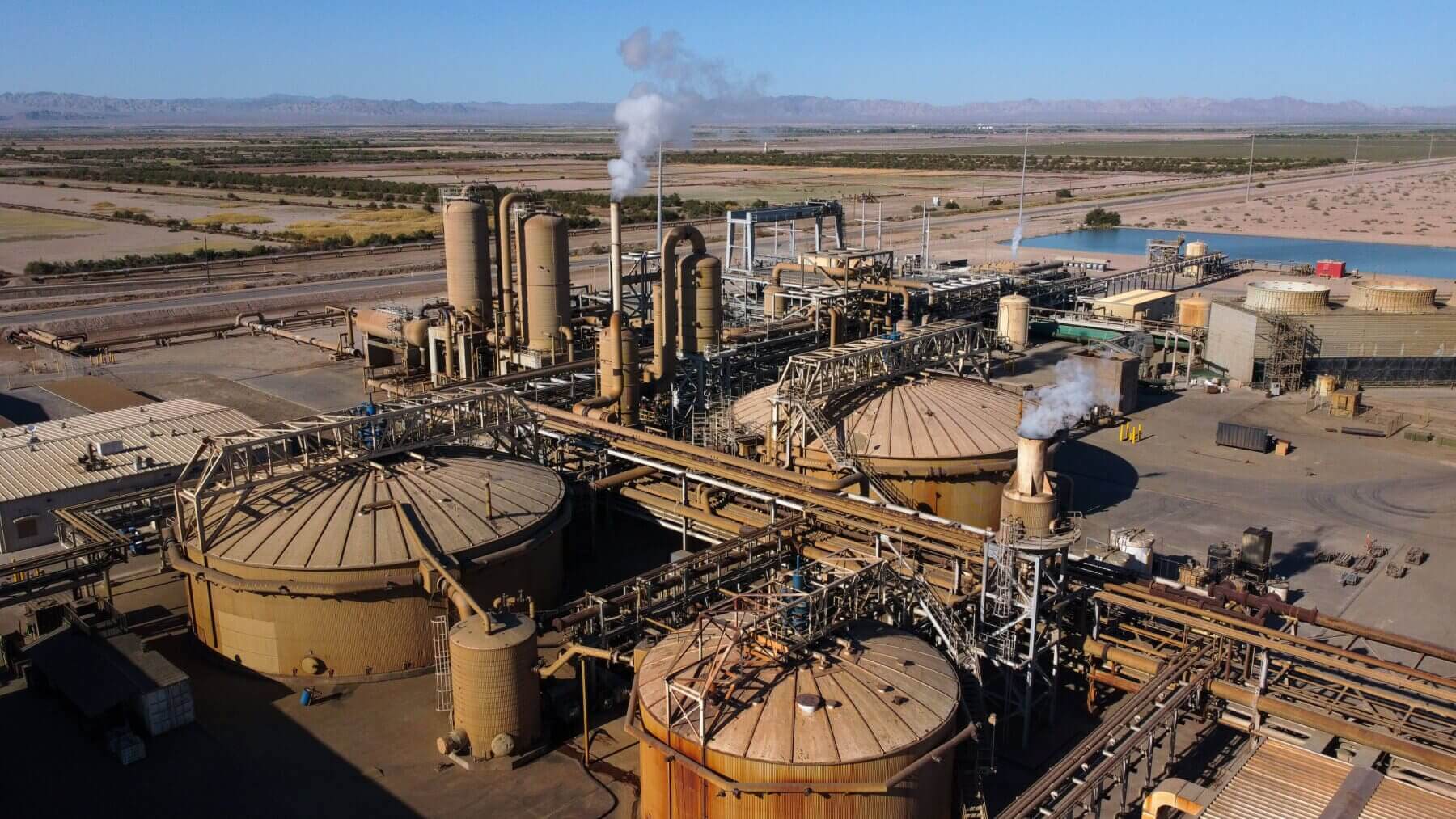
Drone photo of the Featherstone geothermal plant, named after John L. Featherstone, the Chief Technical Officer at EnergySource recognized for leading geothermal energy projects in the Salton Sea area. It is located on the southeast end of the Salton Sea in the city of Calipatria along State Route 111. Click here access the full gallery. Photo by Steven Gute
With the area’s abundance of volcanic activity causing mud pots and natural hot springs, the Imperial Valley Geothermal Project was created giving rise to 10 geothermal energy plants on the southeast side of the lake. While geothermal has been advocated as a clean power source, it does have noticeable environmental issues. Depending on the cooling technology used, geothermal energy can be incredibly water intensive. Spent brine fluid is re-injected, steam byproducts deplete groundwater reserves and release gases like Hydrogen Sulfide, C02, and other particulate matter. And, due to the viscous brine, many geologists regarded these plants as failures citing the overt mineral content clogging filters and making the plants inefficient.
Recent Lithium Mining
The mineral content of the water may have been a problem for geothermal energy production, but it posed an economic opportunity for a new generation of speculators to seek out the Salton Sea. It was recently discovered that the Salton Sea possesses the largest lithium reserves on the planet prompting Gavin Newsom to refer to the valley as the “Saudi Arabia of Lithium.”
Enter Silicon Valley billionaires and investment bankers. Warren Buffet’s Berkshire Hathaway acquired CalEnergy and now owns the ten original Imperial Valley Geothermal plants. Bill Gates is a large proponent of domestic lithium extraction and has put millions into the startup Energy Source (along with other tycoons like Jeff Bezos and Michael Bloomberg). Energy Source launched the first new geothermal plant in the region for over a decade in 2012. The Featherstone plant was not solely meant for power generation, it was announced they intend to also operate as dual-use facility to mine minerals.

Bombay Beach, CA – Locals satirize the economic influx by pretending to sell lithium out of their vans to the highest bidder. Bombay Beach has become a beacon for artists making absurdist art in absurdist conditions. Click here access the full gallery. Photo by Steven Gute
With the price of Lithium rising seven times its value in the past year, the Department of Energy and California Energy Commission have provided subsidies for a test facility to be built by Berkshire Hathaway to mine from their ten plants. Traditionally, lithium has been cultivated in open pits and causes severe air pollution. Given the existing poor air quality of the Imperial Valley, new technology seeks to filter the geothermal brine into processing containment tanks and re-inject the produced water back into the ground.
The ramifications of tapping into subsurface energy flows and altering the geology of surface layers is still unclear. With fracking operations in the Central and Eastern United States and geothermal operations in Korea found to contribute to earthquakes, some believe that manipulating tectonic plates by drilling the Salton Sea, which lays above the beginning of multiple fault lines, is tempting fate and will have unintended consequences.

So far, citizens from the east side of the lake have been hearing promises about trickle down economics as a result of the lithium ingress. Residents are hopeful that lithium could bring additional revenue into the area, but they also remain skeptical, as their immediate needs are not being addressed. After the post office in Niland, a town only two miles from the Salton Sea, burned down in 2022, local residents have operated without mail delivery or PO boxes, having to travel to larger distribution centers in Indio and El Centro to collect their mail. By the time the post office is currently planned to become operational in Niland again, multiple geothermal plants and lithium mines will become operational in the area.
In late June of 2022, despite opposition from EnergySource and Controlled Thermal Resources (CTR), California passed the controversial lithium tax. Funds raised from the flat tax will go to restoring the Salton Sea and assist economic recovery projects in the Imperial Valley. In response, EnergySource and CTR have threatened to shut down operations and focus on interests in other states with less regulation and tax liability. With such a tenuous relationship with industry and the volatile price of lithium, the boom could be short lived. Yet corporate interests are salivating over lithium reserves, odds are the industry will find a way. But if the lithium boom busts, who will be left to clean up the stranded assets left behind?
Yet, all the noise and debate over the anticipated prosperity of the lithium boom ignores the elephant in the room; the Salton Sea is still disappearing, and both geothermal and lithium extraction are water intensive industries which may only exacerbate existing problems. The state of California has spent millions upon millions on studies, but no significant solutions have ever been implemented to address the lake’s evaporation problem.
Some desperate plans call for inconceivable engineering feats, such as importing sea water from Baja or constructing a pipeline through the mountains of the Cleveland Forest to pump de-salinated processed water from Carlsbad. But, just like electric vehicles or lithium will not be the silver-bullet solution to the climate crisis, there is no one clear cut path to saving the Salton Sea. Meanwhile, the toxic playa dust has already been traced to Los Angeles and beyond. Maybe when real estate values are compromised hundreds of miles away, people will finally address the severity of the issue at hand.
-
In 1902, unprecedented snow storms in the Rocky Mountains led to flooding of massive proportions, and the Colorado River overwhelmed the irrigation canals. Unsuccessful attempts were made to tame the deluge which led to uncontrollable 100 foot waterfalls and the creation of two new rivers — the Alamo River and the New River.
The “New River” (pictured here) is now one of the most polluted in California, with contamination from industrial waste and cattle/farming operations from the Imperial Valley.
Photo by Steven Gute
-
For over a hundred years pesticides, fertilizers, excrement, and heavy metals have been draining into the lake leaving behind a toxic chemical consequence. Along the New River, the river drainage holding high volumes of minerals and contamination continues to rot away at the pipes.
Photo by Steven Gute
-
Due to the lack of oxygen and high saline content of the lake’s water, the fish of the Salton Sea have continued to die and wash ashore in mass for decades. In turn, birds who relied on the Salton Sea as a navigational hub also started to perish from eating the fish.
Photo by Steven Gute
-
Geothermal companies emerged upon the Salton Sea to exploit exoergic energy beginning in the 1980s. While they offered cutting edge technology, many geologists regarded the plants as failures citing the overt mineral content of the dirty water being a problem for the quality of operations.
In 2012, Energy Source launched the first new geothermal plant in over a decade: the Featherstone geothermal plant, pictured here. The Featherstone plant was not solely meant for power generation, it was announced they intend to also operate as a dual-use facility to mine minerals — including lithium.
Traditionally, lithium has been cultivated in open pits and causes severe air pollution. Given the poor air quality of the Imperial Valley, the new technology at this plant seeks to filter the geothermal brine into processing containment tanks and re-inject the produced water back into the ground. Though, it is debated whether or not this process will occur on site due to state regulations.
Photo by Steven Gute
-
Drone photo of the Featherstone geothermal plant, named after John L. Featherstone, the Chief Technical Officer at EnergySource recognized for leading geothermal energy projects in the Salton Sea area. It is located on the southeast end of the Salton Sea in the city of Calipatria along State Route 111.
Photo by Steven Gute
-
Bombay Beach, CA – Locals satirize the economic influx by pretending to sell lithium out of their vans to the highest bidder. Bombay Beach has become a beacon for artists making absurdist art in absurdist conditions.
Photo by Steven Gute
-
Salton Sea shoreline in 2013, at a water surface elevation annual average of -231 feet below sea level and an annual average salinity of 54.1 ppt, according to the U.S. Bureau of Reclamation.
Photo by Steven Gute
-
Salton Sea shoreline in 2022, at a water surface elevation of roughly -239 feet below sea level, where it remains today, according to the live data collected by United States Geological Survey and a salinity of 60 ppt according to the most current data from The Salton Sea Authority.
Photo by Steven Gute
-
The original WWII era base on the southwest side of the lake was permanently fenced off due to potential radioactive contamination. Sand dunes have emerged covering the roads leading there, the facility partially remediated, its plastic lining a mirage disappearing into the desert.
Photo by Steven Gute
-
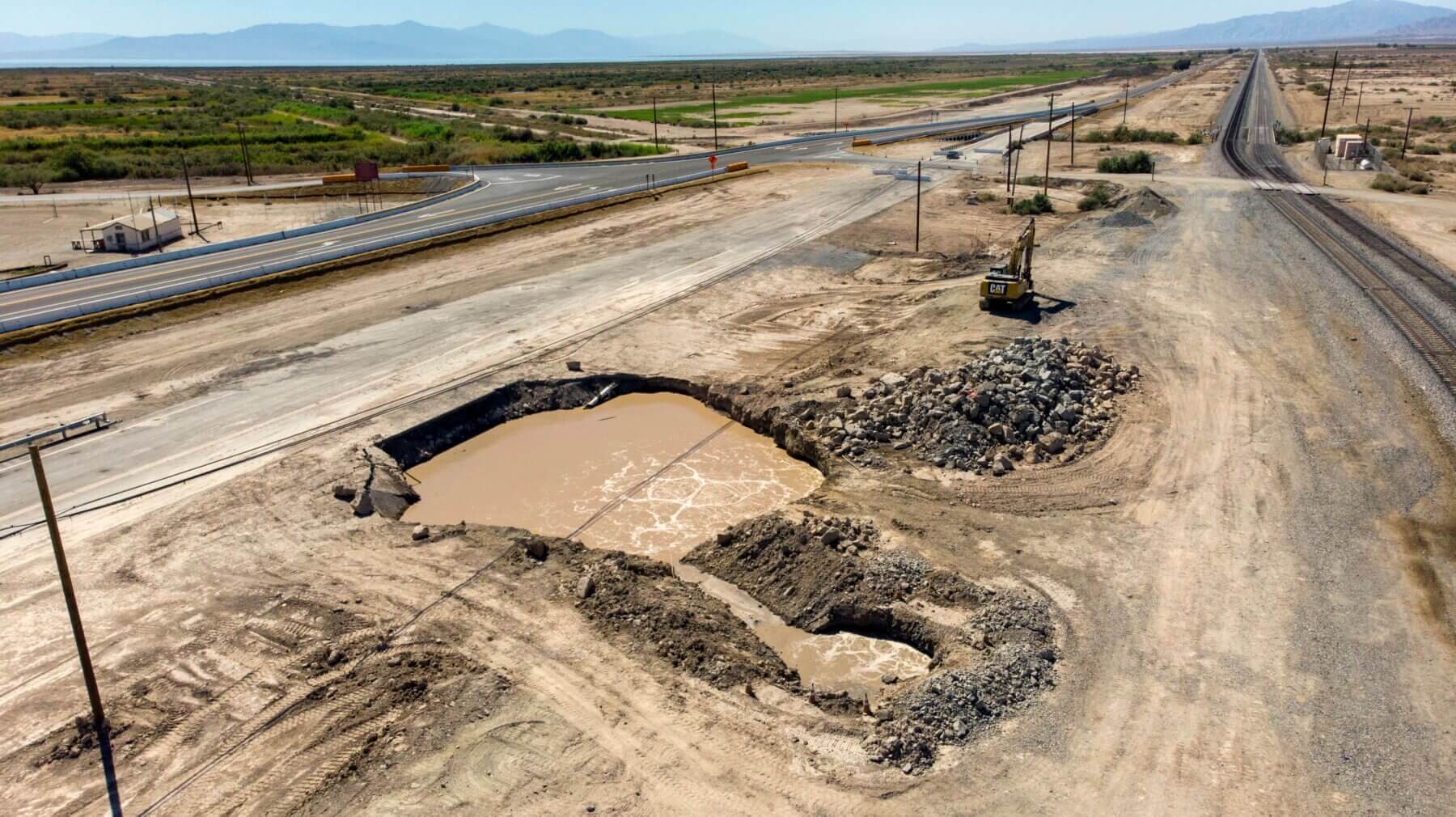
Frantic attempts by Caltrans to control the moving sinkhole with relief wells and metal barricades have ultimately failed and the whirlpool continues to move westward. It has forced the relocation of the Union Pacific railway. The costs have been enormous and scientists still cannot explain the origin of the whirlpool or why it is moving. Eventually the highway and portions of the railroad will be eaten up by the gyre and will have to be rebuilt to the east of the current location.
Photo by Steven Gute



Help us sustain independent journalism...
Our team is working hard every day to bring you compelling, carefully-crafted pieces that shed light on the pressing issues of our time. We rely on caring supporters like you to help us sustain our mission. Your support ensures that we can continue to provide deeply-reported, independent, ad-free journalism without fear, favor or pandering. Support us today and make a lasting investment in the future.

RELATED STORIES



Award Winning



Today’s environmental and social justice challenges are unprecedented, and require an unprecedented collective effort.


Stay updated on our latest features, events and more. Subscribe to our Note From the Nest newsletter!

Hi Steve!
I have been hoping to get back there in the near future but, apparently, it will not be the same place that we toured five (?) years ago. The “beauty of the horror” that we witnessed then may soon become just a horror. This makes me very sad. Is there anything at all that is not going backwards???
Great article on a depressing subject! Thank you for sharing.
Frank
Hi Steve,
Extremely well-done..and a very difficult topic. I have been coming through there for years and the trip through the area is heartbreaking.
Lin