Hope Is the Thing with Pages

Is anyone else tired of being tired? We all know that things are dire. Climate change is, as the talking heads keep reminding us, “an existential threat.” Bees, birds and bats are struggling — and that spells trouble for all of us. The oceans are warming. Nasty diseases are on the move. Even that dark miracle, coffee, is under threat from climate change.
Still, it’s hardly Pollyannaish to insist that it’s not all gloom and doom. The fight isn’t over. There are glimmers of hope. There really are. And here are five of them, in book form.
A Civil Action (1995)
By Jonathan Harr
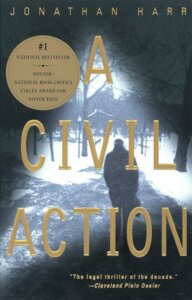
Jonathan Harr’s A Civil Action is not just one story, but a slew of stories — a David vs. Goliath tale, a legal thriller rivalling anything by Grisham or Turow and a portrait of a slick personal injury attorney, Jan Schlichtmann, who undergoes something of a road-to-Damascus transformation while doing battle with corporate giants (Beatrice Foods and W.R. Grace) that refuse to take responsibility for decades of ground-water pollution in a small Massachusetts town.
A Civil Action was made into a perfectly serviceable 1998 film starring John Travolta as Schlichtmann, Robert Duvall as a marvelously amoral corporate attorney, James Gandolfini, Kathleen Quinlan, John Lithgow and a host of other Hollywood luminaries. But Harr’s book is more than mere entertainment: it’s a perfectly paced, wonderfully written examination of underdogs taking the fight to 800-pound gorillas in pinstriped suits — and winning.
The Big Burn: Teddy Roosevelt
and the Fire that Saved America (2010)
By Timothy Egan
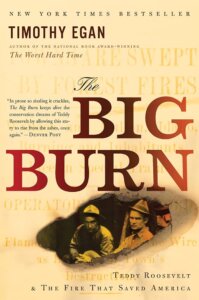
Author Egan (Lasso the Wind, National Book Award winner The Worst Hard Time and so many more) recounts the months in 1910 when drought-plagued national forests in Idaho, Washington and Montana erupted in an inferno that consumed millions of acres in the West. Thousands of forest rangers worked alongside poorly trained, intrepid college students, immigrants, day laborers and others to fight the flames — scores of them died in the effort — but no one had ever faced wildfires on this scale, burning with such ferocity, and for every acre they saved, it seemed another hundred were lost.
The story of how the firefighters gained control of the blaze is dramatic enough. But Egan also highlights how President Teddy Roosevelt and his chief forester, a Connecticut Yankee named Gifford Pinchot, leveraged the devastation, rallying the nation to see wild places as national treasures, our treasures, to be protected and revered, rather than exploited by a few.
More recently, though not named explicitly, The Big Burn, as the massive conflagration was called, serves as a turning point in the just-released (and fantastic) screen adaptation of Denis Johnson’s 2011 novella, Train Dreams.
The Wondrous Workings of Planet Earth:
Understanding Our World and Its Ecosystems (2018)
By Rachel Ignotofsky
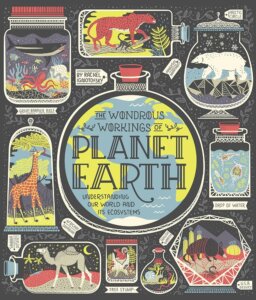 Author and illustrator Rachel Ignotofsky creates beautiful nonfiction books that are ostensibly for kids but are really for anyone who likes fascinating info served up in colorful, whimsical, companionable packages. (Example: What’s Inside a Bird’s Nest. Answer: More than you could possibly imagine.) The Wondrous Workings of Planet Earth is a perfect introduction to Ignotofsky’s signature style, using maps, artwork and readily graspable infographics to explore and explain ecosystems all over the world. Hand this off to your little one and watch the wonder do its work.
The Nature of Nature:
Why We Need the Wild (2020)
By Enric Sala
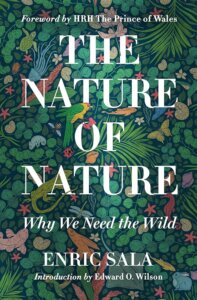
The Nature of Nature came out of the gate with an impressive push — featuring a Foreword by longtime conservationist the Prince of Wales (now King Charles) and an introduction by the great Edward O. Wilson. But Sala, director of National Geographic’s Pristine Seas project, doesn’t really need any help when it comes to making his case. The man is convincing enough all on his own. Perhaps most impressive about the book — in effect, a cogent and passionate argument for the economic and indeed the spiritual importance of the oceans — is that Sala has written a manifesto that does not come off as a screed. He has no illusions about the challenges we face in protecting the seas. But he also knows, and shows the reader why it’s indisputable, that nature can save us from ourselves — if we’d only accept that we are nature, and not a creature vying for dominion over it.
My Seditious Heart (2019)
by Arundhati Roy
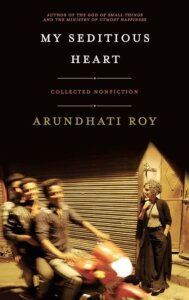
It’s been three decades since Arundhati Roy won the Booker Prize for her wonderful novel, The God of Small Things. In the years since, she has published one more work of fiction, 2017’s The Ministry of Utmost Happiness, and more than a dozen works of nonfiction. In that time, she has grown into not just one of India’s fiercest critics of imperialism, authoritarianism, and theocracy, but one of the world’s clearest voices calling for an end to exploitation of all kinds.
My Seditious Heart is an enormous collection of essays (it clocks in at close to 1,000 pages) defined as much by the author’s rage — at India’s retreat from democracy, at the brutal vestiges of colonialism, at corporate predation and environmental degradation — as by her eloquence and the sheer breadth of her interests, or more accurately, her targets. As a wise man once cried, “Let fury have the hour, anger can be power.” Arundhati Roy’s fury is vivifying. It’s up to us to see that the power that flows from it isn’t wasted.
Help us sustain independent journalism...
Our team is working hard every day to bring you compelling, carefully-crafted pieces that shed light on the pressing issues of our time. We rely on caring supporters like you to help us sustain our mission. Your support ensures that we can continue to provide deeply-reported, independent, ad-free journalism without fear, favor or pandering. Support us today and make a lasting investment in the future.

RELATED STORIES
Award Winning



Today’s environmental and social justice challenges are unprecedented, and require an unprecedented collective effort.


Stay updated on our latest features, events and more. Subscribe to our Note From the Nest newsletter!
