
Making It Home

Manuel Pastor is practically an academic institution unto himself at the University of Southern California, where an index of titles follow after his name: Distinguished Professor of Sociology and American Studies & Ethnicity, Director of the Equity Research Institute, inaugural holder of the Turpanjian Chair in Civil Society and Social Change. He’s also the author of several scholarly books. But I know him in a slightly different capacity—from his consistent presence out in the neighborhoods of South Central where he is an astute observer, commentator and chronicler of Los Angeles’s sprawling inner city and its racial dynamics.
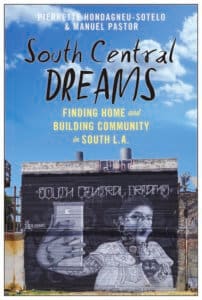 South Central Dreams: Finding Home and Community in South L.A., which he co-wrote with his USC colleague Pierrette Hondgneu-Sotelo, is based on dozens of interviews with neighborhood residents. The book has the sturdy framework of academic research, but its real goal is to document the quotidian-yet-complex, still-evolving narrative of how South Central—or South LA, as it’s also known—shifted from majority Black to majority Latino.
The dramatic demographic change is well known, but Dreams digs underneath the statistic with personal and politically fraught questions such as: How do Black people feel about the change? How do Latinos feel about it? How do Latinos who grew up in a Black place feel about it, versus those who didn’t? How is it that place forms identity?
Pastor says the initial push for the book came from Latino organizations and individuals who were concerned that South LA’s Latino story simply wasn’t being told. “They were also convinced, like me, that in terms of ‘Black and brown,’ reporters and academics go where there’s a lot of flash and fury,” he said. “But, they don’t necessarily look back at daily life.” This is a discussion about that look back—and, as well, a look forward.
I sat down with Manuel Pastor late last year at a high-rise apartment building’s outdoor patio looking over Downtown LA to discuss his book, how we make a place home, and much more.
Erin Aubry Kaplan: You’ve described the sociological and community reasons for producing this book. But what made you want to do it?
Manuel Pastor: I’ve been teaching at USC since 2007, and started teaching a class on Los Angeles and the American dream. When we got to the part on South LA, I would ask the class, how many of you grew up in South LA? And almost every hand that went up was Black. When I asked the question more recently almost every hand that went up was Latino. What I realized was that they were the same kids—the same sense of striving, of struggle, with a sense of pride, with a sense of resilience. It got me very curious about the role of place identity versus the role of race identity. Place is very important. We saw in the last presidential campaign that Black voters in South Carolina are not Black voters in California; they’re very different. Place marks you. When I meet people, I always ask, ‘Where did you grow up? What neighborhood?’
It got me very curious about the role of place identity versus the role of race identity.
Yes, the book talks a lot about “homemaking.” At first, I thought you meant home economics, sewing and cooking, but you’re talking about a people making home—in this case, a home in South LA. How is home here different for Latinos versus, say, Spanish Harlem in New York? How is LA a fundamentally different place?
Chapter two [of Dreams] is called “Always Changing, Always Contesting,” which reflects how South LA has always been changing. It’s also a riff on the Walter Mosley novel, Always Outnumbered, Always Outgunned. It’s one of my favorite Mosley books because it’s about how the main character, Socrates Fortlow, is always making home and reinventing himself, even as he goes back to his old neighborhood. That was a pretty conscious narrative choice.
When you think about it, Black LA was created. In the early 20th century W.E.B Dubois declared that this was heaven on earth for Black people, partly because the rate of Black homeownership was about 40, 45 percent compared to 10 percent elsewhere. There was a making of community through the Dunbar Hotel, the jazz scene, Central Avenue. One of the interesting things about this was that Black people faced discrimination and racism in LA, but because they were a relatively small group, a lot of this was directed at Mexicans. Then the Great Migration happens, lots of Black people arrive in LA, and then it’s Black people’s turn to be sure. There’s such a big move-in by Blacks who are attracted by the really good jobs and attracted simply by the presence of more people coming—the network effects that are typical of immigrants now.
One of the things we highlight in presentations is Wattstax [the legendary “Black Woodstock” concert captured in a 1973 documentary of the same name] in 1971. What’s amazing about that to me is that it’s the Coliseum, there are 110,000 people, and all of them are making enough money to buy a ticket! It’s the height of the Black working class creeping into the middle class in South LA. Then, in 1973, Tom Bradley gets elected. Black people who got pinned into the Central Avenue corridor started moving west into the Vermont area and then eventually into Baldwin Hills, Leimert Park and Crenshaw. Getting too big for the space you were first squeezed into is part of the Latino story, too.
So, Black people make Black LA, and by 1970, South LA, is 80 percent Black. 50 percent of Blacks in the county live in South LA. These days, it’s in the high 20 [percent].
Wow, that’s small. Of course, the Black numbers went down, but it’s also percentages. At the same time that the Latino numbers grew, their percentage of the population grew.
What happened is that the ‘80s was a great period of deindustrialization and job loss, which started for black folks in the ‘70s. This job loss hits LA hard, and it hits Black LA very hard. At the same time, there’s the rise of crack cocaine, Proposition 13—which leads to disinvestment in public education and service—a rise in the violence of militarized gangs and lots of over-policing. So, you get a lot of Black families starting to move out of South LA, which picks up after the 1992 unrest. At the same time, there’s this huge political turmoil going on in Central America and Mexico—a debt crisis and civil war. You start getting Central Americans crowding into Pico-Union. East LA can only absorb so many people, and you start to see essentially a spill-over down the Vermont corridor and movement over from Huntington Park and southeast cities to the eastern part of South LA. It’s a little like the Black Great Migration from the South because they were so many people who couldn’t stay penned in where they were.
So, when Latinos start coming, Black LA is not really in a good place for all the reasons you describe. In the book, there’s an honest discussion of what Latinos thought about the place, and frankly, what they thought about Black people. That was compelling—they don’t go for politically correct.
The main interviewers all grew up in South LA, and Afro-Latinos were part of the team. What was important to portray was the complexities. So the first generation came in with anti-Black racism and colorism. They brought that in with them; coming into the U.S., we don’t spend a lot of time convincing people they shouldn’t be that way.
The one thing that’s really important in telling these stories is that we be real, but paint the nuances. Immigrants tend to shut in and shut out anyway, and [the ‘80s into ‘90s] was an era in which everybody put bars on their windows. Everybody tried to keep their kids in a very safe orbit. There are those people who say, “I don’t trust Black people in my neighborhood,” and then their best friend is Black. [In the book, early Latino immigrants to South LA speak bluntly about the Black threat, which goes deeper than the threat of crime. One interviewee confessed that, after her daughter got romantically involved with a Black man, she “cried for three days.” Once he was integrated into the family as a son-in-law, however, she changed her view—at least for him. “He’s a really good person,” she says. “He even calls me ‘mom.’”]
The second generation grew up with Black friends, Black music, and they also grew up with something else. If you grow up in East LA, you’re going to learn about Chicano movements. If you grow up in South LA after 2000, even if the school you attend is majority is Latino, you’ll pick up curriculum about the civil rights movement and the Black Panther Party. You’re growing up around Blackness. One fascinating thing we found is that Latinos in South LA are quite distinct from Latinos in other parts of the city.
If you grow up in East LA, you’re going to learn about Chicano movements. If you grow up in South L.A. after 2000, even if the school you attend is majority is Latino, you’ll pick up curriculum about the civil rights movement and the Black Panther Party.
It was interesting to read about those divisions, because Blacks tend to monolithize Latinos. And you say that, although the Black population is greatly diminished now in South LA —especially the younger Black population—the history and culture created by the initial Black ‘homemaking’ is still there as a huge influence.
Yes. For example, younger Latinos grew up with the soundtrack of hip-hop. The identities of the youth are more fluid and more Black-identified. If you’re Latino in South LA, you have black people in your life; if you’re Latino in East LA, you don’t have Black people in your life, or in your neighborhood.
I am struck by the number of Black political figures who are always talking about South LA as “Black and brown people,” as a unit. If you look at the data, Black people are far more incarcerated than Latinos. It’s a problem for Latinos, too; [Latino people] are two and half times more likely to be incarcerated than white [people]. But for Black people, it’s five times. You could go through housing discrimination or job discrimination and Black people are far more impacted. So when leaders talk about “Black and brown people,” they’re consciously building bridges around disparities.
Aren’t these leaders also concerned about the constituencies of the future? Playing to the demographic change?
Yes. There’s a whole theory of assimilation called integrating toward whiteness. Immigrants, brown people and Latinos hitting the lower segments like Black people is always viewed as a downward spiral. But, what you see in South LA is something different: Latino people acercando—getting close to Blackness, but seeing that as a sign of strength, resilience, creativity and the ability to thrive. The acronym that people attached to Watts is “We Are Taught to Survive.” We are trying to bust a myth that the only direction of integration is towards whiteness, and that any other direction is a downward spiral.
So the thought about the Black/brown model for a long time in media has been kind of bipolar—people either come together automatically because they’re people of color in the same space, or there is ethnic conflict. How would you characterize the relationship?
It’s complex. Here’s an anecdote not in the book: shortly after I started teaching at USC, I was asked to do an event with then-Assemblywoman Karen Bass. [The community organizing group, Strategic Concepts in Organizing and Policy Education, known as SCOPE] was trying to launch a campaign around retrofitting buildings for climate change and hiring Black and brown folks. One of the first questions was from a Black man who said, “I used to like Mexicans. I don’t like these new Mexicans.” An older Black man raised his hand and said, “The problem is that younger Black men don’t want to work, and so all the Latinos are taking the jobs. Who can blame them?”
We answered those two questions with complexity, honesty, and with reality about what people are really feeling on the ground. What we need to be doing is having uncomfortable, realistic conversations [and] look at the conflicts while trying to build commonality. It’s always important in a group of Latinos to raise the situation of African-Americans as the terrain of discrimination that affects us all. You want to know why South L.A. isn’t invested in? Not because of Latinos. It’s because of deep anti-Black racism.
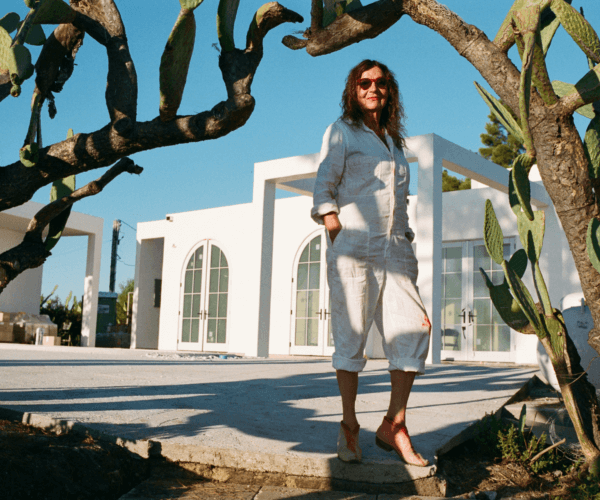
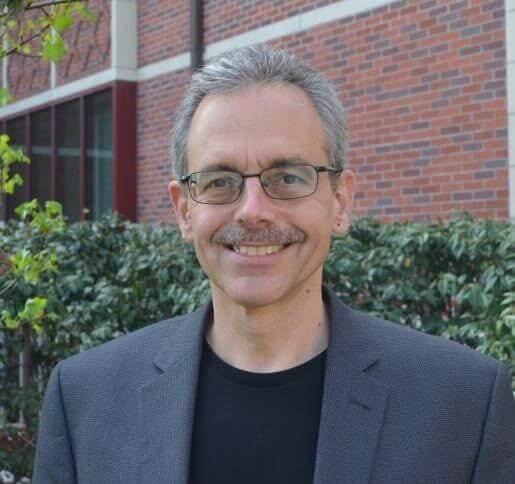 Pastor has published multiple books, capturing inequities found in low-income neighborhoods. Photo courtesy of Dr. Manuel Pastor
One of the four key things to homemaking you describe in the book is a sense of building the future. As I read this, I couldn’t help thinking, what is Black peoples’ future? There’s not a lot of optimism around it right now.
That’s one of the things [that is] important to talk about. How do you couple a sense of admiration of Latinos and a sense of welcome with a profound sense of loss? Central Avenue, this historic heart of Black LA, is now 95-percent Latino.
What I think is meant by that is that the Black/Brown organizing is the future of organizing in the United States. That’s the core base for a progressive coalition that can last.
My late father [the activist and longtime Los Angeles Sentinel columnist] would say that’s because Black people left. After racial housing covenants came down in 1948, Black people with means started to leave. Nobody could have imagined we’d break up the community. I guess that’s the immigrant narrative in the U.S. – you eventually leave the first place you settle in. And Black people fought for hundreds of years to have social mobility, to live where we want to live. Nobody would argue for the continuation of segregation. And yet…
That sense of loss and erasure is real, because of the cultural change. But it’s also real now because of gentrification and displacement threat, which Black and Latino people face together. It’s really salient for young people. The young Black people I spoke with think of Black South LA 30 years ago, and Central Avenue before that, as a kind of Wakanda they never got to be a part of. They say, “Is this ever really going to come back? Can we really have an Afro future?”
One of the things we’re trying to lift up in the book is how the future is being made here. There’s an organizing slogan, “South LA is the future.” What I think is meant by that is that the Black/brown organizing is the future of organizing in the United States. That’s the core base for a progressive coalition that can last.
Help us sustain independent journalism...
Our team is working hard every day to bring you compelling, carefully-crafted pieces that shed light on the pressing issues of our time. We rely on caring supporters like you to help us sustain our mission. Your support ensures that we can continue to provide deeply-reported, independent, ad-free journalism without fear, favor or pandering. Support us today and make a lasting investment in the future.
RELATED STORIES


Award Winning


Today’s environmental and social justice challenges are unprecedented, and require an unprecedented collective effort.


Stay updated on our latest features, events and more. Subscribe to our Note From the Nest newsletter!
