
A Grievous Harvest

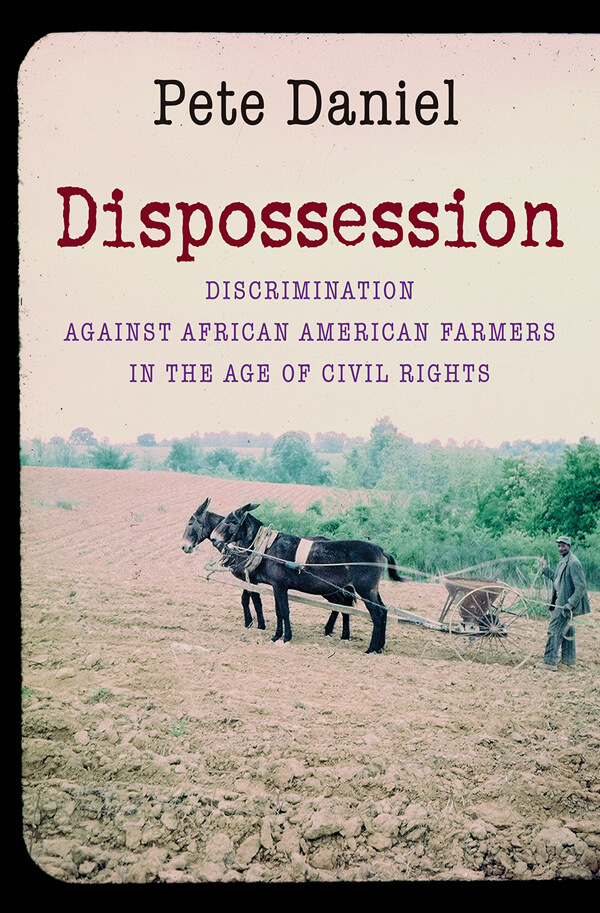
African Americans and other minorities returning to farming face a system stacked against them. Historian Pete Daniel’s book, Dispossession: Discrimination Against African American Farmers in the Age of Civil Rights, details how nearly a million black farmers were pushed off the land and out of their history.
In 1960, an African-American farmer named Francis Joseph Atlas testified before the U.S. Commission on Civil Rights in New Orleans. A landowner, he had attended Tuskegee Institute and was a bricklayer by training, a Sunday School superintendent and a Mason, but he told the commission that when he had tried to register to vote in 1948, 1950 and 1960, he was rejected.
Daring to challenge white power immediately put Atlas’ farm in the crosshairs of the agricultural establishment in Louisiana. Suddenly, the gin he’d always worked with wouldn’t handle his cotton. He couldn’t buy seed, gasoline or other farm supplies. His Black neighbor would no longer harvest Atlas’ soybeans with his combine, fearing that whites would turn on him, too. Atlas lost that crop and went $4,700 in debt, a large sum for that day.
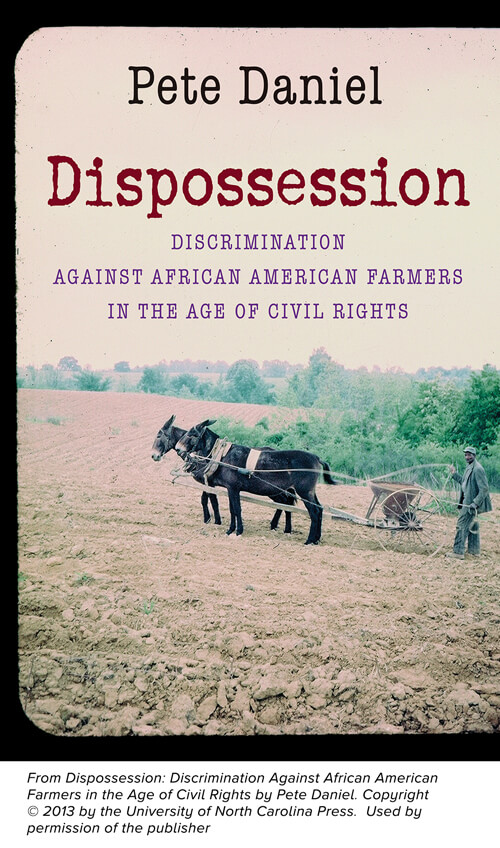
As related in historian Pete Daniel’s gut-wrenching book, Dispossession: Discrimination Against African American Farmers in the Age of Civil Rights, Atlas fared better than most Black farmers. He kept his farm. The overwhelming majority did not.
America’s farms are haunted by this little-known history. In 1920, there were some 925,000 African Americans running farms in the U.S., and about a quarter of them owned their land. The 2017 Census of Agriculture finds there are now about 35,000, a drop of 96 percent. Black farmers have lost over 90 percent of their acreage in the U.S. over the last century, according to the Land Loss and Reparations Project (compared to 2 percent lost by whites), and it isn’t because they don’t want to farm. Dispossession makes perfectly clear that they were pushed out, along with Latinos, Native Americans, women and other underrepresented growers – and are still kept out today.
Over the past several decades, this painful legacy has powered a deep-rooted food justice movement pushing up everywhere out of the American soil. Black and other minority farmers are returning to the land, and the food system breakdowns in this recent pandemic have added urgency to the idea of growing one’s own culturally appropriate food.
Daniel’s 2013 book pinpoints exactly where discrimination destroyed minority farmers and where the current agricultural regime hurts them today. It also shows how exploitation of the land and the exploitation of people are inextricably linked.
The story of how Black farmers were pushed out is not a simple one. Beginning in the early 20th century, technology and chemicals transformed farming from a labor-intensive to a capital-intensive process, putting the world on a path to the fossil-fuel-dependent, toxic and commodity-focused industrial farms that destroy the soil and change the climate.
“They should kick the people out that are at the Department of Agriculture. Turn it into a rural-life museum.”
At the same time, starting with Roosevelt’s New Deal, the U.S. Department of Agriculture spun out programs pushing farmers to “get big or get out,” as Secretary of Agriculture Ezra Taft Benson famously put it. A bewildering array of bureaus including the Agricultural Adjustment Administration (later the Agricultural Stabilization and Conservation Service), Farmers Home Administration and the Federal Extension Service doled out loans, equipment, crop information, conservation money to leave ground fallow, even surplus food. These services rarely reached minorities.
In fact, Daniel found that those programs were used to punish Black farmers and push them off the land, and the great irony is that this peaked during the Civil Rights era in the South. As more and more farmers such as Francis Joseph Atlas demanded the right to vote, especially after the 1954 Brown v. Board of Education decision, powerful county agriculture committees in southern states simply cut them off from federal services. Their allotments — the acreage of price-controlled crops such as cotton or tobacco they were allowed to grow — were cut back in order to give increased acreage to whites. They weren’t even told about programs or crop innovations that saved white farms. Even as USDA officials proclaimed their support for civil rights, these white county committees practiced what Daniel describes as “passive nullification” and “malign inefficiency.” Black and Native American farming collapsed. Most of the damage was done between 1940 and 1974, when the number of Black-run farms fell from 681,790 to just 45,594.
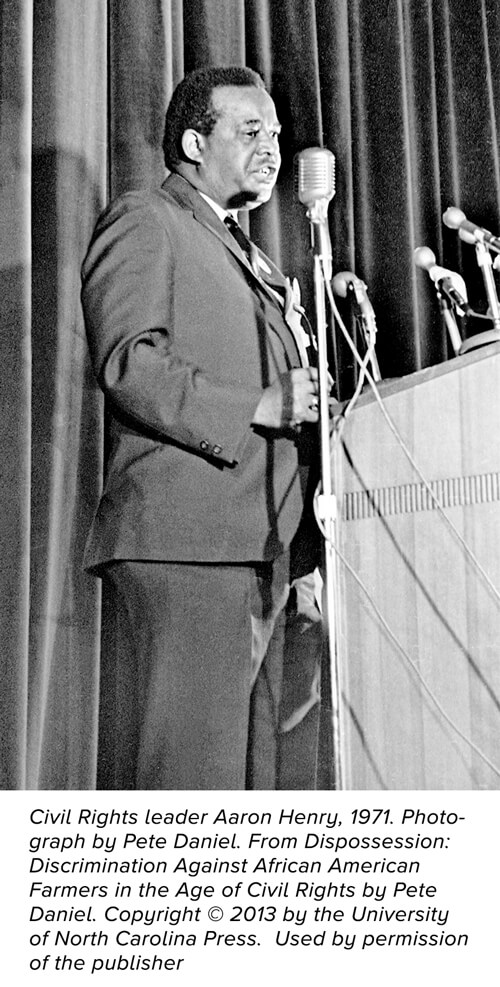
Daniel contends that these county-level offices, and the federal bureaucracy that supports them, are just as punitive today. As the Covid-19 pandemic causes us to reexamine our food systems, and the outcry over police brutality has inspired a culture-wide reckoning over racial representation, this bureaucracy needs new scrutiny. Daniel has been saying for years that it’s time for the USDA to be erased and start over.
“They should kick the people out that are at the Department of Agriculture,” he says. “Turn it into a rural-life museum.”
As a movement to return diversity to farming gains ground, it’s a good time to circle back to the author whose book — and its pointed insights about how institutional racism wreaked havoc on a rich African American agricultural tradition — is only growing in relevance.
Dean Kuipers: The title of your book is Dispossession: Were Black farmers pushed off the land?
Pete Daniel: They left for any number of reasons and it’s unclear to most historians exactly what happened. But from my point of view, the New Deal accentuated the flight of Black farmers. That might sound counterintuitive, but the fact is the Agricultural Adjustment Administration was geared to help more wealthy farmers.
These [AAA] county committees became extremely powerful and were able to shape the way the county developed. They were friends with the land-grant university people, with the state departments of agriculture, and in general with the agricultural establishment. They were in a perfect position to have their way. And that meant controlling the acreage allotments, controlling credit, loans and any number of other programs.
From then on, African-American farmers had no power at all. They were dependent on that white structure, so they were vulnerable. By the time you get to World War II, the whole agriculture complex believed in getting rid of smaller farmers. You put that in with racism and the Black farmers were the target.
Were they also pushed out by the rise of mechanization?
Yes. The advances were incremental. The mechanization, for example, of the cotton culture, came mostly during and after World War II. As did the synthetic chemicals and pesticides and herbicides. You put all that together and you don’t need nearly as much labor.
When the Brown v. Board of Education decision came down in 1954, white southerners were alarmed that they were going to lose a lot of their privilege. And even though African Americans were a minority in those areas, whites were paranoid about this. If African Americans got the vote and sent their children to school and got educated, they could challenge the white power structure.
The Civil Rights Movement threatened all of these things… So the whites were incentivized to do all they could to get rid of Black farmers while they still had that power.
In 1964, the civil rights group Southern Nonviolent Coordinating Committee (SNCC) was in the South registering voters and they figured out that these county agricultural committees were elected, and they started to run Black farmers as candidates.
That’s why the whites reacted so bitterly and violently to the challenges from SNCC; they wanted to hold on to this power because it meant a lot of money in their pockets.
SNCC and the Congress of Federated Organizations (COFO) really worked hard on this, going door to door.
Yeah, after Freedom Summer, summer of 1964, some of the leaders of SNCC in Mississippi came to the realization that you could vote for representation on these Agricultural Stabilization and Conservation Service (ASCS) committees. So they organized for these elections very quickly in the fall of 1964 and then they continued that for several years. But they weren’t very successful because the white power structure turned all of these people’s weapons against them.
Your research shows that the county is the real conflict point. No matter what they said about civil rights in Washington, D.C. or at the state level, at the county level they just ignored all that. This is where neighbor confronted neighbor.
Yes. A lot of these local county committeemen were paternalists of the first order. They felt like, “Oh, we’re looking after everybody.” When, in fact, they were racist and they were looking after their own in so many cases. Not that there weren’t some who did a good job and were impartial.
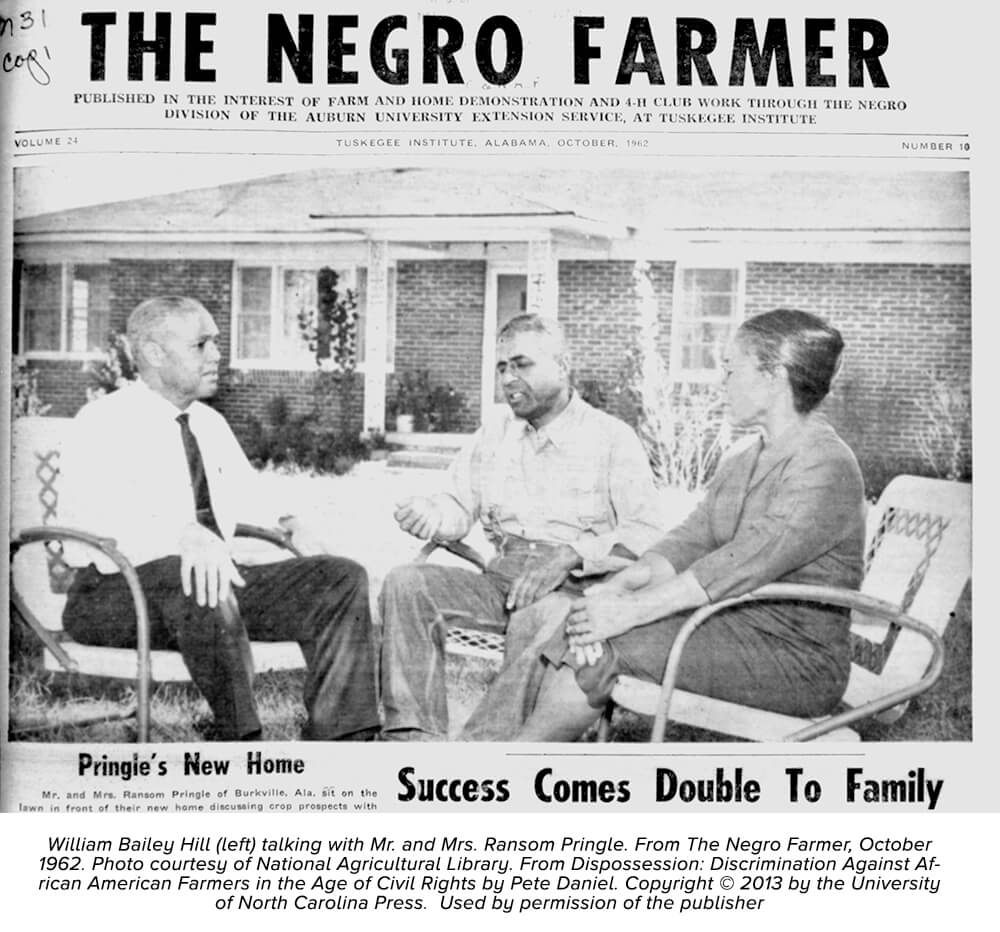
The ASCS was the one that controlled acreage allotments and some loan programs. A lot of federal money came running through these committees. Then there was the Farmers Home Administration, and the head of it in the county had immense power to shape who got loans. And you had the Extension Service, which the Whites controlled. There was the Negro Extension Service that did good work when they could, but the power was in the white Extension Service that offered better advice to rich white farmers than to Blacks or poor whites.
So allotments of cotton or rice could change without warning?
The Department of Agriculture would hand down to the states what they should allot. And then the state would tell the counties, “Here’s your allotment that you can hand out to farmers.” And then the county people and ASCS would hand out the acreage allotment to the farmers. Of course, they could manipulate that any way they wanted to.
But you can appeal that decision?
Yeah, but before the New Deal, a lot of the adjudication of disputes was handled in the county courts. Where at least you had a jury of your peers, although they were white peers. But you had precedent and arguments by lawyers. But when you have the New Deal, those disputes are now transferred to the county committees. And they have what amounted to judiciary power, but what they didn’t have was keeping precedence. They could make the decision a priori on every case and not be bound by anything.
The irony of your book is that during the Civil Rights era itself is when most of these farmers got pushed out.
Yeah, it was a surprise to me. But if you put it all together, the Civil Rights Movement threatened all of these things, just as the SNCC campaign showed. So the whites were incentivized to do all they could to get rid of Black farmers while they still had that power.
It doesn’t seem that this issue got much attention during the Civil Rights era. You don’t hear Martin Luther King or the NAACP bringing it up.
It’s the same thing with Black farmers today. The fact is, people don’t want to talk about farmers. To many Americans, farmers are just this riff-raff who still grow things but need to be ignored. But in the Sixties, the challenge that SNCC made never got really widespread attention or press.
Washington, D.C. believed it was making great strides against discrimination, but at the county level, it had a hundred ways to keep a Black man off their committee.
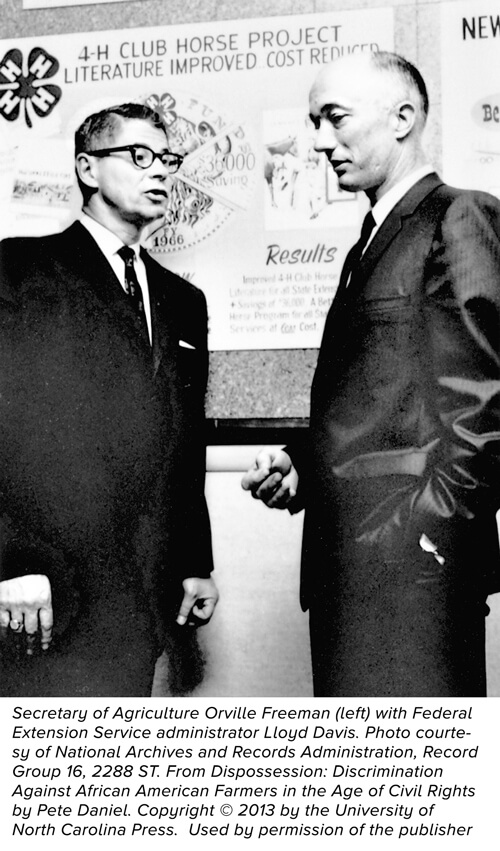
Oh yeah. And I should mention that Orville Freeman, the secretary of agriculture [1961-1969], pledged to do really well for Black farmers. And so did [Tom] Vilsack when he was secretary under Obama. And so has every secretary of agriculture since Freeman pledged to enforce civil rights. None of them have.
So you’re contending that the situation is basically the same today?
Yes. The farmers that I’ve talked to argue that the people on these local committees are just as mean and snide and unhelpful as ever. That funds were slow to come, that they haven’t been portioned out equally. And that farmers continue to fail because of discrimination by the Department of Agriculture.
There are a lot of bitter farmers. I went to a conference at Howard University three years ago and there were a lot of Black farmers there who were just pissed. And they condemned the Department of Agriculture and even had a whole lot to say about how the Pigford v. Glickman decision was carried out. That supposedly solved all the problems, but not in their estimation.
Timothy Pigford brought a suit in 1997 charging the USDA with discrimination for failing to deliver these services, and it became a class-action suit that farmers won in 1999 and millions of dollars in damages were awarded. But it only covered discrimination going back to 1981, is that right?
Yeah, back to the Reagan administration.
I was amazed by how many actual cases of discrimination you unearthed from USDA records. It seems there are hundreds that were ignored.
Yeah, I was at the National Archives and couldn’t find any Agriculture Stabilization and Conservation Service records after 1960. So I asked the archivist Joe Schwartz, “Joe, are there any records after 1960?” And Joe said, “Let me look.” And 10 minutes later Joe came back and said, “Well, there are 1,140 unkept log boxes. Where do you want to start?”
In those records, there was just tremendous documentation for the stuff that I wrote about.
They want the freedom to farm. And what happened with the Department of Agriculture is that these people did not have that freedom.
All these stories are of farmers who tried to get their fair shake and just got turned away: it’s really distressing to read and then it’s really distressing to hear you say that it’s still going on now.
Yeah, it is distressing. And there’s no excuse for it. You have a Department of Agriculture, which all along has subsidized large farmers with the land-grant universities, with those local committees, with the whole structure of the Department of Agriculture. It’s set up to deploy science and technology and that is aimed at the more well-off farmers.
Get big or get out.
Exactly. The Department of Agriculture is always talking about, “Oh, we’re very concerned about the family farm.” I read that the other day and it really pissed me off. They’re “feeding a starving world.” These clichés are just maddening. Because what they are really doing is helping the large farmers. And the Department of Agriculture is riddled with racism. Not just against African Americans, but against women, Indians, Hispanics.
Why is it important for African Americans and Native Americans, Hispanics, women and others to own farms?
Well, the main reason is they want to farm. You talk to most farmers and they just love to farm. They want the freedom to farm. And what happened with the Department of Agriculture is that these people did not have that freedom.
This comes full circle back to some of the things going on now. White supremacy is out in the open again and we have an ex-president and others who have openly courted them.
Yeah, and the thing is, people still want to claim that the Civil Rights Movement in the Sixties solved all the problems along the color line. And that’s just erroneous as it can be. There’s a lot of scholarship that shows that as federal programs under Johnson took hold in the South, white people manipulated these things. Greta De Jong’s book, You Can’t Eat Freedom, goes into really amazing detail about how this worked out with the poverty programs under the Johnson administration.
I feel like now there is a significant movement towards getting more farmers, smaller farmers, and more diverse farmers back on the land. The pandemic threw that into stark relief.
I think you’re right, but a lot has happened to enrich the really larger farmers. And the system is just filled with subsidies for them. The Department of Agriculture doesn’t want to help these small farmers, although politically they have to do a little something to help minority farmers. But they don’t want to. They want to support the people who can get on the treadmill of machines and chemicals.
-
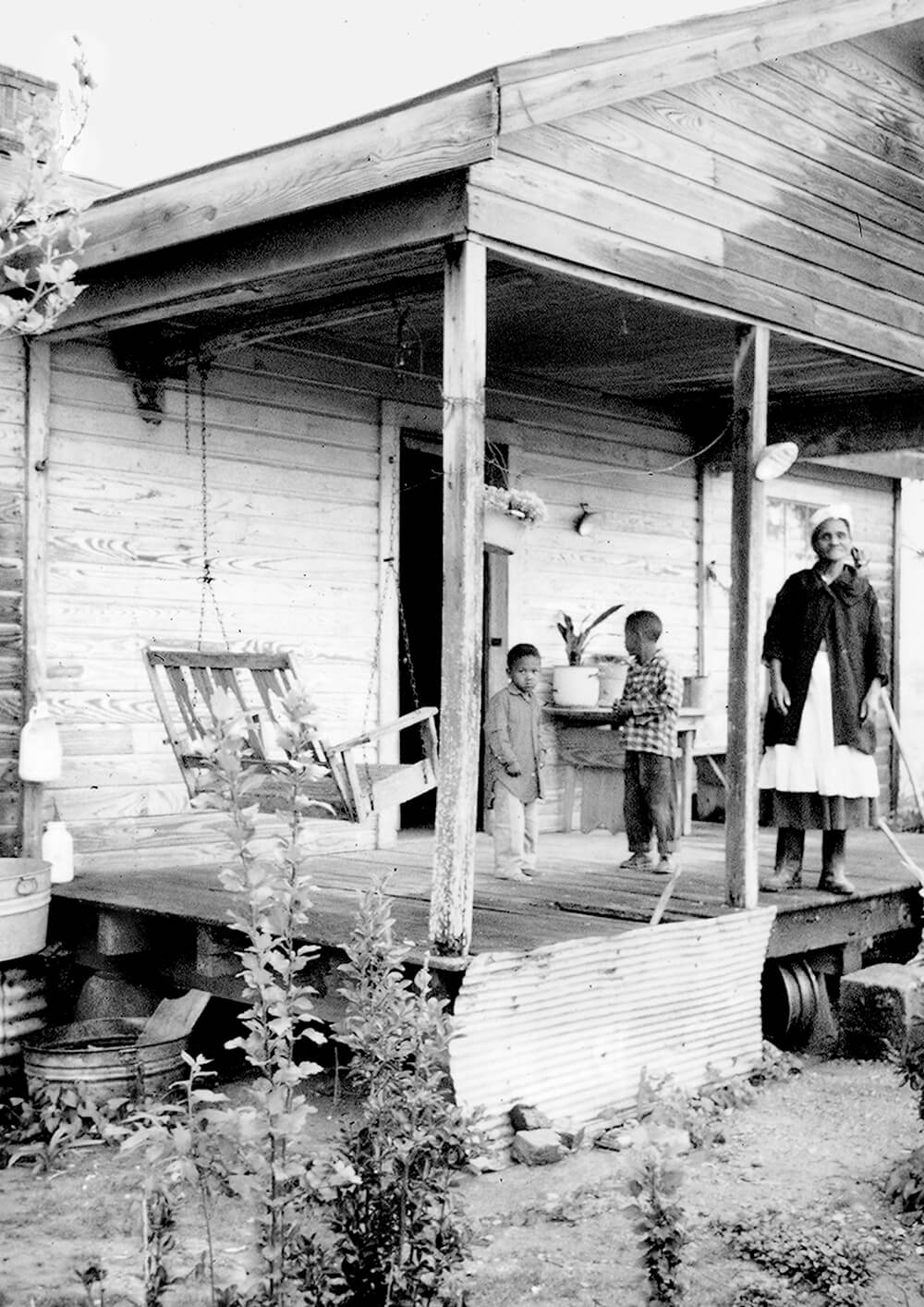
From Dispossession: Discrimination Against African American Farmers in the Age of Civil Rights by Pete Daniel.
-
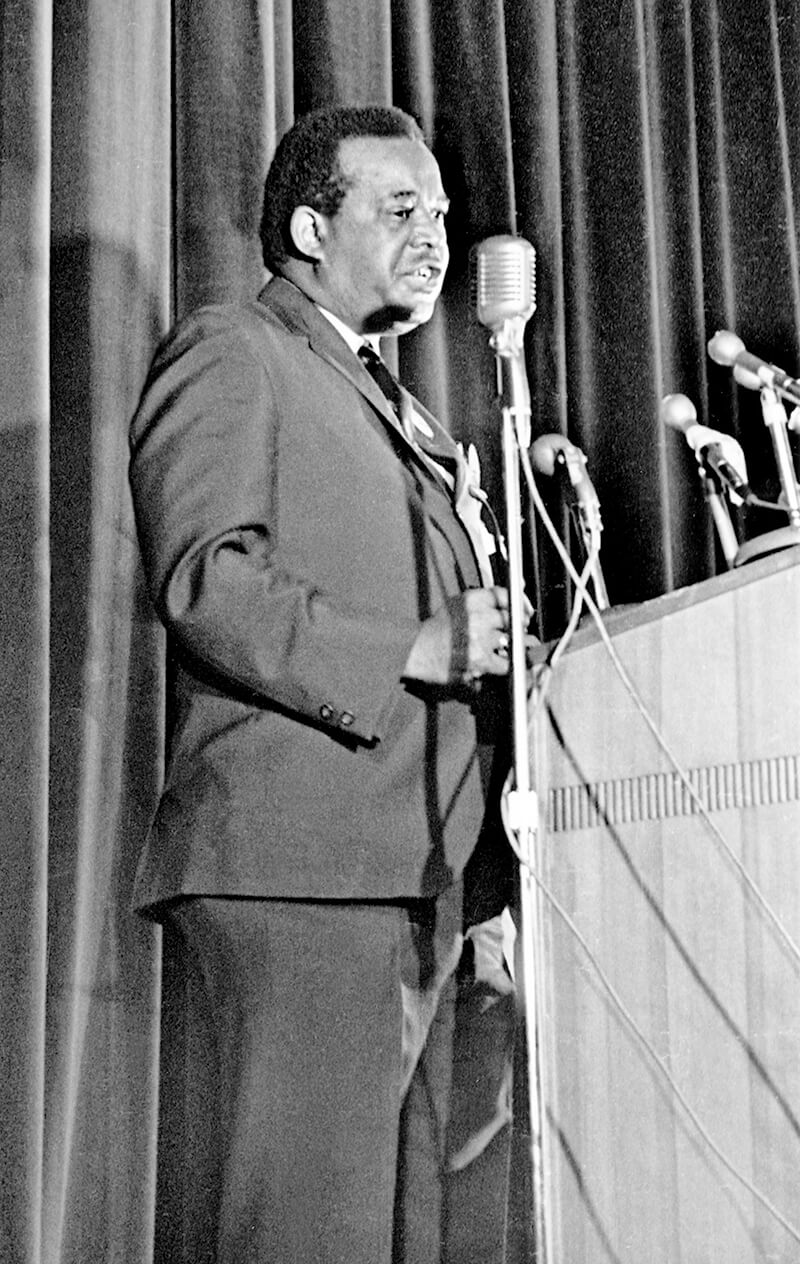
Civil Rights leader Aaron Henry, 1971. Photograph by Pete Daniel. From Dispossession: Discrimination Against African American Farmers in the Age of Civil Rights by Pete Daniel. Copyright © 2013 by the University of North Carolina Press. Used by permission of the publisher
-
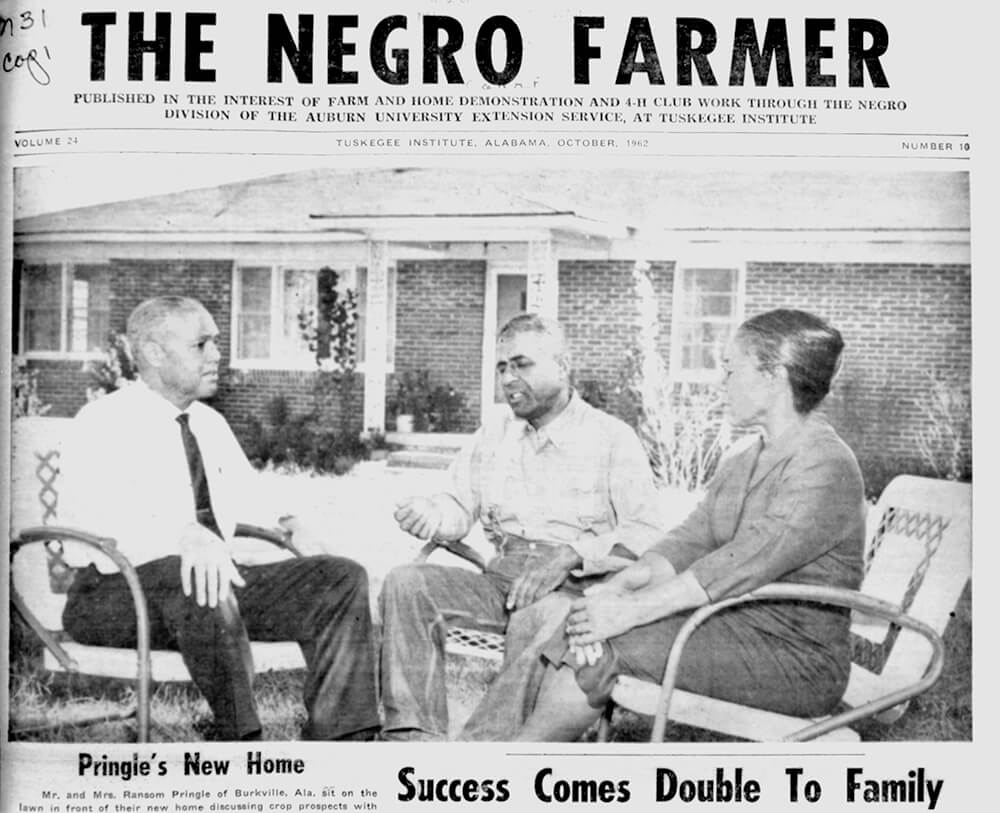
William Bailey Hill (left) talking with Mr. and Mrs. Ransom Pringle. From The Negro Farmer, October 1962. Photo courtesy of National Agricultural Library. From Dispossession: Discrimination Against African American Farmers in the Age of Civil Rights by Pete Daniel. Copyright © 2013 by the University of North Carolina Press. Used by permission of the publisher
-
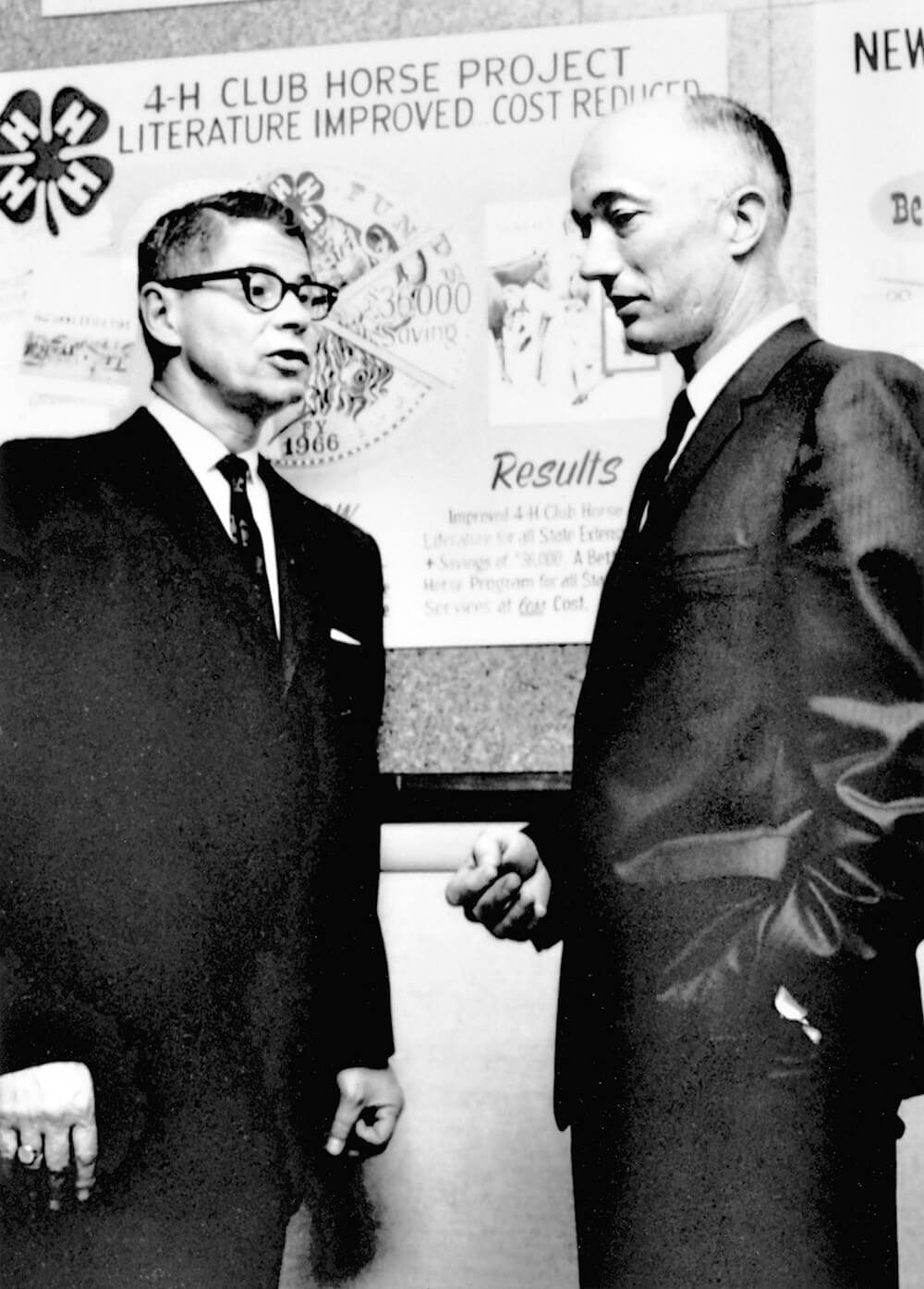
Secretary of Agriculture Orville Freeman (left) with Federal Extension Service administrator Lloyd Davis. Photo courtesy of National Archives and Records Administration, Record Group 16, 2288 ST. From Dispossession: Discrimination Against African American Farmers in the Age of Civil Rights by Pete Daniel. Copyright © 2013 by the University of North Carolina Press. Used by permission of the publisher
-
Rosie Nelson with sons Carl and Marvin, Panola County, Mississippi, 1965. Photograph by Elaine DeLott Baker. From Dispossession: Discrimination Against African American Farmers in the Age of Civil Rights by Pete Daniel. Copyright © 2013 by the University of North Carolina Press. Used by permission of the publisher
Help us sustain independent journalism...
Our team is working hard every day to bring you compelling, carefully-crafted pieces that shed light on the pressing issues of our time. We rely on caring supporters like you to help us sustain our mission. Your support ensures that we can continue to provide deeply-reported, independent, ad-free journalism without fear, favor or pandering. Support us today and make a lasting investment in the future.

RELATED STORIES


Award Winning



Today’s environmental and social justice challenges are unprecedented, and require an unprecedented collective effort.


Stay updated on our latest features, events and more. Subscribe to our Note From the Nest newsletter!
