
Where the Things Were Wild

Illustrations by Nancy Hope
Deep in one of the world’s largest remaining rainforests — 16 million acres of remote western Canada — the towering spruce and cedar trees are studded with cameras. The motion-triggered machines capture imagery that researchers with the distant University of Victoria then run through an AI-powered face recognition algorithm to identify individual grizzly bears. Makes keeping track of them much easier.
This kind of tech is everywhere in the modern wilderness. In central Africa, wild elephants are being fitted with Fitbit-like collars that monitor their physical and even emotional health by analyzing their movements. In the Pacific Ocean, orcas equipped with suction-cup cameras unknowingly transmit everything they see and hear, as well as their position and feeding behaviors, to scientists on land.
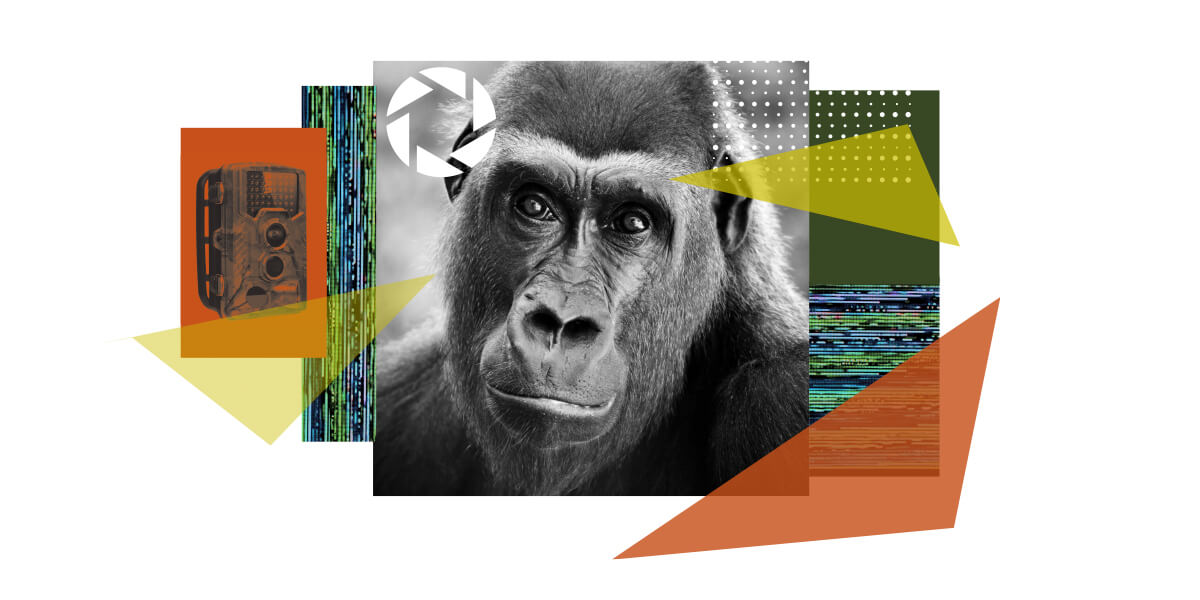
Sensors, satellites, drones and cameras have given us the power to put wild animals under a degree of surveillance that would have seemed like bad science fiction just a generation or two ago. Earnest researchers and idealistic technophiles are mining every conceivable type of data from wild places in the hopes of saving them — aiming to thwart poaching, track animals’ movements, understand the impacts of climate change and wildfires on endangered creatures. The goal is to make the unknown known — to digitally capture, process and analyze the lives of wildlife.
In our climactically imperiled, rapidly urbanizing world, these efforts are usually and, reasonably, seen as a good thing. No doubt, at least some of these programs are helping to keep the animals they focus on from being hunted or climate-changed into extinction.
But at the same time, I believe that something profound is also being lost. With the best of intentions, we are inflicting yet another form of damage on the wilderness. If wild animals are constantly watched by human eyes, monitored by satellites and cameras and remotely controlled collars, can we really call them wild anymore?
Drop down to ground level and it’s practically wild-animal Instagram.
Not if we are being honest. Instead, we are rapidly converting the world’s last truly wild, ungoverned spaces into something tamer, more controlled — moving toward a world where the wild beasts of rainforests and steppes, taigas and wetlands are something more like free-range animals. Free to amble around as they like, but within human-mandated boundaries, constantly watched by computerized systems and human beings who stand ready to step in whenever we deem it necessary.
The number of wild animals under digital surveillance is relatively small, now. But just 20 years ago, so was the number of people carrying cell phones. Soon, what’s left of the untamed world could be much more thoroughly monitored, by proliferating swarms of insect-sized micro drones, arrays of cheap satellites and internet-connected “camera traps”— still or video cameras automatically triggered when an animal wanders past. A wilderness panopticon.
***
We’re already watching wild animals from every conceivable vantage point. Start way overhead, in outer space, where satellites packing high-resolution cameras track the movements of penguin colonies and wildebeest herds. Move down to the atmosphere, where the skies above remote rainforests and frozen tundras are increasingly abuzz with heat-sensing, camera-toting drones.
Just below, in the treetops of forest canopies in Peru and Indonesia, organizations such as Rainforest Connection are deploying acoustic sensors to collect, in their words, the sounds of “every birdcall, insect chirrup, rustle in the leaves and drop of rain.” That acoustic data is run through an artificial intelligence algorithm that spots noises that don’t belong, like chainsaw motors — indications that poachers or illegal loggers may be in the area. Anyone can eavesdrop on the rainforest for fun, too. You can download the group’s app and “livestream the sounds of the rainforest through your mobile device, anytime and anywhere. Listen in for rare screechy birds, laughing gibbons and the occasional Amazon parrot!”
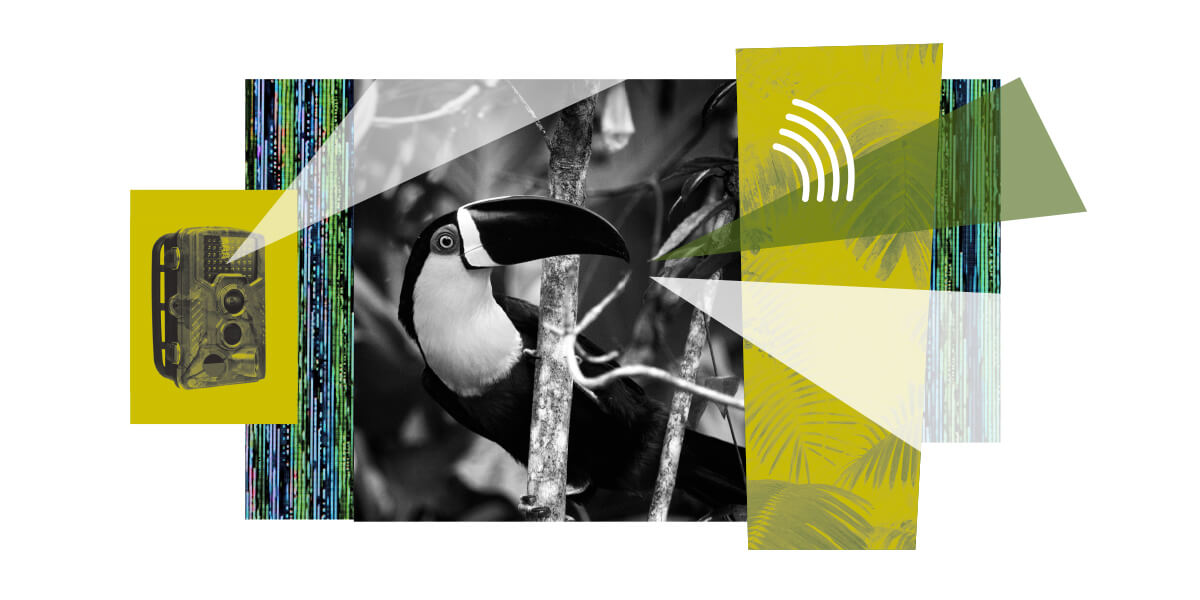
Drop down to ground level and it’s practically wild-animal Instagram. Tens, probably hundreds of thousands of camera traps cling to tree trunks and lurk under rocks on every continent, spying discreetly on everything from Indian tigers to Appalachian coyotes.
Scientists and conservationists have been using camera traps for decades, but as we all know from the evolution of our phones, cameras are constantly getting cheaper, smaller and better, and they’re popping up practically everywhere. As a paper from Britain’s Royal Society put it back in 2019, “The last decade, in particular, has seen the camera trap move from being a niche tool primarily for monitoring big cats to taking center stage in broad spectrum surveys of whole communities of mammals.”
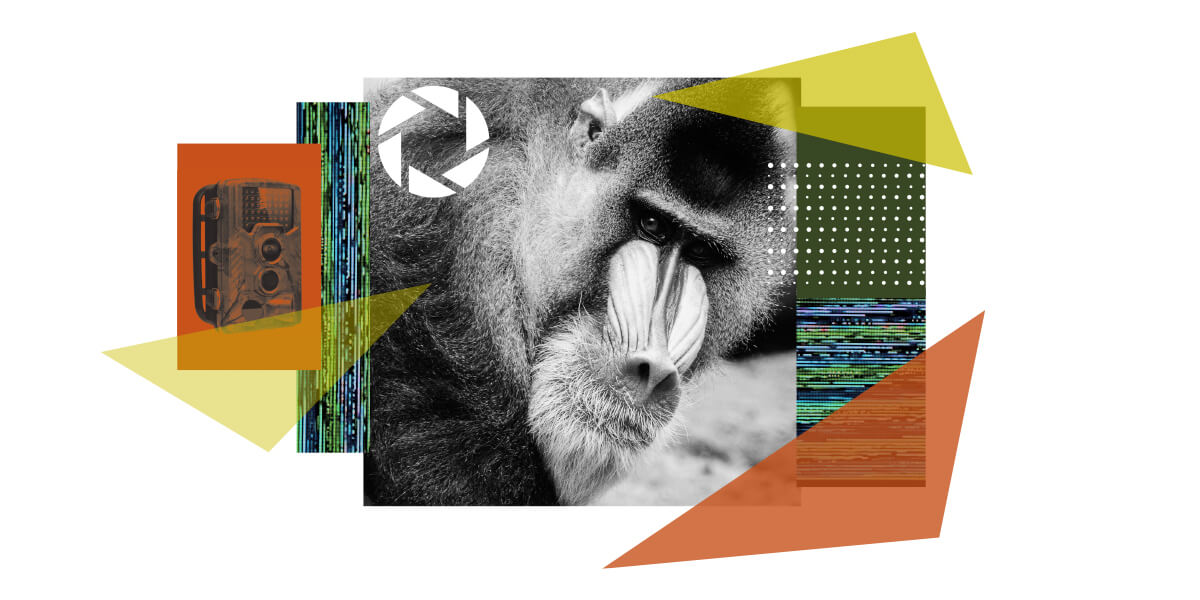
With the help of artificial intelligence, camera systems can now not only identify the types of animals that cross their field of view, but specific individual animals. Algorithms not too different from the ones Facebook uses to identify your friends in party snapshots are being used to recognize and track not only grizzly bears, but also wild chimpanzees, lemurs and baboons.
Just as with we humans, the invasion of privacy isn’t limited to what can be seen externally. We’re moving beyond observing where wild animals go and what they do, to monitoring what’s happening inside their bodies. Wildlife researchers have long attached radio transmitters to creatures that enable us to track their movements. Today’s transmitters can monitor an animal’s body temperature, blood pressure, pulse rate and blood sugar level. Some come with tiny cameras that record what the animals eat and where.
Then there’s the SnotBot, a project of the whale-saving organization Ocean Alliance. It’s a quadcopter drone that flies through the clouds of gunk exhaled by whales, collecting the cetacean mucus on a petri dish. Back in the lab, those samples yield information on the animal’s DNA, stress and pregnancy hormones, microbiomes and other bio-indicators. We don’t even have to come in physical contact with animals to examine their inner workings. Researchers at the University of South Australia have designed a system combining high-resolution digital cameras with a computer algorithm that analyzes tiny movements in animals’ bodies, such as the expansion of their chests, to determine their breathing and heart rates.
The sheer volume of all the photos, video, audio and other data being gathered up every day by satellites, drones, cameras and recorders is literally mind-boggling — that is, it’s way more than human minds can process. And the torrent of data will only grow. A group of researchers from the U.S., Canada and the U.K. recently published a call for camera networks to be knit together like weather monitoring stations, “to monitor biodiversity trends across thousands of square kilometers of diverse habitats, including tropical forests and alpine ecosystems.”
Just as with we humans, the invasion of privacy isn’t limited to what can be seen externally.
To cope with it all, artificial intelligence is increasingly deployed to make sense of natural reality. Computers overseeing the wild. Several cloud-based projects allow researchers around the world to upload animal tracking data for analysis by AI algorithms. One of the biggest such outfits, Wildlife Insights, involves researchers from some of the worlds’ top conservation organizations as well as Google data engineers; their algorithm can scan hours of video in seconds, flagging images of any of the hundreds of species they recognize.
Again, these monitoring projects were created with the best of intentions. Most are meant to simply gather information about animals while interfering with them as little as possible.
It’s easy to see, though, how mission creep sets in. Surveilling leads straightforwardly to intervention — ultimately, why else would you bother? There’s not much point in gathering information about the health of an endangered band of lynx if you’re not going to use that information to help them somehow. Why stop at looking for signs of poaching if your camera arrays can also detect when an animal is sick, has gotten lost from its family or is heading deeper into a drought zone?
That’s already happening. An environmental organization called Resolve fields AI-equipped cameras programmed to spot animals that wander too close to human settlements, where they might trample crops or kill livestock. When they do, the cameras send an alert to rangers or activate speakers that blare out noise to scare the beasts away.
***
Don’t get me wrong. I want to preserve what’s left of our planet’s wild animals as much as anyone. And there’s no denying the catastrophic threat bearing down on them. Poaching, habitat loss and climate change have killed off staggering numbers of wild animals and driven some to extinction. You probably don’t need me to spell it out in detail, so here’s a single statistic, courtesy of the World Wildlife Fund, that sums it up: Between 1970 and 2016, populations of wild mammals, birds, amphibians and reptiles plunged by an average of 68 percent. In other words, two-thirds of the average wild species has been wiped out in my lifetime.

Set against the unforgiving iron of those numbers, the idea of keeping the wilderness pristine sounds more than a little romantic. It is. It’s not practical. If we don’t keep closer tabs on our planet’s remaining wild animals we’ll likely lose them completely. On balance, bringing more wild animals under some form of digital protection is undoubtedly for the best.
But it comes at the cost of something ineffable, impalpable, but nonetheless real. “All good things are wild and free,” said Henry David Thoreau. Does that apply to nominally wild, free things that are under digital surveillance?
Putting the wild under our protective gaze is an inversion of the natural order. The wilderness is the place where people are small and feeble, nature vast and mighty. An unknown, untrodden expanse, where there could be dragons.
Animals, or anything else for that matter, can’t be both wild and safe. Wild entails risk. The increasing preference for “safe” over “wild” shows up in how we raise our children, too. Today’s kids lead lives far more supervised, controlled and programmed than did my generation. Heaps of social-science research confirms that modern American kids are spending less time trekking around in the woods, playing in the streets or just riding bikes around the neighborhood, and more time in soccer leagues, indoor playgrounds and organized play dates. The wilderness of childhood is increasingly watched over, supervised. It’s safer that way, for sure. But also attenuated in spirit. We’re extending that helicopter-parenting style to snow leopards and Siberian elk.
Quantum physics tells us there’s always an “observer effect” — that the act of observing a particle changes it, however slightly. Once we have seen a bit of the natural world that has never been seen before, some aspect of its essence is altered. We are observing the wild and we can’t pretend that doesn’t affect it. By arrogating to ourselves the right to intervene, to maintain the land and its inhabitants in the manner we deem appropriate, we make it bit less wild-animal habitat and more Wild Animal Park. The animals look the same, but to some extent, we have domesticated them. It’s a new variant of an old and depressing story: the assertion of human dominion over the natural world. Only now, the goal is to save the natural world from our own species.
Wild means free. Wild means beyond our control, subject only to the law of the jungle. But increasingly, we humans are setting ourselves up as arbiters of that law, rewriting its rules, appointing ourselves its enforcers. A “protected area” isn’t the same as a wilderness. It’s better than not preserving anything at all. But it comes at the cost of something that may never be recovered.
A world without wild is a world diminished. It’ll still work, especially for we humans, but it will have lost something, and we will have too. A band of color permanently removed from the visible spectrum. A bass line removed from a song — something you may never have even noticed but which nonetheless got your blood moving, your head nodding. A kind of magic, of mystery. A certain, very specific, irreplaceable kind of beauty.
Help us sustain independent journalism...
Our team is working hard every day to bring you compelling, carefully-crafted pieces that shed light on the pressing issues of our time. We rely on caring supporters like you to help us sustain our mission. Your support ensures that we can continue to provide deeply-reported, independent, ad-free journalism without fear, favor or pandering. Support us today and make a lasting investment in the future.

RELATED STORIES


Award Winning



Today’s environmental and social justice challenges are unprecedented, and require an unprecedented collective effort.


Stay updated on our latest features, events and more. Subscribe to our Note From the Nest newsletter!
