
Into The Crucible
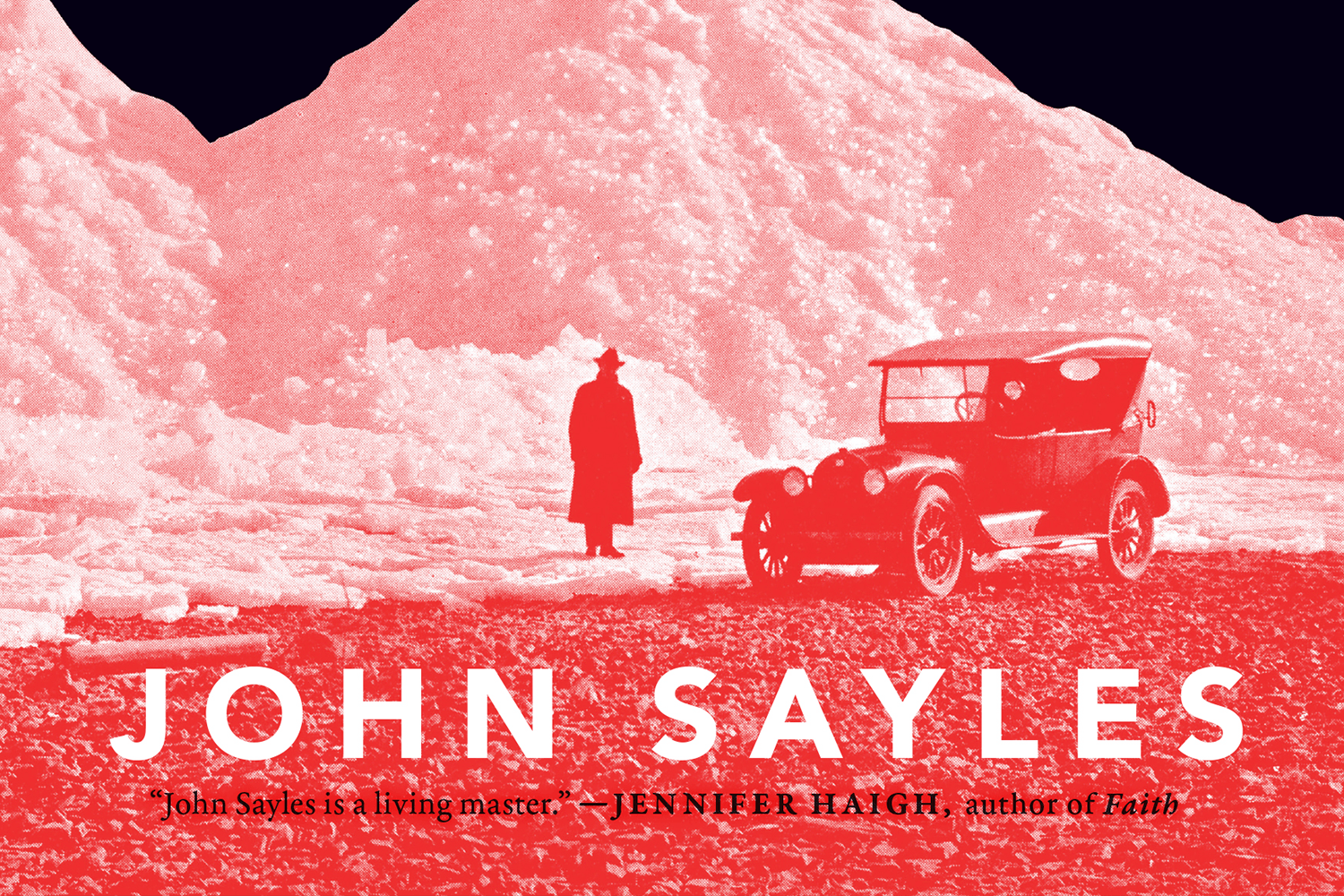
We’re all familiar with artists so unconstrained by style or medium that, in time, they become genres in their own right. Think Rauschenberg, Marina Abramović, Gordon Parks, Bowie . . . or John Sayles.
Sayles, a screenwriter, director, editor, and occasional actor in films as varied as Matewan, The Brother From Another Planet, Eight Men Out, The Secret of Roan Inish, and Lone Star has forged a parallel career as a novelist and short story writer. In books such as his rollicking debut, Pride of the Bimbos, the epic Yellow Earth, or his indispensable The Anarchists’ Convention and Other Stories, Sayles’s curiosity, mordant humor, and allegiance to the underdog shine through.
His new novel, Crucible, is historical fiction that makes the inevitable surprising, and the momentous personal. It’s a big book (maybe too big; more on that below) that never loses sight of its characters’ inner lives. The scale is human; the issues the story illuminates are historic.
Set concurrently in the streets, mansions, tenements, and factories of Depression-era Detroit and at a gargantuan rubber plantation in the Amazon called Fordlandia—carved from the jungle by cheap labor and Henry Ford’s indomitable, unloveable will—Crucible is Dickensian in scope and inventiveness, if Dickens was a baseball-obsessed, old-school American progressive.
The plot sprawls—temporally, from the late 1920s through World War II, as well as geographically, politically, and sociologically. Tracing the United Auto Workers’ efforts to unionize Ford’s factories and Ford’s own attempts to exert dominion over the natural world, the book is in large part a deep dive into the exploitation of working men and women, of racial and ethnic tensions, of resources and landscapes—and of exploitation’s corollary and nemesis: resistance.
For every scene of labor devalued and dehumanized, we meet working men and women striving for security and a decent wage; for every instance of ecological ruin, Sayles hints at a remedy. (In the Amazon, for instance, Ford employees’ ignorance of the land highlights the local population’s appreciation of the rhythms and vagaries of the environment that sustains them.)
On such a vast canvas, it’s striking that two characters, Rosa Schimmel and Zeke Crowder, offer distinct lenses through which so much of the book’s events unfold.
Rosa is the daughter of Jewish immigrants, a fireball from one of Detroit’s toughest neighborhoods whose trust in the promise of worker solidarity is unshakable. Her story helps inform and intersects with that of Zeke, a Black worker in one of Ford’s factories. It would have been easy for Sayles to cast the two as emblems of their communities, or mouthpieces for their communities’ struggles. To Sayles’s credit, Zeke and Rosa are more than totems: they’re complicated, unpredictable, fully human.
Above all, like so many of their union brothers and sisters, they’re fighters. Their unwillingness to exist as mere cogs not only shapes them, it ennobles them. As AI and an ascendant class of oligarchs wreak havoc in workplaces everywhere these days, the phrase class struggle can feel quaint—a humorless punch line. In Crucible, on the other hand, it inspires. It’s a tenet of faith.
***
As in some of Sayles’s previous books, many of Crucible’s fictional creations—Zeke and Rosa; Fordlandia laborers and their kids; city cops, street hustlers, bootleggers—cross paths with figures from history. We meet Henry Ford’s dapper, sensitive son, Edsel; Diego Rivera, creating his magnificent “industry” frescoes at the Detroit Institute of Arts; Harry Bennett, longtime head of Ford’s union-busting internal security agency; Detroit Tigers Hall of Famer Hank Greenberg (“the Hebrew Hammer”), and a host of others.
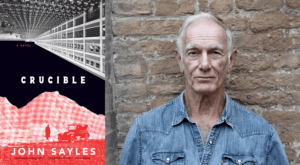
Crucible is Sayles’s 8th novel. “Crucible” jacket courtesy Penguin Random House; John Sayles photo courtesy ScreenSlate.com
One such interaction, between “Smitty,” a newspaperman who serves as something of a wise-cracking Greek chorus, and Henry Ford himself has the ring of truth, if not of fact. The two meet in the meticulous reconstruction of Thomas Edison’s Menlo Park laboratory that Ford built as a tribute to his friend and mentor.
“Do I know you?” [Ford asks]
“We’ve spoken over the years. I’m a reporter.”
The Old Man grins and waves his hand back and forth in front of his face.
“Blowflies. They cluster wherever an animal drops a turd.”
“We’re part of the cycle of life.”
The Old Man waves at the room around them.
“This was Edison’s shop. Nothing fancy. Just what you need to work.”
“Like our newspaper.”
“Hell, you boys upstairs just scribble. The real work is down under, where they crank out the papers. It’s a factory down there.”
“I’ll accept that.”
No one has ever spoken like that in real life, of course—but the dialogue feels at home in the world that Sayles has reimagined.
It’s worth noting, too, that for all of Henry Ford’s unpleasant, even vicious traits—and Sayles doesn’t shy from his infamous antisemitism, his off-hand cruelty, his view of efficiency and automation not as goals, but as ways of being—this Ford is neither saint nor monster. Instead, he’s a tinkerer on a grand scale, a self-absorbed gearhead who prefers squeezing more horsepower from an engine to hobnobbing with fellow potentates. In one of the book’s most memorable scenes, as he and Diego Rivera, the ardent Socialist, bond over their shared enthusiasm for process—trial and error, the importance of doing—Henry Ford is almost likeable. It’s a juggling act, this treatment of a man so formidable and so disagreeable, and Sayles nails it.
The book’s settings, especially Ford’s mammoth River Rouge factory complex, “the Rouge,” and Fordlandia, are characters, too. In fact, they’re so wonderfully drawn that, no matter how grotesque they might be, we miss them in an obscure way when the action moves elsewhere.
Of the Rouge, Sayles writes:
[It] is a beast grown so big it has hunkered down alongside the river, never to move again, a creature worshipped and feared, serviced by an army of myrmidons feeding it coal, coke, petroleum, scrap metal, electric power—the creature purring, buzzing, clattering, roaring with satisfaction as it spews smoke and ash from its hackle-like towers and excretes a shiny stream of automobiles to be carted away by trains, barges, trucks . . .
There is no overt, anachronistic expression of concern here for the environmental calamity that the Rouge represents. But the suggestion, the intimation of a looming catastrophe shadows the book’s action. One hardly has to be a connoisseur of industrial disasters to envision once-beautiful American rivers—the Cuyahoga, the Chicago, the Buffalo, and yes, the Rouge—so choked and polluted that, within decades, they would literally and repeatedly catch fire, in turn sparking public outrage and passage, in 1972, of the Clean Water Act.
The current grassroots pushback against noisome, aquifer-glugging AI data centers in poor, rural communities indicates a similar outrage. Will it inspire equally significant legislation? Time will tell. And we don’t have much time.
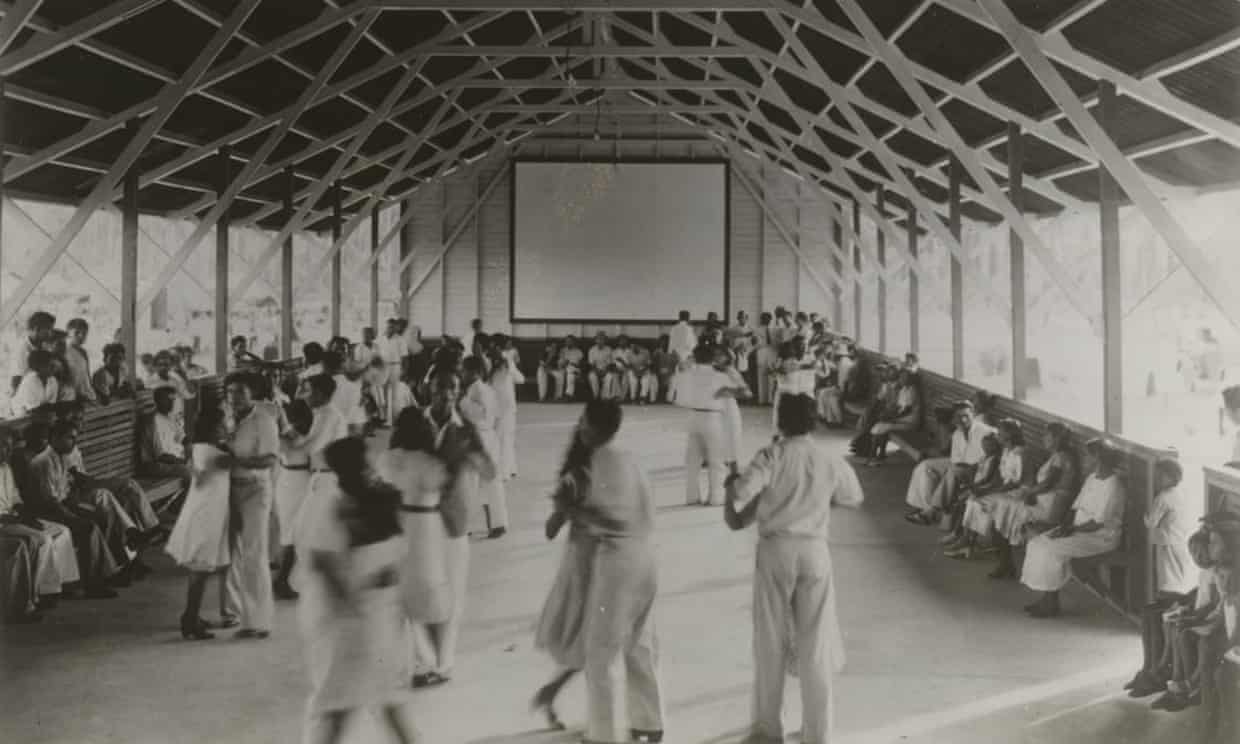
Ford built several amenities to attract workers to Fordlandia, such as dance halls. Photo courtesy of The Henry Ford Museum
The book crescendoes, in a conscious or unconscious echoing of Nathanael West’s biting Depression-era satire, The Day of the Locust, in mass violence: the Detroit race riot of 1943, which only ended after dozens of deaths and the arrival of thousands of federal troops to restore order (and, of course, crack some heads).
Like Day of the Locust, or the unforgettable mob violence in A Tale of Two Cities, the climactic chaos in Crucible has an air of awful, murderous inevitability. Everything, from the corruption that fuels and poisons Detroit’s politics and police to the racial and ethnic tensions that disfigure society at its core, everything leads to one end: a sustained spasm of mayhem.
This is a John Sayles book, though, and welcome flashes of humor, like gleams from a lighthouse, keep poking through.
A worker on the floor of the Chicago Board of Trade is pictured “riffling ticker tape through his hands like a demon tailor about to measure a whale.” Edsel Ford, who oversaw the conversion of the factories into a critical supplier to the Allies’ “Arsenal of Democracy,” flits through a party “with a cocktail glass in hand and a mischievous smile on his face, looking like the cat that crushed the canary in a drill press.”
This isn’t to say that Sayles never steps wrong. In fact, the book would be stronger, the story more engaging, if some scenes never made it to the page. One example: a tiresome meeting, heavy on B-movie lingo (people are referred to as “perforated,” not shot, etc.), between Harry Bennett and real-life mobster Joe Tocco, in which they effectively coordinate the criminal takeover of various aspects of Detroit’s economy and its civic life. If the point is to illustrate that Bennett is a practical man, and far smarter than most of the thugs he runs with, it succeeds. But there are other, sharper scenes that make the same point.
***
There is, ultimately, a tragic dimension to Crucible, captured with poetic force near the end of the book in the image of Zeke, ceaselessly toiling, an assembly-line Sisyphus. A co-worker “marvels at the economy of his motion . . . the routine and the rhythm of the task as if nothing else exists, over and over and over and over and over—”
It’s hard to read that and not hear Lear, demolished by grief, cradling his dead Cordelia, uttering three of the most devastating lines in Western literature:
Why should a dog, a horse, a rat have life,
And thou no breath at all? Thou’lt come no more,
Never, never, never, never, never.
The wonder of this uneven, gripping novel is that Sayles has fashioned a tale about the depredations of unrestrained capitalism and industry-driven eco-violence, and in the end leaves the reader with something like hope. In the lives and dreams of Rosa, Zeke, and their largely nameless brothers and sisters on and off the factory floor, we see models of defiance. And if that’s not a victory over despair, especially in these times—what is?
Help us sustain independent journalism...
Our team is working hard every day to bring you compelling, carefully-crafted pieces that shed light on the pressing issues of our time. We rely on caring supporters like you to help us sustain our mission. Your support ensures that we can continue to provide deeply-reported, independent, ad-free journalism without fear, favor or pandering. Support us today and make a lasting investment in the future.

RELATED STORIES
Award Winning



Today’s environmental and social justice challenges are unprecedented, and require an unprecedented collective effort.


Stay updated on our latest features, events and more. Subscribe to our Note From the Nest newsletter!
