
How to Lose a Gigaton of Gas

Fifty-nine gigatonnes. That’s how much heat-trapping gas the industrial world emits every year, according to the most recent report by the United Nations’ Environment Program. That’s 59 billion metric tons, which is enough to fill 59 billion hot air balloons, or 206.5 trillion bathtubs, with carbon-dioxide molecules. It’s a daunting number, a paralyzing number. A number that you can’t really wrap your mind around, and makes you throw up your hands and think, “well, what’s the point?”
But in the month since the torturous ending of the 2021 26th Conference of Parties (COP26) on climate change in Glasgow, Scotland, I’ve begun to think of The 59 Gigatonnes in a different way—not as a brain buster so much as a useful tool. For whatever else it is, The 59 Gigatonnes is a number, as plain and simple as your bank account balance, your age, or the kilowatt-hours left in your electric vehicle battery. It is solid, trustworthy and predictable. When you start with a number, you can begin subtracting from that number to understand what it will take to get to zero.
A number can be broken down. We can assign portions of it to jurisdictions and industrial sectors for the purpose of developing carbon budgets. We can examine corporate and government pledges for their value. We can put the pressure on regulators to tighten the screws in the right places.
A number makes the goal concrete. A number makes it possible to look at a problem and solve it. To stave off the worst effects of a warming world, we need to hold global temperature rise below 1.5 degrees Celsius — or 2.7 degrees Fahrenheit — according to the Intergovernmental Panel on Climate Change. Reaching that goal will require us to reduce greenhouse gas emissions by roughly 30 gigatonnes before 2030, and then eliminate those emissions entirely by 2050. The 59 Gigatonnes of greenhouse gases does not just include carbon dioxide, but also methane, nitrous oxide, and certain refrigerants classified as carbon dioxide equivalents and abbreviated as CO2e. Within the next 30 years, then, releases of CO2e must fall below the amount of CO2e being removed from the atmosphere, either by natural carbon sinks (such as trees, desert soils, wetlands) or technological innovations (such as direct air capture, which can literally suck carbon out of the skies).
This is the way — the only way — to reduce the concentration of atmospheric carbon to under 400 parts per million and stop the Earth from turning into Venus. Before the industrial revolution, carbon dioxide was at 300 parts per million; this year it’s 416. Every year, with our 59 gigatons of emissions, we raise that number by roughly two percent. We can only arrest the trend altogether if we zero out CO2e pollution by 2050. Then, all we have to do is wait for the soil, water and flora to do their work grabbing carbon out of the skies.
“Climate models consistently show that [baked-in] warming does not happen,” wrote Mark Fischetti in a recent issue of Scientific American. “As soon as CO2 emissions stop rising, the atmospheric concentration of CO2 levels off and starts to slowly fall because the oceans, soils and vegetation keep absorbing CO2, as they always do.”
But, from what I can tell, even when adding up the intended impact of pledges from recent and past COPs, environmental legislation proposed in the U.S. and notional goals proposed by Russia and China, our chances of getting to net zero in 29 years are, well, zero. Even if we were by some miracle to come together as a global unit and accomplish that, the density of atmospheric carbon remains at dangerous levels in the near term. Certain regions of the world already suffer under civilization-ending droughts, 1,000-year floods occur every other year, and wildfires destroy more trees than we can replace in our carbon-absorbing forests. At the rate we’re going, the Earth could become uninhabitable before California’s high-speed rail project transports a single passenger.
Maybe Build Back Better will clear the Senate with enough climate provisions intact so that U.S. emissions drop to where they need to be, below 1990’s levels. Maybe China will close its coal plants (autocracies can do that sort of thing in a heartbeat, just like they churned out solar panels in the early aughts and changed the renewable energy market almost overnight.) Maybe France, Germany and India will not only hew to their Brussels pledges but improve them, bringing global emissions in line with a manageable future. But I not only doubt it; I just can’t see it happening. Honestly, can you?
What, then, as Tolstoy once so quotably asked, must we do?
***
Let’s be clear about this: nothing sufficient to save us has ever come out of a Conference of Parties on climate — not in Kyoto, nor Copenhagen, nor Paris, nor at the most recent gathering in Brussels. Nothing makes me feel like the climate problem is too big, too out of control and complex, like an international conference where a “phase out” of coal gets changed to “phase down” of coal and every country blames another for the edit. COP26 held no promise at all of phasing down oil and fossil gas, much less phasing them out, as we desperately need to do. Blah-blah-blah, as Greta Thunberg aptly summarized. This is the point at which I start feeling nihilistic, fantasizing that we can live however we want because a meteor will probably hit the earth within the next 1,000 years anyway, and we will all — humans, dogs, moose, whales, sardines, and bees — go extinct.
If we’re to have any hope, what we’re left with, then, is ourselves.
It doesn’t help that U.S. policymaking hasn’t done much to lower the temperature, not even in California, where a petroleum industry-approved carbon market has actually allowed for emissions to increase in certain sectors. Awareness of a “greenhouse effect” that may lead to worsening droughts dates back at least to 1975, when Murray Mitchell, a climatologist at the National Oceanographic and Atmospheric Administration, warned a Newsweek reporter that, “If we’re still rolling along on fossil fuels by the end of the century, then we’ve had it.” Attempts to address the problem with policy followed 13 years later, when Colorado Democrat Senator Timothy Wirth and Vermont Republican Senator Robert Stafford introduced bills to, as the Toronto Star reported at the time, “impose tough controls on auto emissions and home furnaces, slash the use of coal and oil, and force industry and business to use less energy more efficiently.”
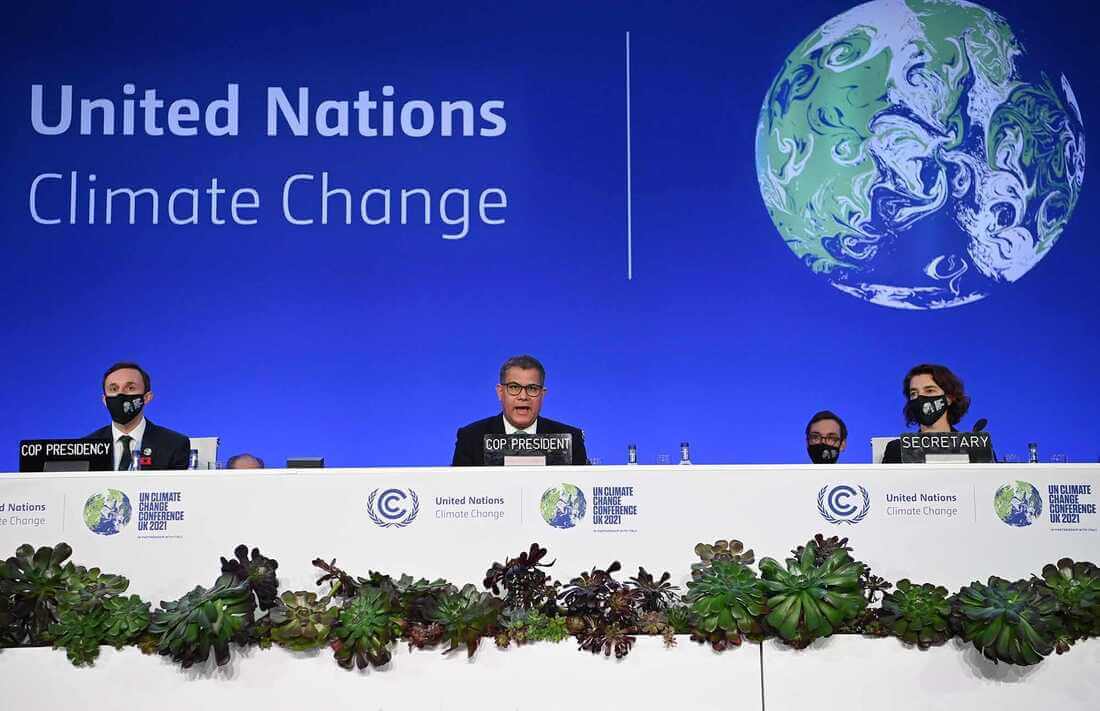
Stakes were high as environmentalists looked towards COP26, though many were left unsatisfied with the conference’s fruitless results. Jeff J Mitchell / Getty Images
The bills didn’t become law, but they did help move then-Vice President George H.W. Bush to campaign for president in 1988 as an environmentalist, committed to ending acid rain and slowing global warming. Then came the Global Warming Prevention Act, updates to the Clean Air Act, the first United Nations Framework on Climate Change (ratified by the U.S. Senate in 1992), the Kyoto Protocol (never ratified in the Senate), and the famously bipartisan Climate Stewardship Act introduced by Arizona Republican Senator John McCain and then-Democratic Senator Joe Lieberman of Connecticut in 2003.
In 1988, U.S. emissions amounted to just a little more than a single gigaton of CO2e. By 2019, emissions had increased by six-and-a-half times.
If we’re to have any hope, what we’re left with, then, is ourselves.
The notion that individual humans have a responsibility in the climate crisis has been largely derogated in environmental politics. In a webinar with climate journalists hosted by Covering Climate Now, journalist and correspondent for the U.K.’s Channel 4 News Alex Thomson called the notion that “We’re all in this together” the fossil-fuel industry’s “Big Lie.” He’s not wrong. As Thomson himself has documented, Exxon, Mobil, Royal Dutch Shell and British Petroleum have lied, deceived and committed crimes against humanity for decades, knowingly burying evidence of planetary ruin brought on by their actions.
Fearing regulatory constraints, manufacturers of disposable bottles and cans, too, have been trying to shift the blame for pollution to individual consumers since the 1950s, when bottling-and-packaging companies devised their “Keep America Beautiful” campaign to blame individual consumers for their growing waste problem. In 1971, we litterbugs were shamed with the vision of a Native American, played by an Italian actor, paddling his canoe through garbage-choked streams with a tear trickling out of his eye, never knowing that Coca-Cola and Dixie Cup had paid for the ad. But I fear we’ve since gone too far in de-emphasizing personal responsibility for the climate crisis. The old-school philosophy of communitarianism has a place here.
***
Roughly put, communitarianism holds that an individual has a responsibility to act in a way that benefits the society at large. And the takeaway from the notorious ‘“Crying Indian”-lesson in corporate duplicity shouldn’t have been to declare our every communitarian impulse — from turning off the lights when we leave the room to picking up after ourselves — insignificant. Just because dirty corporations are offering us gussied-up tap water in bottles made of petroleum-stock plastic doesn’t mean we have to drink the tainted water and discard the bottles in the street. Nor do we have to drive their gas-guzzling cars or squander their dirty energy. We are not powerless, and it does us no good to believe that we are.
Thomas notes that 100 companies are responsible for three-quarters of global greenhouse-gas emissions, and they’ve got to be “dragged, kicking and screaming,” toward change. But who’s going to drag them? Another COP agreement? The U.S. Congress? If enough of us find alternatives to long commutes internal-combustion-engine vehicles, car-makers will adjust their fleets to meet demand. If enough of us refuse to buy our water in small, plastic bottles, manufacturers will stop churning them out. One bottle made of polyethylene terephthalate, or PET — the most prevalent material for disposable water bottles — emits 69 grams of CO2e in the manufacturing process alone. If you drink one every day, you contribute 25 kilograms of CO2e to the atmosphere every day; if 39 of your friends do the same, collectively you contribute a whole metric ton.
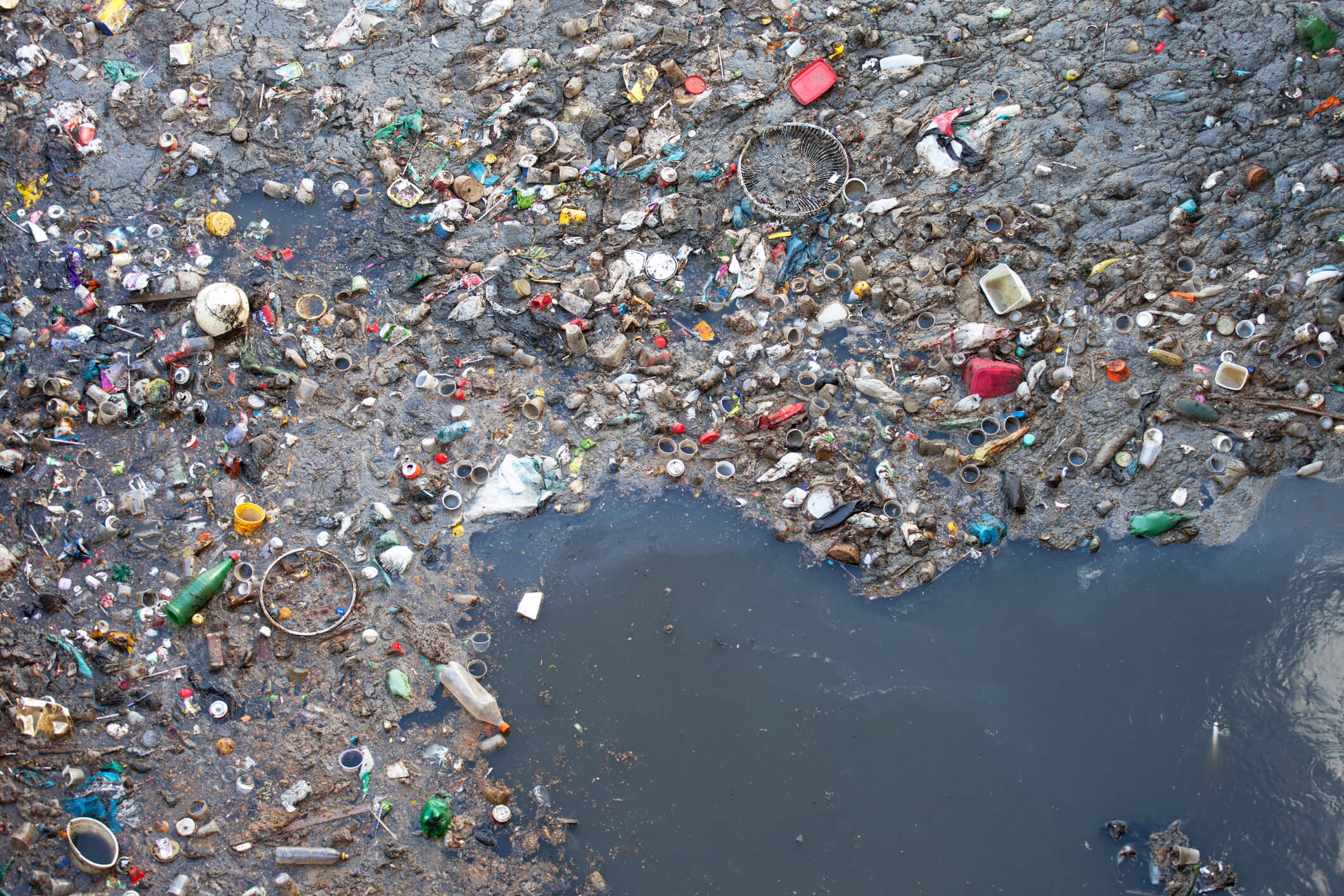
The U.S alone uses and discards hundreds of thousands of plastic water bottles. Photo courtesy of Louman.
That’s not very much against The 59 Gigatonnes. But that example also underestimates how many people have the power to contribute to that reduction. If you drink from plastic water bottles on the regular, you likely drink more than one per day. And you are certainly not alone. Imagine if you all just stopped? The alternatives are easy.
Or, consider another, more constructive example: One tree in 40 years can absorb one metric ton, or one-tenth of one gigaton, of carbon dioxide. Plant a hundred thousand trees today and by 2061, you will have removed one million metric tons of carbon dioxide from the atmosphere. If 158,000 people (50,000 fewer people than the population of Salt Lake City, Utah) copy you and each plant one million trees, then, notionally, at least, you have collectively solved the climate problem, without reducing emissions at all.
Obviously, it’s not that simple. Aside from the logistics of a single person planting one million trees, which at a body-crippling rate of 100 per day would still take 27 years (considering the deleterious effects of excessive manual labor, I personally would be long dead before completing the task), there are feedback loops and complex systems and various atmospheric inputs at work. But I’m not proposing epic tree planting as a literal action to be borne by 59 thousand or even million or billion individuals. Planting trees simply gives us a way of thinking, like knitting or stringing pearls. Add up enough anecdotes, and you eventually arrive at data. Rack up enough grams and kilograms and metric tons, and you get to a gigaton.
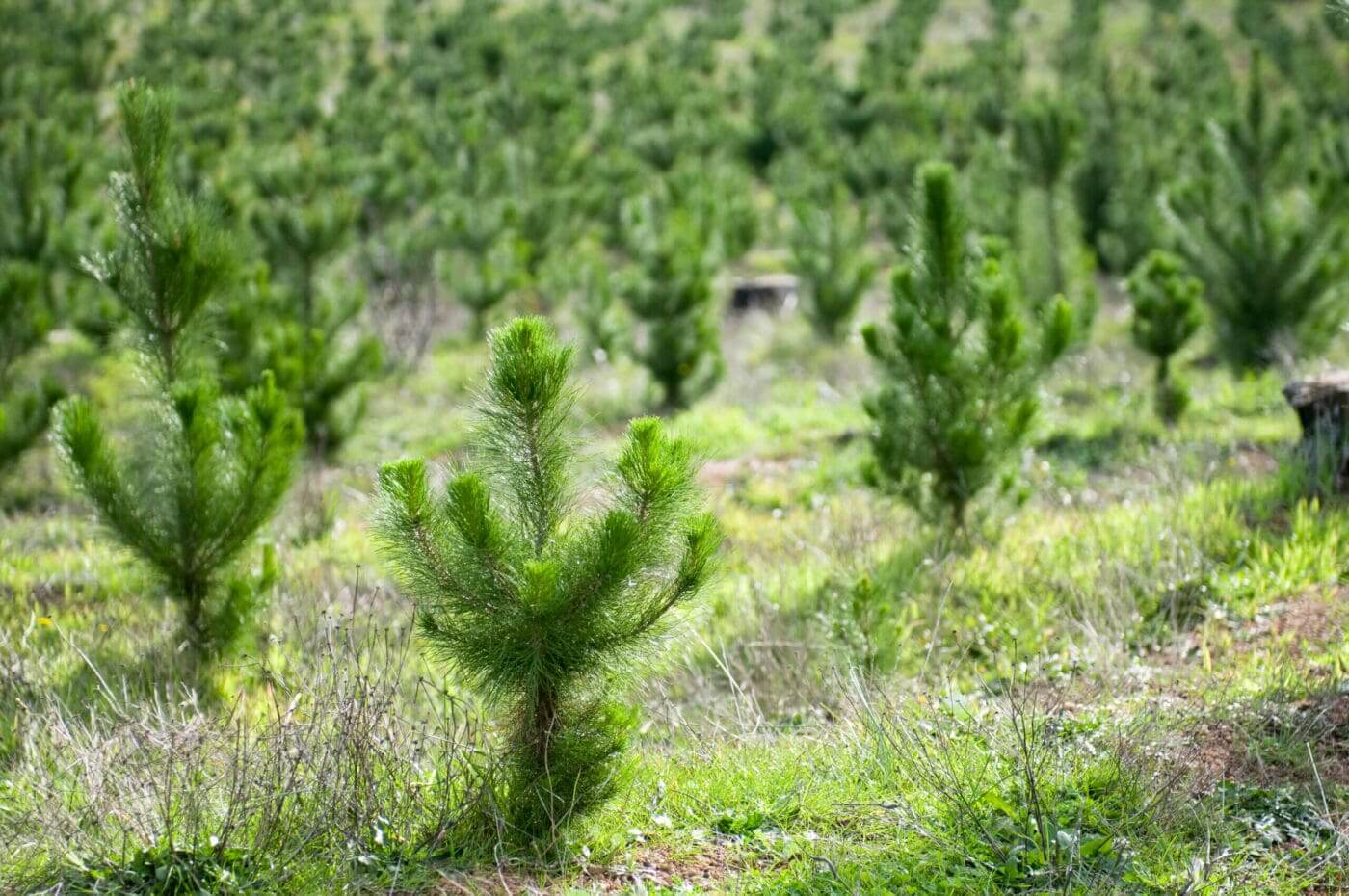
While planting trees won’t fix our climate issues entirely, it is considered the most cost effective and restorative method of decarbonization. George Clerk / Getty Images
What might you do differently were you conscious of your every decision, every move, in terms of its influence on climate? Would you choose pecans over almonds? A front yard landscaped with succulents instead of a petroleum-based plastic, off-gassing fake lawn? New panniers on the bike so you can more easily carry home groceries? Wash your clothes in cold water and dry them on the line? Buy your kids fewer plastic toys? Maybe, maybe not. There are hundreds of interventions within reach in the average American’s everyday life. You can do your own math, make your own decisions. The information is readily available; no one needs to tell you that starving your garbage bin of food waste beats filling the landfills with decomposing vegetable matter. Conservation in this way can be a practice, like stretching, or walking, or keeping kosher.
We are not powerless, and it does us no good to believe that we are.
Communitarianism can become a secular faith. If nothing else, contemplating these choices is a hedge against powerlessness, against despair. It is a way of living that is apolitical and non-combative. It will also keep you fit and save you money. It will give you hope. As much as those polluting corporations want you to believe that the climate problem is all your fault, they also want you to feel hopeless. The climate has no worse enemy than hopelessness.
This updated, small-bore communitarianism is, of course, a luxury of choice available only to residents of the developed, industrialized world, where overconsumption is as rampant as the ignorance of its impact. To reduce your personal greenhouse-gas load, you have to have one in the first place. Not everyone does. In the same Covering Climate Now session where I met Thomson, Disha Shetty, an independent journalist living in Pune, India, pointed out that a person’s power to lower their greenhouse-gas emissions only comes into play “when an individual’s carbon footprint is extremely high.” In much of the developing world, including some island nations most brutally threatened by sea-level rise and intensifying storms, individual carbon footprints are already close to zero.
“That’s one of the reasons why a lot of the climate movement doesn’t resonate with the young people in African and Asian countries,” Shetty said. “Our priorities are not the same and our consumption levels are not the same.”
The U.S. is a different story. At 15 tons per person, annually, our personal carbon output is the highest in the world. It seems to me a moral imperative, then, that those of us who can afford to adopt a way of living informed by our per capita impact on the environment do so. (I say “environment” because global warming is, in essence, an air-pollution problem. Stop polluting at the community level and you’ve solved the global problem, too.)
This idea extends across categories, across industries. If all of us in the high-emissions part of the world who believe that greenhouse gas pollution will end our existence let the fierce urgency of the moment dictate our behavior — as consumers, as parents, as citizens — we would shrink not just our own so-infinitesimal-as-to-be-meaningless climate footprints, we would alter the values of the societies we share. And those societies would force change up the ranks of political and corporate power.
It has happened before on other matters. This is how change happens. New York State’s fracking ban began with opposition from a single rural community. California’s neighborhood air-quality data has been enhanced by individual residents supplied with monitors measuring pollutants in their backyard air; no longer can oil pass the blame to agriculture and vice-versa. People took control.
“Communitarianism can become a secular faith.”
In my neighborhood, behemoth SUVs are giving way to used Nissan Leafs and Chevy Bolts, and not because either company had a super great ad campaign or because someone made them feel bad for polluting. It is happening because one neighbor did it, persuaded the others it works and was the thing to do, and so on. The pressure to display solar on rooftops, to rip out lawns and plant natives among mulch, to eat less meat is similarly intense. Good practices have a way of catching on. Call it the 100th monkey of consumption.
Looking at climate change as a problem only large entities can solve is like saying individual vaccinations don’t matter in the spread of disease. We vote, knowing that thousands and millions of other votes will be cast at the same time, knowing that our influence will be strengthened or diluted when the votes are tallied. We take that risk. We act in the interest of our society, and hope that others act the same way, and, thus, better the world according to our definition of betterment.
This is not to say that individual action is all we need, nor is it to let corporations and utilities off the hook. There is no one reason for anything. We must continue to ride herd corporations, especially those that have contributed heavily to our climate-destroying consumer profligacy; if corporations are indeed people, as the lobbyists say they are, then they have personal responsibility as well. According to John Doerr’s Speed and Scale, as clear and straightforward an analysis of the world’s carbon budget as any out there, running 220 coal plants adds one gigaton of carbon to the atmosphere every year. Who has 220 coal plants? The United States has, at last count, roughly 241. Close them all, and we’ve made a dent. That is how the world changes: Dent by dent.
The worst way to look at the climate crisis is that it’s an international problem that needs to be solved at a glad-handing meeting of super-leaders who may not even hold sway next year, or that it’s a problem that can’t be solved without the cooperation of China, the stunting of India’s economy and some kind of voluntary retreat by the petroleum industry. We can’t wait for all that. We have to take it on ourselves. Dent by dent.
Help us sustain independent journalism...
Our team is working hard every day to bring you compelling, carefully-crafted pieces that shed light on the pressing issues of our time. We rely on caring supporters like you to help us sustain our mission. Your support ensures that we can continue to provide deeply-reported, independent, ad-free journalism without fear, favor or pandering. Support us today and make a lasting investment in the future.

RELATED STORIES


Award Winning



Today’s environmental and social justice challenges are unprecedented, and require an unprecedented collective effort.


Stay updated on our latest features, events and more. Subscribe to our Note From the Nest newsletter!
