
A Tale of Liberation and Human Decency
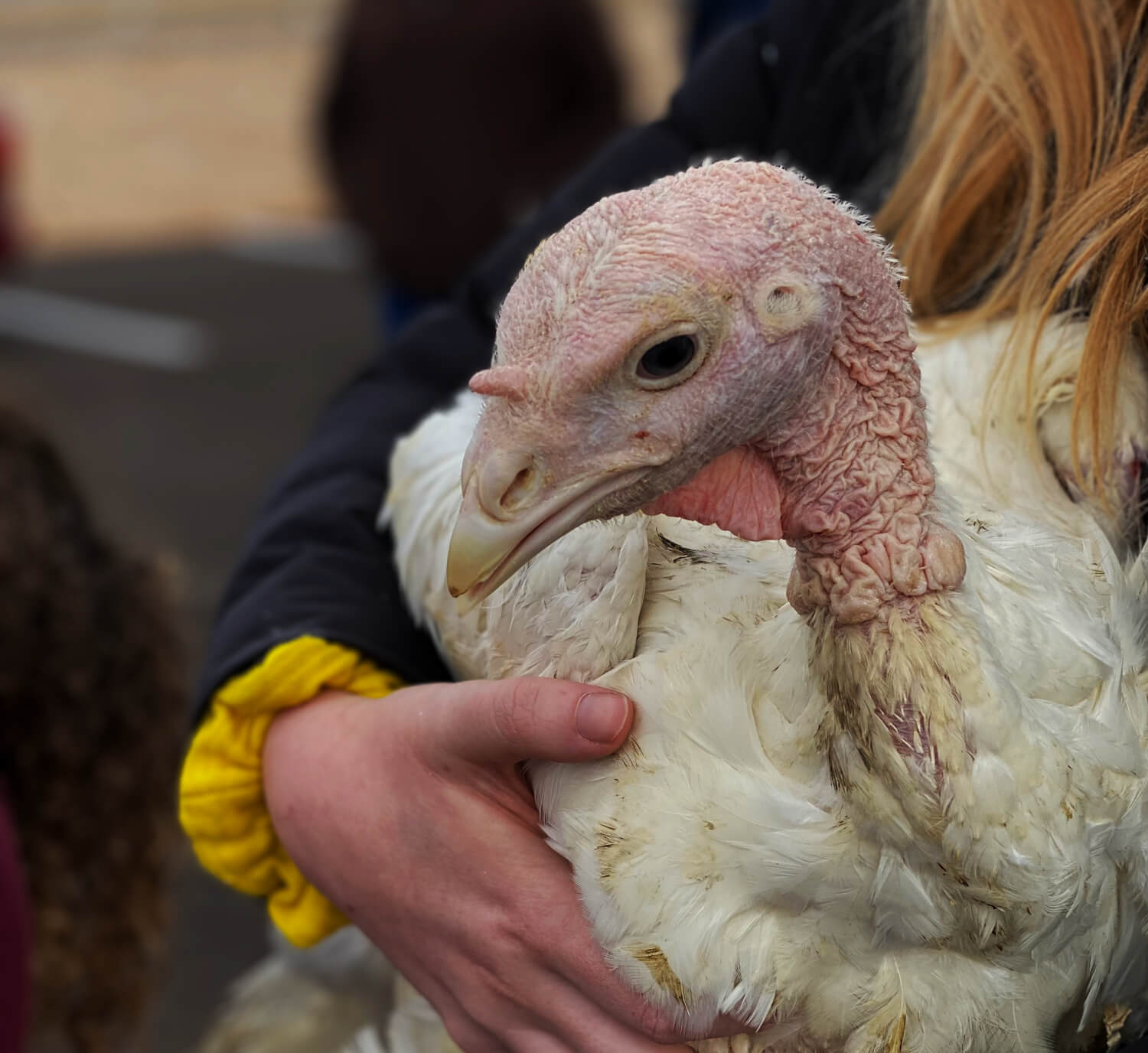
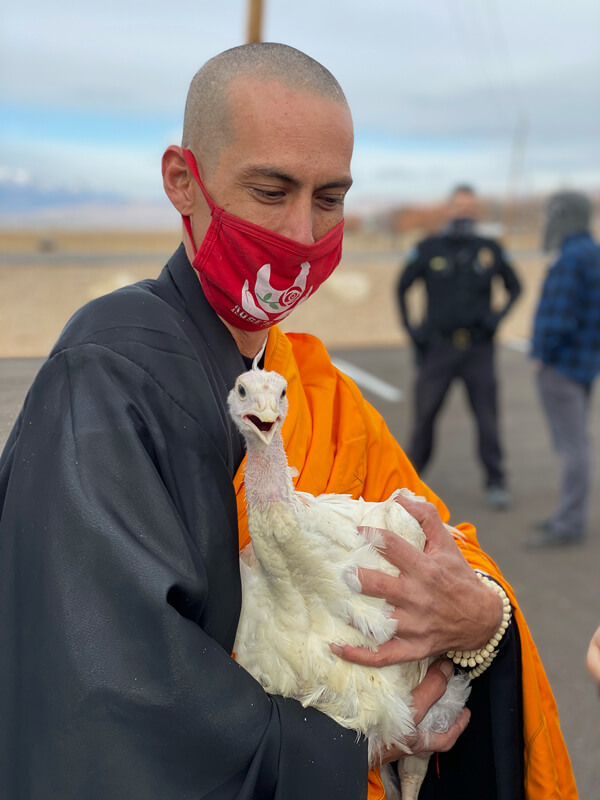
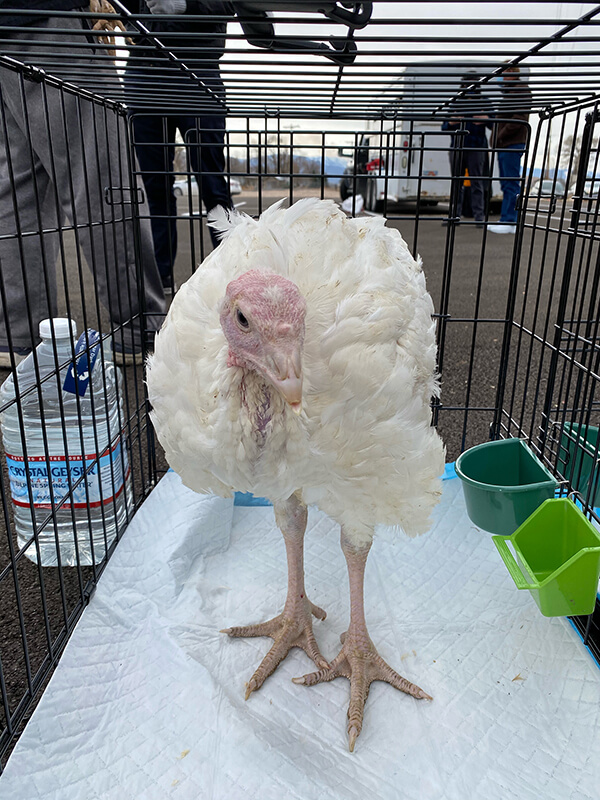
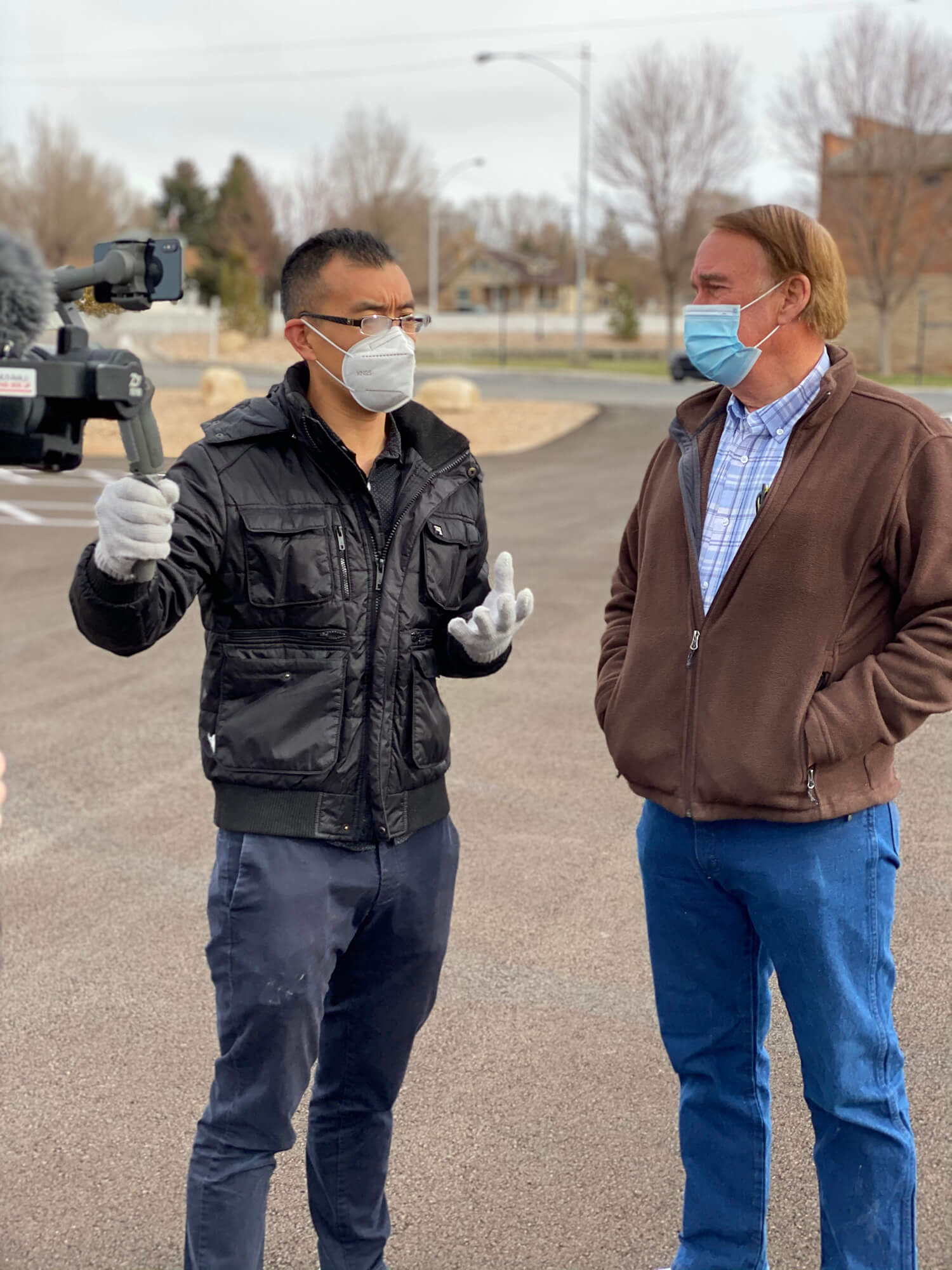
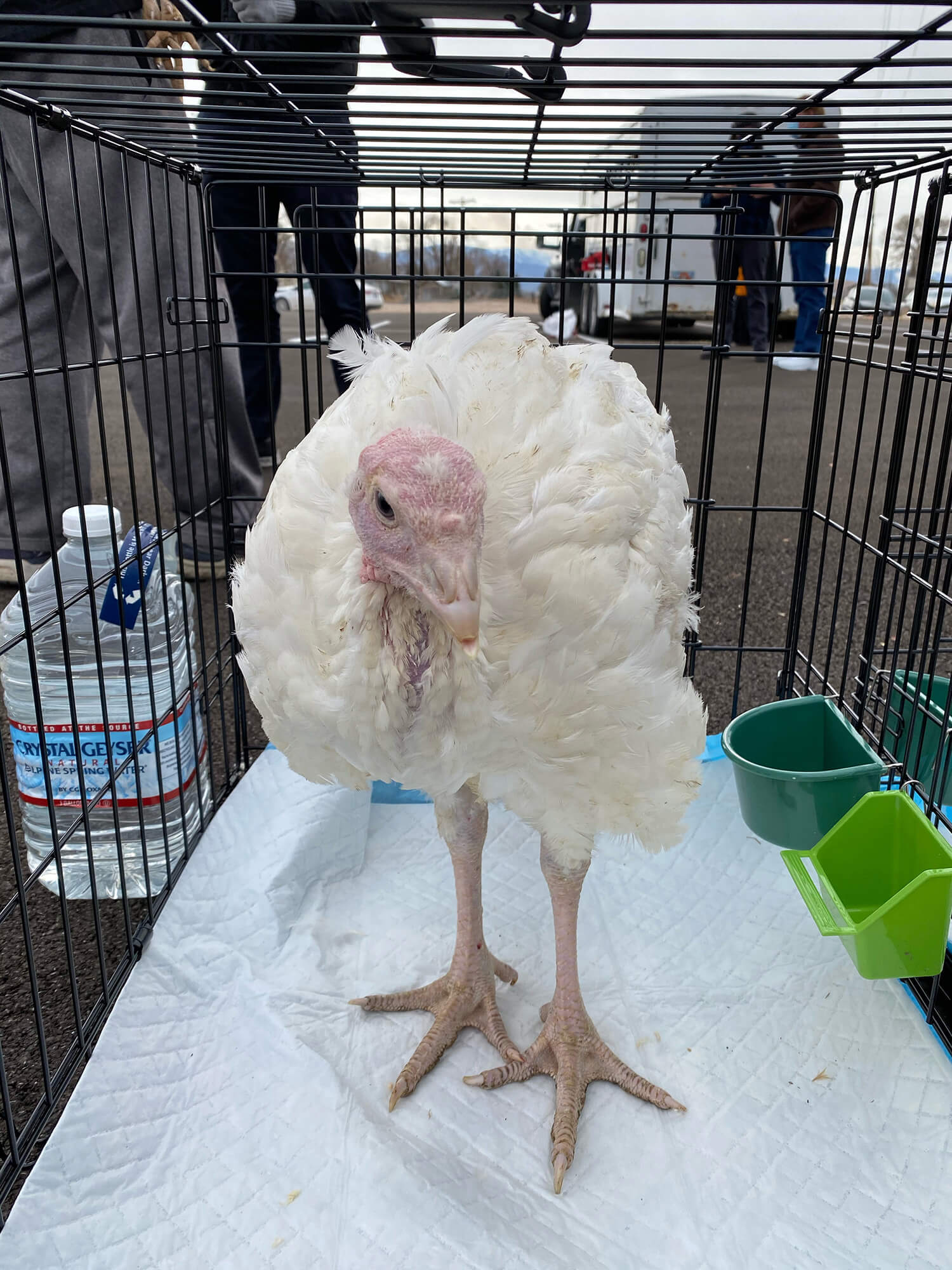
In an empty parking lot in the rural town of Moroni, Utah, on November 23, affable poultry rancher Rick Pitman released 19 of his industrially raised turkeys to an animal rights group, Direct Action Everywhere. The young white turkeys rolled up in a stock truck and were surprisingly calm about their good fortunes. Pitman, along with a veterinarian, a cop, one reporter and maybe six activists were all there to bid the turkeys adieu as they were taken to farm animal sanctuaries where they will live out peaceful lives.
The turkey-reprieve tale is a familiar bit of Thanksgiving feel good, but there is more to this story than doomed gobblers getting a new lease on life. In fact, while these 19 turkeys may be free, some of their liberators are facing jail time. In the contours of this multifaceted conflict we can see both our deep divides and some hope that they can be bridged.
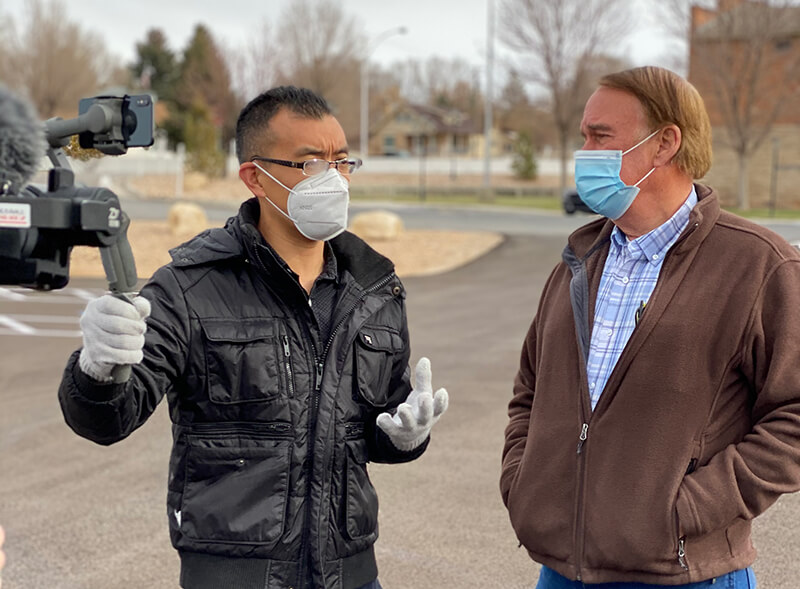
This one started several years ago when Direct Action Everywhere (DxE) and its co-founder, Berkeley, CA-based attorney Wayne Hsiung, went uninvited onto the facilities at Norbest, the nearby farm where these birds were raised, with cameras rolling and exposed squalid conditions. Local officials are prosecuting Hsiung and DxE for their actions and the activists face long prison sentences. Yet, on a Facebook livestream of the turkey release, Norbest owner Pitman expressed his appreciation for Hsiung, avowing that they had become friends.
I think that is the principle upon which we can build and create some transformation in our food system and maybe even our entire society, because our society desperately needs it.
By cooperating to release the birds, the third such release in the last three years, the two of them hoped to show that a dynamic other than truculent division is possible. One in which people work together to improve the lives of farm animals and meat production workers, fight pandemics, take action on climate change and generally respect one another, no matter their politics.
In a nation divided into ideological tribes, the event felt like a relief. In the meat industry, however, it amounts to something like a revolution. Meat producers and processors faced intense public criticism and scrutiny after becoming hotbeds of Covid-19 infection, often subjecting their workers to potentially deadly working conditions. In response, they have mostly closed ranks and thrown up clouds of obfuscation, refusing to be truly transparent about what goes on in the giant plants where our meat supply is handled.
Hsiung and Pitman first met in 2017, when DxE was demonstrating in front of one of Pitman’s slaughterhouses. Pitman came out and invited the protestors in to take a look for themselves. He wanted to hear their critique and figure out if there was something he could do better. They kept up the dialogue and are now partners in this modest gesture of humanitarianism despite the fact that Hsiung and company are still in a lot of hot water with local authorities.
“We want to point out that our shared concern about our planet needs to be addressed in some way,” said Hsiung, speaking of his and Pitman’s motivation for the turkey release when he was reached by phone in Moroni, just moments before the birds were handed over.
“Rick is a farmer who understands if we continue using chemicals and pesticides and pollutants, if we continue to ignore the impacts of climate change on our environment, everything’s going to die, including the factory farming industry. I, as a Buddhist, have as my core principle this concept of ‘ahimsa’, that you have to have compassion for all living creatures, including your adversaries.
“And I think Rick believes that too. And I think that is the principle upon which we can build and create some transformation in our food system and maybe even our entire society, because our society desperately needs it.”
Pitman and his company, Pitman Family Farms of Hanford, CA, purchased Norbest, one of the largest industrial turkey producers in the country, in 2018, the year after Hsiung and DxE had exposed the conditions there. It’s unclear if Pitman has changed the condition at Norbest, though he certainly knows how. Pitman’s California Operation produces Mary’s Free Range Chicken and Turkey, a brand that appears on the menus of conscientious farm-to-table restaurants and which has become a standard for ethically raised poultry. It comes in an array of dietary and sustainable choices, including organic, organic free range, etc. The Mary’s line is named after Pitman’s wife, so he is deeply invested in changing how livestock are raised.
Pitman has not responded to calls to his personal phone, nor has Norbest responded to requests for interviews, but when he was briefly interviewed as part of the Facebook livestream of the turkey release, Pitman agreed that he and Hsiung “absolutely” are friends. Addressing the activists, he said, “You’re very respectful to us, and we want to give the same respect back to you guys. It’s been a win-win for us to be able to sit down and talk to you and try to learn of your values and your ideas, and to help us to learn more.
“You guys have a purpose, as far as what you feel is right. And I wanted to know what you felt was right because I needed to do better in order to have that understanding between us.”
***
In January 2017, Hsiung was one of six activists with DxE who entered Norbest facilities in Moroni without permission –easy enough, as the massive turkey barns were not locked – and videotaped conditions there. They reported finding at least a dozen turkeys that had been trampled down into the feces and detritus on the ground. This is not unusual in a barn housing thousands of turkeys in tight quarters, but then some of the birds raised their heads, indicating they were alive and suffering. The activists found the water was being treated with what they believed to be penicillin, which creates antibiotic resistance when used prophylactically. They scooped up one of the sick turkey chicks and took it with them when they left.
CBS News ran a story on their findings on November 20, 2017, and others soon followed. The CEO of Norbest at that time, Matt Cook, said he found the videos to be “disturbing” and that he was “deeply disappointed” in the contract farmer in Moroni. In a statement, the company announced that they had already flagged problems with the facility that DxE had entered, and had taken steps to correct them:
“Our animal care team had documented violations at the farm in question and required corrective action before we learned of the disturbing photos. On November 1, the owner of the farm was advised he must correct all violations before we would consider returning birds to his care. We took the additional step of formally suspending our contract with the farmer.”
Pitman subsequently purchased Norbest and when DxE went back to that facility in 2018 to find out if anything had changed, they found it empty.
Hsiung, a former corporate attorney, and the six DxE activists were each charged with third-degree felony burglary and theft, which both carry a five year maximum sentence. A third-degree charge for theft in Utah normally requires that stolen items be worth $1500 or more, but an exception written into the law also makes the theft of commercial livestock a third-degree offense – even a turkey chick worth a couple bucks.
Utah was also one of many states that had what is colloquially known as an “ag-gag” law, making it a crime to expose conditions at a farm and thus “gagging” activists. But on July 8, 2017, in a case unrelated to DxE’s work, a federal judge in Utah threw out that law as unconstitutional under the first amendment.
Norbest was not the group’s only action in Utah that year. In July 2017, Hsiung and others also entered the Circle Four Farm pig breeding and slaughter facility in Milford, which is owned by Smithfield Foods. After making videos of sows in gestation crates, some with mangled and gnawed teats, some bloodying their mouths trying to chew through the bars, some laying on dead piglets, DxE activists picked up a couple of piglets they said were sick and immobile and ran for it. The New York Times ran a story featuring the video.
As reported in The Intercept, The Washington Post and elsewhere, FBI agents soon appeared at animal rescue operations, taking DNA samples of rescued pigs, trying to find the two disappeared piglets. Smithfield, which is now Chinese-owned, wasn’t interested in a dialog in the way Pitman had been. The District Attorney of Beaver County, Utah, charged five members of DxE with felony burglary, rioting and “a pattern of unlawful activity…targeting animal enterprises,” a racketeering charge that carries a sentencing enhancement for involving farm animals. Three of the activists had their charges reduced after agreeing not to criticize Smithfield in public, but two have decided to go to trial, including Hsiung.
If you look at the pandemics in 1958, 1967, even 1918 and the bird flu, those pandemics probably came from domesticated animal farming in the United States or possibly in Europe. And I think it’s really important for us to acknowledge that.
“It’s apparent that this is a politically-motivated prosecution focused on speech activity,” says Hsiung. “The Sheriff’s Report describes our activists as being linked to ‘militant agricultural terrorists’ and condemns our ‘harassing’ demonstrations. In fact, nonviolence is our core organizing principle, and the demonstrations have no relevance at all to the criminal case and are protected First Amendment activity.”
Adds, Hsiung, “The Prosecution Summary categorizes our case as ‘Animal Enterprise Terorrism’ and … discusses ‘reputation and public image damage’ to Costco and Smithfield. There is little attention paid to the alleged ‘theft’ at all because both the company and the prosecution know that the animals who were stolen had no value – and that this case isn’t actually about burglary, it’s about speech.”
Smithfield’s pork processing facility in Sioux Falls, South Dakota, was one of the first to be shut down in April after hundreds of workers there became sick with Covid-19 infections. This came hard on the heels of closures of processing plants owned by food giants Tyson, JBS and Cargill the week before, in what quickly became a general collapse of the meat-packing industry due to the coronavirus pandemic.
Hsiung notes that the spread of viral infection, including zoonotic transmission from non-human to human animals, is another one of the impacts of meat production and factory farming that needs more attention. “There have been pandemics that have come from factory farms,” says Hsiung. “And as we think about what we’ve learned from this particular pandemic, I think it’s important for us to look back at the last hundred years: This particular pandemic probably came from a wet market in China. But if you look at the pandemics in 1958, 1967, even 1918 and the bird flu, those pandemics probably came from domesticated animal farming in the United States or possibly in Europe. And I think it’s really important for us to acknowledge that.”
He points out that factory farms are a vector because the confined animals may interact with a wild animal like a bat or insect and then pass a virus to other animals packed into the same barn by the hundreds or even thousands – such as the mink farms in Scandinavia, where animals are currently passing along a mutated Covid-19 virus. Those animals eventually come into contact with humans. Multiple studies have found that workers at factory farms develop high rates of illness, especially respiratory infections, as do the neighbors who live near them. Beyond being an animal welfare issue, these massive facilities present worker safety and environmental justice issues.
“It’s really sad, because I talk to these folks a lot and the powerlessness that these workers feel is directly related, in my view, to the powerlessness that all these animals are experiencing, too,” says Hsiung. “When our political system has been so deeply and fundamentally corrupted by an industry that is driven almost entirely by profit, this is the result for everyone.”

Help us sustain independent journalism...
Our team is working hard every day to bring you compelling, carefully-crafted pieces that shed light on the pressing issues of our time. We rely on caring supporters like you to help us sustain our mission. Your support ensures that we can continue to provide deeply-reported, independent, ad-free journalism without fear, favor or pandering. Support us today and make a lasting investment in the future.

RELATED STORIES


Award Winning



Today’s environmental and social justice challenges are unprecedented, and require an unprecedented collective effort.


Stay updated on our latest features, events and more. Subscribe to our Note From the Nest newsletter!

Really well written Dean! Pitman’s graciousness is noteworthy, but I am hoping that their company is driven to be fully accountable for their animal abuse. In turn, I hope that Pitman, along with DxE are able to thrive out of jail and without animals in the supply chain.
Thank you for the great coverage of this story!
Thank you for writing this story.
I really enjoyed this article. Thanks for reporting this timely information.