
Burning Down the House

Before the wildfires that still rage in Los Angeles began, before unthinkable swaths of Pacific Palisades and Altadena turned to ash overnight, before 12,000 structures (and counting) burned down and 180,000 people evacuated as death tolls climbed, before an urban expanse double the size of Manhattan went up in flames, you could be forgiven for thinking that the term “climate refugee” was something that applied to sub-Saharan herdsmen bedeviled by desertification. Or, closer to home, impoverished Central American farmers fleeing the economic impacts of El Nino-driven drought and making the death-defying voyage to El Norte.
It’s a term that has come into the public imagination over the past few years, thanks to stories like “The Great Climate Migration,” jointly published in Sept. 2020 by the New York Times and ProPublica. “Today one percent of the world is a barely livable hot zone. By 2070 that portion could go up to 19 percent,” the story proclaimed. “Billions of people call this land home. Where will they go?”
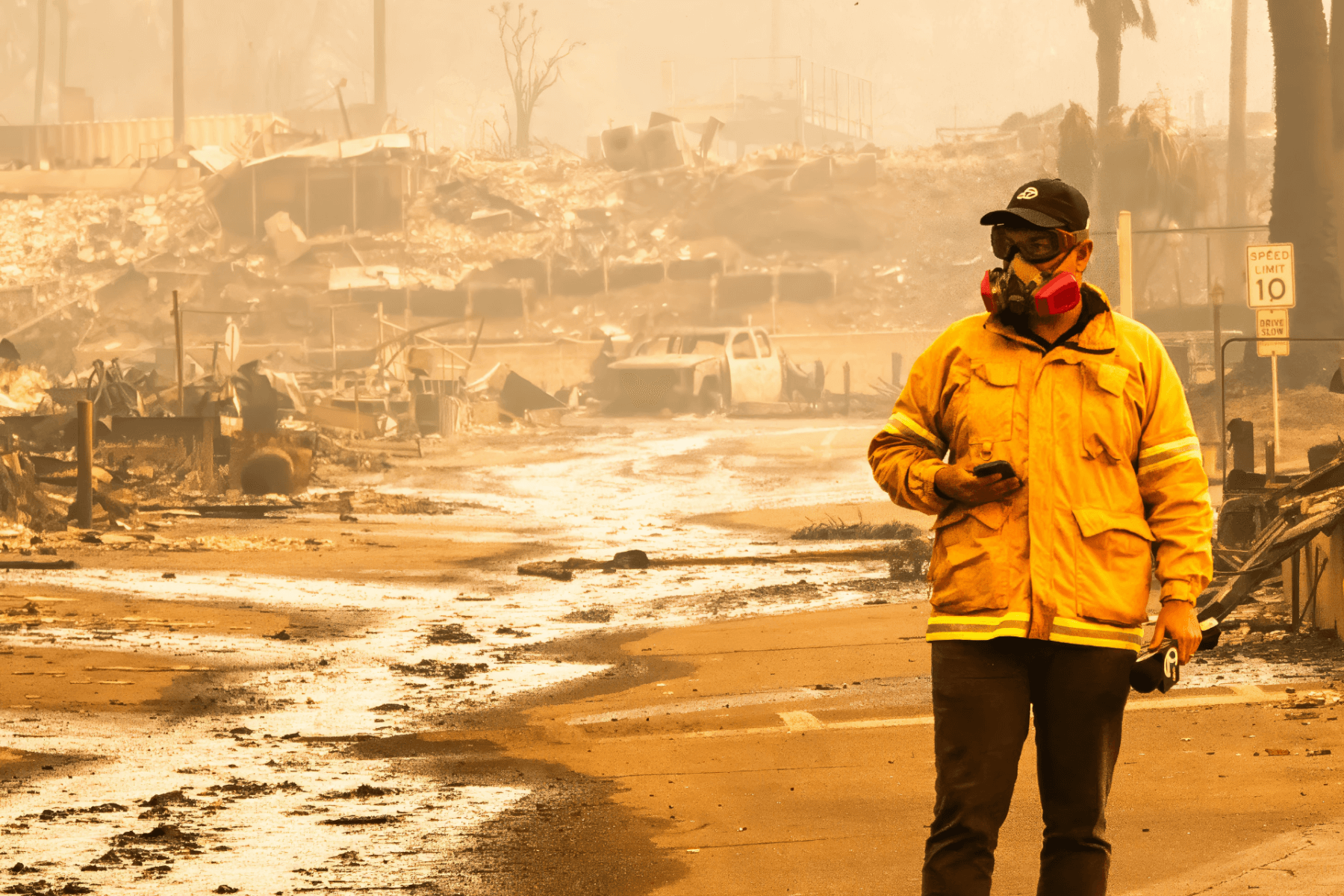
Reporter for ABC7 News on site in what was once a parking lot near Will Rogers State Beach along the Pacific Coast Highway. Photo by Shannon Aguiar
The article highlighted the plight of “Jorge A.,” a Guatemalan farmer forced by catastrophic crop failure in his home of Alta Verapaz to follow hundreds of thousands of his fellow countrymen north to the United States. “Many semiarid parts of Guatemala will soon be more like a desert,” the story explained. “Rainfall is expected to decrease by 60 percent in some parts of the country, and the amount of water replenishing streams and keeping soil moist will drop by as much as 83 percent. Researchers project that by 2070, yields of some staple crops in the state where Jorge lives will decline by nearly a third.”
Jorge’s reluctant decision to leave home, the story concluded, was just one of countless such reckonings that will likely take place over the next several decades, a choice “between flight or death,” the result of which “will almost certainly be the greatest wave of global migration the world has seen.”
The notion of Third World farmers being the most likely global denizens to join the ranks of climate refugees is easy to understand, and the data backs up the general claim. Multiple droughts in Central America since 2014 resulted in “crop losses of 70 percent or more during some harvests and often affecting consecutive growing seasons,” a 2022 US Institute of Peace study found.
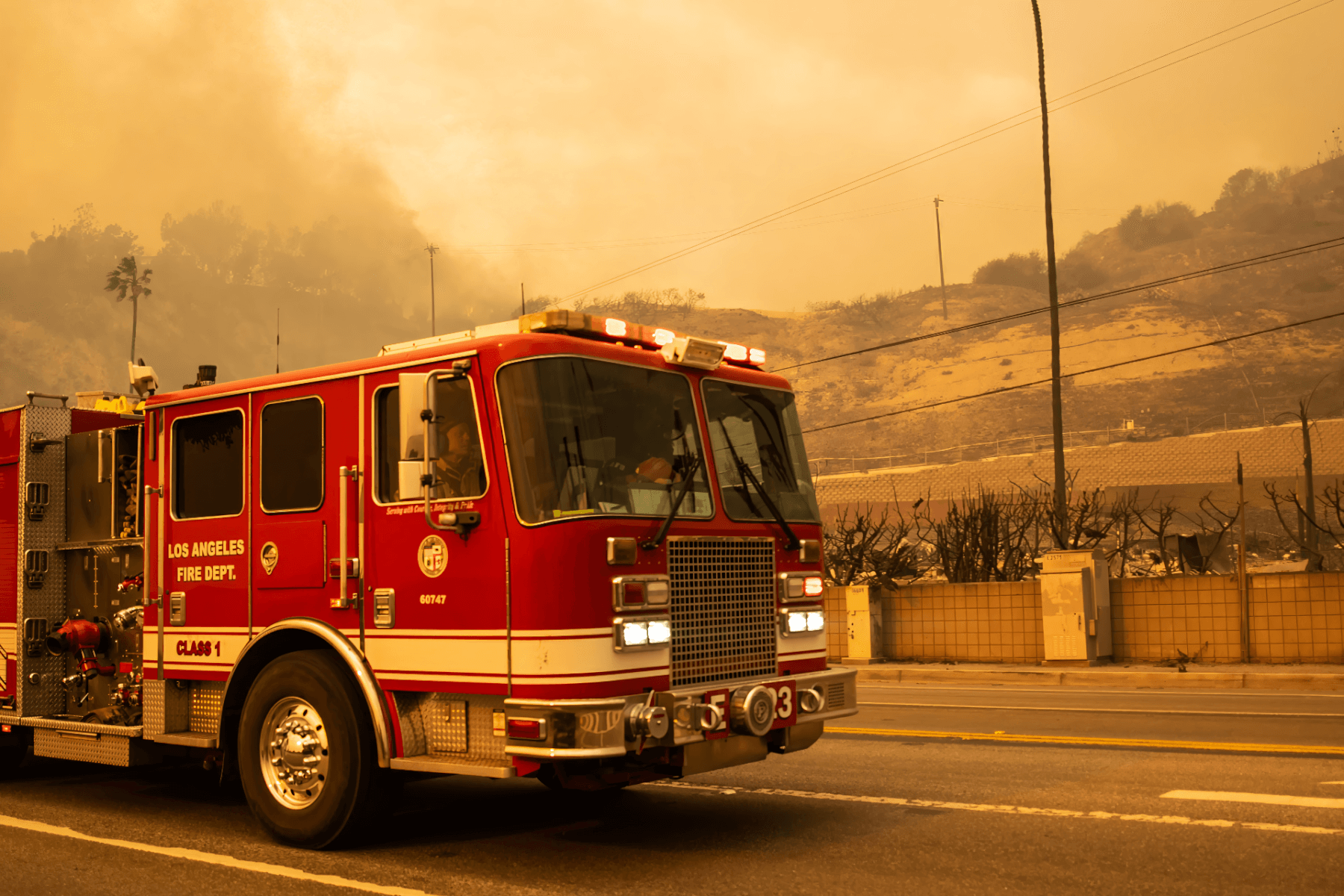
Emergency response drives down Pacific Coast Highway. Photo by Shannon Aguiar
But in recent years, with the rapid acceleration of global-warming-related weather disasters in the United States, the term “climate refugee” has increasingly become part of our, and especially California’s, cultural geography. 2017 seems to be the year this new reality set in, when more than 1.5 million acres caught fire across the state, killing 47 people and burning down 10,000 homes. Although most of the damage was in Northern California, the so-called Thomas Fire burned some 450 square miles of forest in Ventura and Santa Barbara Counties in December of that year, loosening soil that led to mudflows that later killed 23 people in Montecito.
2017 was then the worst year for wildfires in state history, but that record was broken again in 2018, when 83 residents of the town of Paradise died when the Camp Fire incinerated the town with stunning speed, and again in 2020. In the five years that followed, more than 31,000 homes were lost to wildfires statewide according to a 2022 story by PBS, which also predicted that 79.8 million homes in California and other western states would be considered highly vulnerable to wildfires by 2050.
In the face of such risk, many private home insurance companies began dropping entire communities from their coverage areas. The majority of those communities are located along the state’s so-called Wildlife-Urban Interface, a conceptual corridor marking the boundaries of California’s inexorable suburban encroachment into fire-prone pine forest or chaparral-covered wilderness areas. Between 2020 and 2022, according to a recent CNN story, insurance companies declined to renew a whopping 2.8 million homeowner policies in California, including 531,000 in LA County alone. According to CBS News, when one of those companies, State Farm, dropped 72,000 houses and apartments statewide last year, it also shed coverage for nearly 1,600 homes in Pacific Palisades.
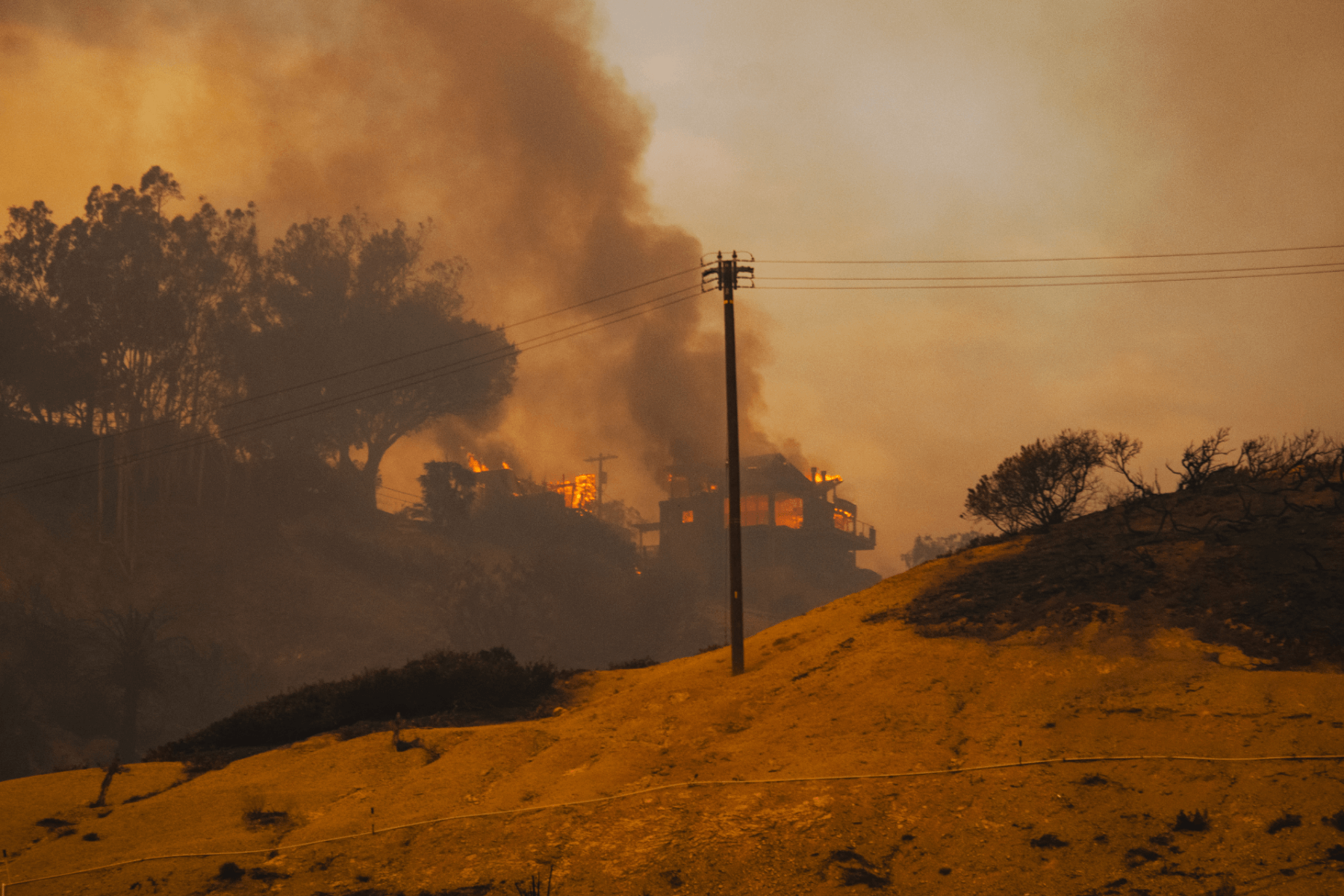
House up a canyon road from the Pacific Coast Highway. Photo by Shannon Aguiar
The state’s insurance commissioner on Friday issued a one-year moratorium on cancellations and non-renewals in affected areas, as well as other mitigations. But these trends are hardly less surprising than the weather, and insurance companies make easy political targets. So do politicians. In a Jan. 8 social media post, President-elect Trump, reacting to reports of firefighters coping with dry hydrants, blamed the fires on Democrat Governor Newsom, claiming he refused to sign legislation that “would have allowed millions of gallons of water, from excess rain and snow melt from the North, to flow daily into many parts of California, including the areas that are currently burning in a virtually apocalyptic way.”
Never mind that no such legislation existed to sign in the first place, or that thanks to heavy rainfalls last year, both California and LA’s reservoirs still had plenty of water when the fires started.
Not to be outdone in the disinformation game, an hour later, Los Angeles Times owner Patrick Shoon-Shiong tweeted: “Fires in LA are sadly no surprise, yet the Mayor cut LA Fire Department’s budget by $23M. And reports of empty fire hydrants raise serious questions. Competence matters…” (Also not true, per Politico, which reported that, although part of the agency’s budget was being withheld pending contract negotiations, the city’s fire budget actually increased by “more than $50 million year-over-year compared to the last budget cycle.”)
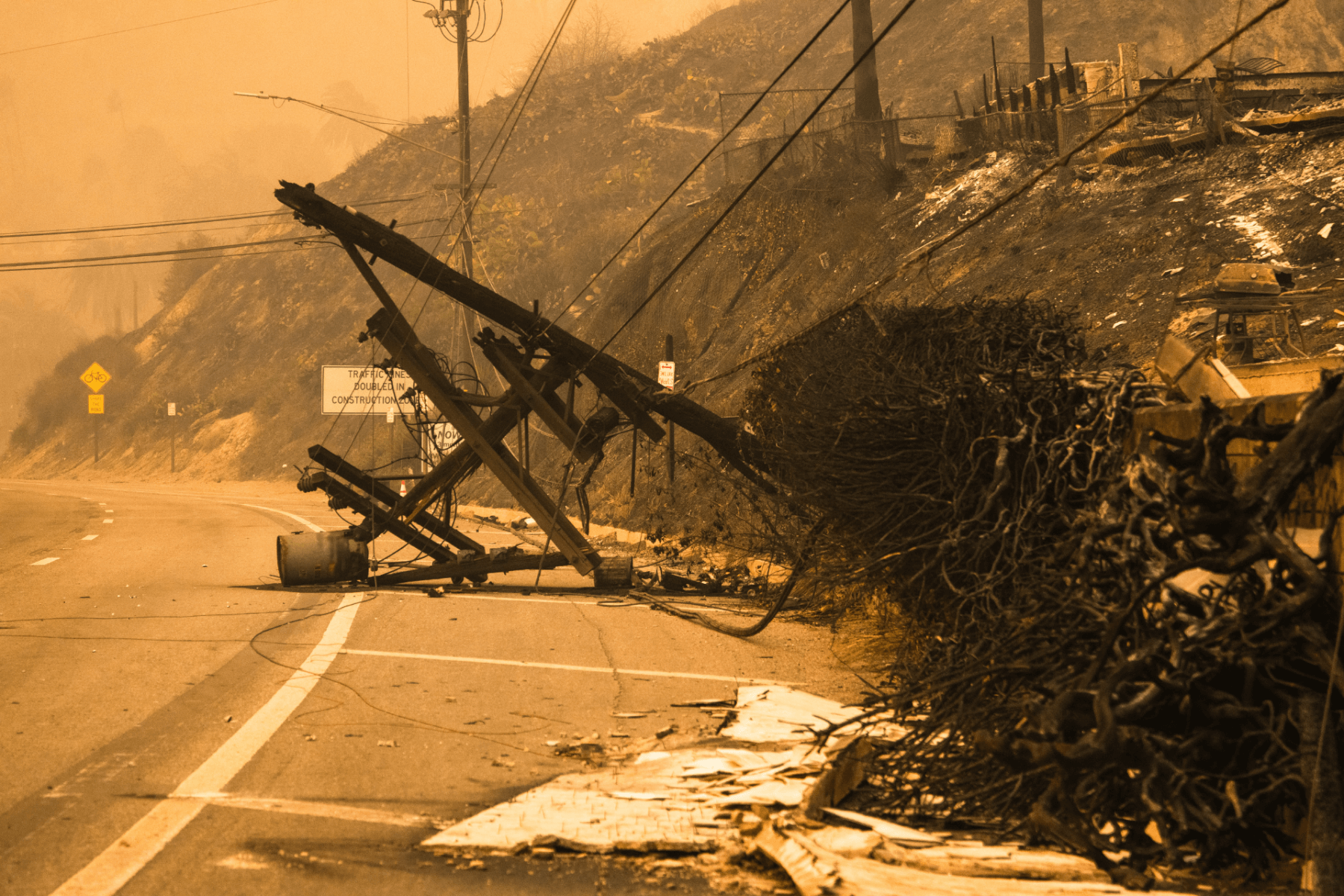
Fallen power lines line the Pacific Coast Highway. Photo by Shannon Aguiar
But as any honest firefighter or weatherman would tell you, no amount of money, or water, or firehose pressure would have made the difference in combatting this week’s historic conflagration. If anything, the ongoing inferno only makes clear that no part of California is safe from climate change anymore. Now, thanks to a particularly brutal Santa Ana Wind event combined with eight months of no rain, close to a third of all the homes reduced to ash by fires in California over the past half-decade went up in flames in just a few days.
These houses weren’t off in the woods somewhere, but right in the middle of one of the most heavily populated areas in the state. Tens of thousands of people have just joined the ranks of the region’s already burgeoning houseless population, not to mention the hundreds of thousands of evacuees who have now become at least temporary refugees in their own city. Those lucky enough to have nearby relatives who can take them in are sleeping in spare bedrooms on couches and in garages while boutique hotels and AirBnBs as far away as Santa Barbara are reportedly filling up with guests wealthy enough to afford the nightly rates. (Though, AirBnB is also reportedly providing temporary free stays as far away as Nevada and Arizona for victims of the fire.)
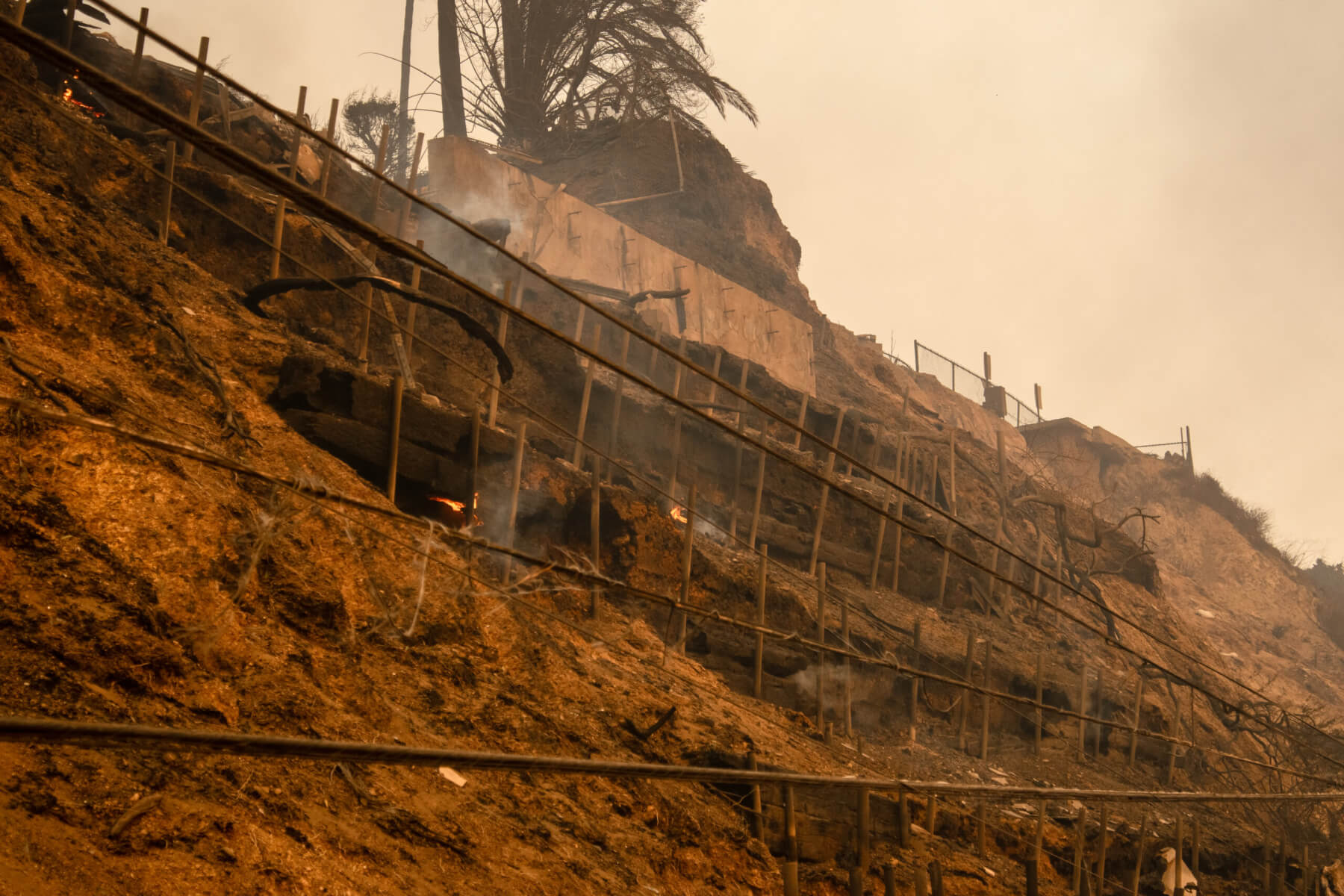
The fire left what were once building unrecognizable along the coastline. Photo by Shannon Aguiar
As tempting as it might be to think of this massive population displacement as a temporary phenomenon, that’s not likely to be the case. It’s not just thousands of homes that are gone, but entire neighborhoods and the infrastructure — everything from grocery stores to schools that supports them. It will likely take decades for LA to approach anything resembling normality. Without seriously addressing global warming and its causes, this is the new normal. Make no mistake, factoring in the grim new calculus of fire risk means that completely rebuilding areas like Altadena and Pacific Palisades that are located in urban-wilderness interfaces highly vulnerable to fire is unlikely, and probably unwise.
We have met the new climate refugees. They are here and they are us.
Help us sustain independent journalism...
Our team is working hard every day to bring you compelling, carefully-crafted pieces that shed light on the pressing issues of our time. We rely on caring supporters like you to help us sustain our mission. Your support ensures that we can continue to provide deeply-reported, independent, ad-free journalism without fear, favor or pandering. Support us today and make a lasting investment in the future.

RELATED STORIES
Award Winning



Today’s environmental and social justice challenges are unprecedented, and require an unprecedented collective effort.


Stay updated on our latest features, events and more. Subscribe to our Note From the Nest newsletter!
