Requiem for Environmental Justice?
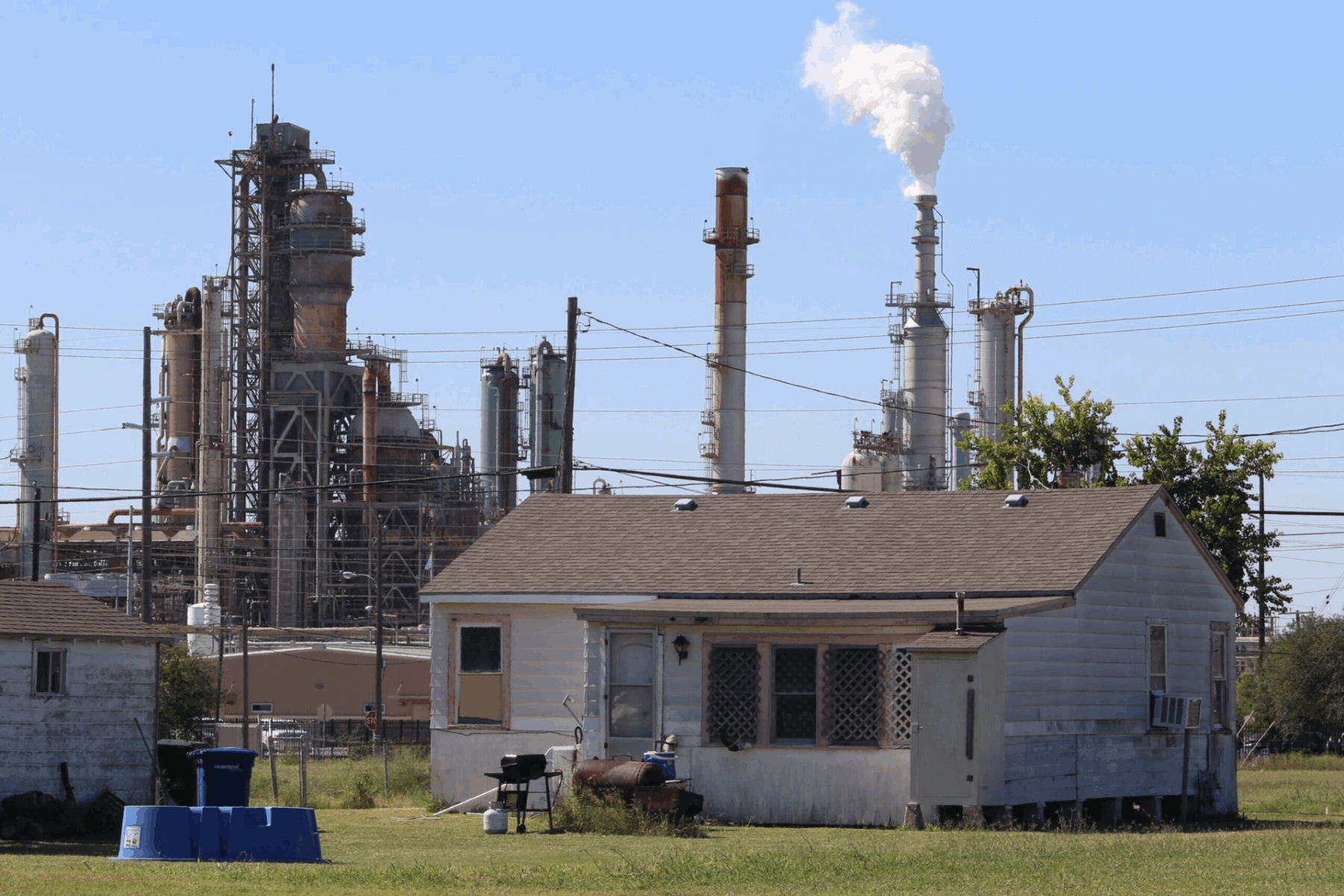
Evelyn Johnson considered herself comfortably middle class — until recently. Her fortunes changed when she had to start taking full-time care of her husband, who suffers from Parkinson’s Disease and diabetes. Her brother, whom she also cares for, is a dialysis patient and at risk of losing Medicaid and SNAP benefits under the Trump administration’s signature piece of legislation — the so-called One Big Beautiful Bill. “They may be making these cuts against him, but it’s going to affect me,” says Johnson. “Thank God I own my home. I don’t have a mortgage. I don’t have vehicle payments or any of that.”
Lead in her drinking water is the last thing Johnson wants to think about, but ever since she followed the promise of a free meal for those attending a workshop held by an environmental nonprofit, that’s what has been on the top of her mind. Johnson left the workshop with knowledge she believes “might have added years to my life.”
A resident of Brunswick County in North Carolina, Johnson learned that the well water she had been drinking her entire life was likely contaminated. Thanks to free testing kits from a nearby laboratory, Johnson confirmed that her drinking water contained dangerous levels of lead, sodium, and perfluoroalkyl and polyfluoroalkyl substances. Better known as PFAS, pre-fluoroalkyl and polyfluoroalkyl substances are considered forever chemicals, meaning they remain in the environment indefinitely as opposed to breaking down over time.
Johnson, who is 71 and spent 33-and-a-half years as a social worker, says she “hasn’t drank that water in years,” now and buys water in plastic bottles instead. “This information was not getting to a lot of the rural [residents],” Johnson says. “And I don’t consider myself one of these people that ‘doesn’t understand.’ I have a Master’s degree in social work.”
The nonprofit that enticed Johnson with a free meal to get out the message about contamination in local water sources is called Democracy Green. The organization sprang to life in the wake of 2018’s devastating Hurricane Florence with a mission to pursue environmental justice for underserved communities that bear the brunt of environmental harm.
The term “environmental justice” is not favored by the current Presidential administration, which has it in its crosshairs along with other pillars of the so-called “woke-agenda” such as diversity, equity, and inclusion (DEI), public health and education and regulatory oversight. MAGA Republicans argue that funding measures such as those allotted to Democracy Green unfairly advantage minority groups rather than awarding grants based on merit. In an executive order titled “Ending Radical And Wasteful Government DEI Programs And Preferencing,” Mr. Trump accused the Biden Administration of funding “illegal and immoral discrimination programs,” which he says fostered “immense public waste.”
Democracy Green primarily serves North Carolina, with additional operations in South Carolina, Virginia, Tennessee, Texas and Florida. To the organization, environmental justice means something practical, not doctrinaire: seeking remedies — from remediation to education — to improve the poor water quality in Brunswick County.
Near the end of its term, the Biden Administration awarded the grassroots organization $20 million under the Community Change grant program for its “Clean Water is Safe Water” initiative. This specific grant is designed for water infrastructure repair in rural communities, including repiping of homes where the pipes are corroded. Democracy Green’s executive director Sanja Whittington says such repairs “would definitely cost $24,000 and up” for a household in rural North Carolina to conduct on its own.
Bipartisan support greeted the grant in Brunswick County. “The county elected officials were very excited about Democracy Green coming in because they don’t have the funding to support these programs,” says Whittington.
The program had already started assessing homes that might qualify for grant money to fix their drinking water issues when the Trump administration cut the grant’s funding.
Hundreds of environmental programs nationwide are meeting the same fate. Under Director Lee Zeldin, the Environmental Protection Agency (EPA) has already made $2.4 billion in cuts to environmental justice programs, while scrubbing the term from the federal vernacular.
Via his executive order targeting DEI, President Trump also called for the termination of “all ‘environmental justice’ offices and positions,” demanded a report on all environmental justice grantees, committees, positions and services, and directed an assessment on the cost of these initiatives. As a result, the EPA shut down its Office of Environmental Justice (OEJ) in March and broadly cut grant funding.
Between February 14 and March 10, around 450 grants had their funding pulled by the EPA, including all with environmental justice in their name. Like Democracy Green, environmental grants across the country that address prevalent health issues were cut immediately. A $14 million grant awarded to Texas A&M University and the Black Belt Unincorporated Wastewater Program — which aimed to install wastewater treatment systems throughout 17 Alabama counties — is dead. Similarly, a $500,000 award was given to the nonprofit Childhood Lead Action Project, and a $1 million award was presented to Kansas City, Missouri, for soil lead mitigation.
Even grants — such as the one the Biden administration designated to Democracy Green — that ranked high on the EPA’s scoring system and do not contain DEI language were eliminated. “We can’t say the Trump administration simply came after us,” says Whittington. “They’re just doing a clean sweep.”
Johnson is more blunt: “The Trump administration cut these grants because people like me are affected.”
***
The concept of environmental justice originates from a 1987 study conducted by the Commission for Racial Justice which showed federally mandated hazardous waste sites were predominantly placed in African American communities. The term now refers to “the disproportionate and unequal environmental burdens that certain communities face,” explains Dorceta Taylor, Ph.D, a professor of environmental justice at the Yale School of the Environment. Taylor has long studied the “link between the political decision-making, environmental burden and race, class and geography.”
In 1992, the EPA’s OEJ was established to “address the needs of vulnerable populations by decreasing environmental burdens, increasing environmental benefits and working collaboratively to build healthy, sustainable communities,” according to a past EPA briefing. Nationwide, low-income communities and communities of color are more likely to live near power plants, drink lower-quality water, endure higher levels of particulate pollution and have less access to green spaces.
For example, in Louisiana, the area between Baton Rouge and New Orleans — predominantly populated by Black and low-income families — is home to 200 fossil fuel and petrochemical plants and commonly referred to as “Cancer Alley.” Residents there face “elevated rates and risks of maternal, reproductive, and newborn health harms, cancer, and respiratory ailments,” according to Human Rights Watch.
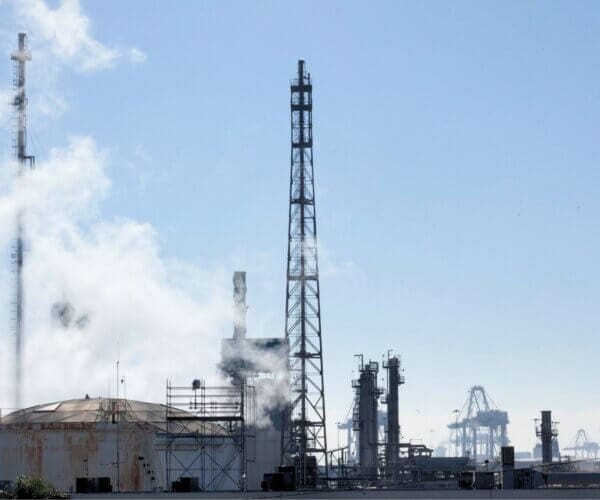
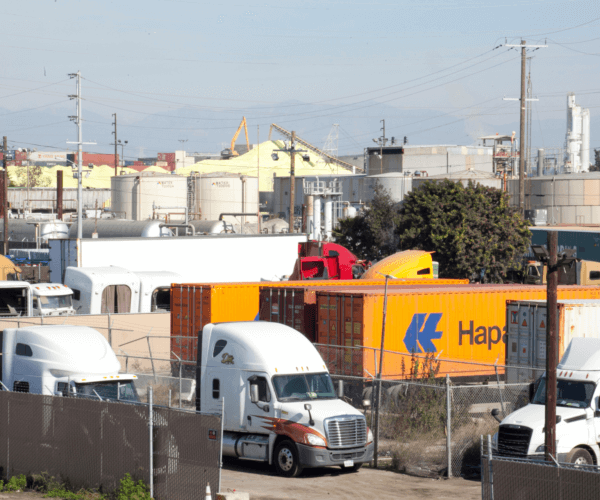
The San Pedro Port Complex in Los Angeles is similarly a breeding ground for disease due to air and water pollution from shipping operations. According to Earthjustice, a national environmental law firm, the region consistently fails to meet federal ozone reduction standards. This makes its residents more susceptible to lung cancer and damage to the airways. Those who live here — also more likely to be POC as a result of redlining — are not always aware how toxic their neighborhood is due to a lack of resources.
And, of course, there is Flint, Michigan. Like those in Brunswick County, the people of Flint were subjected to contaminated drinking water for years. When the city switched its water supply from Lake Huron to the Flint River, the government neglected to test for hazards and failed to comply with the EPA’s Lead and Copper Rule. Between 2014 and 2015, hundreds of children and adults suffered from lead poisoning, which can lead to kidney damage, loss of cognitive function and behavioral disturbances, a study from the National Institute of Health shows (visit the website, while you can).
As the population of Flint is predominantly Black, and many are low-income, the crisis sparked national debate over whether this would have occurred in a wealthy or white area. In 2016, one representative for the region, former U.S. representative for Michigan’s 5th congressional district Democrat Dan Kildee, called racism “the single greatest determinant of what happened in Flint.” Drawing parallels to that debacle, Whittington argues, “We all are experiencing a Flint, Michigan situation. Our water sources are polluted.”
As the climate crisis intensifies, the burdens are increasingly pronounced in these communities. In the aftermath of calamitous weather events, which are becoming more frequent and intense due to global warming, less wealthy Americans have fewer resources for recovery, further adding to their burden. We see this in Central Texas, where flash floods in early July swept away homes and people. The Guadalupe River rose 26 feet within 45 minutes in Kerr County. Some parts of Central Texas received 22 inches of rain, which is more than half of the average statewide annual rainfall.
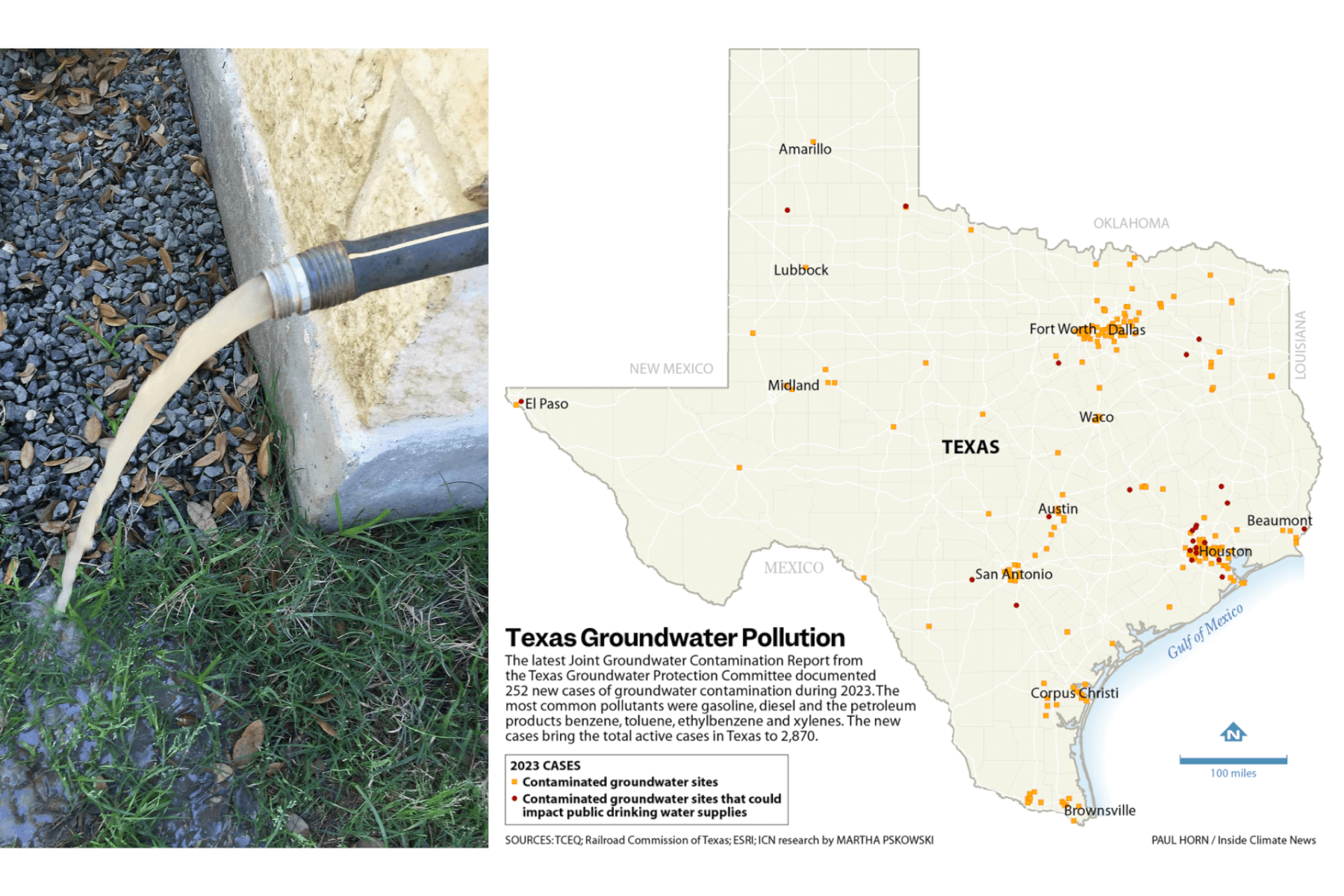
The death toll in the region stands at 135, Governor Greg Abbot said. A report from Cotality — a data-driven tech company — found that 38,600 homes across nine counties were damaged over the Fourth of July weekend. As this estimate only includes homes eligible for assistance from the Federal Emergency Management Agency (FEMA), the total damage is likely higher. This comes at a time when the cost of buying a home in the region is skyrocketing. Last year, home insurance rates were up 18.7 percent across Texas, according to the state’s Department of Insurance.
While Texas was flooding, the Trump administration made cuts to FEMA and the National Weather Service. The president has repeatedly dismissed climate change as a “hoax.” In January, Trump pulled out of the Paris Climate Agreement for a second time and declared a national energy emergency. These announcements came despite the United States being the world’s second-largest energy producer (after China) and top global producer of oil, as reported by the International Energy Agency. The administration’s stated environmental agenda is to deregulate, defund, and drill, baby, drill.
In addition to eliminating federal support for environmental justice, the proposed EPA budget for fiscal year 2026 slashes overall spending by 55 percent. The newly adopted ‘Big Beautiful Bill’ takes away clean energy tax credits for consumers and industries, bolsters the fossil fuel industry and opens up previously-conserved public land for developers.
Furthermore, the six-month budget bill that passed through the House of Representatives in March and extends through November includes a $1.4 billion reduction in funds that were earmarked for Clean Water State Revolving Funds. Specifically, the bill reduces funding for rural water and wastewater projects by 20 percent. 20 million dollars were also cut from the USDA’s Watershed and Flood Prevention, as well as $39 million in EPA’s State and Tribal Assistance Grants and $117 million for USDA’s Rural Water and Waste Disposal assistance program.
***
In Brunswick County, Johnson and her neighbors feel neglected by the administration and local officials. “[The government] is lying to you. They only care about big developments, and want to push people like me out,” says Johnson.
Democracy Green’s grant planned to cover 500 households in unincorporated regions, specifically selecting counties where levels of PFAS were notable. “Those chemicals have spilled over into the groundwater, so we’ve also got well owners dealing with the impact, and the contamination is horrible,” says Whittington. “Our plan [was] to look into reverse osmosis systems that would go into people’s homes and build upon the new pipe.”
While repiping only addresses lead, a reverse osmosis system further purifies drinking water to prevent contamination from PFAS and other chemicals. “Because we’re in the community, we know the needs. We know that people are really dealing with critically dilapidated water infrastructure,” Whittington says.
Day One, an environmental organization based in Southern California, is similar in scope to Democracy Green and faces similar funding cuts. The nonprofit provides resources for educational programs for underserved communities, as well as working to improve access to green spaces and alleviate the burden of extreme weather. “With the relationships we have in place, these are some areas we thought we could really make a difference,” says Christi Zamari, the Executive Director of Day One. “If you drive to [another] community, you’re gonna see a lot more trees, and it’s usually a more affluent community. That’s just a fact.”
Part of Day One’s mission is to help communities with minimal resources survive as the climate crisis worsens. According to Zamari, some SoCal residents “have to decide if [they’re] gonna plug in the AC or the stove” during summertime. Even with the region’s temperate climate, long summer days are becoming less bearable year after year. And with the increase in ICE raids across the nation, residents are faced with a choice: the lack of AC at home or the danger outside. “Even households right now where people have papers are not feeling safe to leave their homes,” says Zamari.
In May, Day One received a letter notifying the organization that its grant funding had been cut. “Now, we’re just going through the process to hopefully advocate with others to try and see if those funds can be restored, but we haven’t heard anything,” says Zamari.
***
Although funding is being cut, environmental justice programs across the country have not gone quietly into submission. Alongside 23 other plaintiffs — including numerous nonprofits, three cities, and one county — Democracy Green joined a class-action lawsuit to restore their grant. According to Whittington, everything is “definitely still pending.”
In June, Judge Adam Abelson, a member of the U.S. District Court for Maryland, determined that these cuts violate the Administrative Procedures Act (APA). The ruling came after three regional grantmakers — the Green and Healthy Homes Initiative, the Minneapolis Foundation and Philanthropy Northwest — also sued the Trump administration.
Under the APA, all government agencies must follow formal rulemaking processes. In this instance, that applies to the designation or repeal of grant funding. The executive branch is not exempt from these formalities. “The EPA is required to spend the funds that Congress appropriated … and to do so on specified types of projects, and to specifically ensure that such projects benefit disadvantaged communities,” Abelson wrote.
Abelson is referring to funds that were previously awarded through the Inflation Reduction Act — President Biden’s signature piece of climate change legislation — and with authority granted under the Clean Air Act. As part of the bill, Congress appropriated $2.8 billion for financial assistance and $200 million for technical assistance to the Environmental and Climate Justice Program.
The money was set aside for distinct environmental programs, including the Thriving Communities Grantmaking Program and the Community Change Grants, the latter of which Democracy Green applied for. Because the funds have been set aside by Congress to specifically address environmental inequities in previously-underserved areas, they cannot be used for any other purpose.
Under the Justice40 initiative, the Biden administration further declared that “40 percent of the overall benefits of certain Federal climate, clean energy, affordable and sustainable housing and other investments flow to disadvantaged communities that are marginalized by underinvestment and overburdened by pollution,” according to the Biden White House archives.
“These are bilateral obligated funds; they never should have been yanked because they’re already designated for this work,” Whittington agrees.
To properly cut funding for previously-appropriated grants, the EPA would need to bring a contract dispute before the U.S. Court of Federal Claims, which they have not done.
In a recent statement, EPA administrator Lee Zeldin maintained that this reduction in force is necessary to eliminate wasteful government spending and be “responsible stewards of hard-earned tax dollars.” The current mission of the EPA is “protecting human health and the environment while Powering the Great American Comeback,” according to an initiative Zeldin announced earlier this year.
The Great American Comeback includes five pillars, the first of which is Clean Air, Land and Water for Every American. However, the other pillars aim to expand American energy dominance (via increased production of fossil fuels), AI technologies and the American auto industry. All of these directly contribute to greenhouse gas emissions and increased pollution — not clean air, land and water. It is unclear whether a new strategy to address the impacts of air and water pollution — thereby protecting the health of residents in Brunswick County, “Cancer Alley,” Southern California, Central Texas, or anywhere else — is underway.
***
In the absence of funding from the federal government, the environmental justice movement must rely on local and state support. An example is Los Angeles’s Safe, Clean Water Program, funded in part by a county ballot measure aimed at capturing and treating stormwater to improve water quality and increase local water supply.
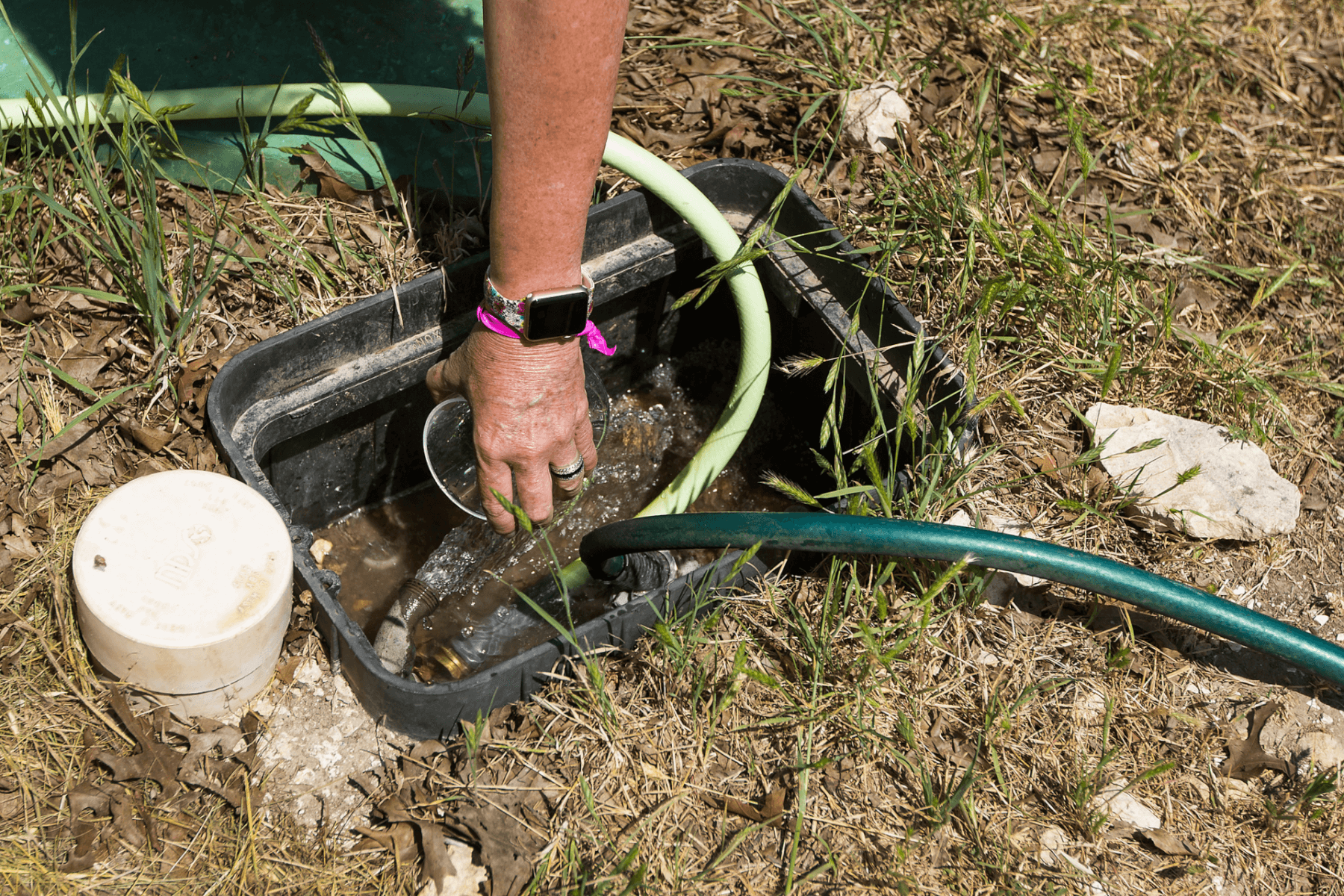
A Blanco resident pulls a water sample from their contaminated well to compare it to bottled water near Austin. Courtesy of Brett Coomer/Houston Chronicle via Getty Images
“It’s a way for us in Los Angeles County to tax ourselves to pay for these kinds of projects,” says Jeffrey Hanlon, who serves as a director for Division III of the Three Valleys Municipal Water District. “The Safe, Clean Water program distributes funds to organizations doing projects that are about building water infrastructure [and] building an educational base around water issues.”
The measure imposes a 2.5-cent property tax per square foot of impermeable surface area. This includes asphalt, concrete and any other surface that water cannot seep through.
California also passed a $7.5 billion water infrastructure and conservation bond in the election last November. In the nonprofit sector, Day One serves as a Watershed Coordinator to engage and educate LA County on water issues, alongside 11 regional organizations. “We can go it alone if we must,” says Hanlon, a longtime Southern California resident.
In North Carolina, Brunswick County’s water is in dire straits, and Democracy Green’s Whittington anticipates conditions will worsen. “The pipes have not been replaced. PFAS has not been eradicated from the water source,” the group’s executive director says. “Clean water, safe water, is something that we all need. Regardless of who we are, or where we are, we’ll die without it.”
For her part, Johnson says she’ll continue the fight for environmental justice no matter what. “Even if I never qualify for the aid myself, I’d fight just as hard for others to get it,” Johnson maintains. “I never thought we’d be fighting for something that is a basic human right.”
Help us sustain independent journalism...
Our team is working hard every day to bring you compelling, carefully-crafted pieces that shed light on the pressing issues of our time. We rely on caring supporters like you to help us sustain our mission. Your support ensures that we can continue to provide deeply-reported, independent, ad-free journalism without fear, favor or pandering. Support us today and make a lasting investment in the future.

RELATED STORIES
Award Winning



Today’s environmental and social justice challenges are unprecedented, and require an unprecedented collective effort.


Stay updated on our latest features, events and more. Subscribe to our Note From the Nest newsletter!
