
The Ashes of History

In Southern California, one of the few advantages of living in the hood is that the wildfires that happen regularly don’t happen here. The dense scrub and trees of the hillsides and mountains — not asphalt and concrete — feed the annual conflagrations that, for most of my life, have plagued mostly wealthy white folks living in places like Malibu, Palisades, Topanga and Hollywood Hills. Growing up in South Central, it was something of a ritual of neighbors to watch the burning every year on TV news, shaking our heads in sympathy but also in bewilderment that anyone would risk living there. We also couldn’t help feeling that this was part of the price rich folks paid for their insistence on remoteness and exclusivity. There was a whole lot of irony in the fact that for a brief but perilous time, it was the urban core, not the high-priced ZIP codes, that were bastions of safety.
The fires devastating Los Angeles now have officially ended any notion that Black people cannot be affected en masse by this kind of disaster. Everybody knows South Central, but the world suddenly knows Altadena, too — the area that, along with Pacific Palisades, has sustained the most destruction and loss (at last count, 25 deaths and 13,000 structures).
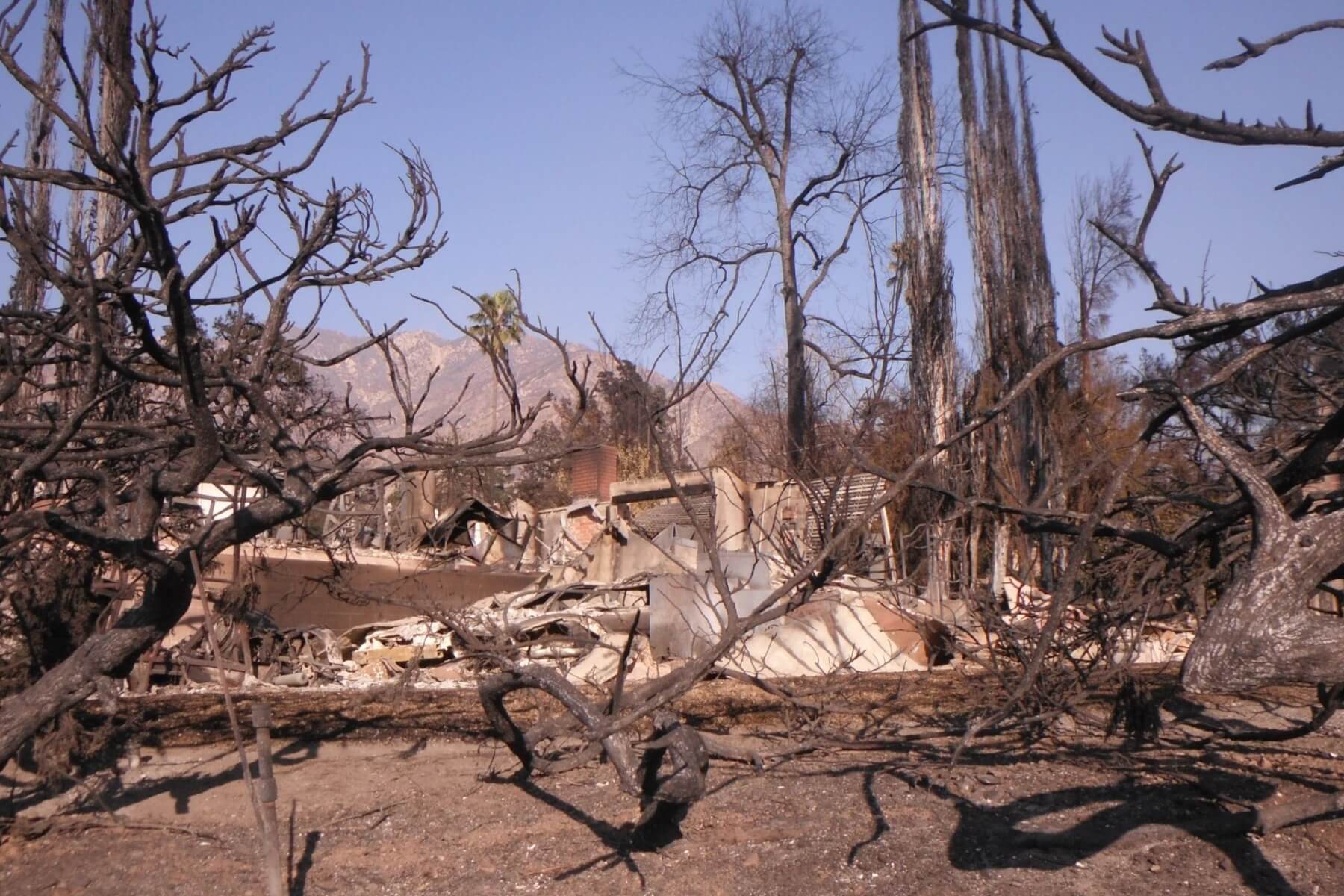
A single-family home on the Homepark Avenue cul de sac, where every house but one was reduced to rubble. Photo by Tori O’Campo
What the world may not quite know is that Altadena has a longstanding Black community with roots in the 19th century and is one of the very few cohesive Black communities left in a county that has seen its Black populations shrink significantly in the last couple of decades. The Black population in Altadena, though significant, has been shrinking too, because of gentrification and other pressures that have already greatly diminished our presence in urban-core places like Crenshaw, Compton and Inglewood. The fires have caused so much displacement and ruin in just a few days couldn’t have come at a worse time.
Abolitionist Owen Brown, son of John Brown, moved to Pasadena and built a place in the hills above it — Altadena — where he was buried before a multiracial crowd in 1889. Black people started moving to Altadena in earnest in the 20s and 30s. Part of the Great Migration, the neighborhood was a magnet for the middle class, professionals and strivers; it was the last home of teacher and civil rights pioneer Ellen Clark, who traveled the South teaching newly emancipated slaves how to read. Altadena’s historical society recorded oral histories of lesser-known pioneers such as Jesse Gilton, the first black taxi driver in Pasadena.
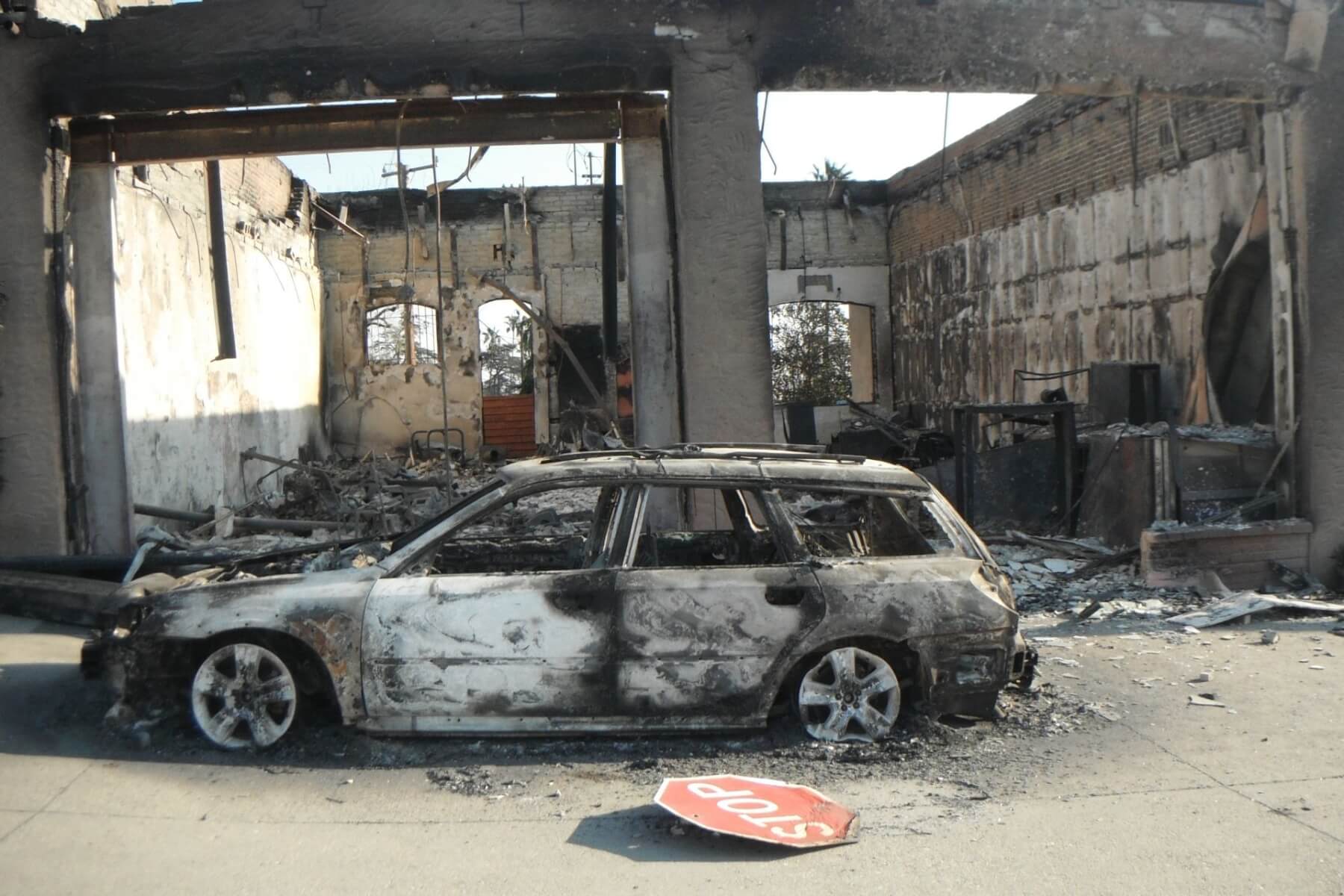
On the corner of Lake Avenue and Altadena Drive, an office building that last week contained multiple Black-owned businesses. Photo by Tori O’Campo
I’ve long known Altadena’s reputation as a historic Black space, one that flourished in the relatively progressive environs of that corner of LA County. Though a counterpart to South Central, I’ve always thought of it as opposite of the hood — urban but improbably rustic, picturesque, framed by the San Gabriel foothills and mountains. My friend, the novelist Jervey Tervalon, is a longtime Altadena resident who lost his house to fire this week. Jervey was always urging me to move there. He talked up Altadena as a better option to South Central, a dynamic Black frontier still in the midst of fulfilling its true possibilities. He was raised in Crenshaw and South Central but moved to Altadena in the 90s when homes were affordable. Jervey founded the Litfest in the Dena, an annual event he positioned from the beginning as the racially diverse answer to bigger, more mainstream events like the LA Times Book Festival. After his house burned down last week, he has been sheltering with friends in Gardena, close to Inglewood, where I live. At this point, he doesn’t imagine himself not returning to Altadena. That would be an insult to history, and to the non-negotiable imperative that “we have to exist,” he said.
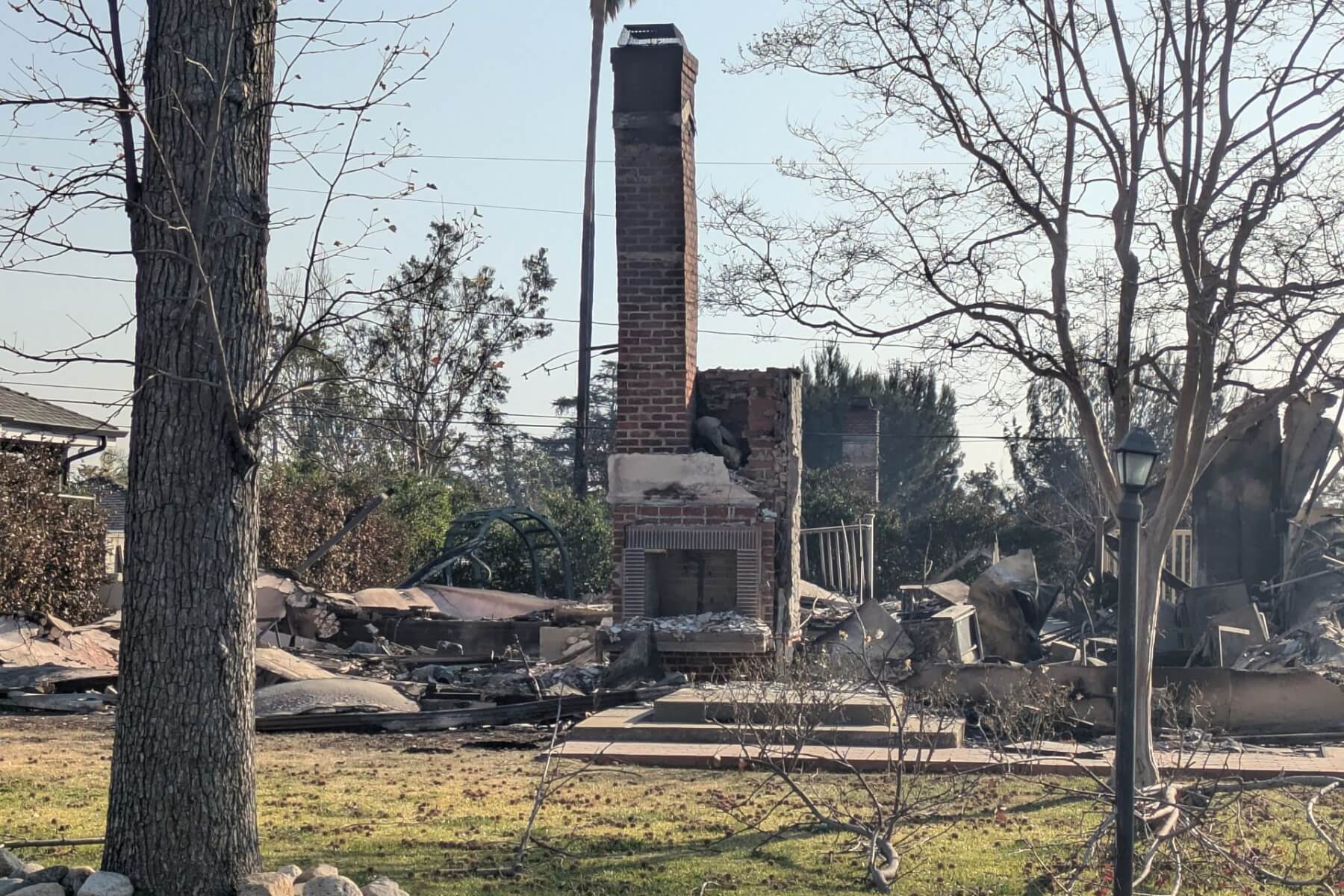
Driving through North Altadena, fireplaces are the only remembrance of homes that contained multitudes. Photo by Tanner Sherlock
Predictably, the media has focused on the devastation of Palisades and other celebrity-studded neighborhoods as the most potent symbols of the LA paradise burning. But the gutting of Altadena is equally tragic. It, too, is a paradise Black people began carving out on a West Coast that promised Eden to all who came, but hardly promised it to people of color. But in a big state like California, there were always exceptions, places that either didn’t adhere to the Jim Crow covenants and customs or didn’t have them, and Altadena Meadows was one of those places.
It wasn’t alone in its sensibilities; Pasadena was founded by Union supporters, and Monrovia, neighbor to Pasadena and Altadena, also has a black presence dating back to the 19th century. Altadena has been an important respite for Black artists, including the renowned painter Charles White, for whom a local park was named in 1980. Lynell George, a friend and fellow journalist who’s won numerous accolades for her work, is also a longtime Altadena resident whose house miraculously survived. Celebrated sci-fi novelist Octavia Butler, about whom George has written extensively, was born and raised in Pasadena and honed her unique literary vision there: one of her most indelible novels, Parable of the Sower, opens with a bleak invocation of a menacingly fiery landscape that could be Altadena of the last seven days. “Fire has sprung from nowhere, has eaten in through the wall, has begun to reach toward me, reach for me,” she wrote. “The fire spreads.”
***
Altadena was exceptional, and not. In the mid-20th century, it followed the same pattern of decline that was the story of Black areas everywhere. In 1960, Altadena was 95 percent white. During that decade, following the collapse of racial covenants, the Watts Rebellion, school desegregation and other social upheavals, Whites left in droves. But they didn’t leave entirely. Lake Avenue became the unofficial racial dividing line — Blacks lived west of it, Whites east. Black population peaked at 39 percent in 1990, thanks in part to the availability of undervalued housing stock.
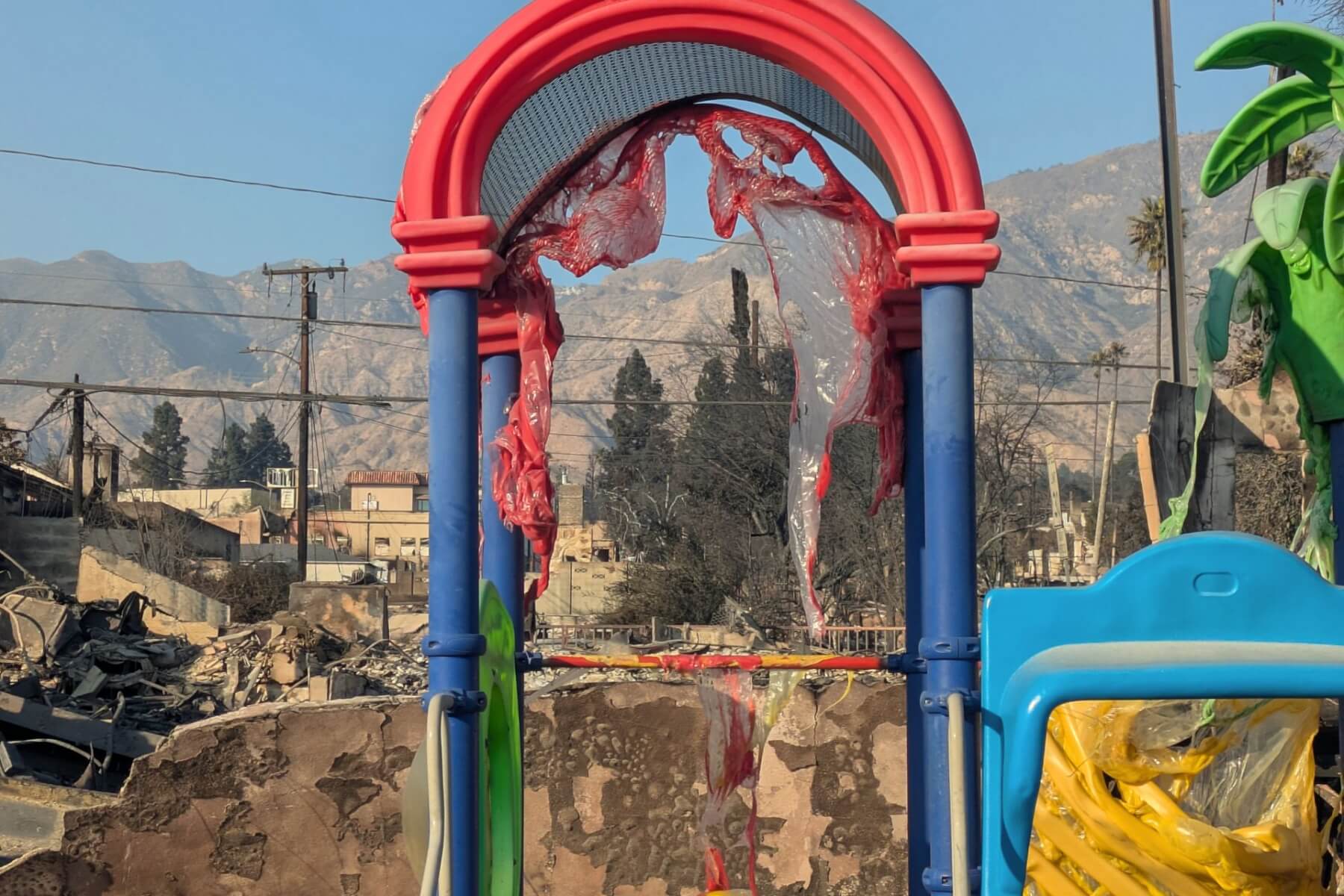
What’s left of the Princeton Montessori Academy playground on Lake Avenue, with the school building reduced to metal and ashes behind it. Photo by Tanner Sherlock
Today, gentrification has boosted the white population to 53 percent, while the Black population has fallen to under 20 percent. On paper, Altadena is very diverse — one of the most diverse communities in Southern California. But, whether this is integration or just a snapshot in time in which Black people are on their way out, as appears likely in other gentrifying areas, remains to be seen.
One thing is certain, the relatively low prices that allowed Jervey and others to settle there and build on Altadena’s Black history are long gone. Now that many of those actual homes are gone too, the question is whether they can or will be rebuilt, with the same population, in a much pricier housing market. Jervey is characteristically optimistic about a renaissance, even if he’s short on specifics on how it will work.
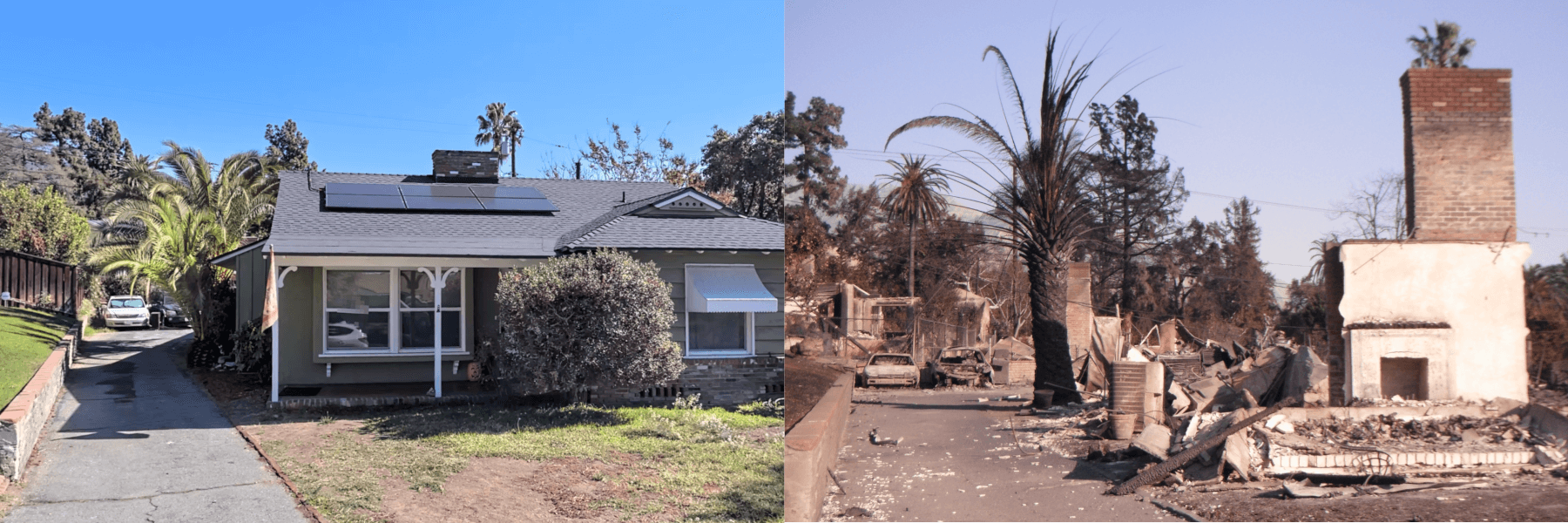
Before and after the Eaton Fire for this single family home built in 1952. Courtesy of Apple Maps (left). Photo by Tori O’Campo (right)
That broad optimism is shared by Black Altadena resident, Maria Brimsey. “I look at this as an opportunity to recreate, to forge a new beginning,” said Brimsey, who lost the home she shared with her husband for 21 years. The couple lost not just a home, but a whole community with a tight-knit, convivial, bucolic atmosphere that made Altadena “a very special place,” according to Brimsey.
It’s a place that even in the most ideal post-disaster circumstances, with plenty of money and incentive, won’t be easily or quickly replaced. Home never is.
Help us sustain independent journalism...
Our team is working hard every day to bring you compelling, carefully-crafted pieces that shed light on the pressing issues of our time. We rely on caring supporters like you to help us sustain our mission. Your support ensures that we can continue to provide deeply-reported, independent, ad-free journalism without fear, favor or pandering. Support us today and make a lasting investment in the future.
RELATED STORIES

Award Winning


Today’s environmental and social justice challenges are unprecedented, and require an unprecedented collective effort.


Stay updated on our latest features, events and more. Subscribe to our Note From the Nest newsletter!

Thank you for this, Erin.