
A Central Valley Cinderella Story
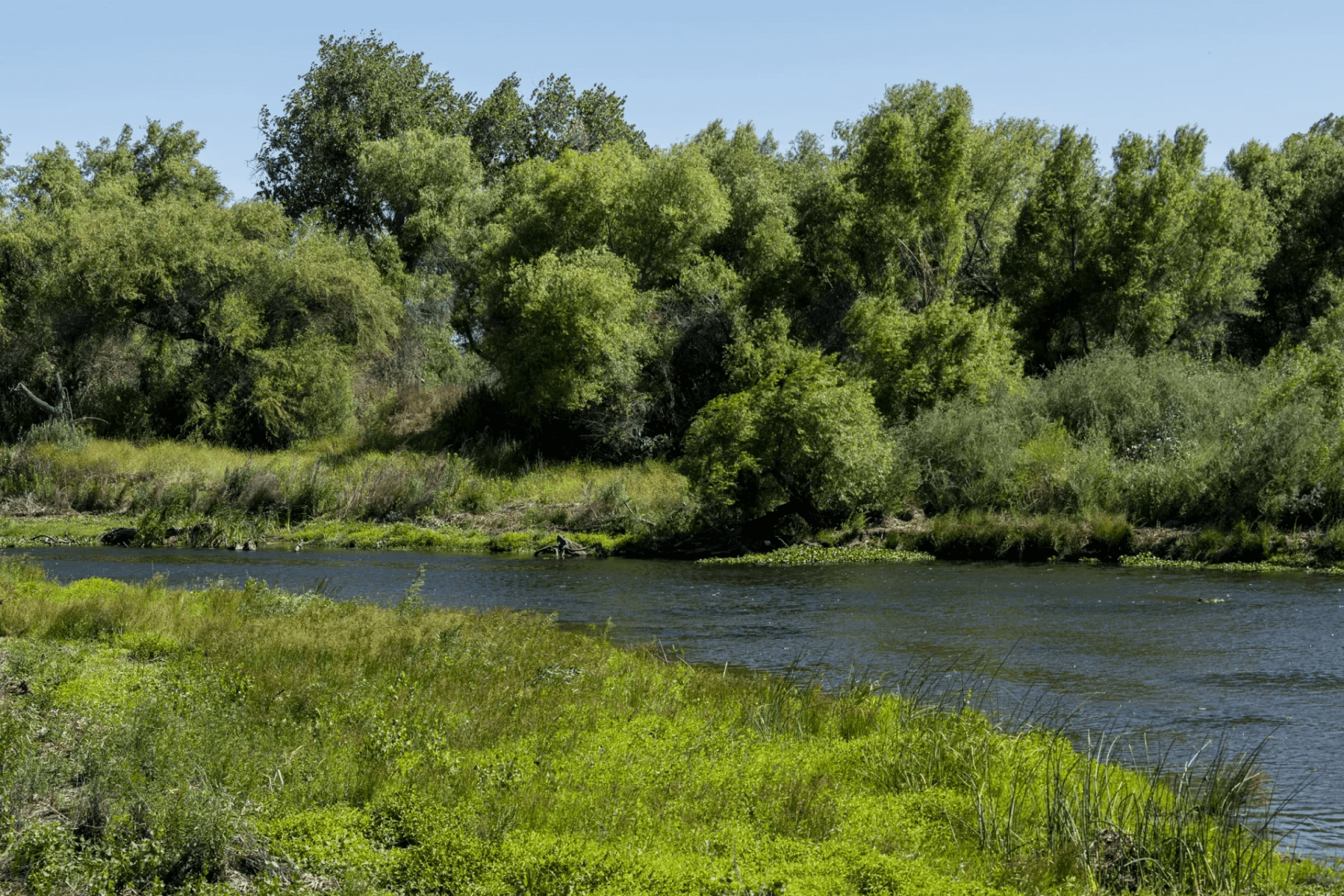
California’s Great Central Valley residents have long been privy to a secret hiding in plain sight. Generally overlooked as too flat, too rural and too uncool to register as a conservation hotspot, locals know how much opportunity the Valley holds for new green public spaces, something their key constituents have spent years advocating for. This past summer, they secured a big one with the designation of Dos Rios State Park. Located at the junction of the Tuolumne and San Joaquin rivers, Dos Rios is an ongoing 1,600-acre restoration project that is returning farmland to riparian forest and other native habitats. Although the site still has bureaucratic steps to take before it changes from a proposed park to an official one, its approval will make it the first new state park in California in 13 years.
This is something of a Cinderella story.
Of the state’s 280 state parks, over 150 are on the coast, and 15 are in the park system’s Central Valley District. The District only covers a portion of the larger Central Valley, which means that by my count—on a map, depending on where you draw the edge of the Valley—there are about 32 parks in the Central Valley, and many of those are recreation areas or historic sites, not natural areas.
By any outdoor metric, the Valley is underserved, a Great Conservation Vacuum, or GCV, if you want to give it an acronym. Dos Rios won’t turn the working Valley into an outdoor paradise, but it will provide residents with one more green space to gather. The park could also be the first piece in a regional transformation, where nonprofits, farmers and government agencies work together to systematically green the state’s rural interior. This would be no small feat in a region where conflicting agendas and claims on water make conservation contentious.
Dos Rios sits 10 miles west of the city of Modesto, but the tiny town of Grayson is closer, and its 1,300 residents are particularly well-positioned to benefit from the park when it opens. Right now, many Grayson residents relax by hanging out at the community center or the One Stop Market at the neighboring gas station. Most are farm workers. Some don’t speak English. Some don’t have cars. Their town only encompasses four by five blocks.
Out in the sweltering west side of the San Joaquin Valley, between Interstate 5 and Highway 99, there are few opportunities for hiking and learning about the area’s natural history, and even fewer for camping. Overall, the region resembles one massive farm after another, a seemingly look-alike grid of tilled rows and canals. City parks exist. You can camp by reservoirs at many of the foothills’ recreation areas, but you can’t camp in a National Wildlife Refuge. Although the Valley offers small regional parks and numerous State Recreation Areas, often in the foothills, outdoor spaces here largely favor boating and fishing over natural history. The Valley is the fastest-growing area of the state, but there’s no Central Valley National Park or San Joaquin Valley Wilderness Area. As the California State Parks Director, Armando Quintero, told The San Francisco Gate, California’s rural San Joaquin Valley has the least amount of state parks of any region in the state. So, if you live here, where do you go for a less-manicured nature experience?
The Valley’s historical land-use patterns set the stage for its current dearth of natural areas. Grazing, farming and oil extraction limited the land that’s available for public recreation. “In addition, these rural counties had lower population bases than the growing urban centers of Southern California and the Bay Area,” Adeline Yee, California State Parks Spokesperson, told me. “Although the first State Park units date back to the 1950s, the State of California did not prioritize acquiring state park properties in the Valley prior to the establishment of the Central Valley Vision in 2003. The Central Valley Vision recognized the growing population base of the region and its need for recreational opportunities and outdoor spaces.”
The Central Valley Vision began in 2003 when California State Parks identified a lack of available recreational opportunities in the state’s rural interior. The Central Valley Vision Implementation Plan is a 20-year roadmap the full realization of which would add over 22,000 acres of Valley land to the California State Parks system and double the number of area campsites, taking them from approximately 1,600 to 3,500.
“California State Parks is making a conscious effort to increase its resource-based park units within the Valley,” Adeline Yee said, “with Dos Rios the latest example.”
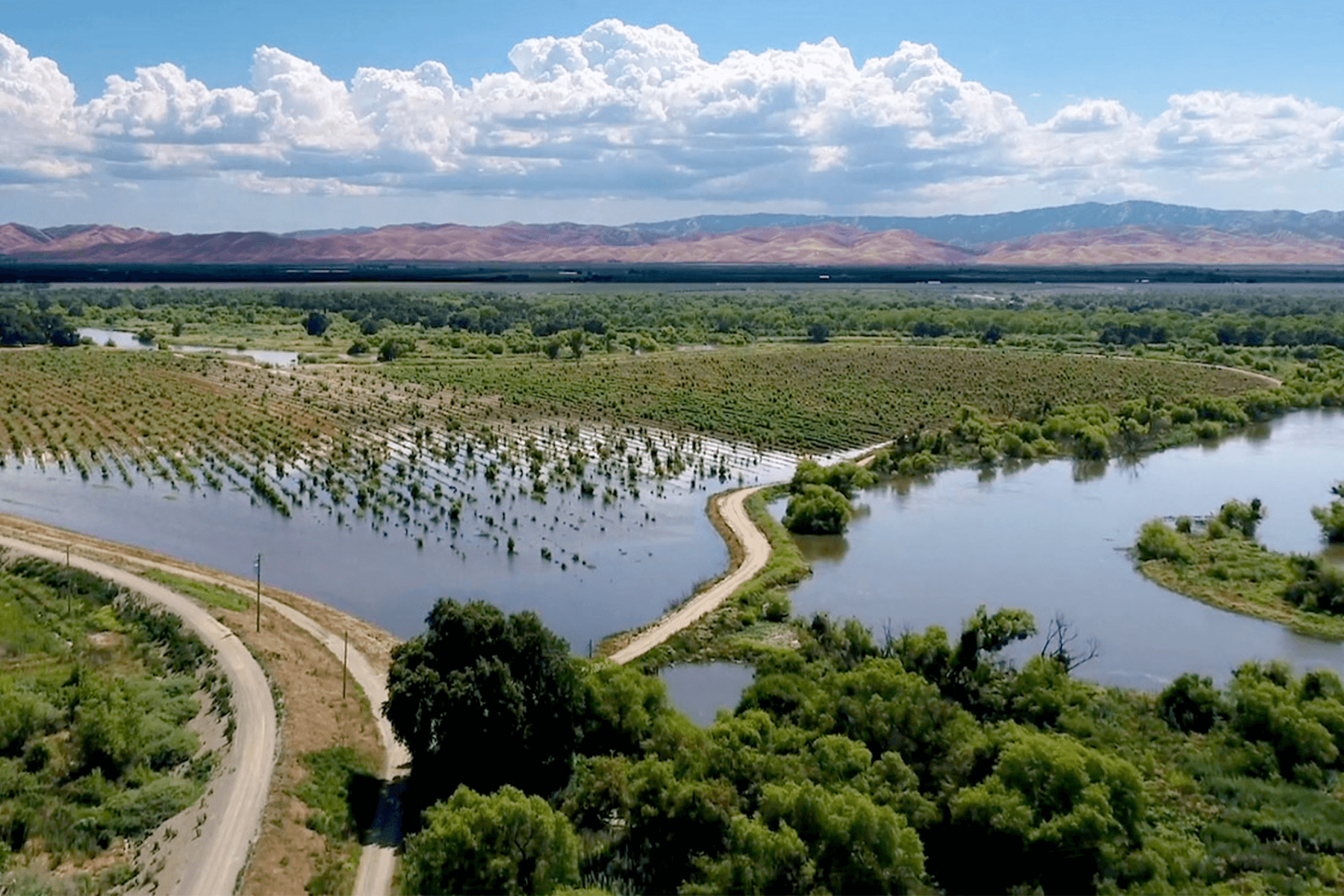
What was once flat crop land now provides a green escape for both the humans of the Central Valley and the endangered species looking for an ecosystem to once again support them. Courtesy of River Partners
In five to ten years, the State will add some combination of hiking and biking trails, restrooms, picnic areas and, likely, a campsite to Dos Rios specifically. Public infrastructure will serve the people. Along with infrastructure come the park’s more ethereal, but essential, offerings: stillness, greenery, birdsong, and a break from dust, pavement, buildings, screens, tilled rows and chemical applications — a break from the built environment.
“I think that emotionally, it’s going to be very good for their mental health,” Lilia Lomeli-Gil, who runs the Grayson United Community Center, told NPR.
Ecological restoration has inherent value for natural systems and the species that inhabit them. Here in the Valley, restoration can also help mitigate seasonal floods’ effects on rural communities, improve climate resilience through carbon sequestration and help stabilize threatened and endangered species’ populations, like the riparian brush rabbit and Central Valley chinook salmon. But people like Lomeli-Gil know how restoration impacts folks’ quality of life. And River Partners, the nonprofit who spearheaded Dos Rios’ creation, appreciates the value of public access, too.
“We’ve done the planning; we’ve done the mapping,” River Partners president, Julie Rentner, told NPR. “We’re thinking about doing 10 more Dos Rioses just in the next decade. Maybe more.” Hopefully, that statement holds true.
***
Dos Rios State Park began as a dairy farm named Dos Rios Ranch. Although the landowners left a few old Valley oaks standing, they cleared large stretches of riverbanks of their original riparian forests of oak, cottonwood and willow. The floodplains were leveled to grow alfalfa, winter wheat, corn and almonds. Valley riversides have fantastic soil for growing food.
In 2002, River Partners and Tuolumne River Trust started work to create Dos Rios State Park, first securing the land, then designing their long-term restoration plan. The two organizations attracted 11 state, federal and local agencies, including San Francisco Public Utilities Commission, to invest money and support the restoration efforts. The restoration eventually cost over $46 million.
Based in Chico, River Partners did what it does: It replanted the floodplain with native trees. Riparian forest is critical and endangered habitat. The Valley once contained an estimated 4,000 square kilometers of riparian forest. Modernity whittled that down to 416. River Partners is bringing forests back. After years of managing the ranch, parts of the formerly tilled farm plots are starting to look like the floodplains that Yokuts villagers knew from pre-Spanish times: young willows, tall cottonwoods, brush rabbits and Swainson hawks. With time, those trees will grow tall and dense.
Running over 400 miles north and south between the Sierra Nevada and the Coast Range, California’s Central Valley is made up of the Tulare Lake Basin and two adjoining valleys: the drier San Joaquin Valley in the south and the wetter Sacramento Valley in the north. The valleys’ namesake rivers meet in the middle, in the Delta, and together they contain 20,000 square miles of lowland.
The Valley averages 50 miles wide, 75 miles at its widest, making it vast enough that haze often obscures its edges. It contains some of California’s fastest-growing cities, four of America’s five highest-grossing agricultural counties, and some of the nation’s worst air pollution. People drive through it to get to Yosemite and Lake Tahoe. The Valley is where you stop for gas.
This isn’t the Sierra, where a series of National Forests, National Parks and Federal Wilderness areas protect natural space. California’s famous natural beauty all seems to reside elsewhere. The Valley is a working rural landscape. Its 300 days of sunshine, available water, agricultural chemicals and Class 1 soil allow it to grow over 250 different crops, from kiwis to dairy to nuts. About 75 percent of California’s irrigated farmland, and 17 percent of the entire country’s irrigated land, is here. Driving it, you feel the power of its openness — the horizon extends for eternity — but you don’t see many places to take in the scenery, enjoy a hike or learn about the Valley’s unique natural history or its Indigenous inhabitants.
Originally, the Valley supported a complex, seemingly contradictory mixture of dense marshes, semi-desert expanses, riparian jungles and oak savannahs. Its grasslands supported massive herds of pronghorn and elk. Kit foxes, kangaroo rats and snakes lived in its salt scrub. Grizzlies and cougars prowled the plain where highway traffic now passes, and in spring, after winter rains, the parched soil bloomed.
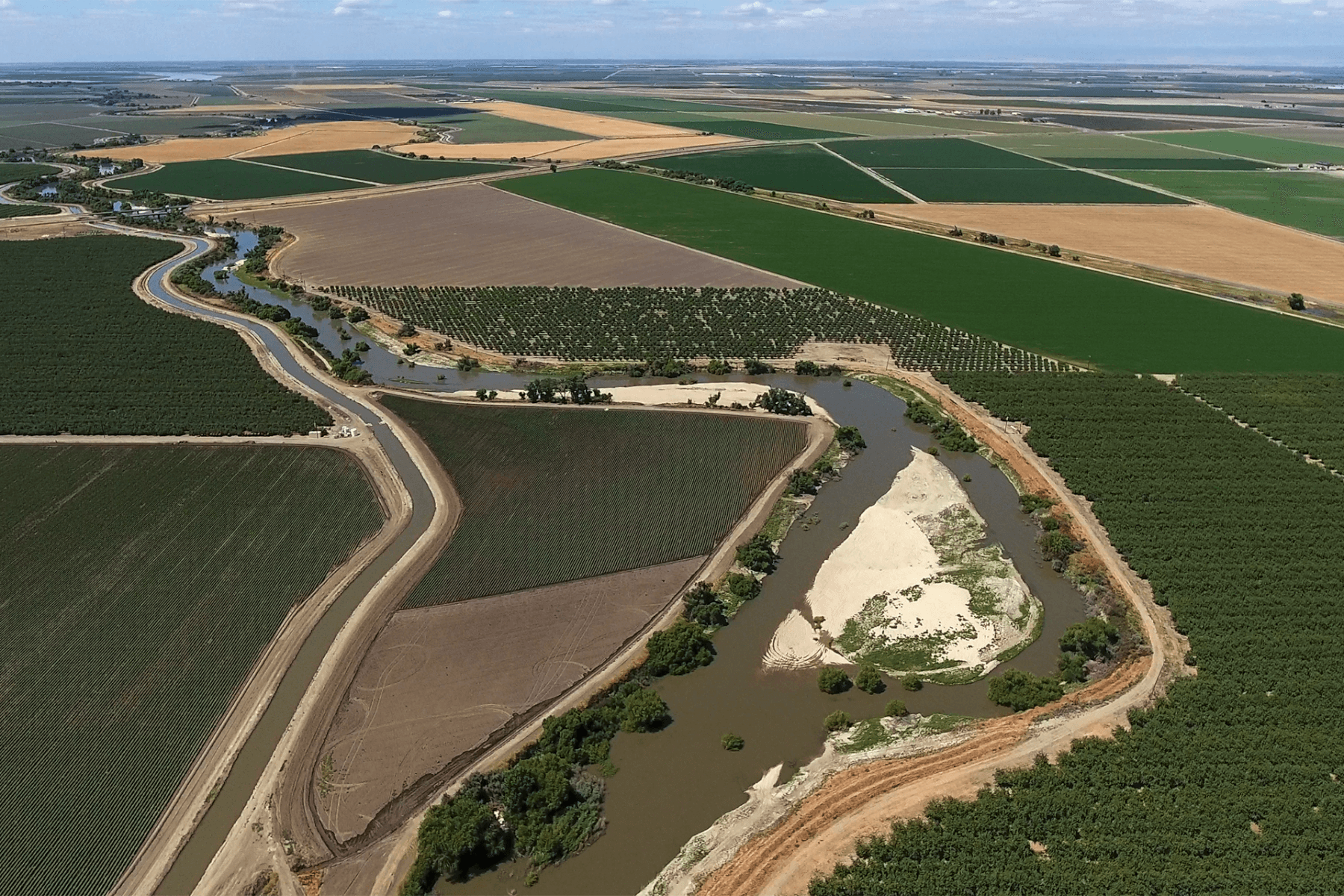
In 2017, before restoration began for the Dos Rios State Park project, the junction of the Tuolumne and San Joaquin rivers were surrounded by dry, flattened farmland. Photo by Steven Gute
“The Great Central Plain of California, during the months of March, April and May, was one smooth, continuous bed of honey-bloom,” John Muir wrote in his 1894 book The Mountains of California, “So marvelously rich that, in walking from one end of it to the other, a distance of 400 miles, your foot would press about a hundred flowers at every step.”
Modernity erased most of it. Now, the region also suffers soil subsistence, soil salinization, drying wells, ground-water pollution, air pollution, cancer clusters, poverty, and — an issue you hear less about — access issues.
Over seven million people live in the Valley, yet so few state parks serve it. Historic land-use patterns shaped it, but that might remain true because many of its residents, low-wage farm workers, immigrant communities and non-English speakers, long lacked the political power and economic privilege to change that. What you might call “ecological equity” is a Valley problem that NGOs and the state can help solve by turning more retired farmland into restoration projects that favor public access and regional natural history education.
***
In the late 1990s and early 2000s, I spent a lot of time driving around the Valley to understand — and experience — its natural history. California’s old, printed hiking guides only came as close to the Valley as the Coast Range and Sierras. Travel guides often folded the area into the “Gold Rush” chapter, namely, the Sierra and state capital. It was as if the Valley, beyond local interest, hardly existed at all. I scoured high-resolution GPS maps online, the Department of Fish and Game and Nature Conservancy’s websites and scientific documents to find any remnant habitat.
Gradually, names of preserves emerged: Semitropic Ridge, Kaweah Oaks, Creighton Ranch, Pixley Vernal Pools, Carrizo Plain and Audubon Kern River Preserve. I made a list and visited each of these one after another. When I wrote my book about the Valley, The Heart of California, even many locals I spoke with didn’t know what this landscape looked like before it got farmed: the tarantulas, the grizzlies and the swamps filled with towering reeds that blocked the sun and swallowed horses and their riders.
Caswell Memorial State Park, near Modesto, is my favorite park in the Valley. It protects what was once its largest piece of intact riparian oak forest. The “Memorial” in its name says it all: established to protect a memory — an aging, increasingly distant past, truly “natural history.” It’s where you can glimpse the jungle growth that John Muir described in his book The Mountains of California: “And close along the water’s edge there was a fine jungle of tropical luxuriance, composed of wild-rose and bramble bushes and a great variety of climbing vines, wreathing and interlacing the branches of willows and alders, and swinging across from summit to summit in heavy festoons.”
It was as if the Valley, beyond local interest, hardly existed at all.
The San Joaquin Valley also contains large wetland sites, such as the 10,000-acre Merced National Wildlife Refuge near Merced, and the 26,000-acre San Luis National Wildlife Refuge. There’s the 2881-acre Great Valley Grasslands State Park — part of a sprawling, multi-agency effort called the Grassland Ecological Area — and Sutter Buttes State Park north of Sacramento. But overall, outdoor spaces here favor boating and fishing over natural history, camping and restoration.
At the Bureau of Land Management’s 8,000-acre Atwell Island Project, a team of scientists has been restoring century-old cotton, oat and alfalfa fields to native grassland and scrub habitat, and encouraging the return of endangered species. The property’s full name is the Atwell Island Land Retirement Demonstration Project, but most people called it Atwell. It’s the San Joaquin Valley’s largest habitat restoration project, and it has the potential to become a San Joaquin Valley State Park one day. In fact, the way it’s positioned near Pixley National Wildlife Refuge, Kern National Wildlife Refuge and Allensworth State Historic Park — which contains incredibly rare land that’s never been tilled — Atwell sits at the geographical center of what could one day be the second largest piece of natural land in the San Joaquin Valley, after Grasslands to the north.
Along with Dos Rios, the Modesto region has the 62-acre George J. Hatfield State Recreation Area on the Merced River. Up the Tuolumne River, you have little Fox Grove Park near the tiny town of Hughson, and Big Bear Park in the town of Watersford. At a 2,500-foot elevation at the start of the Sierra foothills, Turlock Lake State Recreation Area provides boat access and other amenities on the shore of Turlock Reservoir. North of the river, on Modesto Reservoir, the Woodward Reservoir Regional Park offers year-round camping, picnicking and RV hookups.
Up the San Joaquin River from Dos Rios is tiny Laird Regional Park, a 97-acre site with 30 developed acres that provide picnic tables, fields and event space for tiny rural communities, such as Grayson. Dos Rios sits east of the San Joaquin River National Wildlife Refuge, which would allow boaters to float to it along the Tuolumne River. Together, these smaller regional parks are far from a wildlife corridor or string of green pearls, but it situates Dos Rios in a larger growing network of green spaces in the Valley proper. Not on a reservoir. Not in the foothills. But in the flatlands, designed to look the way the primordial Valley looked when the Yokuts managed it, designed to give regular folks access to the world outside their towns, their phones and their modern times.
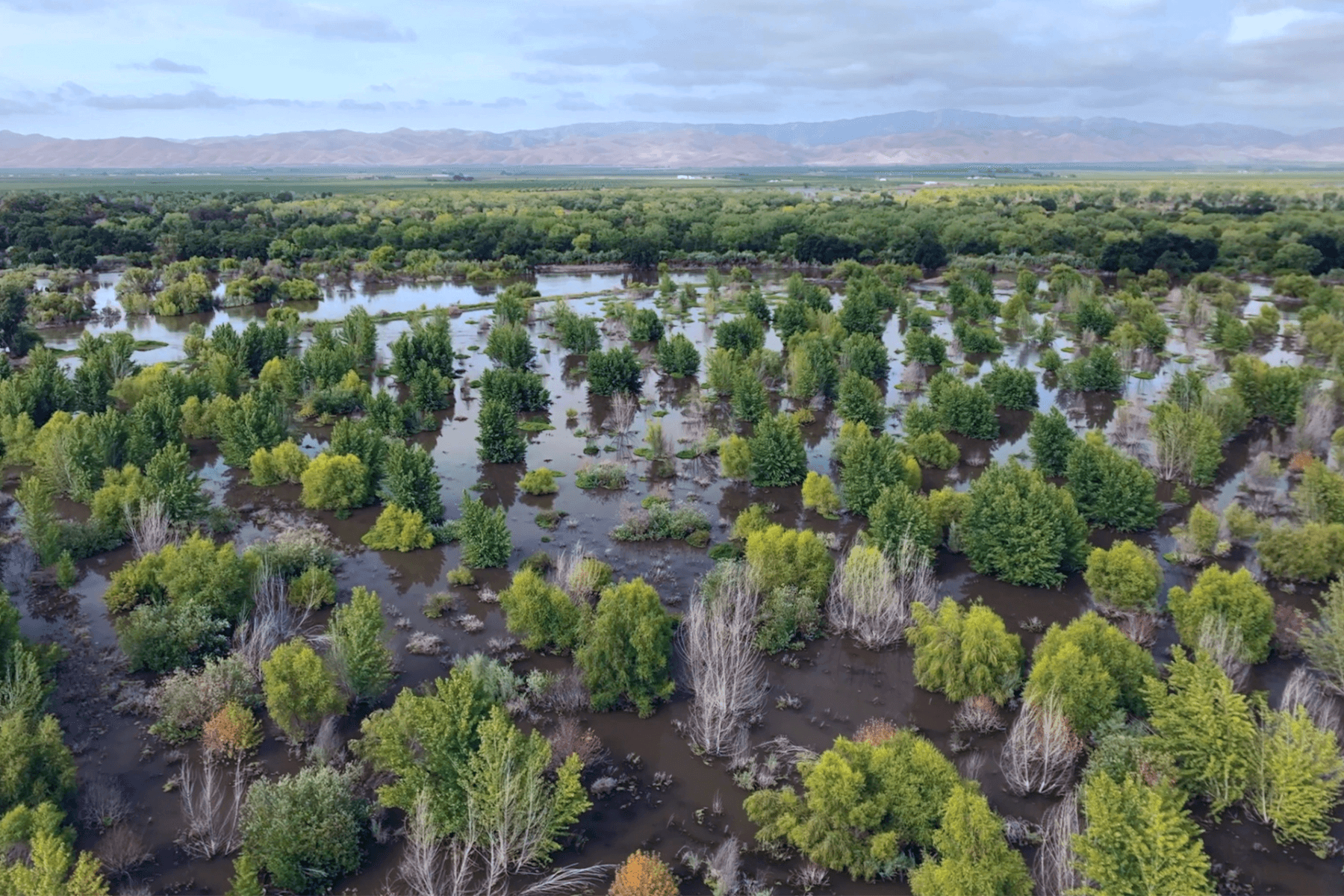
River Partners is tracking over 60 threatened species and have already documented promising trends in increased riparian brush rabbit occurrences and improved diversity in bird populations. Courtesy of River Partners
Standing under a large valley oak at Dos Rios in May, California State Parks Director Armando Quintero told a group of agency leadership and members of River Partners, “The beauty of a place like this is that many people in the Central Valley don’t get to experience the Central Valley for its really incredible and local natural beauty.”
Julian Morin, a park interpreter who takes guests on tours through the park in both Spanish and English, told NPR that, “We want to continue to increase accessibility to parks, they’re out here for everybody…Language barriers shouldn’t be why people can’t get out and enjoy state parks and experience everything they have to offer.”
According to the organization, River Partner’s founder, Bernard F. Flynn, was driven “to protect and restore the riparian forests of California, not only as a resource for wildlife, but for the citizens of the Central Valley and State of California.”
“Language barriers shouldn’t be why people can’t get out and enjoy state parks and experience everything they have to offer.”
First and foremost are the Yokuts people, the Indigenous people who have inhabited this area for thousands of years. When the Spanish first entered California, between 30,000 and 80,000 Yokuts people lived in the San Joaquin Valley. Now, only a few thousand do. They deserve natural areas where they can harvest traditional materials, like willow and tule, and traditional foods and plant medicines, like the lupna mushrooms, which water diversion, wood cutting, and climate change have decimated. Greening the Valley would serve Indigenous communities and provide a measure, however small, of reparations.
Then, because the Valley is an agricultural landscape, it houses a large Spanish-speaking population — communities with a long history of spending time outdoors and working for environmental causes.
Many Spanish-speakers work in outdoor industries, such as agriculture, construction and manufacturing, where they are directly affected by extreme heat, air pollution, chemicals, and wildfire smoke. In fact, although one-fifth of the national workforce is Hispanic, Hispanics compose more than half of hired farmworkers. That lived experience makes environmental issues personal. As Honduran-American, Onys Sierra told Yale Climate Connections in 2022, “The environment is what gives us life. So destroying it is the same as destroying ourselves?” Amen.
In 2022, the Pew Research Center found that “About eight-in-ten U.S. Hispanics say addressing global climate change is either a top concern or one of several important concerns to them personally.” Even back in 2017, research by the Yale Program on Climate Change Communication found that, “Latinos are much more engaged with the issue of global warming than are non-Latinos.” You can’t have that level of engagement without feeling a personal connection to — and having access to — natural places.
Recreation may be a privilege not everyone can afford, but the data shows that Latinos also hike, picnic, fish, camp and garden outdoors, and they value healthy, accessible natural spaces for these activities. Latinos-formed groups are advocating for this access, including HECHO, which stands for Hispanics Enjoying Camping Hunting and the Outdoors. Created in 2013, HECHO empowers Hispanic leaders to, in their words, “engage their communities in the conservation of our public lands” and to strengthen and preserve Hispanic communities’ connection “to nature and each other.”
Same with the group Latino Outdoors, which works to, “inspire, connect and engage Latino communities in the outdoors and embrace cultura y familia as part of the outdoor narrative, ensuring our history, heritage and leadership are valued and represented.”
This environmental work is about protecting human health, protecting cultural connections and ensuring access to healthy green spaces. With so many Spanish-speaking residents the Central Valley, the groups like River Partners and the State of California, serve these citizens well by helping to green the Valley.
Ethnicity and language play a central role in this larger effort, which also makes it fitting that the new state park’s name is in Spanish: What greater recognition of Spanish speakers’ presence in the Valley, and their influence on California, than the name Dos Rios?
The new park is a promising start to this larger effort to get underserved Californians outdoors. “Providing equitable access to all Californians is a priority for California State Parks,” California State Parks Spokesperson Adeline Yee told me, “especially in communities such as the Central Valley, and aligns with California’s Outdoors for All initiative, championed by Governor Gavin Newsom in 2021. Outdoors for All is a movement that is creating new parks, protecting existing parks, and expanding access to the outdoors for all Californians, especially for underserved communities.”
***
Two rivers meet at Dos Rios State Park — the Tuolumne and the San Joaquin. But two worlds also collide here — that of the pre-European world of seasonal floods and Yokuts villages, and the American world of mega-farms, roads, and suburban subdivisions. Two visions meet here, too — one that sees the opportunity for ecological restoration, and one that sees the opportunity to build more homes on farmland and continue business as usual. Dos Rios is proof that we can protect and honor the Valley’s natural history without sacrificing agricultural productivity or the need for more housing.
Both Indigenous and naturalized alike, all lose something sacred, and essential, when we inhabit land dedicated nearly exclusively to work.
Valley farms feed the world. We should celebrate their service. But who will feed locals’ souls?
Yoimut, the last member of the Chunut tribe of the Yokuts people, confronted a similar dilemma in the 1930s. “Cotton, cotton, that is all that is left,” she told historian Frank Latta. “Indians cannot live on cotton. They cannot sing their songs and tell their old stories where there is nothing but cotton.”
She had been forced from her land and was living in the town of Hanford. A century later, both Indigenous and naturalized alike, all lose something sacred, and essential, when we inhabit land dedicated nearly exclusively to work. You can’t measure spiritual nourishment the way you measure crop yields, profits and nitrate applications, but emotional health is just as important as food: If you can’t access green space in your backyard, you starve in a different way.
Help us sustain independent journalism...
Our team is working hard every day to bring you compelling, carefully-crafted pieces that shed light on the pressing issues of our time. We rely on caring supporters like you to help us sustain our mission. Your support ensures that we can continue to provide deeply-reported, independent, ad-free journalism without fear, favor or pandering. Support us today and make a lasting investment in the future.
RELATED STORIES

Award Winning


Today’s environmental and social justice challenges are unprecedented, and require an unprecedented collective effort.


Stay updated on our latest features, events and more. Subscribe to our Note From the Nest newsletter!
