
Little Angels
Little Angels
Scott noticed that there was something up with Eva on the morning of their youngest son Tim’s Little Angel ceremony. The rest of their kids lined up for inspection in the family bay in the Enclave garage. Laurie had her toddler clipped to her waist with a tether, leaving both hands free to reach the twin 9-millimeter pistols holstered inside the baby’s Kevlar front pack. Laurie was short, Eva’s height, and round-bodied at 17 from the babies. She went helmetless. After the second baby, she had cut her long hair and shaved her head. Scott thought it made her look angry.
John, 14, stood a little taller than his older sister, in full tactical kit like a miniature of Scott, from the helmet optics to the shouldered long gun and .45 sidearm, to the zip ties and stun grenades on his toolbelt. A toy soldier just out of the box and never played with. To Scott’s eye, John had perhaps too much ammo on his vest for the occasion, and still hadn’t quite figured out how to keep his helmet from slipping down over his eyes. James, 10, checked the load on his automatic listlessly and had velcroed his tiny tac vest, decorated with Batman’s face and swinging figure, all sideways. Scott felt like something was missing. There should have been more children, and Eva should have been fussing around them, especially the youngest.
Behind the children, a silvery self-driving vehicle shimmered and hummed on a charging plate athwart the entry to the bay. Scott liked the SDVs because they were safe. Outside the Enclave was anarchy, despite the best efforts of the President and the other good men with guns. SDVs were armored, autonomous and loaded with protective features, perfect for getting from one reasonably safe place to the next. They were financially beyond the reach of most families, even Enclave dwellers, but an SDV time-share subscription was included in the SuperSecure package.
Scott and Eva had ridden in clunky beta-stage ancestors of these beasts on pacification missions just after the Revolution. Nowadays, they were identical and metallic grey, shaped like pillbugs about twenty feet long and eight wide. They moved on two independently steerable axles and whether in motion or at rest made a vaguely annoying hum, like a rather large friction motor unwinding. Over the sound of the vehicle, Scott could hear the buzz of other SDVs, and more faintly other families forming up, checking kits, voices unintelligible.
Scott knelt by James and took the gun from the boy. Scott’s squat was no small feat with the weight of his own battered vest and well-used armament. He checked James’ sidearm — it was safed — and put it down between his feet, shiiiked open all of the boy’s velcro, and began putting his son back together. “What’s up, Buddy?”
“Timmy asked me to trade, Dad. Right before yesterday…”
Timmy’s second-grade class had been just learning to carry. As in all big families, there were hand-me-downs. With so much to be prepared for, according to the news, demand for firearms was high. Even with Scott’s employee discount and being a Hero of the Revolution, which entitled both him and Eva to a ten percent discount on everything, guns were expensive. Living in an Enclave, while it did a lot for Scott’s peace of mind, wasn’t cheap even after the Hero discount. So, Timmy usually carried an old .38 revolver that sometimes, hardly ever, really, jammed. It was James who had carried the cranky old .38 most recently, and he occasionally traded pistols with his younger brother out of sympathy. But not always, and not yesterday.
So, when the Crazy Kid burst into Timmy’s classroom shooting, the old .38 was all that Timmy had to use. The class brought the 15-year-old down, but not before the shooter had taken out half of the children and their teacher.
“…But I said no. If Timmy hadda had the .45 he coulda stopped that kid.”
Scott cinched James up. He thought about what Eva would say at times like this, and where she might be. He picked up the gun and handed it to James. “Look, buddy. It’s okay to be sad. I’m sad, your Mom’s sad. It’s right to have our Thoughtful Prayers about Timmy today. We all loved Timmy and we know he did his best, and, Jimmy, we love you.”
James checked and holstered the gun. Scott smiled and put his big hands on the boy’s small shoulders. Eva was always better at this part.
“What happened to Timmy was not your fault. There was nothing you could have done. Timmy was collateral damage. And what do we say about collateral damage? We say ’There’s nothing’— Hey Jimmy, are you with me? C’mon, man.”
John, bless him, stepped up. “We say, ‘There ain’t shit you can do about collateral damage,’ right Jim?” James giggled at the profanity, then repeated along with his big brother. Scott thought again of Eva.
“Boys, finish inspecting each other. Laurie, when the SDV opens up, get everyone loaded.” Scott stood up with a little effort and went back through the blast doors into their unit to look for his wife. Eva, with pursed lips, pale face and shadowed green eyes, hurried down the stairway, buckling her own kit.
“Is everything all right, Babe?” Of course, it wasn’t, and it showed in his voice. She paused in her descent three steps from the bottom, so she could look Scott in the eyes.
“Just a little blue this morning. That’s ok, right?” With a crooked smile, she lifted her arms as if to hug him, though the volume of their gear prevented it — an old gesture between them. Comforted, he reached out and patted the air around her.
“Thoughtful Prayers, Babe.”
***
In the SDV on the way to the ceremony, Scott compared Eva’s face from that morning to other memories. Eva’s morning sickness came early and was easy to recognize. Scott had been through six of her pregnancies so far. Scott was excited, pleased that there was hope on this day when yes, dammit, it was okay to feel sad about losing your youngest son. Scott blinked, and sniffed. Eva patted his armored shoulder.
It was quiet inside the SDV. Sights and sounds from outside the vehicle were blocked and dampened. The windowless interior was light grey, in a material that felt like a tennis ball to an ungloved hand. They sat in lightly padded seats or stood at a crouch, like chopper-borne infantry, or Vikings in the fog. Scott listened to Laurie talking nonsense to her toddler, to Johnnie — no, John — and James teasing each other. Scott felt so many different ways: sad and proud about Timmy, his Little Angel, joyful and protective about the family around him, and the new life inside Eva. The feelings filled him up for a moment as if he were made of water.
If Scott had been operating a vehicle as his father had when he was growing up, with his wife by his side and his family seated in the back, the car might have wiggled, just briefly. Scott was grateful that he did not have to contend with operating a vehicle, or with navigating the lawless streets.
The new elementary school was in a relatively safe zone not far from their Enclave. Their SDV joined the formation scuttling into the parking lot. Parents, siblings, and classmates of the Little Angels, all armed and armored like Scott and his family, exited the vehicles and clustered together, at a mutually respectful distance.
As Heroes of the Revolution, Scott and Eva were entitled to wear red patches on their shoulders. Eva was not wearing hers. Had she stopped wearing it? When? Scott nodded to a few other Heroes he knew. They exchanged thin smiles and some chatter (“Was it a Terrorist or a Crazy Kid? I heard it was a Terrorist at first.” “No, I’m pretty sure it was just a Crazy Kid.”), but no one quite relaxed.
The crowd formed around a statue of a girl. Larger than life, the middle-schooler stood about six feet tall, slightly crouched, sighting up the barrel of a .45 automatic at something taller, one pigtail between her teeth. The statue was a copy of the much larger bronze, titled Guardian Angel, installed in the new capital city.
The principal moved to the front of the crowd and activated the public address channel in her armor, temporarily taking over everyone’s comms. “ETERNAL LORD JESUS, BLESS US ALL AND BLESS THE PRESIDENT,” she began, with the speakers built into her armor shouting her words for the younger kids and others not wearing helmets or headsets to hear. The crowd settled. “STUDENTS OF FORD ELEMENTARY SCHOOL, FELLOW TEACHERS, PARENTS, AND FAMILY MEMBERS. YOU KNOW THE TRUTH. THANK YOU FOR COMING TODAY AS WE HONOR THE BRAVE LITTLE ANGELS WHO GAVE THEIR LIVES YESTERDAY FOR ALL OF US.”
“Thoughtful Prayers,” said the crowd.
“WE ARE PROUD OF THE WAY EACH AND EVERY ONE OF YOUR CHILDREN FOLLOWED THEIR TRAINING, YOUNG AS THEY WERE.” The principal looked from face to face as she spoke, sharing steely affirming glances with the Angels’ families.
“AS IT IS OUR TRADITION, WE’VE MADE YOUR LITTLE ANGEL INTO A DIAMOND FOR YOU TO WEAR. AS I SAY EACH OF OUR LITTLE ANGELS’ NAMES, WILL THE MOMS PLEASE STEP FORWARD.”
“Shine Forever!” said the crowd.
The principal began to read the names. Scott watched Eva step forward and noticed her falter. But she recovered and stood at attention as the assistant principal set a small diamond (probably made with part of Timmy) in a purpose-built receptacle in Eva’s armor, where it joined another.
Eva had received the other diamond almost eight years ago when their son Paul died in a Terrorist attack on the old elementary school. John, a year younger and in a classroom down the hall, had barely escaped the blast with his classmates. There had been no diamond seven years before when their firstborn, Larry, killed his second-grade teacher and two of his fellow students before the rest of his classmates gunned him down.
Eva stepped back into the crowd. Scott moved closer to her side and took her hand. He felt, acutely, the loss of his sons. But the feeling of fullness was there too, pride in his surviving children, and in Eva’s strength. There were a few minutes for Thoughtful Prayers. Scott squeezed Eva’s hand and prayed for the child growing inside her.
Soon, it was over. There were a few wary nods to exchange with acquaintances, and the families returned to their SDVs. James trudged into Limbaugh Elementary, shoulder-to-shoulder, with a squad of friends. On the back of James’ tac-vest, Batman fired a long gun with a circular magazine down into reaching black shadows.
Parting from James made Scott’s feeling of fullness diminish a little. The rest of the family loaded into the SDV and it continued its programmed rounds. At the Creche, Laurie and the toddler stepped out (“Say goodbye to Grandma, Clara.”) and joined other young women and a stream of children flowing into the old convention center, past a picket of armed security. Laurie worked as a wet nurse at the Creche, her day divided between feeding other peoples’ infants and supervising toddlers and preschoolers at play. As Laurie described supervising play, she and a few hundred other young women — some armed, most not — tried to contain thousands of two-to-five-year-olds within the old great hall of the convention center. She said she felt like a small patrol ship, with her guns and armor and the baby in front like a figurehead. Occasionally, a child would wash up against her and need calming, cuddling or correcting. But, mostly, she navigated an ocean of children that was sometimes still, sometimes violent, with activity. She was amazed that a child was only rarely hurt.
She said being part of that ebb and flow was Clara’s favorite activity.

Illustration by Tori O’Campo
Scott had a few minutes with John before the SDV stopped at the guard shack at Forrest Military Academy. He showed the boy how to adjust the helmet web so it wouldn’t slip. “I’m proud of you today, son. You stood tall at the ceremony and you helped me out back there with your brother.”
John grinned as the SDV coasted up to the curb. He hopped out and jogged up to the guard shack, where he cleared the chamber and exchanged his clip for a bright orange clip of non-lethal rounds. As the crew port slid shut, Scott caught a glimpse of his son charging toward the front door of the Academy into a hail of rubber bullets. Dum-dums bounced unheard off the armored sides of the SDV as it sped away.
John had assured him that the rubber bullets were harmless, but Scott had seen the bruises. Part of the program, Scott supposed. In addition to the daily tactical exercises, the school offered a rigorous academic curriculum and a no-nonsense attitude. It was expensive, but worth it, in Scott’s opinion. At 18, being a soldier and a Hero had been great, but at the end of the day, Scott was just another guy with a gun. Now, at 42, Scott saw that people who tell people with guns what to do, people like his boss, Howard, had it much better than people like Scott. He wanted his son to be a leader.
The full feeling had continued to quiete with Laurie’s and then John’s departure.
“Hey, soldier,” Eva smiled. “John is a surprisingly grown-up kid.”
Scott nodded, “A good leader. He got Tom out of his navel earlier with ‘There ain’t shit you can do about collateral damage!’”
It took Eva a beat to get it. Her smile flickered and returned, “And not too old to go potty mouth when it suits.”
They laughed together. Scott’s full feeling expanded, pushed out words: “Eva, this morning…”
She stopped him. “I know, and I don’t want to talk about it right now. It’s hard to hold all of it at once. Let me process.”
“Okay.” The feeling deflated.
The SDV stopped and the crew port opened on an alley roughly half a mile from Scott’s place of employment. The SDVs selected a random drop-off point each day, a security feature included in the SuperSecure package. They stood and patted the air around each other. Scott disembarked. The SDV drove away with Eva.
Scott settled into his kit, held his long gun ready and his feeling of love for Eva and his family close, and began to hike to work.
***
Scott’s walk took him through a district of old commercial buildings, three- and four-story brick and masonry blocks, on the ground floors of which were rows of small shops. Many were unused, stock abandoned inside. The rising sun illuminated shop windows displaying dusty hats and dresses, old paper magazines and heavy pre-Revolutionary furniture. However, the neighborhood was not completely empty. Some of the storefronts were in use, and there were people on the street, unarmored folks who generally scurried away before they crossed Scott’s path. Scott smelled grilling meat and onions and spices he couldn’t name, and heard unfamiliar vowels.
As he walked, smelled, looked and listened he settled into his tactical self. Muscles remembered how to hold up the kit. Breathing slow and quiet, head on a swivel. His heart, still full of Eva and the kids, slowed.
At a corner, Scott stopped to let two armored figures with long guns, herding a group of dark-skinned men in zip ties down a cross street, heading elsewhere. They showed each other the red patches on their shoulders. Other than that, neither Scott nor the other two wore any livery or insignia. Scott could not tell whether they were law enforcement, or private police recruiting a work detail, or something else.
The red-on-yellow signage of KYLEZ GUNZ, Scott’s place of employment, covered fifty feet of second- and third-floor windows in a former warehouse of dark red brick. The first-floor frontage was decorated with pictures of strong young men and their guns, and young women admiring them. Crimson posters lettered in white read:
YOU KNOW THE TRUTH
KEEP OUR COUNTRY GREAT
LONG LIVE THE PRESIDENT
FREEDOM ISN’T FREE
HANDS OFF OUR GUNS
Rafe and Siggy, in full kit, were sweeping cigarette butts and protest leaflets off the sidewalk. They pushed it all across the boundary marked by a half-circle painted with highway paint on the sidewalk and street in front of the store. Second Amendment protesters were supposed to stay outside the circle and to allow a path for customers. Scott’s job, and Rafe’s and Siggy’s, was to enforce those conditions and otherwise facilitate customer access to the store. For that, he was paid an hourly wage, plus tips and commissions on business that he brought in.
The money was good enough for Rafe, a short Black man from Texas, and Siggy, a tall blond from Wisconsin whose real name was Seymour, but who went by Siegfried because, he said, he got paid better. Rafe and Siggy were straight-up mercenaries, not Heroes. Just a couple of guys who liked working with guns. Between wars and warlike operations, they shared a cheap apartment and shifts at Kylez and made more than enough to eat and drink well and sleep soft. For Scott, even with the Hero discounts, it was often tough to stretch his wages until the end of the month.
This morning, instead of ragging on him for being late, Rafe and Siggy put their brooms down inside the outer door, closed it, and walked in flanking him. “We are so sorry about your son, man,” said Rafe. Siggy gave a steely, Nordic nod. Scott was surprised by the camaraderie. He felt a flush of feeling, like an echo. They stepped through the store, shoulder-to-shoulder.
The sales room was already brightly lit, salesgirls in low-cut blouses and daisy dukes polishing the glass, gunmetal shining through the display cases and along the racks of long guns. It smelled of gun oil and air freshener, with a tang of testosterone that the freshener did not quite cover. The boss, Howard, was in the back room to welcome him. Howard didn’t wear armor but was carrying a sidearm in a shoulder holster over his creamy white shirt, and, Scott thought, something at his ankle. Howard held out his hand. “Scott, so sorry about your loss. You know the truth. You know our Thoughtful Prayers are with you.” Rafe murmured, “Thoughtful Prayers.”
Twenty-four years earlier, Scott and Eva and two dozen others had followed Howard into one of the battles that became the Revolution. Scott and Eva had been together since. Right after the Revolution, it had been easy for them both to get work. Populations had to be pacified, or cities razed, to ensure that everyone remained free. Months-long, even years-long ops had been required, ensuring a steady income for good guys with guns. When Eva got pregnant with Larry and had to quit active operations, Scott’s income had seemed like more than enough all by itself. They put up what they had saved as a downpayment and moved into the Enclave with the SuperSecure package. Ten years later, after the cities had been reduced enough that the President could declare the Revolution complete enough, good contract work dried up. Eva had suggested he talk to Howard. “He knows what to do with a good guy with a gun,” she had said.
Scott put on his best smile and took Howard’s hand. Howard said, “You know you don’t have to come in today. You’ve got time off banked up.”
Scott could trade time off for cash at the end of the year, when tuition for Forrest Academy would be due. He didn’t want to use the day off, and, while he didn’t necessarily want to be there, he didn’t know where else to go. He wanted, if he thought about it he wanted very much, to go home and talk with Eva, but she wouldn’t be ready yet. When she had something to say she generally thought it all the way through, and Scott knew better than to rush her. Scott took a breath.
“I’d rather be right here, Howard,” Scott said, and gave Howard’s hand an extra squeeze.
“Thought you might,” said Howard. He released Scott’s hand “I punched you in at eight-thirty.”
“Thanks, boss!” After taxes, the extra 20 minutes on the clock would be worth about four dollars. Eva had shown him the math, then coached him on how to seem grateful anyhow.
The security team marched back through the sales room and opened up the doors. The rule was that the last one in got the first shift outside. Scott pulled a chair out of the security vestibule and over to a window where he sat down. The street was empty of people. He was still warm from his walk from the SDV, loose in his muscles. He leaned the chair back against the window. The sun was on his face, and he closed his eyes for just a moment.
***
“Hey! Hey Hero!” Scott woke without startling and opened his eyes slowly. A couple of Second Amendment protesters waved at him from outside the painted circle. “Wake up, Hero!”
Like most Liberals, they were unarmed and unarmored. They wore workers’ clothing and carried signs that Scott ignored. Liberals did not live in Enclaves. Liberals believed in killing unborn children, confiscating all the guns and giving everything away to the Chinese and the Mexicans. They listened only to fake news and did not believe in Jesus.
There were only two of them, but more slim, unarmored figures were approaching. Scott stood up. He raised his voice, “Hey guys?”
Siggy and Rafe stepped outside. Rafe took a post on the other side of the doorway and after a quick look, Siggy jogged back inside to report to Howard. For now, the threat was minor. A few customers were also arriving, and the protesters were respectful, keeping their distance and not molesting them. But Scott had seen protests get nasty and had to shoot protesters on more than one occasion. Scott, Rafe and Siggy took shifts of two waving the customers in, displaying their long guns as they patrolled the painted semicircle. It took most of the morning for the crowd to fill the space between that perimeter and the building across the street, filtering in pairs and small groups from all directions, packing in around the painted half circle, blocking the sparse traffic. Finally, all three security were outside, with long guns at the ready. Howard and one of the salesgirls had now posted as an inside security detail, minding the customers. The outer doors had been closed, with folding chairs, brooms and any other potential weapons stowed inside.
At about eleven thirty, Scott noticed that there wasn’t a path through the crowd, so he began to make one with his armored shoulders and the butt of his rifle. As if this were a signal, the Liberals raised their signs and posters plastered with pictures of what they called murdered children and began to sing. The song was slow with simple harmonies, and the crowd had rehearsed. It reminded Scott of a hymn at first, until he listened to the words.
Without Love, You can be whoever You want
Without Love, there is no one to hold You
Your heart is as wide as a continent
Without Love, it dissolves in salt tears leaving only
Obsidian knives . . .
This was not a Thoughtful Prayer. It was not even a chant. Scott knew the usual chants and had counter-chants for most of them. Scott tried to stop listening, but the singing went on. He moved deliberately through the crowd, mostly letting Liberals get out of his way, pushing aside those who didn’t. He was reasonably gentle. Howard could get sued if Scott used unnecessary force on anyone outside the circle.
Scott reached what he judged to be halfway through the crowd. He looked back at Rafe and Siggy by the entrance. They pointed beyond him. Scott could see some young men at the fringes of the crowd, carefully approaching the store, uncertain. Scott pointed his rifle and the Liberals parted. Scott waved the young men forward, and a handful headed his way, but the passage he had made back to the store was closing up, the crowd slowly pressing inward.
…With a Gun, You could do whatever You want
With a Gun, You could be the big angry man
Your Hurt is as large as a continent
With a Gun, You could share it and perish in fire
Like a Viking …
Scott understood what the Liberals were doing. Like the pictures they were holding, the pressure of the crowd and the song were meant to discourage his employer’s customers. It was Scott’s job to get them to the front door of Kylez regardless. He waved again to the young men and showed the long gun to the crowd.
. . .Love is hard, but should not be as hard as a Gun
Nor should Guns be so clearly the answer to shame
Nor should Guns be so clearly the answer to Fear
Nor should Fear be so easy to drip in Your ear
With a flattering whisper . . .
Scott now had a train of four nervous young men. He saw that they all had pistols out, watching the crowd. He nodded to them and shouldered back the way he had come. They followed. Scott had what he’d been told was a classical education. He thought of his progress through the singing throng as getting past the Sirens without the benefit of earplugs.
. . .With the Gun, You could be who You dreamed to be
If You dreamt of a corpse in a pool of blood.
Your future is full as a continent
Don’t die on the beach with Your boots still wet . . .
Scott reached the entrance. Rafe and Siggy opened the doors wide and ushered in three young men. Scott looked back and saw the last one wavering, caught in the spell of the song. He marched back and grabbed the kid by his collar, hauled him up on the sidewalk and handed him to Siggy. The singing stopped.
“Hey, what the fuck?” said a fat Liberal with glasses at the edge of the circle, just outside the paint. “You abducted him.”
Scott stepped away from the door, toward the annoyance. “I helped him exercise his freedoms, citizen.”
“What about his freedom to change his mind, man? Maybe he doesn’t want to go kill a bunch of kids. Now he’s inside, he’s gonna walk out with a gun, so he like, has to?”
“That is the most ridiculous line of Liberal bullshit I have ever heard, citizen.”
But the fat Liberal was ignoring what Scott was saying and was talking to his friend about him. “Yeah, so this guy thinks that, even if this kid might be thinking of doing something bad, just having a gun isn’t dangerous.”
The fat Liberal’s friend butted in. “It’s when the kids have the gun and the ammo that it becomes dangerous, man.”
“Speak for yourself,” said a big brown woman, showing a fresh bruise on her shoulder. She must have got in the way of the butt of Scott’s rifle. Scott blushed at the display of female flesh, though the salesgirls inside and the young women in the posters behind him showed much more.
The Liberal continued to talk to his friend. “But that kid, that kid could have gone another way, and now he might wake up one morning with a loaded gun and decide to kill him some babies, or maybe some cops, like this guy here.” He gestured at Scott. “This guy’s a fucking Hero of the fucking Revolution.”
The crowd around Scott took up a familiar chant about killing babies and waved their pictures of bullet-riddled children. The photographs were all alike, like all the other ones before, red Rorschachs that meant nothing to him. Scott had practiced ignoring the pictures. He knew the truth. Freedom wasn’t free, and there wasn’t shit you could do about collateral damage, so there was no point in looking at it. But Timmy’s perfect little face, a copy of his mother’s, was on a poster, and Scott could not help but see his son, and then he saw the rest of the image.
The high-velocity shells had torn Timmy’s arms off and shredded his torso but had not touched his face, the curls of hair on his forehead. The ten-by-ten placard showed all of it.
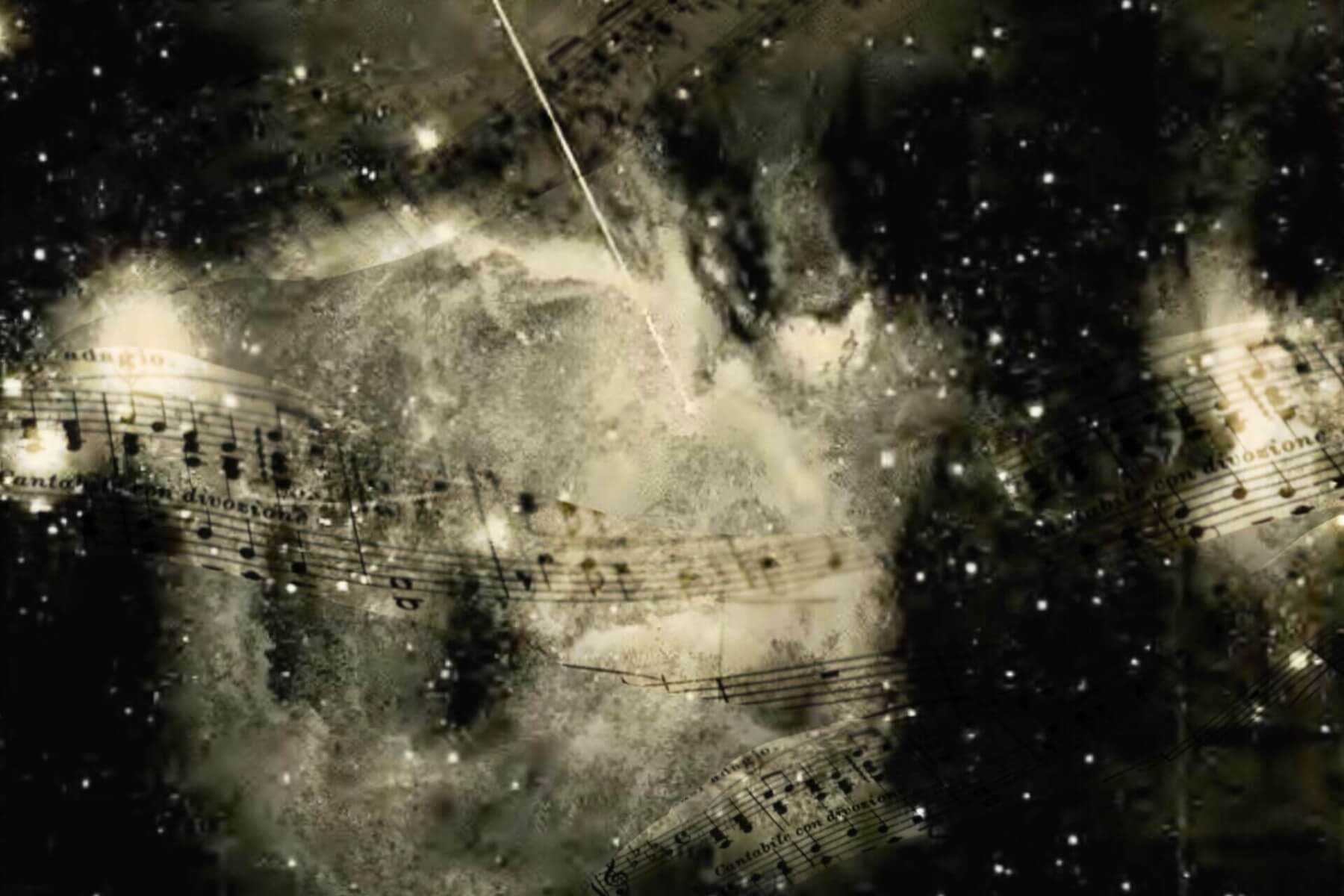
Illustration by Tori O’Campo
At the Angel ceremony that morning, Scott had received no diamond, though he also had lost three sons. With each lost son something pierced his armor and entered his heart. Those wounds sang to Scott, first a lonely solo, then a duet, now a three-part canto difficult to ignore. It is part of the fullness Scott had been feeling. That song joined the one the protesters were singing, the one he had tried to ignore about sympathy for Crazy Kids like the one who had taken Timmy, the ones who had taken Paul, and Larry. He thought about hearts reduced to shards of volcanic rock. He remembered being an angry kid, an outsider like the Liberals now were, with a long gun and a cause and the words of the movement singing in his ears. He had been chanting them like mantras ever since. He knew the truth, that the President and his men had made a world where Scott and Eva could live freely, and Scott thought he understood the price of that freedom.
Seeing Timmy made him doubt the wisdom of the bargain. Perhaps three sons was too high a price. For a fraction of a minute, he felt shaky, sweaty and could not decide to move. For a fraction of a second, he could have dropped his weapon, dropped to his knees and sobbed. But he knew the truth, he knew the price of freedom, and because he knew the most important truth, that he, the President and the other good men with guns could not be responsible for that cost, he moved. He emptied the long gun into the crowd and then loaded another clip. He was reloading again and screaming “How dare you desecrate my Little Angel!” when Rafe and Siggy knocked him down.
***
Fortunately, most of the Liberals who were killed were inside the painted circle, and they only had to drag the others a few feet. A squad of protesters had rushed into the protected zone while Scott was frozen, before he opened fire on the fat Liberal and his friends. The Liberal suicide squad managed to deface the windows along the storefront before Rafe and Siggy shot them down.
Howard’s lawyer, whose shirt was whiter than Howard’s, came down to Kylez with his own small army of red-tagged security and explained to Howard, Scott and the other employees, and then to the police and the press, that when the protesters got to within 30 feet of the entrance of a gun store, they were, legally, unreasonably interfering with the exercise of rights guaranteed by the Second Amendment, which in turn legally entitled anyone with a gun to reasonably fear for his life and take appropriate action.
The rest of Scott’s shift was consumed in interviews with law enforcement, news and fake news. The media seemed to think the Liberals had targeted him specifically because of Timmy. Nobody mentioned James or Larry, but it was only a matter of time before the fake news would be back with more questions. Then, Scott had to stay and help clear out the bodies, sweep up the cartridge casings, clean the windows and hose down the sidewalk. Scott’s overtime didn’t make up for the lost commissions on Kylez’s sales to the four young men Scott had led through the mob, and a generous tip from the last one, whom Scott had dragged in by hand. Howard kept all that to cover bribes and expenses, even though Scott did most of the cleanup work. The worst was the graffiti.
The Liberals had drawn obscene babies on the glass over the images of young men and young women — babies falling out of the bikini bottoms of the young women modified with exaggerated pregnancies, babies squashed under combat boots, babies bayonetted by the eager young men. Scott now felt empty, like the complicated fullness that he experienced that morning had been forcefully sucked out of him by the stream of bullets. The confusion and rage that had connected his emptiness and anger to his trigger finger was not gone, exactly, but rather locked away. The Liberals and the fake news stayed away, but they would be back tomorrow.
***
Eva had not gone directly back to the Enclave. She learned about the shooting minutes after it happened from a report on the fake news. The fake news often covered things as they occurred, though the coverage was hopelessly slanted against the President. Knowing she would be needed at home, she cut her meeting short, but not before firming up an appointment for the next day.
Laurie learned about the shooting from her mother. Only a few minutes into supervising play, she was annoyed to be hustled away from the children and then home with Clara and the baby in a security SDV. Eva had made it home in the nick of time and explained that Scott had had to shoot some Liberal protesters, and the Creche feared reprisals against Laurie and Clara. Laurie and Clara couldn’t go back to the Creche, for now.
James saw the fake news feed minutes after the shooting occurred on a squaddie’s contraband cell phone. He felt proud of his Dad all day at school, and glad that as many people as possible were being punished for Timmy’s death. He wanted to go home and give his Dad a big hug.
Instead, he got into an argument at the dinner table with John about the whole thing and Dad got home late, so he fell asleep and didn’t wake up until Dad started shouting.
John had seen the shooting over and over at school. As an impromptu exercise, his teachers and classmates spent the afternoon dissecting and re-dissecting the Liberals’ tactics and his father’s response. When John got back to the Enclave garage he waited until the SDV rolled away and then vomited behind a neighbor’s trash containers. Inside, he found his mother in shock and his brother bubbling with praise for their hero father. Eva had reflexively cooked something that James would like, and John reflexively ate. Over dinner and the washing up, he quieted James down by engaging him in a discussion of crowd control tactics.
Eva couldn’t eat. After the boys took their argument upstairs, she sat for a bit before she went up herself, leaving her portion of dinner on the kitchen counter. She closed the door to the hallway. She quietly laid out a change of clothes, three of underclothes, her grooming kit and an envelope full of photographs of her and Scott and their children. There were photos of babies and toddlers and first days of school, but no graduations. She found an old knapsack in the back of her closet and packed it, then put it back into the closet.
She felt chilled. She changed into soft pajamas and a robe and sat on the bed to wait.
***
Scott was quite late getting home. Safe behind the blast doors and the perimeter alarms, Scott took off his armor and most of his guns.
The rest of the family had eaten and were upstairs. A plate had been left on the kitchen counter and smelled promising. He went up. He could hear John and James through a closed door in the room that James had shared with Timmy, arguing about something.
He peeked through the half-open door into his daughter’s room. Laurie and her toddler slept in a swirl of blankets, the baby in a crib close by, all warm in the orange glow of a nightlight. He began to feel again a little of the fullness he had felt earlier, at the ceremony for Timmy.
In the master suite, Eva sat on their bed in pajamas and her soft robe, hugging her knees to her chest, looking small without her armor. “Hey”
He sat on the bed. “A lot, today.”
“It was. It is. It will be and shall forever be.”
“What?”
“A lot. I have some things to say. James told me about the guns. James told me that we let Timmy go out with a faulty piece.”
“The .38 works pretty well most of the time and it’s a good size for him.”
“It was a good size for him. Now he can’t use it. And yes, I know, even with a rifle or a…or a bazooka, Timmy didn’t stand a chance, the Crazy Kid could have gone to James’ classroom instead, and there’s nothing we can do.”
“About collateral damage,” Scott tried to finish.
“No, about any of it. There is nothing we can do about our daughter bearing children like a cow, and there is nothing we can do about Timmy and Paul and Larry being dead, and there is nothing we can do about the rest of our sons turning into little soldiers before our eyes and there is nothing we can do about how we feel about it, so there was nothing you could do about all those bullets this morning. I saw you on the fake news. They all saw you. No, Laurie hasn’t seen it. I told her about it.”
“Those were all good kills! They were inside the paint!”
“I’m sure you colored inside the lines, Scott, but that’s not what I want to talk about. You are a Hero of the Revolution and you can shoot anyone you want. But you didn’t have to shoot, not today. You did all that for Timmy.
“I see you breaking, soldier, battle-friend, husband. I need to talk to you about how I’ve been breaking too.” She waited. He didn’t know what to say. She continued.
“You know how when we lost Larry I didn’t flinch. We were so broken and we both kept it together on the outside.”
“You are so strong,” Scott murmured. He held out a hand. She clasped it briefly and hugged her knees more tightly.
“But then, we lost Jimmy, and I…at first, I took my diamond and I actually felt proud. But then there were so many diamonds. All our friends had diamonds. So many bits of carbon that were once bone or brain or…I stopped feeling proud of it, stopped feeling like Jimmy was an angel, and started feeling like he was a victim.”
“A sacrifice . . .”
“No, a victim, an innocent killed for no purpose.” Eva was crying now, talking through tears using a precise diction that gave each word a breath and a beat. “So, I said to myself if they put a second diamond on my armor, if they take another one of my children away I won’t give them any more after that.”
She held out her hand. Scott didn’t take it.
“What are you talking about?”
“Scott, I love you, but I don’t want to have any more babies. I don’t want to have this baby.”
Scott was startled, as if the fetus were his secret.
“Of course, it’s a baby because this is exactly how it always starts, and of course you know, because you love me. They’ve taken three of my babies, our babies, Scott, there are three more left to take, and I will not let my heart be broken any more than that. I just can’t do this anymore.”
At first, Scott didn’t understand what she meant. He had never considered a possibility other than having the new child. When he did understand, he felt his bones grow cold and felt acid tears form at the edges of his eyes. “What you are talking about is illegal. It’s against what we believe.”
“But it happens. There are places, safe places.”
“You know I can’t agree to this.” Then, belligerent, “Why even tell me? Why not just do it? Why not just go murder our child?”
“Because I would be away for days and you would wonder why, and because I might not come back. Because you are my husband and I love you and I want to share this terrible thing with you, like we shared Timmy this morning, and Paul before and Larry before him. Like we shared that Day. How many did we kill that day? How many did you and Rafe and Siggy kill today?”
Scott was filling up again but with a cold fluid. The place to which the morning’s red rage had retreated began to throb. He stood, moved to the bedroom door, and made sure it was closed. “When would you go?”
“Tomorrow. The sooner the better, really, and better you not know where.”
Scott stood before Eva and held out his hands. “There’s no way I can change your mind? You used to know the truth, you used to know that every child is an act of faith and a seed of hope for the future, how we who did the work of the Revolution have to keep our country great. And to prove it, with every child we’ve lost, God has blessed us with another.”
Eva’s voice was as cold as an egg frozen in liquid nitrogen. “We said that was the truth, and then we strapped them up and sent them off to die. We couldn’t even give Timmy a gun that worked. I would rather let this one go before I become attached. If that’s murder then we are both guilty of so much more.”
Scott was full of cold mercury. He used his gun.
***
Scott sat with Eva in her room at the Intensive Care Obstetrics Ward of the Creche. He held her hand. It was warm but listless. Eva’s green eyes were taped shut, her head inside a tangle of wires and tubes. She was monitored, intubated and catheterized, having suffered a blow to the head that put her in a vegetative state that the doctors feared would be permanent. The new life within her was fine and could be expected to come to full term, they said.
James was understandably upset when Scott explained to the children how he had neutralized the threat to his unborn child. The two older children were practical about it. Eva had some sedatives in her kit that Laurie knew how to put to good use. She took charge of James and seemed to barely notice Eva, sprawled there. Scott left James with Laurie and had John help move Eva into an SDV. John stayed with him through the ride to the hospital, the talks with the doctors, and the admissions paperwork, but once Eva was settled in her room, John wouldn’t sit down and finally left to check on James, he said. Scott could hear his son’s kit — still too big for him but not for much longer — rattle down the long hallway of the ward, past rooms where more quiet women and their machines gestated another generation.
Scott watched Eva sleep. “Soon we will see our beautiful child, our little angel,” he whispered. Eva said nothing. The machines hummed and gave off a faint odor of ozone. Outside, there was a clatter of automatic weapons fire.
Help us sustain independent journalism...
Our team is working hard every day to bring you compelling, carefully-crafted pieces that shed light on the pressing issues of our time. We rely on caring supporters like you to help us sustain our mission. Your support ensures that we can continue to provide deeply-reported, independent, ad-free journalism without fear, favor or pandering. Support us today and make a lasting investment in the future.
RELATED STORIES



Award Winning



Today’s environmental and social justice challenges are unprecedented, and require an unprecedented collective effort.


Stay updated on our latest features, events and more. Subscribe to our Note From the Nest newsletter!
