Invasive Species?
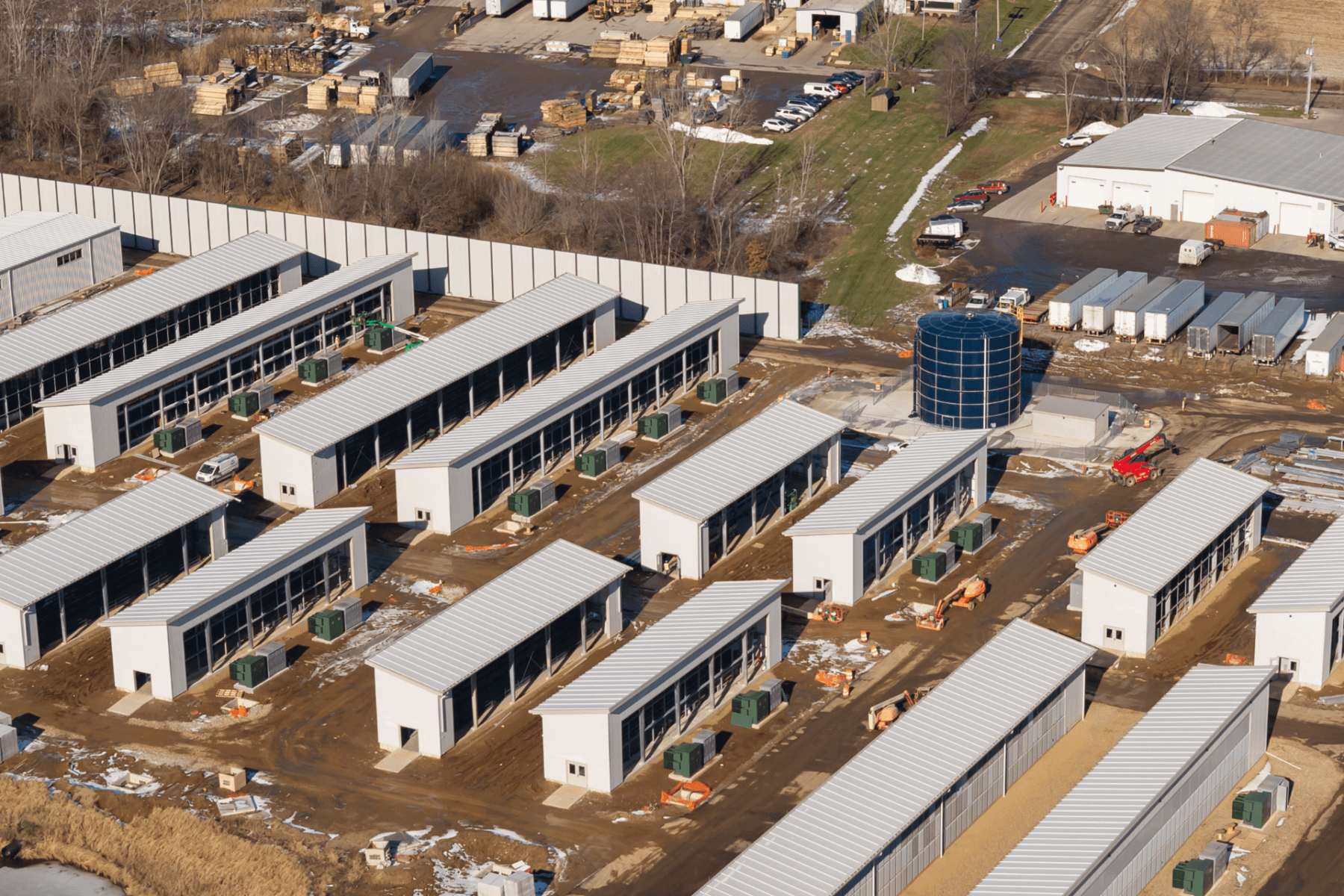
On a recent frigid Wednesday afternoon on the outskirts of Austin, a small town near the Iowa border in southeastern Minnesota, about 100 people gathered from across the region at the Jay C. Hormel Nature Center for a seminar on hyperscale data centers. Speakers included developers, government officials, hydrogeologists and environmental advocates.
The audience was equally mixed with elderly women worried about pollinators, political candidates, and city administrators wondering what data centers might do for their bottom lines.
Standing toward the back in a red and black flannel shirt was Mike Seifert, Scott County chapter president of the Minnesota Farmers Union. Seifert says farmers are worried about how data centers could affect their livelihood.
“We hear a lot about intensive water and electricity use,” said Seifert. “I think it’s safe to say that there are a lot of farmers who don’t know much more than that. And so there’s a good deal of concern about how that will impact us in our industry.”
After years of building on the coasts and in the South, data center developers are now moving into the Upper Midwest, drawn by its relatively cheap land, infrequent natural disasters and colder climate. Here, developers are making enticing offers to city leaders for large pieces of land, promising new jobs and generous tax revenue in exchange for permission to build hyperscale data centers that will support massive cloud computing and the burgeoning AI industry.
But these data centers are increasingly raising concerns over their water and power consumption, as well as the noise they generate. Residents say they are alarmed by how developers are employing arcane loopholes to skirt more stringent environmental reviews while avoiding public scrutiny by asking city officials to sign nondisclosure agreements. In multiple instances, environmental advocates have successfully blocked proposals from moving forward, but the proposals keep coming.
***
The first hyperscale data center was built near Portland, Oregon, in 2006. Hyperscale data centers are commonly defined as occupying at least 10,000 square feet, containing at least 5,000 servers and needing at least 100 megawatts of power to run. They often consist of several buildings on a single campus.
In Minnesota, there are currently 21 active proposals for hyperscale data centers, while three others were suspended. So far just one, owned by Meta, is under construction. It is set to open later this year in the small city of Rosemount, just south of the Twin Cities metro region. In addition to promising that the center will generate millions of dollars in tax revenue, Meta says that once the center is completed, Meta will launch a community action grants program, funding local nonprofits and schools dedicated to supporting STEM education.
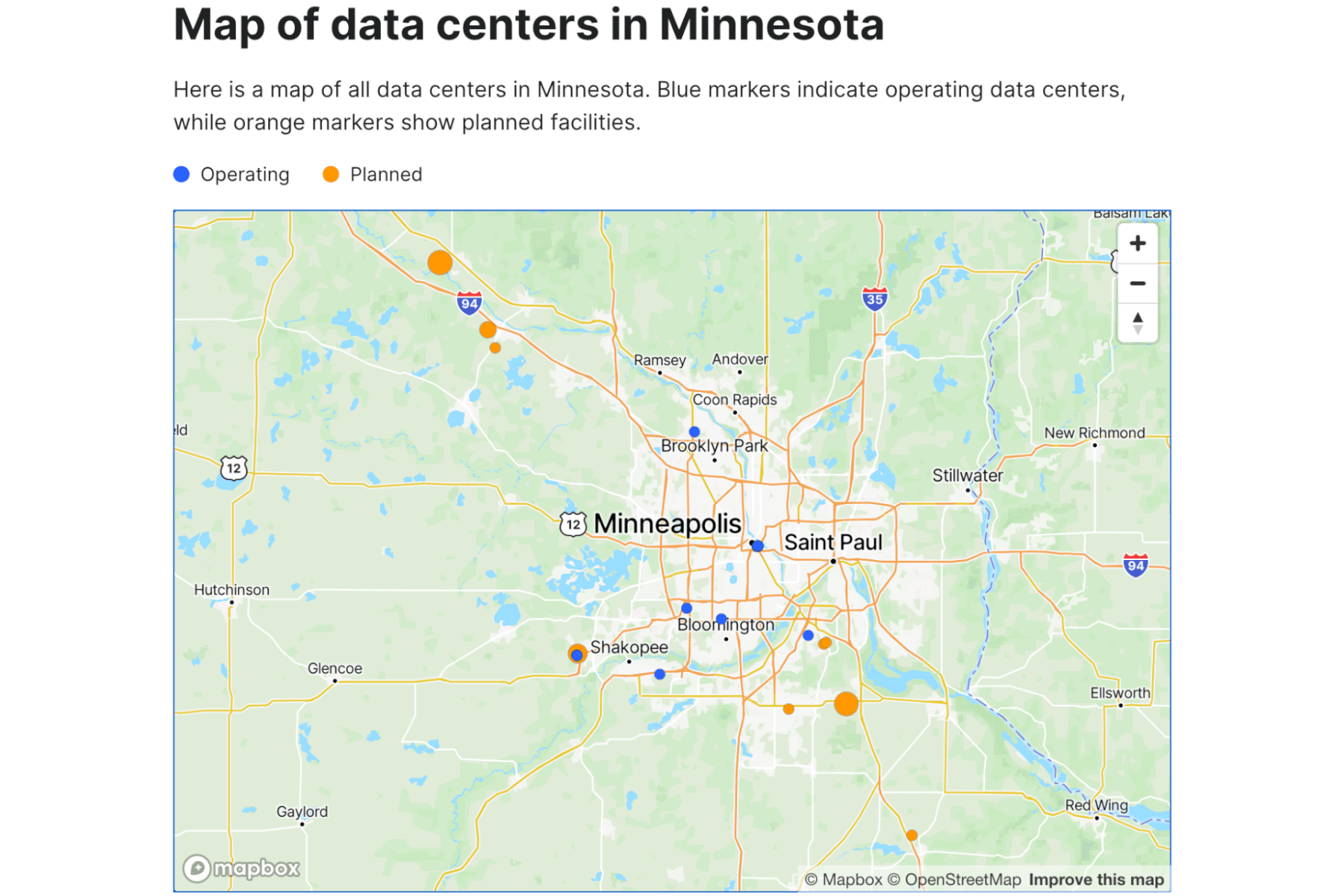
As of February 2026, Minnesota has 13 operating data centers with 43 megawatts of capacity and 12 planned projects that would add 1,120 megawatts of additional capacity. View the interactive map here. Courtesy of Cleanview
Trisha Sieh is a practicing civil engineer and a Vice President at Kimley-Horn, a planning and design consulting firm that has worked on several hyperscale data centers. She says the data centers being built today are very different from those built 20 years ago and that the tech companies behind many of these data centers are leaders in the renewable energy movement.
“The investment is actually really helping advance that renewable energy,” said Sieh, adding that in her experience these projects pay their own way and improve outdated power grids. “Our grid is fairly antiquated since its initial build-out 60-ish years ago, so there are a lot of improvements that need to be made and this is an investment, an infusion of money, that is able to help strengthen the grid.”
There are numerous types of data centers involving different methods of cooling as well as different sources of backup power, depending on their purpose. Sieh says with today’s data center designs, there’s a balance to be struck between water use and power consumption.
“If you did use a lot of water, you would use less power for cooling. Using no water, you use more power. So, from an engineering standpoint, where it ends up always being the million dollar question is, where do you strike that balance? And that’s based on the locality, based on what you’re surrounded by, a lot of factors that go into that: your temperature, weather patterns, wind. So it’s complicated, it’s not a simple answer… But all of the data centers and users and all of us engineers that are working for them, we are always trying to optimize and make this as efficient as possible.”
Minnesota, known as the “Land of 10,000 Lakes,” is a particularly attractive location for data centers due to its abundant supply of fresh water. But an issue for Minnesota is that the proposed centers are tethered to existing electrical and digital infrastructure, which is where the water isn’t.
Carrie Jennings is the Research and Policy Director for Freshwater, a nonprofit dedicated to preserving clean, sustainable water for communities and ecosystems. She’s concerned that the speed of business is outpacing the speed of policy development in the region. Some of the data center proposals are asking cities for volumes of water that equal as much as 50 percent of their current use. But because developers are buying land located where high voltage power lines intersect with fiber networks, many of these sites aren’t located near major rivers or lakes. Jennings says that means they’ll have to rely on local aquifers.
“The farther you get away from the Great Lakes or a surface water body, the less likely you are going to be able to sustain a large water user on groundwater alone,” says Jennings. She notes that drawing down the water table can lead to the creation of sinkholes, and worse. One community considering a data center proposal asked the Minnesota Department of Natural Resources to stress test the aquifer with extended pumping.
“During that period of time, private well owners who were in rural areas with their own wells — not on city water — got this surge of black stuff, gray stuff in their water in their houses,” says Jennings. She also says testing revealed the presence of both naturally occurring manganese (a neurotoxin) and arsenic (a carcinogen) that had been sucked out of the nearby glacial sediment.
Last year, the Minnesota state legislature passed legislation requiring data centers to work with the Department of Natural Resources earlier in the development process to ensure a proposed location has an adequate water supply.
***
The sudden surge in data center proposals is testing Minnesota’s permitting process in new ways, and developers appear eager to use loopholes in the system. Several have taken advantage of what’s called an Alternative Urban Areawide Review (AUAR), which provides an environmental review of a piece of land based on several potential uses, rather than a specific construction project. As a result, the developer can announce the project they plan to build after the opportunities for public comment have already been completed.
That’s what happened in Pine Island, Minnesota. Aubree Derkson is one of a group of residents who found out late in the review process that a data center was being planned less than a mile from where they live.
“The challenge was residents as a whole did not know what was happening. When you don’t know what an AUAR is and you advertise the project as ‘come comment on an AUAR for Project Skyway,’ nobody knows what the hell you’re talking about,” says Derkson. “They don’t mention a data center and they keep things really vague.”
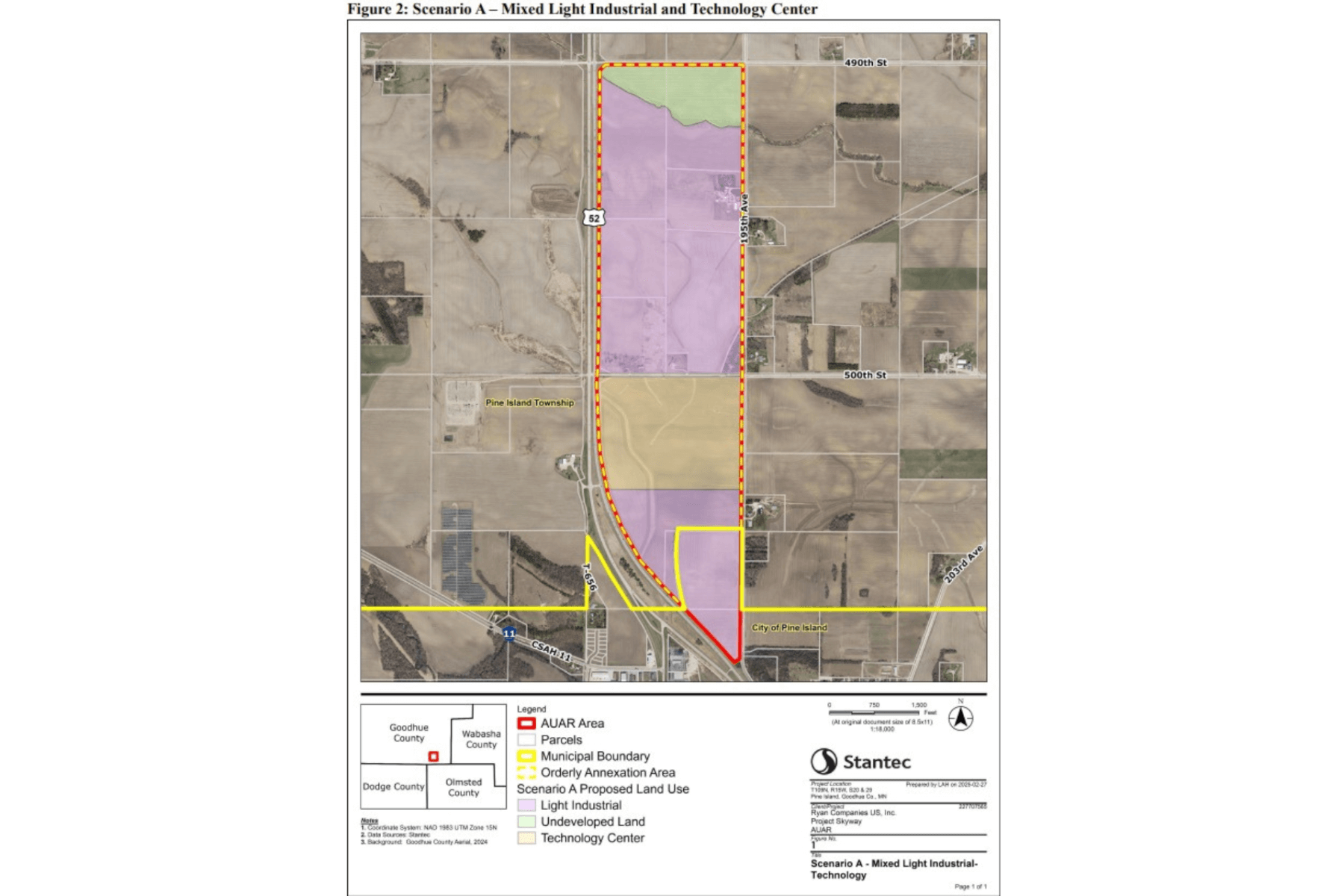
Map for “Project Skyway,” marking the designated areas — including the industrial and technology center — as planned by Ryan Companies US, Inc. Courtesy of the City of Pine Island
Derkson says she and her neighbors are concerned about noise, emissions from backup generators and a possible increase in their utility bills.
Developers argue they don’t actually know many of the details yet, because many of them are building centers in anticipation that they’ll get buyers, or renters, for their facilities, and they don’t yet know what specific needs they’ll have. But it’s the city leadership that makes the final call on which type of environmental review process to employ, and residents are increasingly frustrated by city administrators who appear to be making deals with developers without public input.
Kathryn Hoffman is the Executive Director of the Minnesota Center for Environmental Advocacy, which currently has five lawsuits against cities and developers for their hyperscale data center proposals. She argues that there needs to be a permitting system, including a full Environmental Impact Statement, that’s specific to data centers.
“It’s really different from a lot of other large facilities. If you wanted to build a natural gas-fired power plant or a large industrial or manufacturing facility, there’s an established permit path for those. You might not like it, but it’s there,” said Hoffman. “Nobody says ‘here’s your permit for getting a data center.’”
Instead, Hoffman says, developers are forced to go to multiple different regulatory agencies to get permits for zoning, power, water and more. And those agencies aren’t necessarily communicating with each other.
“The challenge was residents as a whole did not know what was happening…They don’t mention a data center and they keep things really vague.”
“It’s really messy, which is not great for really anybody, right? It’s not great for the public, it’s not that great for the developers either. And what’s happening is that it creates a very challenging situation in terms of transparency. Because without a good environmental review process, without a good study, there is nowhere where we take all the pros and cons, all the information, and put them in one place.”
Hoffman says she is particularly alarmed that city officials in places like Hermantown, Hampton and Farmington have agreed to sign nondisclosure agreements during the initial negotiation and application process. While developers say this allows them to be more strategic and competitive, critics say it effectively prevents government leadership from talking about the project with experts who could help them understand what questions to ask, and how much leverage they have in negotiating terms. In addition, they say such agreements impinge on the right of citizens to know about the decisions that elected officials are making on their behalf.
***
To get a better sense of what might be coming down the pike for Minnesota communities, it’s helpful to look to a region that’s had the most experience with data centers — Loudoun County, Virginia. Loudoun’s “Data Center Alley” has the highest concentration of data centers in the world, with more than 200 built, and another 100 approved for construction.
Mike Turner is the Vice Chair of the Loudoun County Board of Supervisors, and he’s written a best practices guide for communities approached by data center developers. He says developers flocked to Loudoun because of its dense fiber optic network; the result has been a huge economic boon to the county.
“In fiscal 2025, our operating budget was $950 million. Now we have a four billion dollar budget, but to actually operate and run the county costs about $950 million dollars. And $895 million in tax revenue was coming from the data centers,” explained Turner. “Our real property tax rates are probably 25 percent lower than any of our neighbors in the DC metro area. Our budgeting process normally takes a month and a half— last year it took two weeks. We just filled up all our pots to overflow and then moved on. People hear our revenue numbers in Loudoun County and they just roll their eyes. [Data centers] are incredible cash cows.”
Turner says developers are now paying up to $6 million per acre of land. While this has been great for landowners, it means smaller businesses have been completely priced out of the market. Turner says the county is working on changing the zoning ordinances to allow for more diversity in the business sector, but that’s not the only challenge.
By Virginia state law, the county can’t deny a development proposal based on its energy demand. And so the region already has far more data centers than the local grid can support, if they all run at full power.
“Data center developers are moving quickly, outstripping the ability of states and communities to properly regulate and manage these projects.”
Turner says data centers are consuming so much energy that there’s movement afoot throughout the entire PJM Interconnection — the largest power grid in the United States, serving 67 million customers — to delay or outright cancel fossil fuel decommissioning plans in order to not just maintain but increase capacity.
“All the regional greenhouse gas initiatives that we’ve been pursuing nationwide, we’re backing up, because of the urgent demand for more power to power our data centers because of the urgent demand for data from consumers,” said Turner. “I don’t see the demand for data going anywhere soon.”
Turner’s observation is evident in Minnesota where two of the state’s largest utilities, Xcel Energy and Minnesota Power, are currently proposing to build natural gas power plants specifically to serve data centers, despite the state passing a law that requires all utilities to be 100 percent carbon free by 2040.
Turner says water use for cooling has also been manageable because until recently most of the data centers have used air cooling which uses electric fans, compared to liquid cooling. But he says that was before the surge in AI development.
“Now that AI is using graphics processing unit chips, GPU chips — which are very, very hot and very electricity dependent — all of the data centers are shifting back to the submerged systems, where the racks are submerged in water, and have a much higher demand on water,” explained Turner. “That has not hit us yet, but it probably will soon. And I would say water is now a critical consideration for all communities because with the AI revolution, it’s yet another demand on that critical resource. So I think water is going to be a major issue.”
While some developers tout the use of closed loop cooling systems, which allows the same water supply to be used over and over again, Turner says that comes with its own environmental cost.
“The closed loop water picks up contaminants — PFAS and PFOA — and then what do you do? Dump it back into the water tables? That’s really bad. How does it get cleaned? We don’t even know how to clean PFAS and PFOA. So that’s an issue that’s coming up that they’re going to have to deal with.”
Given the insatiable demand for computing power, Turner says traditional energy grids will quickly be overwhelmed, and are not a sustainable long term plan.
“There’s no question in my mind that the old paradigm of huge generation plants and then hundreds of miles of transmission and distribution lines to the end user — that’s in the past,” said Turner. “They’re going to have to go to a distributed energy network where all major consumers have some sort of power generation and storage on site.”
In a recent white paper on the energy needs of data centers, Turner envisions three possible scenarios for Virginia that could theoretically apply to all states. One is that the government, in conjunction with the power utilities, caps the energy use of data centers in order to ensure the grid remains stable. A second option is for tech firms to make a technological breakthrough significantly reducing the power needed for AI and cloud-based computing. Another possibility is that, faced with exponential demand, the data center industry develops onsite distributed energy power — essentially, microgrids — which reduce reliance on the regional power grid.
Turner imagines it will likely be a combination of these three things. He says Virginia, following in the footsteps of Ohio, is looking into a tariff structure for data centers. This way, he says, if tech firms do make a breakthrough and suddenly don’t need the data centers anymore, citizens are protected from paying residual infrastructure costs.
Ultimately, Turner says, if this demand for power continues, the industry will be forced to turn to geothermal, nuclear and even cold fusion in the years to come.
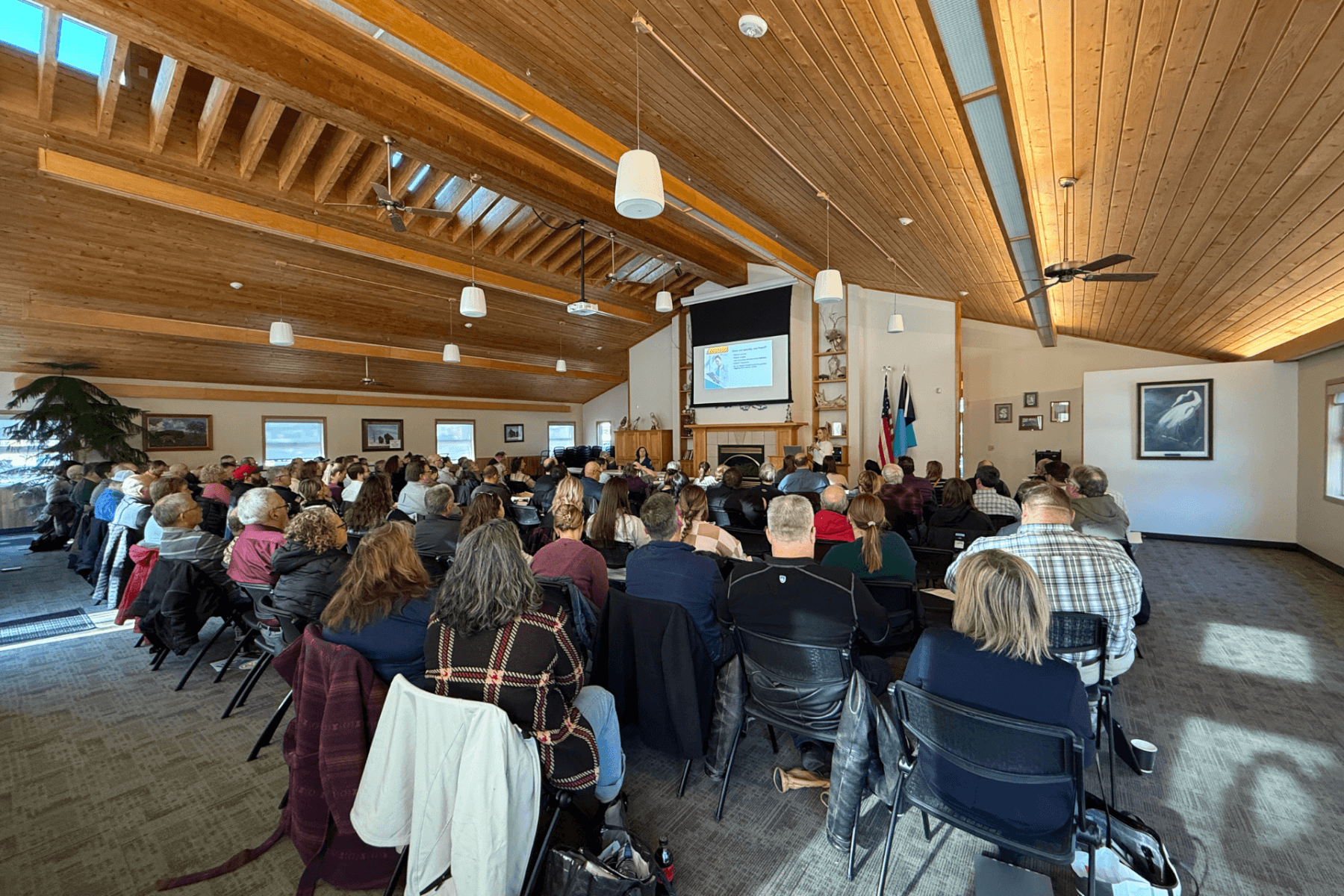
Close to a hundred Minnesotans gathered at the Jay C. Hormel Nature Center just outside of Austin on January 14 to learn about both the potential financial benefits and environmental concerns surrounding hyperscale data center construction. Courtesy of Benya Kraus / Southern Minnesota Initiative Foundation
In the meantime, folks in the Midwest continue to demand greater regulation for an industry that seems intent on becoming their new neighbor. Back in Austin, Minnesota, as the seminar comes to a close, Seifert says his eyes have been opened to the fact that the impact of data centers extends far beyond water and power bills.
“I don’t know if it allayed my concerns, but I will say that it really did clue me into the idea that this is a much more complicated issue than it is on its face,” he said.
Given the overwhelming momentum behind data center production, Seifert says it’s important to enact public policy and regulations that ensure they are developed responsibly.
To that end, the MCEA’s Hoffman says her agency is working with concerned residents, environmental NGO’s and legislators on proposals they believe will mitigate the harms caused by data centers — included among them is a moratorium on new data center construction.
“Data center developers are moving quickly, outstripping the ability of states and communities to properly regulate and manage these projects,” Hoffman said. “We need a pause on hyperscale data center development so that laws and policies can catch up with the rapid pace of AI investments.”
Hoffman says MCEA plans to bring its proposals to the Minnesota state legislative session, which begins February 17.
Help us sustain independent journalism...
Our team is working hard every day to bring you compelling, carefully-crafted pieces that shed light on the pressing issues of our time. We rely on caring supporters like you to help us sustain our mission. Your support ensures that we can continue to provide deeply-reported, independent, ad-free journalism without fear, favor or pandering. Support us today and make a lasting investment in the future.
RELATED STORIES

Award Winning



Today’s environmental and social justice challenges are unprecedented, and require an unprecedented collective effort.


Stay updated on our latest features, events and more. Subscribe to our Note From the Nest newsletter!
