
Don’t Fear the Data Center
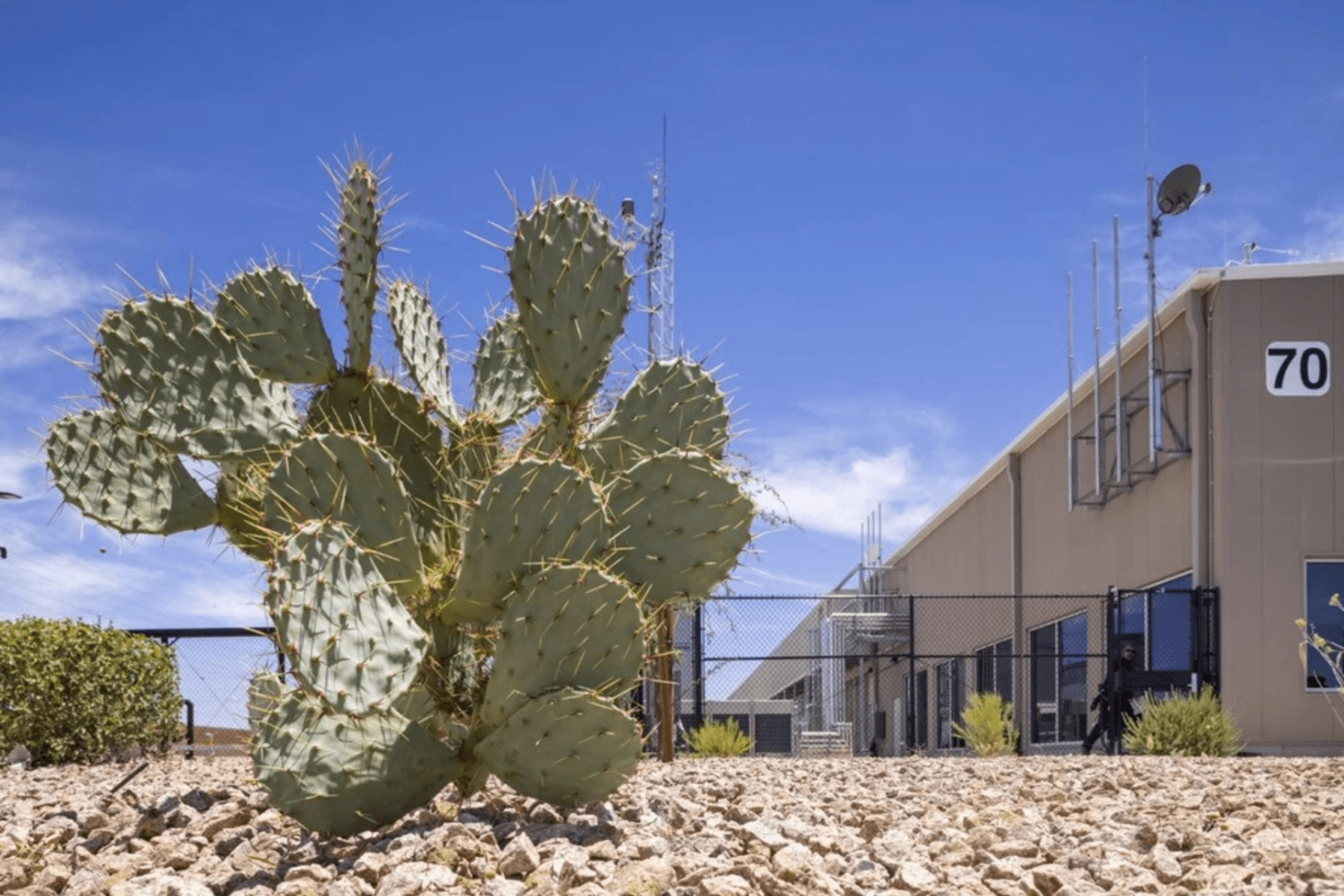
In the small town of Goodyear, Arizona two narrow, drab concrete buildings stand on a 279-acre campus, surrounded by desert-dull orange walls delineating the campus from the quiet suburbs and the square, brush-free fields that border it on all sides. The anonymity of the buildings works as a sort of camouflage. What they contain would be anyone’s guess unless you already knew the answer: thousands of servers, performing trillions of calculations per second, drawing energy at a rate of thousands of kilowatts, and, based on internal analysis reported on by Karen Hao at The Atlantic, drinking 56 million gallons of water a year.
These buildings are data centers, typical of the type fueling the AI future. Less than 20 miles from Phoenix, they consume energy at a rate analogous to the speed at which they produce data. The problem, as is often the case in America’s Southwest, is heat. Data centers draw massive amounts of electricity, almost all of which is converted to heat as the servers do their work. Computers slow down or break in overheated environments, so data centers often use water to keep cool. The rise of computationally intensive work and the continued spread of digital technology has spurred their construction for decades, but cryptocurrencies and, recently, the AI boom, have led to an explosion in data center construction around the world, and more data centers mean more water consumption. One study by researchers at UC Riverside estimates that global water use from AI alone could rise to over 1.1 billion gallons by 2027.
In places where water is plentiful, this isn’t much of an issue. Lake water and ocean water have been used to cool data centers to much economic and environmental success (so long as the cooling system uses a closed loop or treats the water before releasing it back to its source). But data center host cities such as, say, Hamina, Finland and Zurich, Switzerland, are rarely struggling for water the way Arizona is. Building data centers in cold climates works well too, for obvious reasons. However, data stored in remote outposts doesn’t get to the user as efficiently as data stored close to customers. Building for delivery speed is better for the bottom line than building data centers that can be cooled more sustainably. You can pay for water to cool your servers, but electricity will only move so fast through fiber-optic cables. So, companies build data centers in metropolitan areas and pay their way to get the water their data centers need.
Population growth and its attendant consumer demand in parched Southwestern cities such as Phoenix present a conundrum for this math and have led to a great deal of controversy over many a tech giant’s introduction of new data centers into Maricopa County. The optics issue is obvious: big tech taking water from an already drought-stricken region seems callous at best and negligent at worst when said drought doesn’t seem to be getting better.
Arizona’s history of agriculturally-supported frontier settlements has always bolstered a sense of libertarianism that continues to this day, and data centers are a unit of dependent interconnectivity that represents a future already filled with concerns over water supplies. That same history has cemented Arizona agriculture as an essential cultural and economic artifact worth preserving less the state abandons part of its identity and economy. While agriculture in the desert is a huge water suck, much has been written about preserving its legacy and the state’s western identity. Culturally, data centers are an easier target for criticism of water use.
In the Phoenix area, where farmers are losing land to development and tech giants dot data centers across the city’s metropolitan area, water issues serve as a useful illustration of challenges surrounding increasingly stressed resources.
***
Microsoft owns the Goodyear Center mentioned above — one of many they own worldwide — and it’s aware of the water issue. In 2020, Microsoft publicly pledged that the Goodyear Center would be water-positive by 2030 through the treatment, recycling and returning of water to the environment. That’s great on its face, however, the company claims information related to the center’s water usage is proprietary and requires that all documents listing that data redact those numbers. Currently, assessing the center’s water usage relies on estimates made by analysts hired by Microsoft. In other words, we have to take their word for it. Its current estimate is the one cited by The Atlantic above. It’s perhaps also worth noting that some estimates place the average data center’s water use at about 1-5 million gallons per day.
Even if Microsoft abides by its pledge and hits its 2030 goal, that doesn’t help Phoenix today. Arizona Governor Katie Hobbs announced last June that construction projects in the Phoenix area (but not in the city itself) requiring groundwater resources would be halted due to a study showing that the area’s groundwater couldn’t meet the rapidly growing area’s water requirements. Many of the projects affected were properties with plans to build new homes, a serious blow to a city struggling with a housing shortage. The U.S. Geological Survey estimated Maricopa County uses two billion gallons of water per day, of which the Microsoft data center’s 56 gallons a year (153,424.66 gallons per day) is but a drop in the bucket. But, that is just one data center, and there are more than 60 data centers in the area using at least that amount of water. Those drops quickly add up to their own buckets.
Here’s another way of looking at it. The City of Phoenix estimates that the average Phoenix resident uses about 120 gallons of water per day, or about 43,800 gallons per year. The Goodyear data center, then, uses the same amount of water per year as 1,279 people. Assuming that all of the city’s data centers use 3 million gallons of water a day, that’s 1.47 million people’s worth of water used to cool data centers per year. That’s about 89 percent of the city’s entire population.
The rise of AI and attendant data center construction in the Phoenix area has been a hot topic of conversation. Understandably so, considering Microsoft’s Goodyear facility (as well as others in the Phoenix area) was announced just a week after Microsoft invested $1 billion in OpenAI, the first of several carrots that Microsoft would wave in front of the AI pioneer, at least until they ran out of carrots. The exponential growth of generative AI over the past few years suggests that more and more data centers will need to be constructed to not only keep up with the demand for AI, but also for the continued expansion of our digital world, whether people like it or not.
Data centers aren’t even close to the largest non-residential consumer of water in Maricopa County — that would be agriculture.
Cities such as Phoenix, which is already struggling with the water required to run these data centers, are looking at the impact new data centers will have on Maricopa County’s water supply. The numbers I outlined previously, though more napkin-math than academically rigorous data, don’t paint a great picture. This is why much of the conversation around Phoenix’s growing data center infrastructure has focused on its use of natural resources (mainly water and electricity) and its encroachment on lands previously used for other purposes. But data centers aren’t even close to the largest non-residential consumer of water in Maricopa County — that would be agriculture.
An estimated 30 percent of Maricopa County’s water was used for agriculture in 2015, according to a study by The University of Arizona’s College of Agriculture and Life Sciences. Thirty percent of two billion gallons per day is 600 million gallons per day, or about 5 million people’s per-day water usage. Assuming that 59 of Maricopa County’s data centers consume an estimated three million gallons of water per day on average, about 177 million gallons of water are used to cool data centers daily. That’s just 30 percent of the water used by Maricopa County’s agricultural industry and less than one percent of the county’s total water use.
***
Phoenix’s farms have been going through a crisis of their own. The amount of land used for agriculture in Maricopa County has declined for decades, from 640 square miles in 2000 to 410 square miles in 2019. Housing development has been cited as a primary cause, as residential land around Phoenix expanded from 540 square miles to 750 square miles in the same 19-year period. Much of that is due to housing developers purchasing and developing land leased by farmers. The developments they build use much less water than the farms, and in theory, help to alleviate Phoenix’s housing crisis too — a pair of wins that address some of the area’s most oft-talked-about problems.
But the pause on construction in the Phoenix area has put many of these housing developments on hold, and to many people’s relief: Arizona, like much of the U.S., was founded as an agricultural economy, a fact which has weaved its way into the state’s cultural identity. Many of the state’s farms have been family-owned for generations. Arizona’s “5-C’s”: copper, cattle, cotton, citrus, and climate were foundational elements of the Arizonian economy for much of its early history, and still have a stronghold on the state’s culture and identity despite their small impact on the state’s modern economy.
Agriculture in Maricopa County was valued at roughly $1.6 billion in a 2022 study, about .35 percent of the state’s total GDP. Yet, water from those farms takes up a third of the county’s water allotment. Much of Arizona’s drought issues are tangled up in water-rights issues not dissimilar to California’s, but the fact remains that Phoenix’s farms take up an outsize portion of Arizona’s water without contributing commensurately to the economy.
So, why keep farming in a desert? While the state needs to think outside the box, shutting down the state’s farms (or even just Phoenix’s) isn’t necessarily an easy fix to this problem. Maricopa County accounts for 30 percent of the state’s total agriculture cash receipts according to a University of Arizona study, and importing that amount of food would increase the state’s costs as well as the food industry’s carbon footprint, not to mention the loss of livelihood and cultural history associated with the people doing the actual farming.
Agriculture in Maricopa County was valued at roughly $1.6 billion in a 2022 study, about .35 percent of the state’s total GDP. Yet, water from those farms takes up a third of the county’s water allotment.
It’s easy and even fashionable to think of big data, AI and the super-processing of information, entertainment and consumption as the sum of all evils. Put the water-consuming data centers in a growing metropolis located in an increasingly uninhabitable desert and the apparent compounding of follies can appear absurd. Yet, thousands of small businesses wouldn’t have survived the pandemic if not for the e-commerce allowed by data centers. The research that both AI and data centers support through the storage and processing of data is also vital in tackling the climate crisis. We’ve had a lot less time to romanticize the data center as a token of civilization, and the elements of our society they support are much more complicated, both ethically and technically, than farms. But they’re essential to our way of life nonetheless.
Agriculture, meanwhile, is a leading catalyzer of climate change. That’s not to say the electricity drawn by data centers isn’t an issue, but renewable energy sources are becoming more and more common, and plenty of effort is going into replacing non-renewable energy sources with renewable ones. The electricity issue data centers face is solvable, but there’s no way to make a cow release less methane, or to make a potato use less water.
AI is more than likely going to be a key component of the world that data centers are helping us build, and perhaps ironically, it’s becoming a major force in the agricultural industry, too. Predictive and analytical AI have proven to be essential tools in many fields due to their ability to acquire and interpret data, and farming is a prime example.
Farmers have been analyzing the health of every plant and the fertility of their soil for a long time, but never with the speed, efficiency and low cost that AI tools are now offering them. Although controversial in other industries, AI labor is relatively cheap too, which is important when farmers are getting older and labor is becoming scarce. It can even help farmers lower their water use, perhaps something that might aid Arizona’s drought and alleviate some of the pressure farmers in the state are experiencing. Ironically, it may be the union of data centers and agriculture that abates the condemnation and diminishing that each is facing. None of that would be possible without data centers to support the AI being used.
Plenty has been written about data centers “taking” water from the desert around Phoenix, but much of the discussion lacks the context in which Phoenix’s water crisis exists. In a word: agriculture. No matter how you cut it, farming is a water-intensive activity, much more so than the cooling of data centers, and Arizona has been drought-stricken for decades. Data centers are indeed more sustainably run in water-abundant areas, but the same could be said of farms, and the water consumed by Phoenix’s data centers is fairly insignificant when compared to almost any other facet of Maricopa County’s infrastructure.
Farming is, of course, foundational to humanity’s success, but data centers have formed another element of civilization’s foundation. Just because some of the technology they support is controversial doesn’t mean they lack value. As climate change evolves and humanity continues to develop and adapt, questions of how we control our limited resources will require difficult decisions in service of our cities’ success and our planet’s well-being. Data centers are probably here to stay. The future of Phoenix’s farms is another question.
Help us sustain independent journalism...
Our team is working hard every day to bring you compelling, carefully-crafted pieces that shed light on the pressing issues of our time. We rely on caring supporters like you to help us sustain our mission. Your support ensures that we can continue to provide deeply-reported, independent, ad-free journalism without fear, favor or pandering. Support us today and make a lasting investment in the future.

RELATED STORIES
Award Winning



Today’s environmental and social justice challenges are unprecedented, and require an unprecedented collective effort.


Stay updated on our latest features, events and more. Subscribe to our Note From the Nest newsletter!
