
Farm Aid
No surprise, Americans eat a lot of meat, about three times more than the average per person globally. Meat is the star of our meals, and veggies are the side dish, at best. We put meat on our meat (bacon cheeseburger, anyone?) Although consumption statistics are frustratingly hard to pinpoint precisely, the U.S. Department of Agriculture reports that U.S. meat markets allocated about 224.6 pounds of meat per person (red meat and poultry) per year, while other sources report that Americans eat about 272 pounds of meat per capita annually. And, while these trends are down slightly, it is still about three times the global average meat consumption and 40 percent more than dietary guidelines recommend. People in the U.S. are also among the least vegetarian in the world, although younger Americans are increasingly more likely to identify as vegetarian.
We are meat lovers, which is not surprising, as the wealthier countries tend to lead the world in meat consumption. Meanwhile, like energy, meat consumption tends to increase in countries where per capita wealth is growing. In other words, meat is aspirational.
Putting the ethical and health issues associated with over-consumption of meat aside for now, the primary concern is environmental. Animal agriculture — especially livestock — is a massively land-intensive and water-inefficient enterprise that is responsible for 14.5 percent of global greenhouse gas emissions. These emissions are caused primarily by methane and nitrous oxide, which are 300 times more damaging to the environment than carbon dioxide.
Cow farming, by far the most environmentally damaging form of agriculture, accounts for 65 percent of those emissions; one kilogram of beef produces the same emissions as driving a medium-sized car 62 miles. It’s also hard on fresh water. It takes about 660 gallons of water — enough drinking water to hydrate a person for nearly two years — to make a hamburger, according to the U.S. Geological Survey.
With the high demand for beef and other livestock, land to farm this meat is also in high-demand, leading to deforestation adding another major source of carbon emissions and depletion of our best natural means of carbon storage – trees.
Courtesy of Hannah Ritchie/Sustainability By Numbers
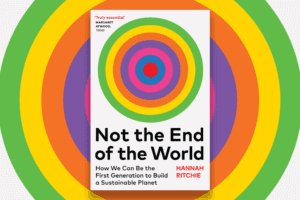
Although we are not likely to fall out of love with a cheeseburger, fries and soda anytime soon, there is some indication that we’re approaching peak meat. That’s good news for lose, including Hannah Ritchie, Senior Researcher for the University of Oxford’s Global Development Programme. Ritchie, a data scientist and sustainability expert, is the deputy editor and lead researcher for Our World in Data. Her recent book Not The End of the World uses data to pierce the misconceptions about the critical factors underlying human-caused climate and environmental crisis, and what we can do about it. For Ritchie, meat-first agricultural practices are among the most obvious targets for reform.
In a recent conversation with The New York Times’ Ezra Klein, Ritchie estimated that if global consumption of animal products ceased, “We could reduce global agricultural use by 75 percent. So we shrink global agricultural land to a quarter of what it is today. And you could feasibly feed everyone on that land.” She added that when it comes to “reduc[ing] your carbon footprint from your diet,” eliminating animal products is the best way to do it.
On the bright side, plant-based meat substitutes are a growing agricultural sector. Revenues exceeded $10 billion in 2023, more than doubling since 2018. On the other hand, after steep growth over the past few years, sales of plant-based proteins are slowing down as consumers grapple with price, quality and taste barriers. The proliferation of plant-based meat substitutes hasn’t increased the number of Americans identifying as vegetarians, which appears to hold steady at four percent.
***
While the health benefits of a more plant-based diet have been widely recognized, the environmental benefit is something people such as Hannah Ritchie are trying to make clear through her data. The gist is that animal agriculture emits more greenhouse gasses (GHGs) per acre and requires more land and water than crop farming. To put it in perspective, Ritchie notes that 50 percent of all habitable land on the planet (land that is neither ice nor barren) is given over to agriculture and 75 percent of that land is used for animal grazing. A 2018 study published in Nature reported that of the GHG emissions created out of our agriculture practices, just 25 percent are generated by all crops combined, while the other 75 percent is caused by animal products.
Deforestation is at the top of the food chain, so to speak, when it comes to environmental impact. The trees we need to cool the planet and absorb carbon are being cut down to make room for cows that produce inefficient and GHG-emitting food. Even worse, a great deal of our crop yield goes to feeding those grazing animals that are stressing the environment. “Without any change in this trajectory in food that we’re on, emissions from food alone would take us past 1.5 degrees [the global warming limit],” Ritchie tells Klein.
Production of soy, a widely grown crop, uses just 10 percent of the water required for beef production. One kilo of tofu, a soy product, uses 665 gallons of water and contains between 99 and 121 grams of protein, according to UCLA Sustainability. This translates to six gallons of water usage per gram of protein. Beef, on the other hand, requires 20–22 gallons of water per gram of protein.
Just like different animal products impact the environment differently, not all plants are grown equally. Nuts such as almonds and cashews require upwards of 1,000 gallons of water per kilo. Additionally, 53 percent of U.S. irrigated land (land designed for farming) is used for just three crops: corn, soybeans and wheat. Maintaining this land requires substantial resources and water use. On the other side of the water spectrum, crops such as tomatoes, squash and melons are drought-resistant and absorb water from the soil, making them relatively environmentally friendly and easy to maintain.
Regarding emissions, mushroom cultivation produces 3kg CO2/kg, and cashews produce 4.99kg CO2/kg, — comparable to the 4.1kg CO2/kg generated by chicken, the “greenest” meat. Other crops, such as microgreens, lentils, wheat, onions and tomatoes, produce less than 1kg CO2/kg, making them much “greener” than any animal product.
One kilo of tofu, a soy product, uses six gallons of water usage per gram of protein. Beef, on the other hand, requires 20–22 gallons of water per gram of protein.
It’ll take more than a cultural or policy shift (just try banning cheeseburgers!) to change global agricultural practices and priorities; it’ll have to make economic sense, too. Animal-free agriculture and crop farming, though, can also make economic sense. A study by the Humane Party — an animal rights organization — found that despite using less land than animal agriculture, crops generate 512 percent more pounds of product. The expenses associated with animal-free agriculture are only 75 percent as much as those associated with animal agriculture. It is more efficient in terms of cost and yield, and uses much less land — land on which carbon storying, oxygen-emitting trees could live.
Small farms struggling to compete with the large-scale factory farms that dominate the American economy are often in a double bind. They have to minimize costs to compete with large-farm efficiencies of scale, while often being trapped in contracts with “Big Ag.” For example, Texan Bo Halley struggled for years to pay off a loan on his poultry farm. The chickens his family sold were not reaping substantial profits, and by the time they were close to paying off their initial loan, they were faced with additional costs imposed by their corporate contract.
The Halley family is one of the case studies highlighted by The Transfarmation Project, one of many organizations committed to “livestock transition farming,” a growing movement offering alternatives to meat-centric factory farms. Evan Penhasi, who helped transition the Halley farm, notes on the project’s website that, “the [poultry] business was not something that made financial sense.” The late Bo Halley and his family looked for a long-term, viable business “that doesn’t include animal suffering.” Eventually, they escaped the “debt treadmill” of constant loan payoffs, and now grow hemp using repurposed chicken houses for storage.
The Halley family is not alone in their desire to escape the big-agriculture industry. To assist farmers seeking more independent and environmentally sustainable practices, Mercy For Animals started The Transfarmation Project with the mission “to build collective power sufficient to realize a just and sustainable food system.”
The nonprofit is currently working with nine farms trying to grow food crops on their terms, rather than produce animals dictated by contract farming. Of these, seven are considered “transfarmed,” meaning they are committed to animal-free, plant-based agriculture and have pledged not to return to factory farming.
Each project undergoes three phases. Farmers looking to make a change first contact Transfarmation, communicating their needs and desires. Then, the organization assesses the farm and works with the farmer to determine the best path forward and creates transition paths to exit factory farming and grow specialty crops instead. Since each case is unique, there is no one way to transition these farms, but there is a consistent commitment to protect small farms and the environment in tandem.
***
Transfarmation works with farmers around the country. The company has multiple cases in progress in North Carolina, a state with a high concentration of industrial and factory farms generating animal waste. Manure and feces are a top contributor to the agriculture industry’s GHG emissions. Factory farms produce “lagoons of feces’’ that pool up and leak into nearby land, according to Megan Hunter, Transfarmation’s Midwest Coordinator. They also spray excess feces on crops when these lagoons reach capacity, which not only pollutes the land and air, but “spreads micro-droplets through the air linked to respiratory illness.”
Seeking freedom from the factory farm behemoth in North Carolina, the Boles Farm transitioned from a chicken farm to growing microgreens, peppers and flowers. Paula and Dale Boles inherited the poultry business from Dale’s father, and worked with Tyson Foods to raise broiler chickens. In a Sentient Media article, the pair revealed they were promised “easy money” by Tyson, but “found themselves spiraling into debt,” putting a strain on not just their pockets, but their mental health and marriage.
Once in a contract like the Boles’, farmers cede control of how their animals are raised and fed. The conditions set by large food processing companies such as Tyson are “just really inhumane,” according to Paula. Chicken sheds on the Boles farm were packed “wall-to-wall and door-to-door.” Managing a farm with such strict requirements and imposing poor living conditions on animals placed unnecessary stress on the Boles family; they were eager to escape. With the help of Transfarmation, the pair has been able to repair their mental health and reduce their environmental footprint.
Because growing crops requires a completely different farming style and skill set from livestock, the transition can be daunting, especially if resources are not available. Beyond curbing a farm’s emissions, Transformation is working to incorporate sustainable growing practices that will generate long-term profits at a lower environmental cost.
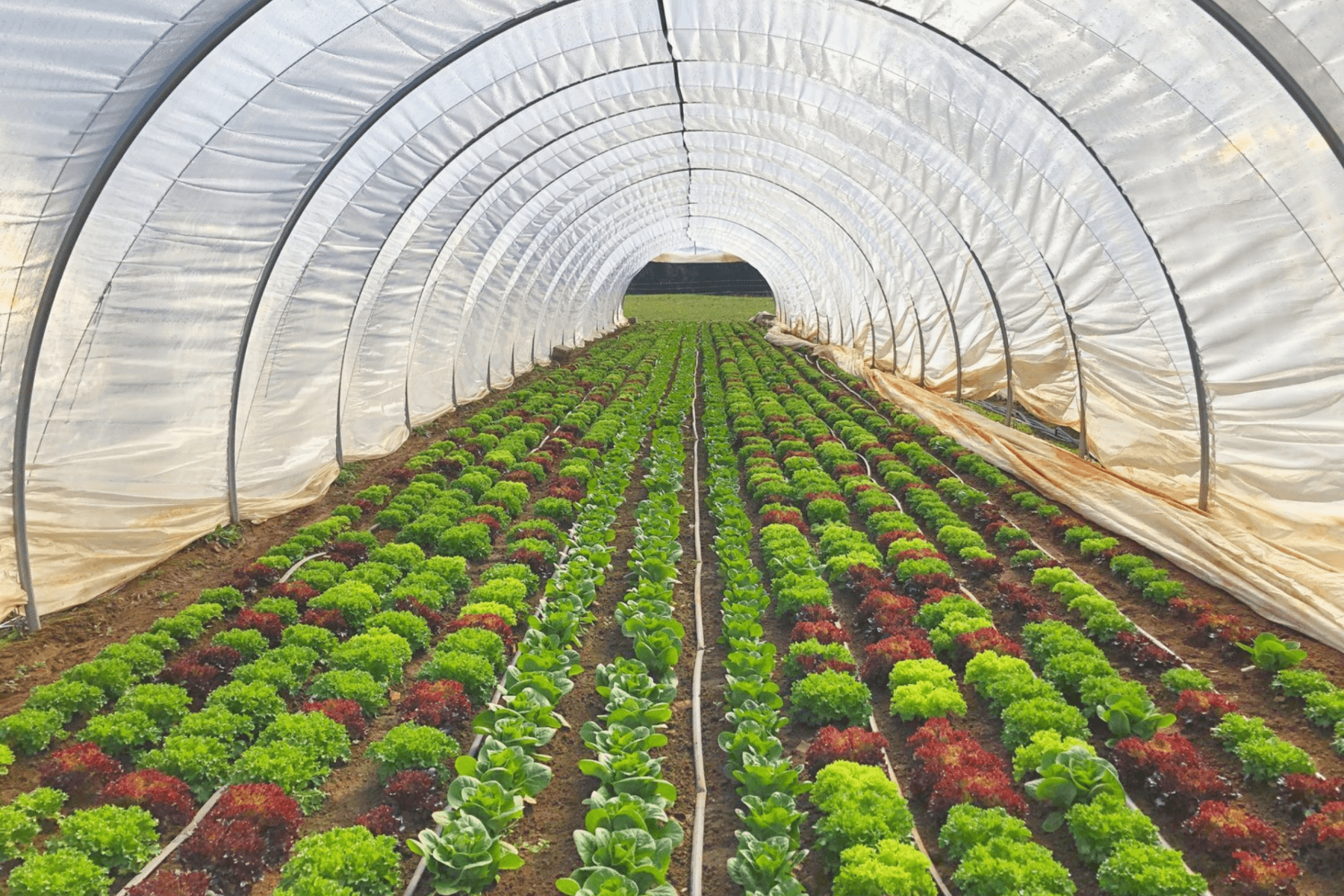
In North Carolina, the team “turned a chicken house into a greenhouse” and “reworked the feed and water system to grow crops,” Hunter said. A former dairy farmer in Indiana is “using nursing and welding skills” to transform into a mushroom-growing operation. Compared to other crops, mushrooms have a high return on investment, leading several farmers transitioning away from livestock to move toward mushroom cultivation.
Transfarmation works with farmers every step of the way and ensures they have the tools necessary to thrive. “We connect farmers to existing resources, such as technical consultants, to help them build the technical skills specific to growing their new crops,” Hunter noted. Successful pathways and useful resources are uploaded to a farmer toolkit for fellow “in-transition” farms.
Transfarmation exemplifies “the possibility of farm transitions” by promoting “farmer-led working to build a more just and sustainable food system.” The nonprofit “aims to shift the false narrative that factory farms are good for rural communities and consumers,” Hunter added. “Rural communities, especially communities of color, face degradation of their land, water, and air.”
Transfarmation’s demonstration hubs assess the impact of a specific farm transition and build upon existing information. Aware they don’t have all the answers, the organization is eager to expand its knowledge on these contentious issues.
Despite the drawbacks of animal agriculture, there are barriers preventing society from making the plant-based switch. Fast food companies such as McDonald’s and Taco Bell provide affordable meal options, while fresh fruits and vegetables are rising in price. A Big Mac averages four dollars — roughly the same price as a small carton of organic blueberries, depending on where you shop. To properly reduce the impact of the animal agriculture industry, there must be an affordable alternative for consumers.
In their conversation, Hannah Ritchie and Ezra Klein point out another conundrum in meat business: while they are the most environmentally detrimentally animal-protein source, cows are generally the most humanely raised. Think grazing pasture versus factory-farm chicken coops.
***
The meat business isn’t going away tomorrow. Society and culture need time to adjust. But, it’s possible for, and possibly incumbent upon, high-income countries such as the U.S. to shift away from unsustainable farming practices and lay the groundwork for a sustainable tomorrow. Transfarmation isn’t the only outfit seeking to smooth this transition. On the federal level, Senator Cory Booker (D-NJ) first sponsored the Farm System Reform Act in 2020 and reintroduced it in early 2023 with co-sponsor Representative Ro Khann (D-CA) with an eye to “crack down on monopolistic practices, invest billions in the transition to a more resilient food system, [and] place a moratorium on large factory farms.”
On the nongovernmental side, the Rancher Advocacy Program and Rowdy Girl Sanctuary are nonprofit organizations working with individual farms seeking to transition out of animal farming for a variety of reasons ranging from ethics to economics. The organizations tailor practices to meet the differing needs of farms in different locations with different climates and economies.
For California, with its ever-looming drought cycles, transition farming is one way to reduce water use. California is currently home to 62,900 farms spanning 23,800,000 acres, according to the 2023 State Agricultural Overview. It is the nation’s leading dairy producer, generating 40.9 billion pounds of milk last year and bringing in $8.1 billion in revenue.
Around eight million heads of cattle were counted in 2023, including those raised for milk, along with 6.8 million other livestock animals. Transitioning to less water-intensive crops would allow agricultural water supply to be distributed toward other resources or reserved for future emergencies.
California’s economy, and the country’s, will continue to rely on animal agriculture as long as consumers keep eating meat, eggs, and dairy. A 2019 study found that if the US shifted to plant-based agriculture, food-related GHGs could be reduced by 49 percent. As more consumers choose to eat at plant-based establishments, the power of the meat industry will diminish. Reducing meat consumption is a small step toward alleviating the environmental footprint of the animal agriculture industry.
By 2030, the plant-based food industry could be worth $85 billion, according to one market analysis study. As with vehicles transitioning from gas and diesel, the movement away from animal agriculture is gaining cultural traction, however haltingly, and increasingly making economic sense.
Help us sustain independent journalism...
Our team is working hard every day to bring you compelling, carefully-crafted pieces that shed light on the pressing issues of our time. We rely on caring supporters like you to help us sustain our mission. Your support ensures that we can continue to provide deeply-reported, independent, ad-free journalism without fear, favor or pandering. Support us today and make a lasting investment in the future.

RELATED STORIES

Award Winning



Today’s environmental and social justice challenges are unprecedented, and require an unprecedented collective effort.


Stay updated on our latest features, events and more. Subscribe to our Note From the Nest newsletter!
