Is The West Still the Best?

Listen to an audio version of the story, read by the author.
Editor’s note: This is the third in our series examining the future of the West as both aspiration and destination. For more, see Erin Aubry Kaplan’s “The Black Middle-Class Deferred,” Paul Tullis’ “The End of Golden State Exceptionalism?” and Chris Barton’s “Beyond the Heat Dome.”
I ask Dominique Hargreaves to stand high up on a favorite Southern California bluff—one with a 360-degree view of the entire Los Angeles basin—and peer 30 years into the future. I ask, what would be the best-case scenario for what we would experience, given the current climate challenges?
“You’d be able to see out to the coast and the mountains because the air would be clean,” says Hargreaves, who served as the chief sustainability officer for the City of Los Angeles until recently. “[Ideally,] if we’ve done our job and upheld the Paris [Climate] Agreement and implemented everything in our Sustainable City pLAn, the temperature will not rise by more than a couple of degrees.”
Hargreaves, the author of L.A.’s Green New Deal, a 152-page roadmap from 2019 that covers everything from renewable energy and water and air quality to green jobs and way more, continues to imagine an upbeat future. “Hopefully when you look out to the ocean, the water is clean. You see people walking, biking, and taking electric buses. Transit is available, and maybe some flying autonomous vehicles,” she says.
Sounds good, right? The person charged by the nation’s second-largest city to figure out how to get over 3.9 million people to have a livable future even uses the words “breezy, comfortable and beautiful” during this more optimistic portion of our conversation.
I then ask Hargreaves to imagine she’s standing on that same hillside, the same number of years from now. What is the worst-case climate scenario? Trigger alert: the word “apocalyptic” is about to arise.
“We go backwards,” Hargreaves begins. “If we maintain our internal combustion vehicles and keep burning fossil fuels in our buildings, schools and homes, then you won’t be able to see the mountains. You won’t even really be able to go outside; it will be like an apocalyptic landscape. It will be extremely hot. There will be more wildfires closing in on the city on an annual basis.”
Okay, but at least L.A. still will have great beaches, right? Hargreaves says that plastic would cover the beach below the bluff she is thinking about.
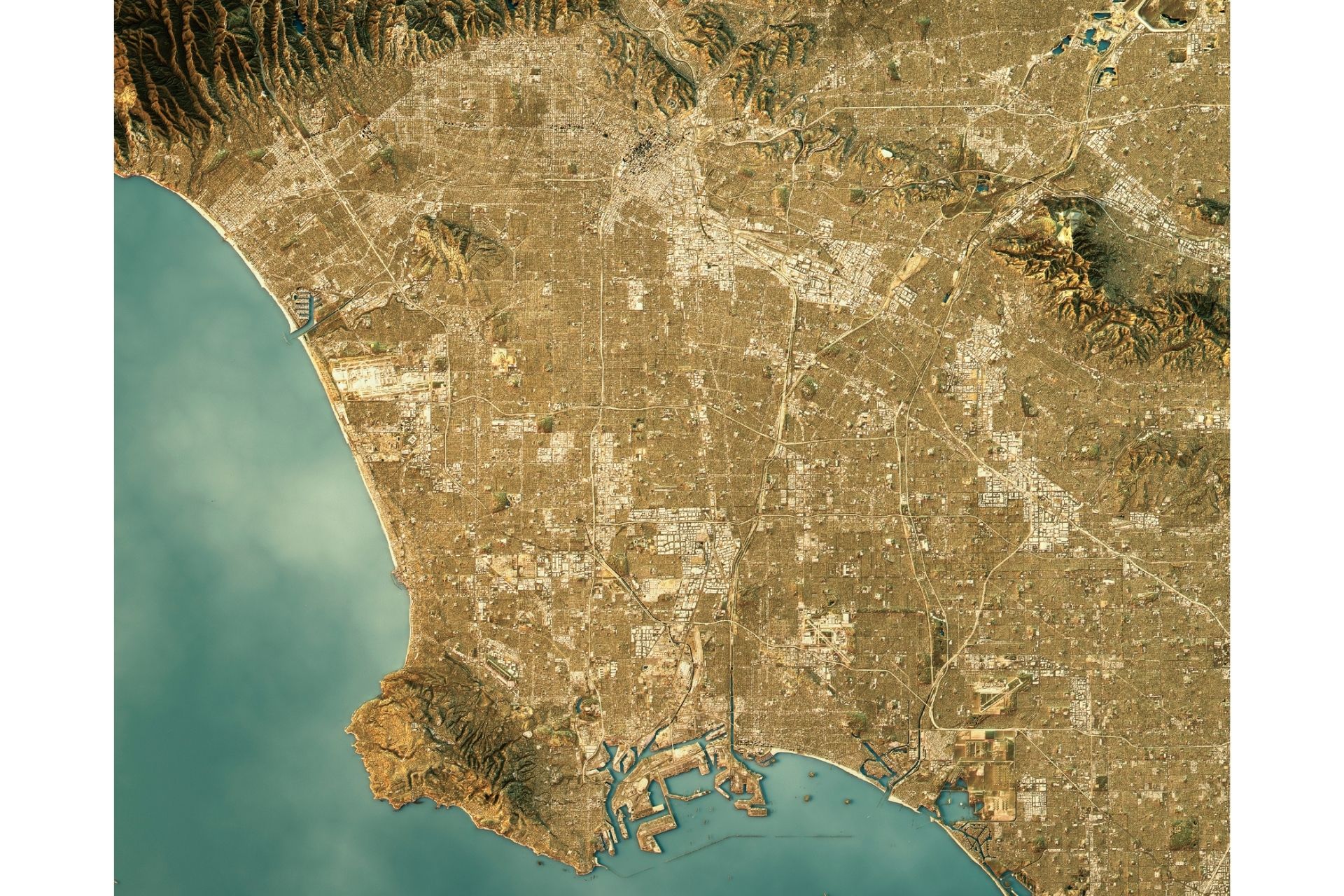
3D Render of a Topographic Map of Los Angeles, California. Photo by Frank Ramspott
Well, the county will still have its essential wetlands, those flood restrictors and buffers between land and sea, right? “With the projections of sea-level rise on our coasts and around the world as icebergs melt, we could lose Ballona Wetlands,” Hargreaves says, referring to the already receding area at the base of the bluff.
You get the picture.
At least, though, we’re in the archetypical frog-in-gently-boiling-water situation. L.A.’s residents are not perishing in, for example, some catastrophic explosion.
“There’s also a gigantic natural gas storage facility at the bottom of the bluff that could potentially rupture and leak methane, rendering that area a disaster area,” Hargreaves says. “We have to be very cognizant of what the risks are. [We have to] think about how we adapt and mitigate against these risks.”
Oops, perhaps I spoke too soon.
This conversation with Hargreaves took place earlier this year, during an interview for another publication. During our Zoom call, I mention to Hargreaves that long ago I stopped saying “climate change” and switched to “climate changed.”
Did she think I was just being too cute with words? Or, are we past the point of mitigations—i.e. stopping climate change—and now simply focused on adaption—i.e. living with it?
“We have to be very cognizant of what the risks are. [We have to] think about how we adapt and mitigate against these risks.”
“Both are happening simultaneously,” Hargreaves says. “The research indicates we now have until 2030. We were really hoping this to be the decade of action, but 2020 got sideswiped with COVID-19. So, it feels like the time is even more urgent to take climate action.”
Scientists, Hargreaves, and anyone paying attention understand that civilization at large can’t undo so much of the emissions and other impacts that have already occurred. “But, we can do better in our daily practices. We can draw down carbon, sequester carbon and put out less carbon into the atmosphere,” Hargreaves says. “I think governments are focused on adaptation at this point, but you can’t take your eyes off mitigation measures as well.”
***
The apocalyptic scenario that Dominique Hargreaves described came when I asked about life three decades from now. Already, though, so many days feel like something out of the worst passages of the Book of Revelations.
If you’re reading this, you surely know all the stats and stories: 2020 and 2016 were the two warmest years globally on record. Supposed once-a-century storms arrive more frequently than the local bus. Mega-droughts. Water bodies withdrawing, ice caps melting and sea levels rising. Smoke streaming across the country. Mass extinctions. Almost incalculable mass animal deaths during heat waves, and the most vulnerable humans sickened or worse, too.
This summer was the warmest ever known in five Western states. In Portland, Oregon, the temperature reached a record-breaking 116-degrees during June. In Nevada, Lake Powell, the second-largest reservoir in the country, dropped to its lowest level ever. The summer heat continues to kill more people in Arizona than ever before. Utah endured its driest recorded summer. In California, as I type this, the base of the world’s largest tree is wrapped in foil like a goddamned baked potato, thanks to heroic efforts by firefighters, while all of us hope its grove survives the latest unprecedented conflagration.
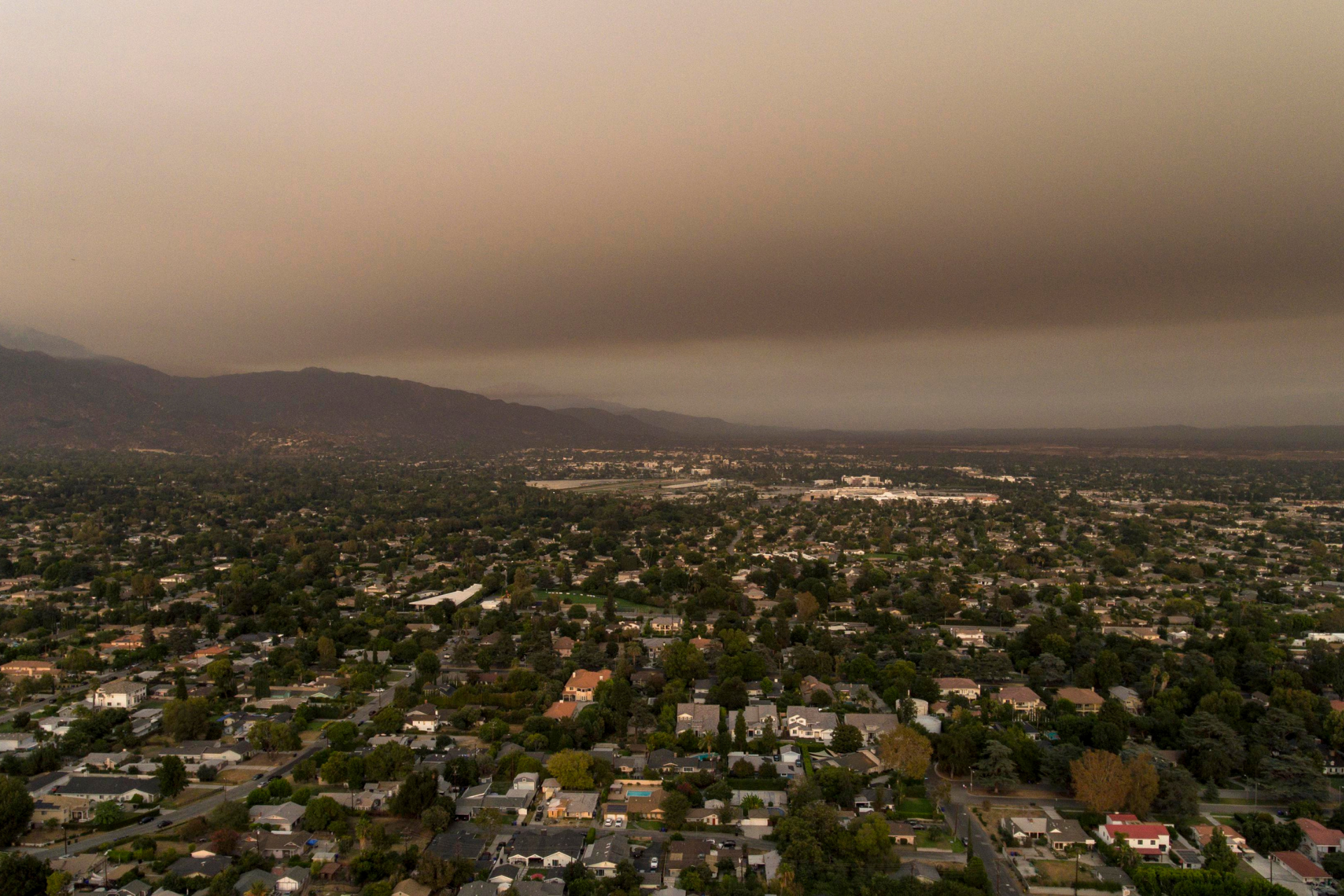
The 2020 Bobcat Fires in San Gabriel Mountains. Photo by Steven Gute
This list could go on and on. Bottom line: Does all this mean that when it comes to the climate moving forward, everyone west of the 100th meridian is cooked?
“To say that the West is any more doomed than, say, New Orleans or the Southeast—or after the storms recently in the Northeast or the Mid-Atlantic states—it’s hard to say that we’re necessarily worst off,” Michael Woo says.
Woo is Dean Emeritus of the College of Environmental Design at California State Polytechnic University, Pomona. He was chair of the board of directors of Smart Growth America for 11 years and was also the first Asian American elected to the L.A. City Council.
Woo understands better than most how the smallest of public policy, legislative or municipal code changes can make a massive real-world difference. So, I ask him, can we policy our way out of our problems?
“Public policies are part of the solution,” Woo says. “But, actually, I think the government is not the entire solution because what we really need is a combination of both lowering the cost of living and also to try to remove the barriers to people being innovative and trying to act on new ideas. It’s not easy to do that, systems don’t encourage it and it’s partly government’s fault.”
When I first reached out to Woo for this story, he, similar to almost everyone I spoke with, wanted to make sure he understood what Red Canary meant when we refer to, “the West.” It could have meant a hemisphere, or the North Atlantic Treaty Organization (NATO), or only the states in the Mountain time zone. Or, it could have meant a controversial doctrine born in mid-19th century America.
“Go West, young man”
“Manifest destiny,” Woo says. “The assumption that for people caught in crowded cities in the East, the West represented an opportunity to make a fresh start. That so much vast land and territory represented opportunity for people whose horizons were otherwise going to be very limited.”
For many people then, that “Go West, young man” principle was on point. (Whether Horace Greeley ever said those words or not.) But now?
“In some ways in the 21st century that is less true than it was before,” Woo says. “That’s part of the reason that explains California’s decline in population growth, and the fact that some areas—especially some of the urban areas like Seattle, Portland, San Francisco, and L.A.—may represent limitations, or in other words, not as much opportunity as before.”
Woo and others point out how expensive housing has become in many cities, both out West and back East. He and others likewise point out that technology and the necessity of remote work during the pandemic have allowed information economy workers to decamp to a wide range of destinations. It remains to be seen, for example, what long-term effects that will have in places such as Silicon Valley and the Bay Area in general.

Woo has been on the frontlines of policy change in Los Angeles. Courtesy of Michael Woo
Speaking of other metropolises, Woo’s Smart Growth America bonafide makes it seem unlikely that he would be a fan of a couple of horizontal growth goliaths located in Nevada and Arizona, but it’s not that simple. “Cities like Las Vegas and Phoenix represent both opportunity and failure,” Woo says. “They still represent opportunity to a large part because land is cheap, and there is a lower cost of living. And because to some extent, especially in the case of Phoenix, they still offer jobs.”
“The downside though is that they represent 20th-century urban sprawl in terms of low-density development dependent on the automobile. Having geographies for which public transportation is not very convenient or efficient,” Woo continues. “Plus, Phoenix and Las Vegas are located in hot places that really depend on air conditioning. Without air conditioning, it would have been very difficult for either to grow the way they did.”
In an era of climate change, the likelihood of extreme weather events, drought conditions and limited natural resources is not going to make modified desert living any easier. “Based on the cost of electricity demand,” Woo says, “the low cost of living that they have benefited from in the past is going to be harder to sustain in the future.”
***
“The West,” Jon Christensen says, “is suffering from a narrative breakdown.”
Christensen is an environmental historian, professor, Liberty Hill Foundation board member, former executive director of the Bill Lane Center for the American West at Stanford University, and producer of the Earth Focus documentary TV series from the Public Media Group of Southern California.
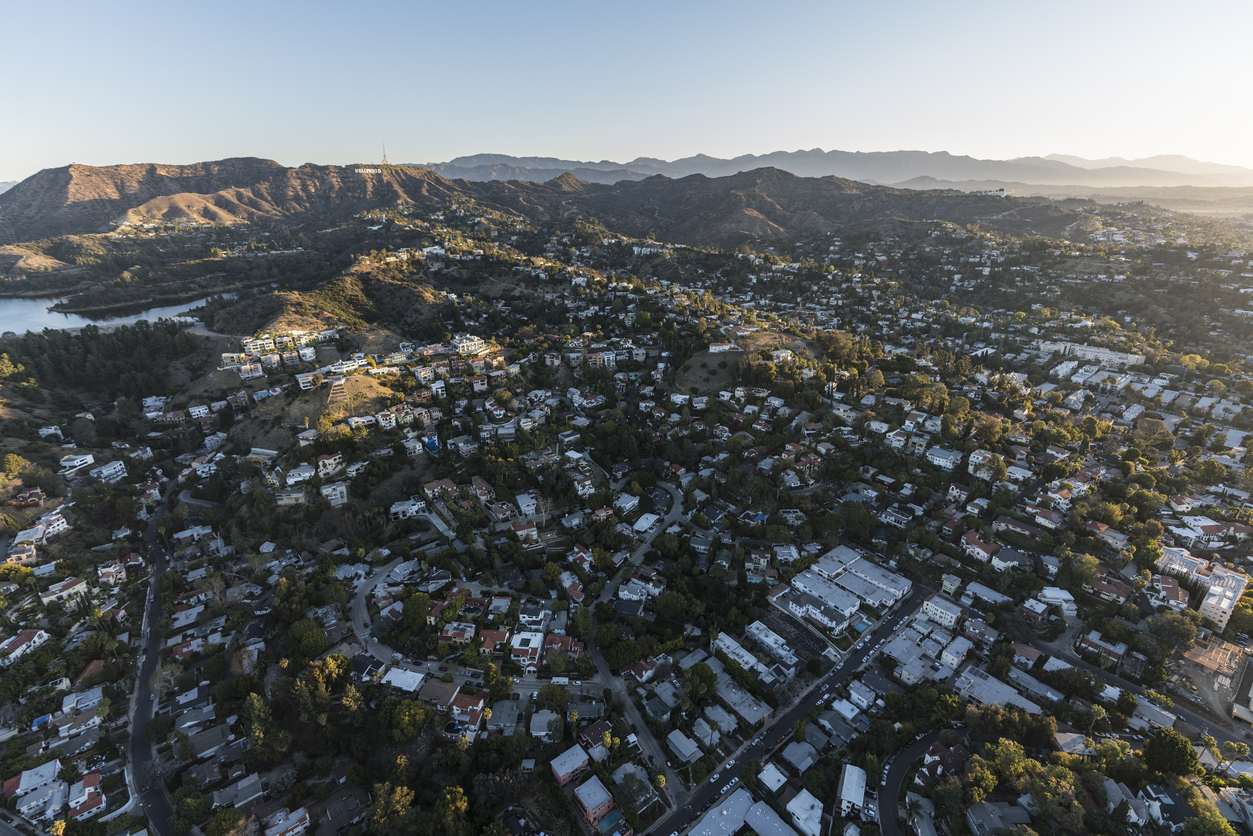
Classic Southern Californian urban-wildnerness interface. Photo by Trek and Shoot
“We’ve got drought, mega-fires, crises on affordability of housing, land barons cutting off access to public lands, right-wing extremism and others,” Christensen says. “All of those things are bad enough on their own, and worse when taken together. We’ve also lost the ability to tell a coherent story about the West. And without that, we may never find our way home. We’re in need of a narrative that can make sense of where we are and the possibilities at hand.”
“The West is suffering from a narrative breakdown.”
Christensen lists some of the region’s dominant narratives from the past 150 or so years: “We have the Frontier Story, the Old West, the Post-War Boom West, the Environmental West, the Immigrant West, the White Supremacist West, and now the West on Fire,” he says. “Besides all of these very dramatic myths, as well as dramatic narratives of crisis, it’s very hard to tell the story of a moderate, adaptable, resilient, diverse, purple, bipartisan West,” Christensen says. “It’s very hard because it’s just not as attractive of a narrative, or, very hard because it’s not true.”
That possibility of a resilient, purple West—and in Nevada in particular—is on full display in one of his Earth Focus pieces, “The New West and the Politics of the Environment.” The documentary, in part, tells stories of how cooperation between seemingly unlikely political, cultural and economic bedfellows led to the likes of new National Parks in Nevada and the opening of a photovoltaic solar power plant by the Moapa Band of the Paiute with the City of Los Angeles as its first customer.
Can working cooperatively happen in today’s America, and in today’s West, which is barely removed from the Harry Reid-era events shown in the documentary? There are some encouraging signs, such as the spring 2020 Western States Pact regarding COVID-19 between Washington, Oregon, and California; or back in 2013, the Pacific Coast Action Plan on Climate and Energy between those same states and British Columbia.
Then again, I can’t help thinking back to an experience in 2010 that shows how difficult cooperating, much less sacrificing, could be during the climate-changed era. A non-profit organization had convened a climate change-related summit in Downtown Los Angeles and invited key stakeholders hailing from a range of industries and institutions. As I remember it, there were representatives from agriculture, fishing, the environmental movement, timber, power companies, insurance and government. There were subject matter experts from universities and think tanks on topics such as wildfire, sea-level rise and drought.
What counted as good news at this event was that there was no nonsensical bickering about whether climate change science was a settled matter. If there were any flat-earthers in the room, they kept it to themselves. The report issued by the summit detailed all the expert projections about increasing heat, fires, ocean rise, etc. Yet, the conference, from my perspective, ended with little sense that all the opposing sides were ready to work together to offer societal solutions. People, it seemed, were doing their jobs and representing the interests of their respective industries which resulted in no meaningful progress. On the plus side though, at least they were building relationships across boundaries and rivalries.
Can working cooperatively happen in today’s America and in today’s West?
Speaking of relationships that span boundaries, the federal government is facing its own set of issues. Almost half of Western lands are federally owned, including more than 45 percent of California and approximately 80 percent of the Silver State–the highest percentage in the nation. (Utah is next, at 63 percent, as of 2019.) Although these are ostensibly public lands, they’ve often been used in the service of private interests.
“There’s a long literature on the American West as a resource colony,” Christensen says. “Nevada has been that; there’s been a real shift in that kind of a mentality or pattern of thought as well the underlying economic realities. From especially the late 1970s, 1980s, and going forward, there’s been less dependency on resource extraction—on timber, oil, coal and those extractive economies—and importantly, much more dependence on the value of scenery and tourism. You know that has been a big boon for Nevada, clearly. Not just the scenery, but also gambling.”
Although, hey, what’s gambling if not a little resource extraction, amiright? Crickets? No one else here ever lose money playing cards?
***
When I reach Natalie Avalos, an assistant professor of Native American and Indigenous studies in the Ethnic Studies department at University of Colorado Boulder, instead of asking her if the West is over, I accidentally ask if the West is dead. Avalos, a Chicana of Apache descent who was born and raised in the Bay Area, took the question on its face. “It’s provocative,” she says. “I think immediately of Native genocide and I’m like, ‘You mean it’s even more dead? Like how much more?’”
Avalos is currently working on her manuscript titled The Metaphysics of Decoloniality: Transnational Indigeneities and Religious Refusal, which explores urban Native and Tibetan refugee religious life as decolonial praxis. “Is it that the idea of the West and the Western frontier and the manifest destiny discourse is dead? That actually might be interesting to think about, that shifting and changing,” she says. “Or even, the idea that the West itself was operating in the service of genocide, and that became an ideological foundation or pathway, a kind of goal like: ‘We have to secure the West.’”
It wasn’t just new people who arrived to “secure the West,” as Avalos points out. “Settler colonialism brings people, but it also brings plants and animals,” she says, citing Spanish explorers bringing palm trees from the Philippines and early American settlers bringing damaging eucalyptus trees.
“Thinking about all the ecological changes that have led now to an ecological crisis point in the West helps us understand colonialism in that the history of colonialism impacts the land,” Avalos says. “It’s directed at peoples, but it really has been incredibly impactful and harmful to land. Then it leaves the people—not just indigenous people, but all the people here—very vulnerable to the harm that that causes. And so, the irony, of course. It’s like, ‘Oh, well let’s rethink our practices and our approaches,’ which is great and I’m excited about that. But it may be too little, too late, thinking about the harm that’s already been done.”
Avalos is upbeat about what she sees from her students. She says that everywhere she’s worked, environmental studies has been the most popular major. “Young people really care about this, for good reason,” she says. “They’re looking at this dystopian present and figuring, ‘Do I have a future here?’ That really is cultivating this discourse and awareness with our young people, and they’re doing incredible work on the ground, organizing and marching.”
Generation Greta certainly can’t be faulted for not acting during the past three or four decades and waiting until all the red alerts were finally going off in their own backyards. But, every older generation can.
Avalos references the words of Lakota scholar and father of “Indian studies” Vine Deloria Jr., who passed away in 2005. “[Deloria] said, what happens in Indian country is often a canary in the coalmine for what’s happening somewhere else in the larger world,” says Avalos. “We’re seeing these really stark and really harmful environmental impacts happening in Indian country. It’s days, months, years until it impacts everyone else.”
Could, then, that mutual pain bring people together? The pandemic presents narrative options in favor, as well as wildly opposed, to this idea.
“I think that having a shared mobilization between native and non-native people,” Avalos says, “and realizing this is an intersectional issue, it’s a racial justice, it’s a gender justice issue, and that we can’t live without clean air, clean water, healthy soil, and that’s the baseline for basic quality of life, really understanding that and exploring that in this moment is crucial.”
***
Bill Deverell is a historian with a focus on the 19th and 20th century American West. He’s an author, professor at USC, and director of the Huntington-USC Institute on California and the West. Deverell can talk sagely about water, fire, Woody Guthrie (he co-authored a book), and just about any other topic. He and Greg Hise co-edited the seminal Land of Sunshine: An Environmental History of Metropolitan Los Angeles.
“It’s not lost on me that you’re asking me this on the day that the California gubernatorial recall is taking place,” Deverell says. “There are fissures, infections and tribalism in the polity. Those have always been there, but are they more profound or more pronounced now?”
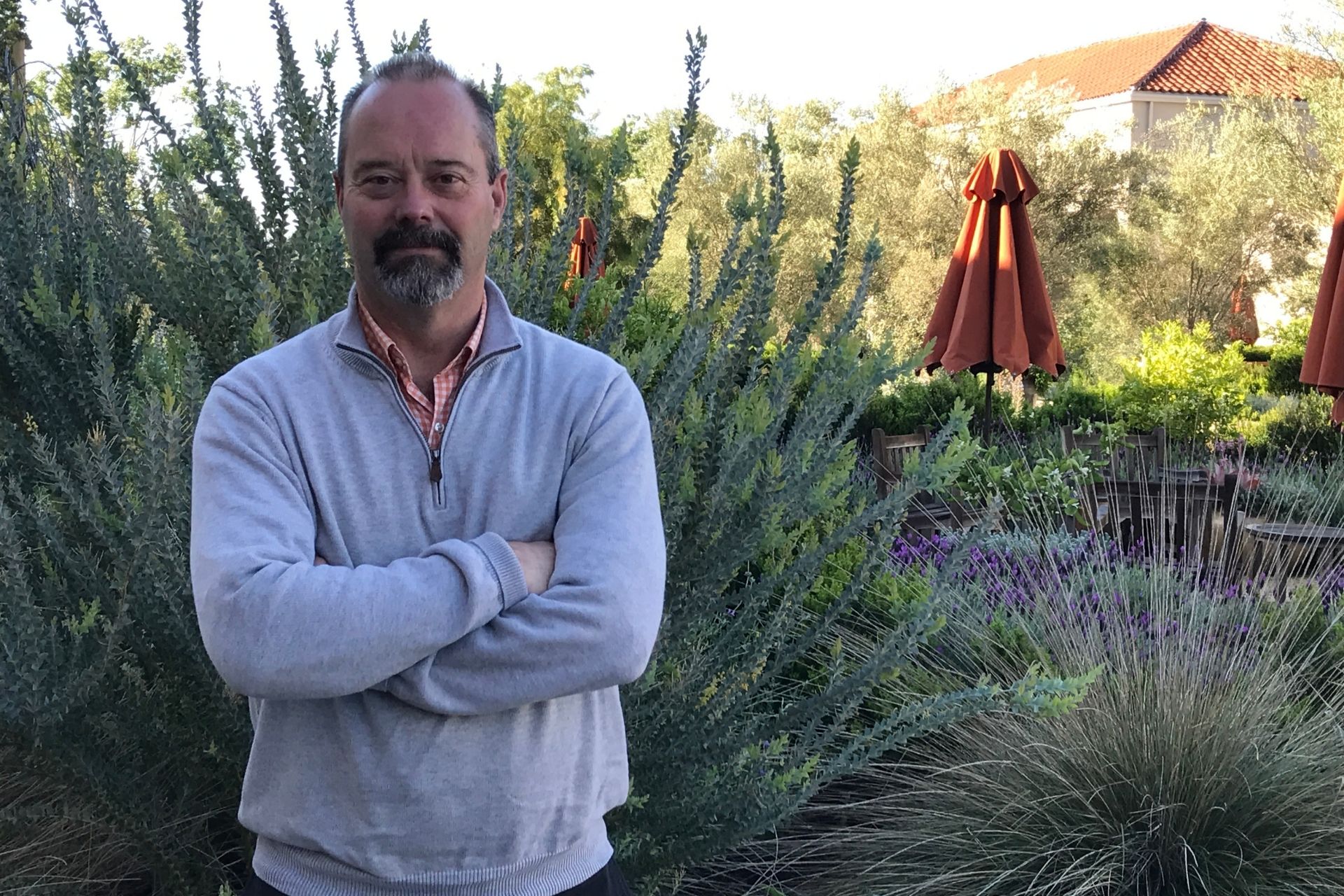
Deverell hopes to contextualize the issues of The West. Courtesy of Bill Deverell
Deverell answers his question. “I think in my historical sensibility, I would say, yes, they’re really pronounced,” he says. “But I’ll give a little caveat: This is a nation that also had a civil war. And so you’ve got to place this in some kind of relative relationship to other events or movements across American history and culture.”
Deverell also says the cross-disciplinary summit that I earlier described as leaving me worried shows we should be further along in our dealing with our issues. “There’s still a head-in-the-sand kind of quality to everyday life and people who move through it,” he says. “I think we really need to re-energize our collective sense about these problems.”
Many of these problems do indeed stretch to millions upon millions of Westerns. The Colorado River, famously, is one such focal point. Battles over water distribution from this body of water, which serves near-and-far-flung populations in two countries and multiple states and industries and depends so much on snowpack in the Rockies, are likely to become more intense. “The fate and future of the Colorado River are tied tightly to the future of the American West, particularly Southern California,” Deverell says. “That’s a topic that can be a case study of some of these issues and problems of climate change and also shared resources.”
“There’s still a head-in-the-sand kind of quality to everyday life and people who move through it. I think we really need to re-energize our collective sense about these problems.”
When my conversation with Deverell turns towards solutions, he brings up this topic, on a large scale. “We need to prepare a lot better for when those really wet seasons come, which we’re pretty sure they’re going to,” Deverell says. “We need to make sure you’ve got water capture technologies really up to speed, which means we need to be building water infrastructure that isn’t in use for, let’s say, seven out of ten years because it’s dry. But in those three years where it’s really wet, it’s abundantly clear that we’ve got to capture that increased rainfall.”
Deverell isn’t as high on desalination as Pacific panacea–we talked that through–but he is warming to another big idea surrounding H20. “I was in a long discussion and kind of a debate with a colleague yesterday about pipeline ideas. You bring spring water from the Midwest to the West,” he says. “I thought that that was a kind of outlandish idea; it was too expensive, the engineering challenge of it is beyond what we should be grappling with, we’ve got to work on conservation for these wet seasons, etc. But my colleague, who’s a very talented, important American historian, said, ‘Look, we do this for oil. Why not water?’”
To care about the future of the West—and the world—these days means spotting news stories seemingly all day, every day. Stories about philanthropic foundations pledging billions for environmental causes; venture capital and impact investors pouring billions in new ideas and technologies; tech giants–or some of them–pledging to purge misinformation from their platforms; utilities budgeting billions to belatedly bury fire-sparking power lines; automobile manufacturers going electric; cities and states and the federal government finally changing laws and codes and regulations; billionaires prepping spacecraft in case we need a new home (ahem); Congress considering passing trillions for infrastructure, and so much more that could begin to address many longstanding and overlapping problems.
“I think in some respects in American culture, we put a little bit too much reliance on American ingenuity to solve our problems. We say, someone will come along and solve our problems,” Deverell says. “I think that expectation of the individual brilliant actor has to be recalibrated. Now, we need a groundswell of people who say we have real problems. We need to think about this and talk about it far more than we do.”
Help us sustain independent journalism...
Our team is working hard every day to bring you compelling, carefully-crafted pieces that shed light on the pressing issues of our time. We rely on caring supporters like you to help us sustain our mission. Your support ensures that we can continue to provide deeply-reported, independent, ad-free journalism without fear, favor or pandering. Support us today and make a lasting investment in the future.
RELATED STORIES


Award Winning



Today’s environmental and social justice challenges are unprecedented, and require an unprecedented collective effort.


Stay updated on our latest features, events and more. Subscribe to our Note From the Nest newsletter!
