
Dragonflies, Bats and Hackberry Trees, Oh My!
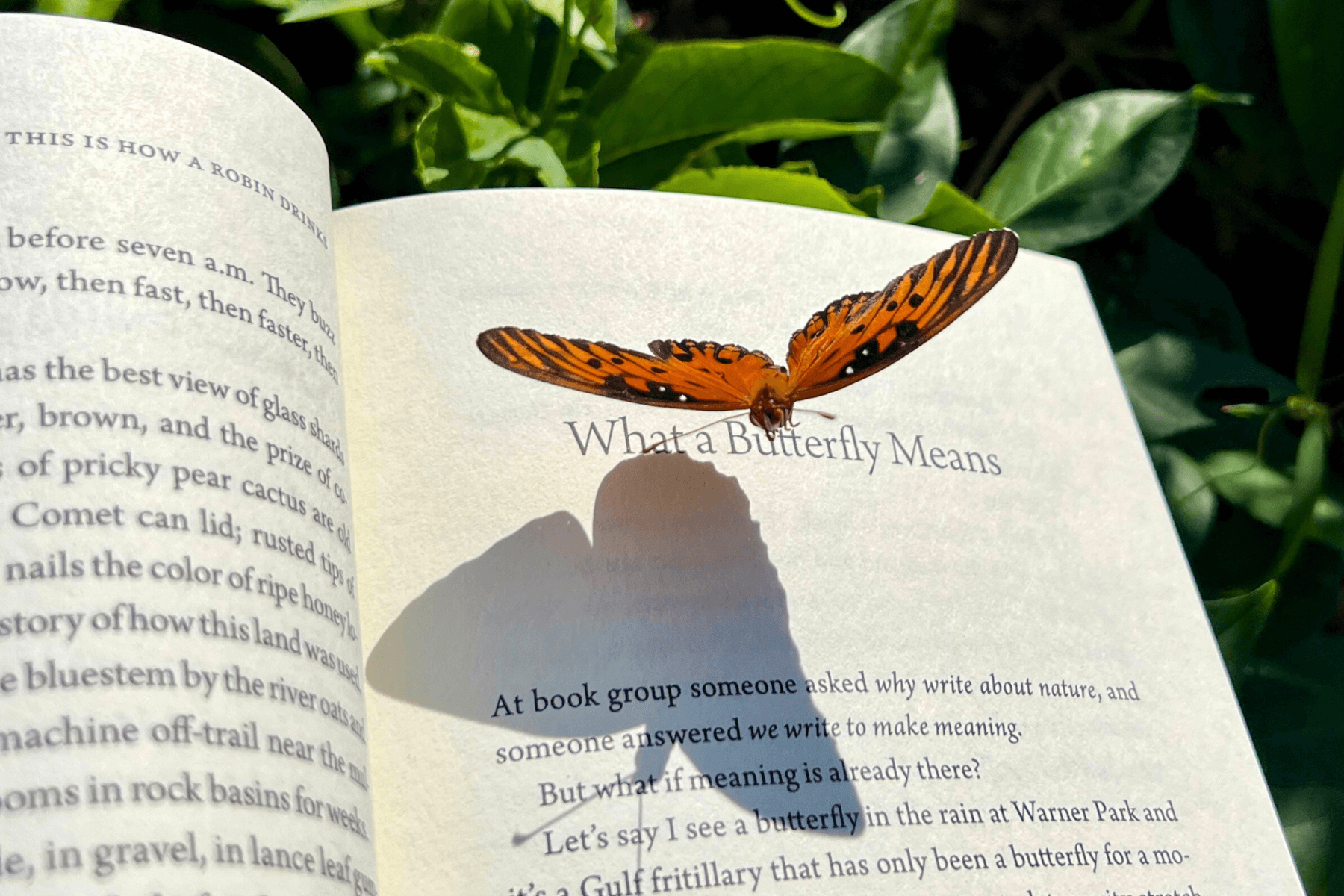
Quick. Think nature writer. Who comes to mind?
Thoreau? Annie Dillard? Rachel Carson?
What about Christian Cooper, of “Central Park birder” fame? Or, the incomparable Barry Lopez? Or, Mary Oliver?
Once summoned, the names keep coming: Wendell Berry, Diane Ackerman and Bill McKibben — even Wordsworth, for chrissake. There are as many ways to write about forests, deserts, savannas, mountains and seas as there are critters and plants enlivening those places — which is why Joanna Brichetto’s sharp, amiable debut, This is How a Robin Drinks: Essays on Urban Nature, fits so neatly in that kaleidoscopic tradition, even as it brings something new to the party.
With its 52 short essays arranged by season, This Is How a Robin Drinks offers a year’s worth of observations, paeans and plain old musings around Brichetto’s chosen field of study: namely, the sidewalks, backyards and little public parks — oases positively teeming with life — in Nashville, Tennessee, and specifically her own neighborhood in Music City. (Some readers might already know of Brichetto and her urban naturalism through her popular and long-lived blog, Sidewalk Nature.)
In the shimmering of dragonflies, brown bats arcing through the twilight, the always-sudden, bracing chill of autumn, and the comforting presence of her beloved hackberry trees, Brichetto finds welcome and constant reminders that, even in the city, nature abides.
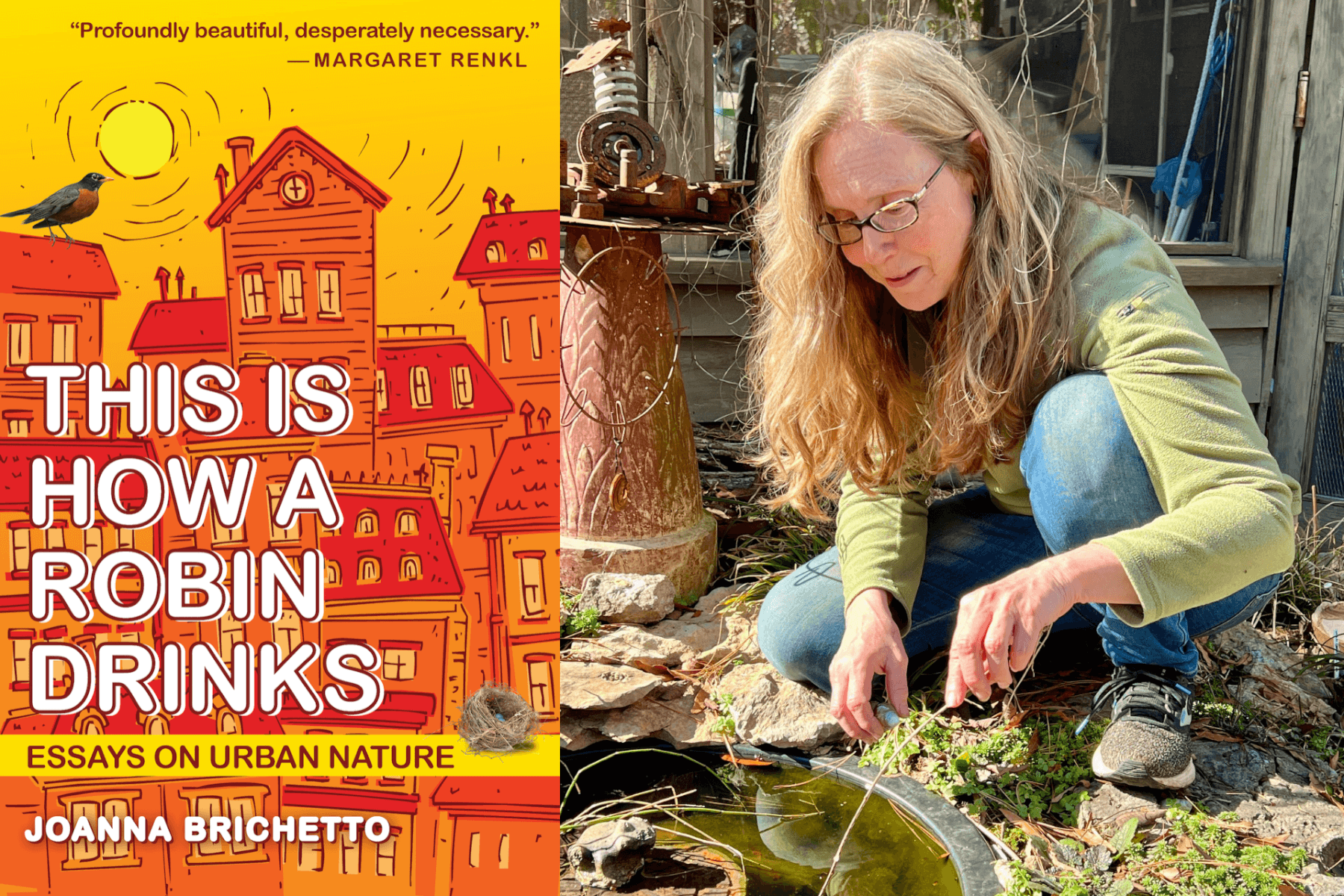
Brichetto takes the time to listen to and really see the nature in her own backyard. Courtesy of Trinity University Press (right). Courtesy by Joanna Brichetto (left)
In fact, a reader doesn’t have to get too far into this book before appreciating that one of Brichetto’s many gifts is that she not only stops and smells the roses in her path, but happily spends time — like, hours — enjoying the dramas and occasional comedies that unfold inside those and other flowers, in cracks in the driveway, on a trip to the store, anywhere and everywhere, all at once.
That being said, let’s briefly consider what Brichetto’s book is not. It is not a work that grabs you by the throat like, for instance, Edward Abbey’s defiant, elegiac Desert Solitaire. It’s not a book where wildness and the sublime echo from every page, like Peter Matthiessen’s Zen-inflected masterpiece, The Snow Leopard.
Instead, This Is How a Robin Drinks works on another scale entirely, in the modest size and shape of the scenes where Brichetto’s adventures play out, and in the companionable tone with which she shares her fascination with the natural world.
Take, for example, the wondrous strange phenomenon known in some parts of the world as honeydew — perhaps most memorably cited in Coleridge’s trippy masterpiece, Kubla Khan. (“Weave a circle round him thrice, /f And close your eyes with holy dread, / For he on honeydew hath fed, / And drunk the milk of Paradise.”)
“Honeydew is falling from the hackberry tree,” Brichetto writes, far less ominously:
Slower than rain. Smaller and less determined. It behaves more like the tiniest of snowflakes. Or a mist, super fine. In counterpoint, white wooly aphids … waft in dozy trajectories: up, down, sideways. Little aphids look big when you are trying to see honeydew.
Do you know honeydew? Not the green melon but the stuff aphids make while they suck your garden dry. Honeydew is aphid poo.
The essay takes several sharp turns, all of which we readily follow because Brichetto is fun to hang out with and often behaves unexpectedly. After a discussion of where the particular aphids she’s been watching come from (they were “accidentally brought from China”) and whether they defecate on command (they do not), Brichetto does something as weird and as sweet as honeydew itself:
Sugar is forbidden on my new migraine diet. No starches, no fruit. The sweetest thing allowed is blueberries a couple of times a week. I am dying to know the carb count of aphid honeydew. Judging by exploratory licks, it is as sweet as maple syrup, molasses, brown rice syrup, as sweet as honey. And look at all the time and effort it takes to produce those sweet things. Look how hard bees have to work to make honey. Aphids make theirs by taking a dump.
And then the kicker, which displays so much of what makes This Is How a Robin Drinks such an enjoyable read: Brichetto’s attention to minute detail, the pleasure she takes in the unexpected, her frankness, her unforced humor:
Some friends of ours want to move from Nashville to Wyoming, to live under a big sky…. But I like living under a small sky. I like waking up every day to our city yard, our hackberries. I like to sit with my teacup right here in a blackened folding chair on our blackened driveway and watch honeydew shoot from a million aphid assholes.
Granted, this is not the exalted writing of, say, a naturalist-philosopher like John Muir, whose love of the American West and advocacy for wilderness helped spark the modern environmentalist movement. But one suspects that the craggy old Scot and co-founder of the Sierra Club might very well nod in approval at Brichetto’s take on aphid turds, as well as her wholly relatable sense of straight-up wonder. She and Muir are kindred spirits that way.
Still, let’s face it: reading a book filled with nothing but expressions of wonder would exhaust even the most ardent nature lover. Awe itself can benefit from a sell-by date. Thankfully, Brichetto peppers her essays with wonder-adjacent observations that in lesser hands might sound twee, but in This Is How a Robin Drinks are mini “aha!” moments in their own right.
Writing of the goldfinches who feed on sunflowers in her backyard — a female “stands on the forehead of a tilted rim and tucks her head to bite and twist seeds from their pockets” — she offers this:
The goldfinch “contact call” — the sound they make to one another in flight — is potato-chip, potato-chip. Isn’t that sweet? But the funny thing is goldfinches make me crave salt, as in super salty potato-chips, potato-chips. Lay’s Classic Salted comes in bags colored not unlike a male goldfinch in breeding plumage: “wild canary” yellow. Which means year-round, when I see potato chips, they make me crave goldfinches.
Joseph Conrad famously asserted that his primary task as a writer was, “by the power of the written word, to make you hear, to make you feel … before all, to make you see.” In her essay on goldfinches, improbable creatures colored “bright gold, a yellow you cannot miss,” Brichetto emphatically makes us see. In fact, throughout her essays, she shapes images that flicker behind our eyelids long after we’ve closed the book — scenes vivid enough that for a moment a reader can imagine that they happened in her own life, before remembering that, wait, no, they occurred in Brichetto’s.
Like all the best essayists, Brichetto also fashions strong opening lines, sentences that make the reader want to stick around to find out what’s going on:
“It’s hard to be a tree in a city.”
“If our boy is tucked in and the sky is dry, I can ease outside ahead of the bats.”
“Once upon a time, bugs were bad.”
“Just like that: it’s time to find the sweatshirts, the coconut oil is white again, bath towels stay wet, and I want to wear socks to bed.”
“At Goodwill last summer, a thing flew past my face.”
(It was a dragonfly, by the way, the thing that flew past Brichetto’s face, and it’s hard to imagine anyone short of a poet — Camille Dungy, maybe? — investing that tiny fighter jet of an insect with more personality and mystery than Brichetto does.)
Knowing how to start an essay is as key as knowing how and when to stop. Brichetto gets it, and with that knowledge, she fashions essays that read like dispatches from a quirky, smart, curious friend — no small feat, as every writer seeking their unique voice knows.
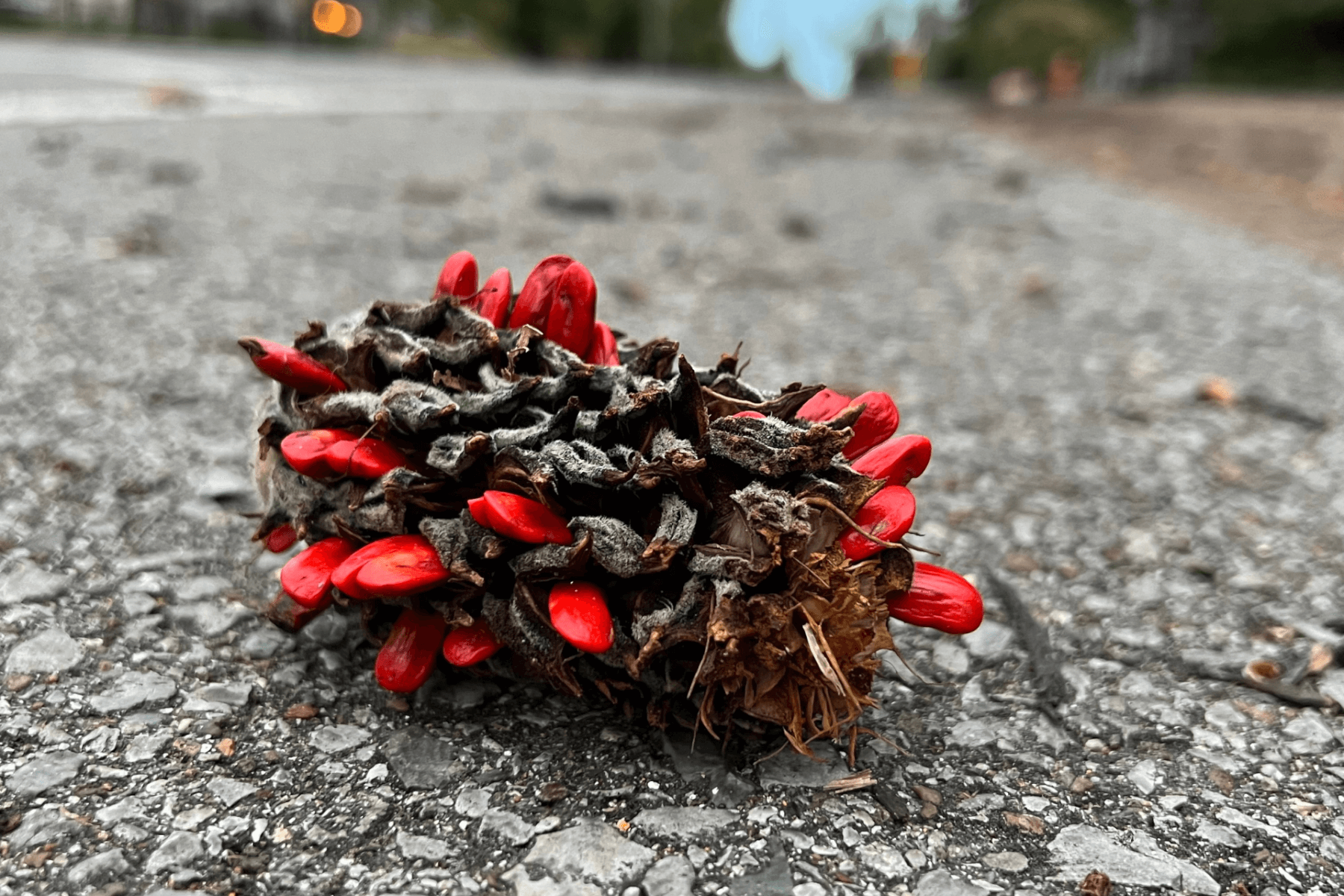
For Brichetto, this Southern magnolia seed — a plant native to the American South — is cause for pause and examination, becoming the focal point of one of the essays in her book. Courtesy of Joanna Brichetto
Lastly, climate change. It’s a big topic. The biggest, really. We humans have barely begun to grasp what long stretches of 100-plus-degree days (and nights) across areas of the globe unused to such heat might mean for life on Earth; how habitat loss fueled by climate change might affect already stressed ecosystems; what fresh hell steadily rising ocean levels and temperatures might unleash along the world’s coastlines and, in light of the outsized role the oceans play in our planet’s weather, everywhere else.
One hardly expects a writer as clear-eyed as Brichetto to sidestep the issue, and she doesn’t. Evidence of species, landscapes, communities and entire continents undergoing in decades the sort of transformations that in the past would have taken millennia is all around us, including in the pages of Brichetto’s book. But she weaves that evidence into stories about other things, rather than writing about climate change, and that gives her work a resonance that old-school hortatory could never manage.
Example: When she travels to a hospital one November day for a mammogram (stopping along the way to gather some fallen catalpa leaves, because… nature), Brichetto wonders if every person of color in the waiting room assumes “that my white, middle-aged, middle-class, straight, married female southern self voted for the racist, misogynist, homophobic, narcissistic, and staggeringly unqualified climate change denier who won the presidential election in the wee hours of this very morning.”
Placing climate-change denial on a par with racism, misogyny and other execrable attitudes feels right — not for “political” reasons, but because like all ugly beliefs, climate denial is a moral outrage. “Human activities…have warmed Earth’s surface and its ocean basins,” NASA scientists remind us, “which in turn have continued to impact Earth’s climate.” Refusing to act in the face of this cataclysm is akin to someone standing on a sidewalk, watching their home engulfed in flames, and refusing to act — while hearing their family’s screams coming from inside.
Admittedly, that’s pretty heavy. But Brichetto’s essays touch on some hefty questions, without preaching or giving into despair. What is our role here on Earth? How can we find satisfaction and even joy in tending to our planet, caring for our neighborhoods, and fighting for our kids’ future? Can true wonder be found in our own backyards, down our streets, far from the wild places of the world?
Brichetto wisely leaves those and other questions unanswered, for the most part, and while she doesn’t ask this outright, it’s a question that hovers at the edge of everything she writes: In a world so weird and (let’s just say it) miraculous that insect excrement has evolved to taste like honey, and goldfinches on the wing sing to one another of salty snacks, are we not the luckiest creatures in the universe?
Help us sustain independent journalism...
Our team is working hard every day to bring you compelling, carefully-crafted pieces that shed light on the pressing issues of our time. We rely on caring supporters like you to help us sustain our mission. Your support ensures that we can continue to provide deeply-reported, independent, ad-free journalism without fear, favor or pandering. Support us today and make a lasting investment in the future.
RELATED STORIES

Award Winning



Today’s environmental and social justice challenges are unprecedented, and require an unprecedented collective effort.


Stay updated on our latest features, events and more. Subscribe to our Note From the Nest newsletter!
