
En Toto
Who doesn’t love a spirited rivalry?
Ali and Frazier, Picasso and Matisse, Jay-Z and Nas—at their most intense, these struggles for primacy hold up a mirror to schisms in the wider culture. When Smokin’ Joe and Ali met in the ring, for instance, it wasn’t just a boxing match, but a clash of sensibilities, of worldviews. In the public’s eye, Frazier was the embodiment of old-school—a brooding, workmanlike Philly brawler. Ali, on the other hand, was a counterculture icon (“I ain’t got no quarrel with them Vietcong,” he famously said when refusing to serve in Vietnam. “No Vietcong ever called me ni**er.”) with movie-star looks, a rebel’s charisma and a mesmerizing fighting style that seemed one part ballet, three parts ferocity.
The chasm between the fighters and their fans was not so much generational—they were separated by just two years, after all—as ideological. Frazier was the past; Ali (in fact, the older of the two) was the future, and each time they did battle, more than a title belt was on the line.
So it was, too, in the 18th century, when a decades-long rivalry in the ostensibly staid realm of science not only divided popular and professional opinion, but spread ripples so far and wide that it still has a profound effect, three centuries later, on nothing less than how we view humanity’s place in the vast, intricate web of life.
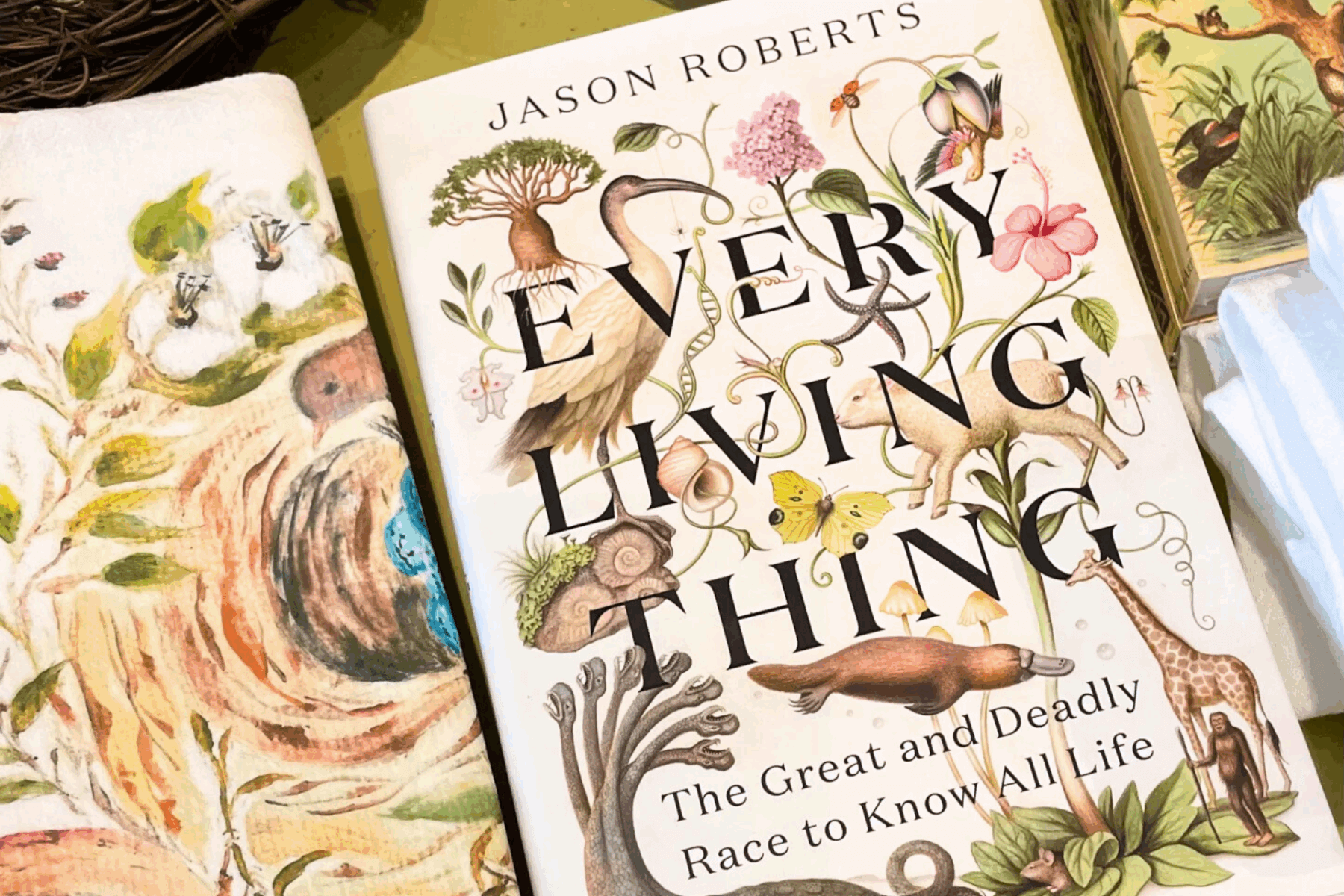
Jason Roberts’s masterful, engaging Every Living Thing is, in effect, a dual biography of those long-ago rivals: a Swede, Carl Linnaeus, the inventor of binomial nomenclature—Homo sapiens, Canis lupus (the wolf), Megaptera novaeangliae (the humpback whale)—as well as the Linnaean system of taxonomy (Kingdom, Phylum, Class, Order, etc.); and Georges-Louis Leclerc, Comte de Buffon, a French autodidact whose 35-volume Histoire Naturelle, Générale et Particuliere sold so well among fellow “natural philosophers,” i.e., scientists, and the general public that it made him the most popular nonfiction author France had ever seen.
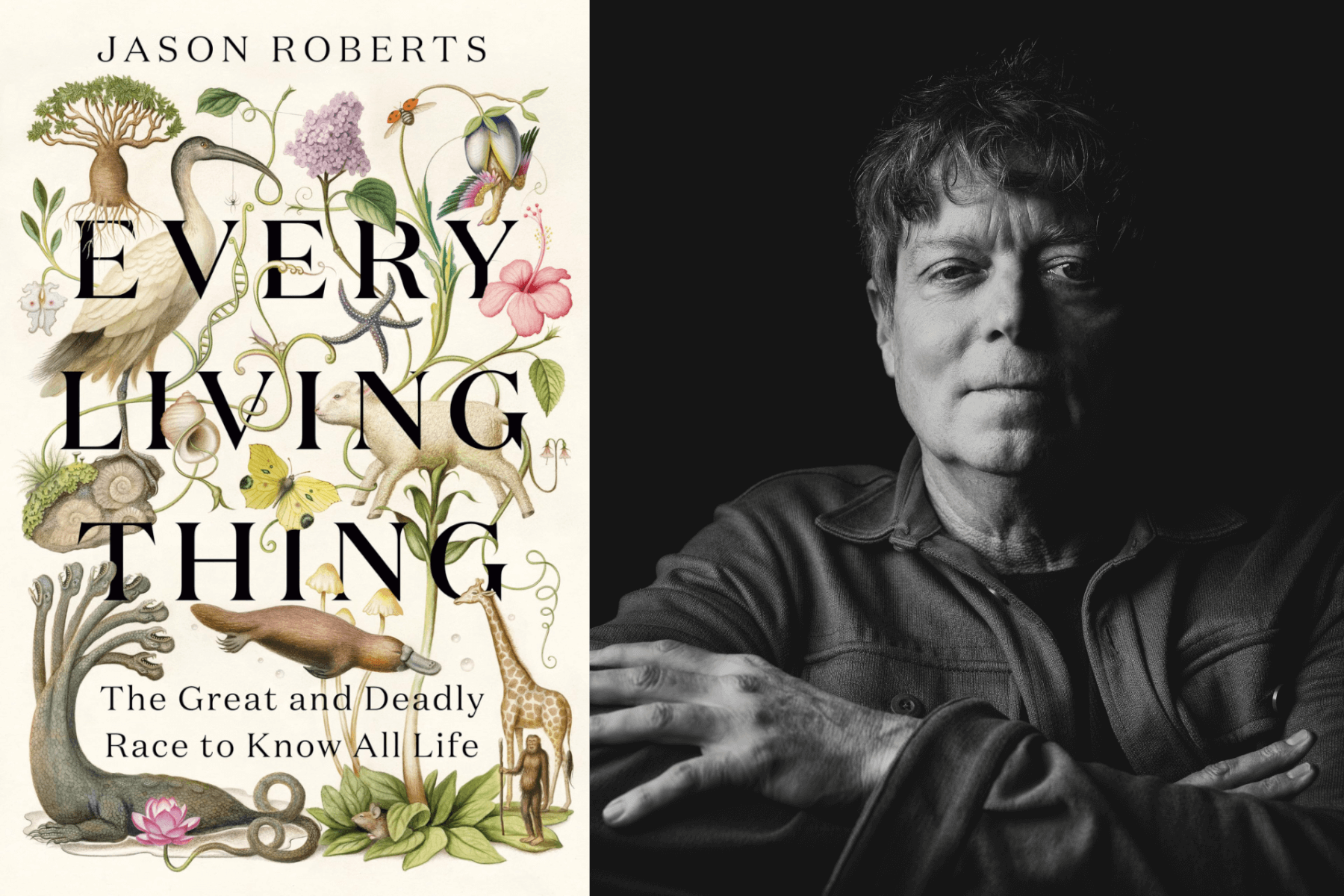
As Roberts makes clear—and as the book’s compelling subtitle, The Great and Deadly Race to Know All Life, suggests—Linnaeus and Buffon were not looking to merely catalog plants, animals and fishes; instead, each sought a glimpse into the essence of what it is to be alive. For the devout Linnaeus, it meant devising ways to identify every single thing God created, whether it bloomed, hopped, swam, scuttled, flew, slithered or walked.
For Buffon, the search assumed a more holistic shape, in which nature was not humanity’s to subdue, or even to inventory, but a vibrant galaxy of interwoven elements. He approached the natural world, Roberts writes, “not as static objects . . . but as dynamic, interdependent manifestations of a greater whole.”
With the Bible as his guide, Linnaeus believed that he and his “apostles”—students who sought out botanical and zoological specimens around the globe—could name and know all creatures and plants, great and small. How difficult could it be to know all animal species, anyway? How many could there be, if all could fit in Noah’s 500-foot-long, 80-foot-wide Ark? Ten thousand? Twenty, maybe? (Some of his acolytes fell ill, were badly hurt, or even died in the pursuit, making the “race to know all life” perilous, indeed.)
Roberts distills Linnaeus’s creative, Scripture-fueled reasoning with admirable brevity:
In a 1763 lecture, Linnaeus confidently announced, “the whole sum of the species of living creatures will amount to 40,000 ….” [But] even 40,000 struck Linnaeus as an unnecessary complexity. To his students, he wondered out loud why God, “who has created everything in the most simple and wise way,” had not created man as worms and “the globe as a cheese, which we worms could have gnawed.” Since Nature existed solely for the benefit of humanity, surely matters could have been streamlined.
Leaving aside that nightmare image of wormlike humans gnawing a lump of cheese forever, Linnaeus’s logic and math were, within the parameters of his faith, ironclad. Surely a lifetime of diligent, pious work could suss it all out. Right?
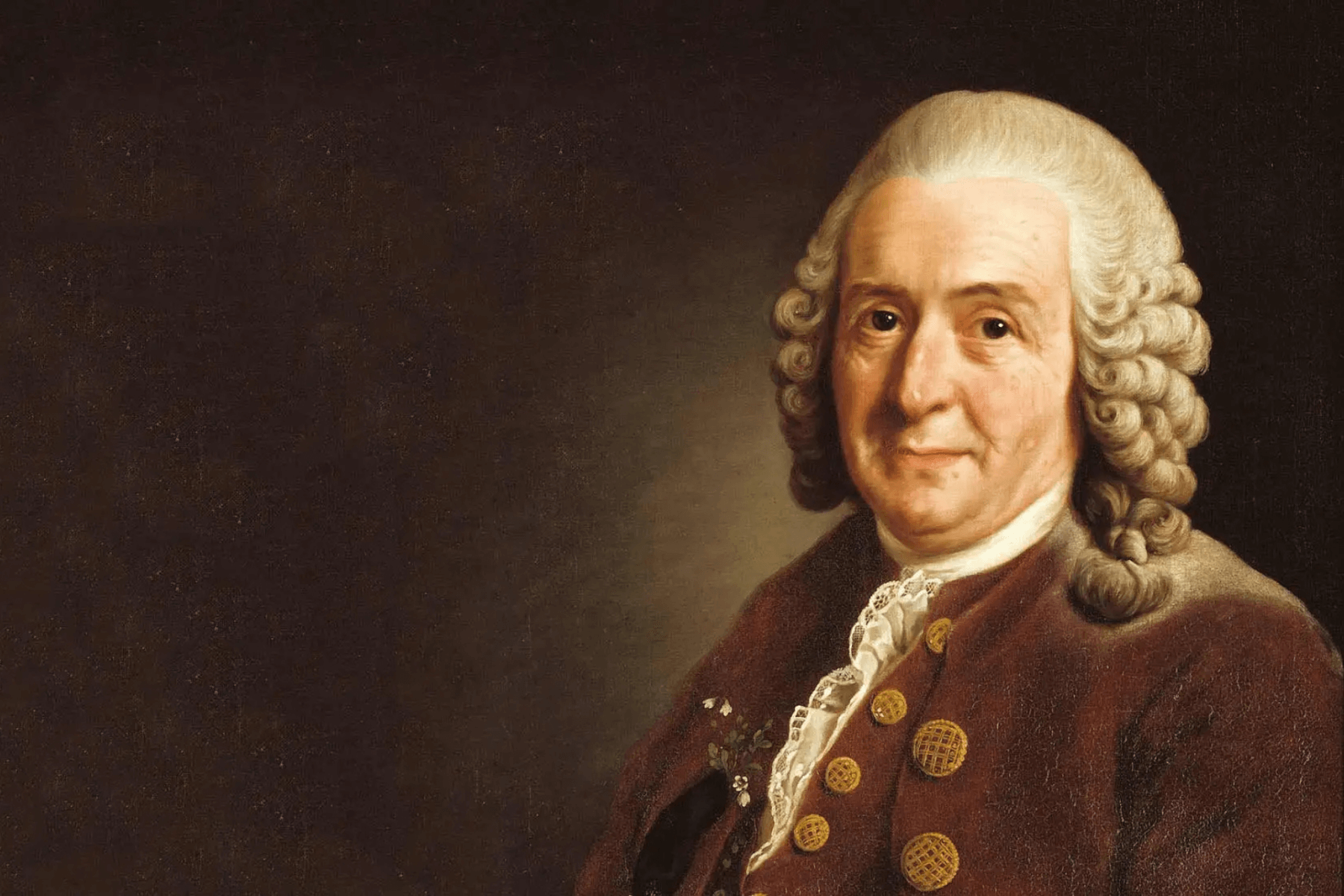
Carl Linnaeus, the inventor of binomial nomenclature. Courtesy of New Scientist
Well, as Roberts notes, “advances in genetics now make clear that the number of extant species—as defined by genetically distinct reproductive populations—is vastly greater than previously imagined.”
A National Science Foundation project [Dimensions of Biodiversity, begun in 2021] . . . is using gene sequencing to identify species down to the microbial scale, and while it will take years for full results to emerge, project members already estimate the total number on Earth is more than twenty orders of magnitude greater than previously understood.
Unlike Linnaeus, Buffon adhered to what Roberts characterizes as a “complexist” view, as opposed to Linnaeus’s “systemist” approach to the natural world. For Linnaeus, the number of species was finite and, given time, one could catalog them all. Buffon’s take—as radical as it was blasphemous—was that species not only evolved but disappeared, i.e., went extinct, even if he could not definitively cite the mechanism that brought about these changes. In short, Linnaeus believed that identifying and, crucially, naming a species captured all individuals within it, for all time. Buffon, writes Roberts, instead saw cataloging species as “the scaffolding of science, and not science itself,” and that Linnaeus and those who shared his view mistook “the scaffolding for the edifice” of the natural world.
Born into a family of civil servants in 1707 (the same year Linnaeus was born), Buffon hardly seemed destined for greatness. As Roberts puts it:
No one was impressed by his intellect. His friends would remember him as more interested in sports than school books, although they were vaguely aware that he read other books on his own. Having completed the equivalent of his high school education in 1723, Georges-Louis had then begun a similarly tepid course of studies at Dijon’s School of Law, despite having no plans to become a lawyer.
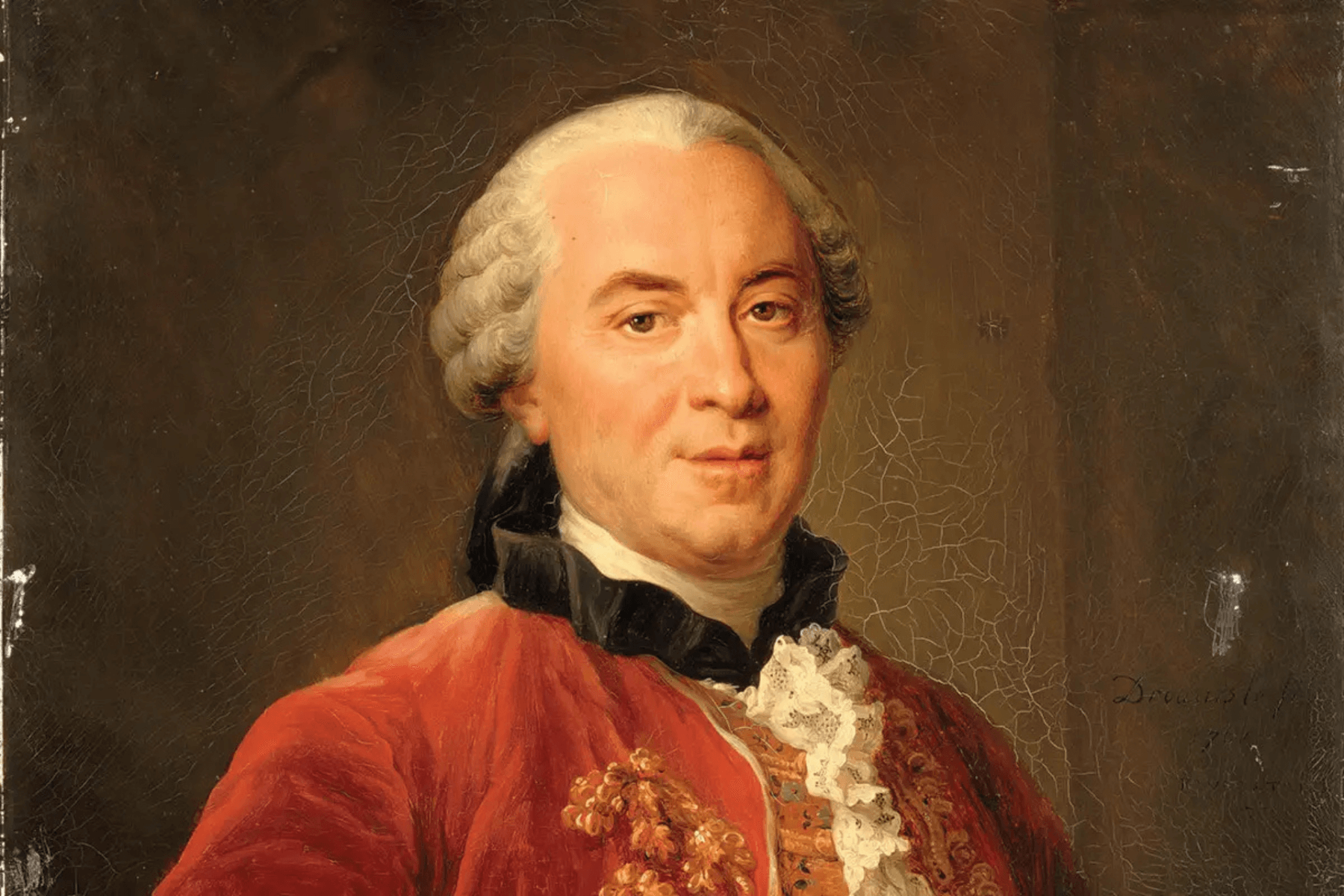
Georges-Louis Leclerc, Comte de Buffon. Courtesy of New Scientist
The recipient of an enormous, unexpected inheritance early in life, Buffon, by his early 20s, was at home in rarefied social circles, had assumed the role of caretaker of the royal gardens in Paris (like Linnaeus, botany was his first love) and had built an enormous estate in the French countryside where he indulged his passion for natural philosophy. There, through sheer will and a near-superhuman adherence to routine, he evolved into one of the towering intellects of an age that boasted more than a few titans in France alone (Voltaire, Montesquieu, Diderot, et al.).
Unlike his idol Isaac Newton, a solitary man who died a self-admitted virgin . . . Buffon recognized himself as hedonistic by nature, given to indolence and dissolution. In order to combat his natural tendencies, he adopted a strict schedule. The day began at 5:00 a.m. with the entrance of his valet Joseph, who was under specific instructions to rouse him no matter what.
After his morning preparations, Buffon entered one of two “isolation chambers” on the property. “Each space contained only a writing table, a fireplace and a portrait of Newton.” There Buffon sat, thought, wrote notes and thought some more.
At 9:00 a.m. he paused for a quick breakfast, which always consisted of a roll and two glasses of wine. Then back to work until 2:00 p. m., when he enjoyed an unhurried meal with family, friends, and guests …. He returned to the isolation chamber at 5:00 p.m. and ended his workday exactly two hours later …. At 9:00 p.m. he excused himself [from the guests he invariably entertained] and went to bed. He kept to this schedule for the next fifty years.
One result of this earnest cogitation was a groundbreaking mathematical advance, today universally known as “Buffon’s needle.” Buffon determined that the probability a needle dropped on, say, a lined sheet of paper will cross one of the lines on the page is directly related to the value of pi. This formative proof — one that, it bears repeating, seems to have sprung fully grown from the mind of a man sitting and thinking, alone, for hours, days and weeks on end—“marks the beginning of the field of geometric probability.”
Scientists today use techniques descended from Buffon’s Needle to tally the number of cells in a tissue sample, to calculate the internal surface area of a lung, and to quantify the number of neurons in a human brain …. Financial firms use them to calculate investment risks …. Physicists used them to develop the first atomic bomb.
Not bad for an indifferent student whose early intellectual life was haphazard, at best.
Ultimately, though, Every Living Thing impresses not only in the way the author balances the tale of these two very different men and their oddly parallel lives, but by the clarity and compassion with which Roberts delineates their competing views of nature.
While clearly more impressed by Buffon as a man and a thinker, the author does Linnaeus the great service of showing that his “systemist” approach to the natural world offers a still-foundational lens through which to consider the panoply of life. His two ingenious creations—binomial nomenclature and the taxonomic classification system—remain essential frameworks for considering scientific phenomena ranging from natural selection to clonal colonies, like the 40,000 genetically identical Quaking Aspens, nicknamed “Pando,” in Utah’s Wasatch Range that comprise, in effect, a single supermassive organism.
That Linnaeus also employed his taxonomic model to promote bluntly racist views, with “European man” the apex of the natural world and all other Homo sapiens barely human at all, does not discredit everything he accomplished—even as it casts a moral pall over his triumphs. This much has always been true: one can be an intellectual prodigy and have vile opinions. It’s also the case that Linnaeus’s “original five nesting boxes (kingdom, class, order, genus, species),” which he considered divine, perfect and complete, have multiplied beyond anything he, or Buffon for that matter, might have imagined.
Biologists have been compelled to balloon the hierarchy to no fewer than twenty-one distinct categories. Some taxonomists have deployed a twenty-second category . . . intended to accommodate our increased understanding of the diversity of unicellular life. A group of microbes called hemimastigotes, for instance, differs from other microbes as much as a chanterelle mushroom differs from a chimpanzee.
As for Buffon’s legacy, scientists ranging from evolutionary biologists to climatologists have found kernels of their disciplines in his expansive, nuanced work. Darwin himself wrote that Buffon “was the first author who, in modern times, has treated [the origin of the species] in a scientific spirit.” Two and a half centuries before Nobel Prize laureate Paul Crutzen coined the term Anthropocene to describe our current epoch and the “impacts of human activities on earth and atmosphere,” Buffon made a strikingly similar argument.
Human-driven environmental change had proceeded to the point that it represented the “seventh and last epoch, when the power of man has assisted that of Nature.” This power, Buffon concluded, was not universally positive …. Buffon did not anticipate modern global warming: Pollution on such a scale as to cause it was unimaginable in 1774. But he did believe that human habitation had already permanently changed the climate, and that the planet was not an inexhaustible resource.
Roberts offers other examples of Buffon’s uncanny foretelling of scientific discoveries and theories, to the point where the reader recalls with something like unease the thinker in his “isolation chamber,” patiently pondering the workings of the natural world and conjuring insights that border on visions.
Of course, neither Linnaeus nor Buffon could possibly grasp the breadth of their own competing contributions to science, even if, in Linnaeus’s case at least, he was mortally certain that his work was not only unique, but divinely inspired. (He wrote four autobiographies, filled with variations on the boast that “God has given him [he always referred to himself in the third person] the greatest insight into natural history, greater than anyone else has enjoyed.”) Still, one gets the sense that for both of these men—“exact contemporaries and polar opposites” who, remarkably, never met face to face—the occasional glimpse behind nature’s veil might have been reward enough.
Like all great works of popular science, Every Living Thing inspires in the reader a sense of wonder and humility. But Roberts’s book also reminds us that there are countless paths to truth, and that few figures walked those paths for as long, or to greater effect, than Linnaeus and Buffon. Across more than a quarter of a millennia, their footsteps have hardly faded. How many others, in any field, can claim even a minuscule part of such recognition and renown?
Help us sustain independent journalism...
Our team is working hard every day to bring you compelling, carefully-crafted pieces that shed light on the pressing issues of our time. We rely on caring supporters like you to help us sustain our mission. Your support ensures that we can continue to provide deeply-reported, independent, ad-free journalism without fear, favor or pandering. Support us today and make a lasting investment in the future.
RELATED STORIES
Award Winning



Today’s environmental and social justice challenges are unprecedented, and require an unprecedented collective effort.


Stay updated on our latest features, events and more. Subscribe to our Note From the Nest newsletter!
