
An Underwhelming Groundswell

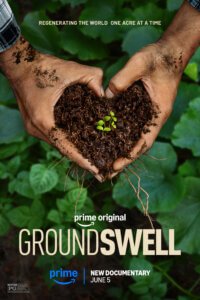 One of the common criticisms levied at climate documentaries is their tendency to lapse into a tone of either stern parental reprimanding or gloomy portent of slow, inevitable doom. Both are valid rhetorical stances, in that humanity has consistently chosen to make global warming worse (whether by individual choice, societal organization, or otherwise), and climate change is both real and potentially apocalyptic should nothing be done to curb its progression. What makes so many of these docs ineffective is the perception that they will serve up self-righteous admonishing without offering an effective, grassroots response to the problem.
Not all climate documentaries fall into this trap, of course. Josh and Rebecca Harrell Tickell are frequent exceptions to the scolds and doomsayers. They’ve defined their careers with activism-focused climate documentaries as far back as 2008’s Fuel, which won that year’s Sundance Audience Award for Best Documentary.
Their latest films, Kiss the Ground and Common Ground, have focused on the subject of regenerative agriculture: a method of farming that prioritizes restoring soil health, increasing biodiversity, and capturing carbon from the atmosphere. Both were noteworthy for the attention they brought to regenerative agriculture but received criticism from climate activists for pointing to the practice as an all-encompassing solution to the climate crisis when they’re really not. Both offerings included lots of scientifically dubious claims that sound nice but aren’t proven fact, and neither acknowledged the innate drawbacks of regenerative agriculture, such as the huge amounts of farmable land required to do it well.
The Tickells’ latest film to take on the subject, Groundswell, is cut from the same cloth, in that it’s a well-intentioned, rhetorically self-defeating film that squanders interesting coverage of environmentally conscious farming efforts around the world by framing it with ineffective and dubious arguments that detract not only from the film’s intended purpose, but also from the agricultural movement its trying to represent.
***
Groundswell’s primary argument—that regenerative farming is the most comprehensive solution to climate change we can enact today—is poorly delivered, and the entire film ignores vital pieces of the conversation around how farming can be adapted to aid the climate crisis. For example, the film spends considerable time on how best to raise cattle rather than pointing out that raising cattle at all is a major contributor to global warming that could be severely curtailed if more people ate less red meat. (By some measures, cows contribute more to global warming than cars and vans.)
The film’s overemphasis on regenerative farming, and the repeated claim that it could be a be-all-end-all solution to the climate crisis, is the film’s most fundamental flaw, and detracts from the otherwise noteworthy display of how regenerative farming efforts have managed to make a difference in the economies and ecosystems around the world.
The film’s most confused rhetorical thread is its push against systemic change as a method of addressing the climate crisis.
It’s more disappointing because the film does shine in a few important areas. Namely, its exploration of modern grassroots agricultural practices in non-Western cultures. The Tickells’ previous work was rightly criticized for overlooking South America, Africa, and Asia, all of which have agricultural traditions not nearly as steeped in the factory-farming model that defines the modern world’s farming industry. Groundswell addresses that shortcoming by focusing on farms in India, Africa, and South America.
When Groundswell is exploring the sustainability of coffee farms in Colombia or the activist work of a tribe in East Africa employing sustainable farming techniques used in the region for millennia, it’s a fun and informative watch. The uplifting, positive tone the film comes through and manages to break the mold of that dour narrative voice characteristic of so many climate documentaries. And yet, the film consistently undermines its strengths with poorly constructed arguments, both in the narration and visuals.
A single line in particular, narrated by actor Woody Harrelson (every film in the Tickells’ regenerative agriculture trilogy celebritymaxxes—Demi Moore is the co-narrator), encapsulates the issue well: “Now here’s where we tend to go wrong: Jumans keep trying to fix our heating planet with policy and technology. And so far, that hasn’t cooled much of anything.”
It’s a seductive sentiment—that somehow the climate crisis is salvageable by people rather than institutions or that eschewing technology will lead to salvation. Of course, people can and must make a difference, and industrial agriculture is certainly not sustainable as it is currently practiced, but to deny the power of policy and technology to help fix global warming is to whistle past the graveyard with one hand tied behind your back.
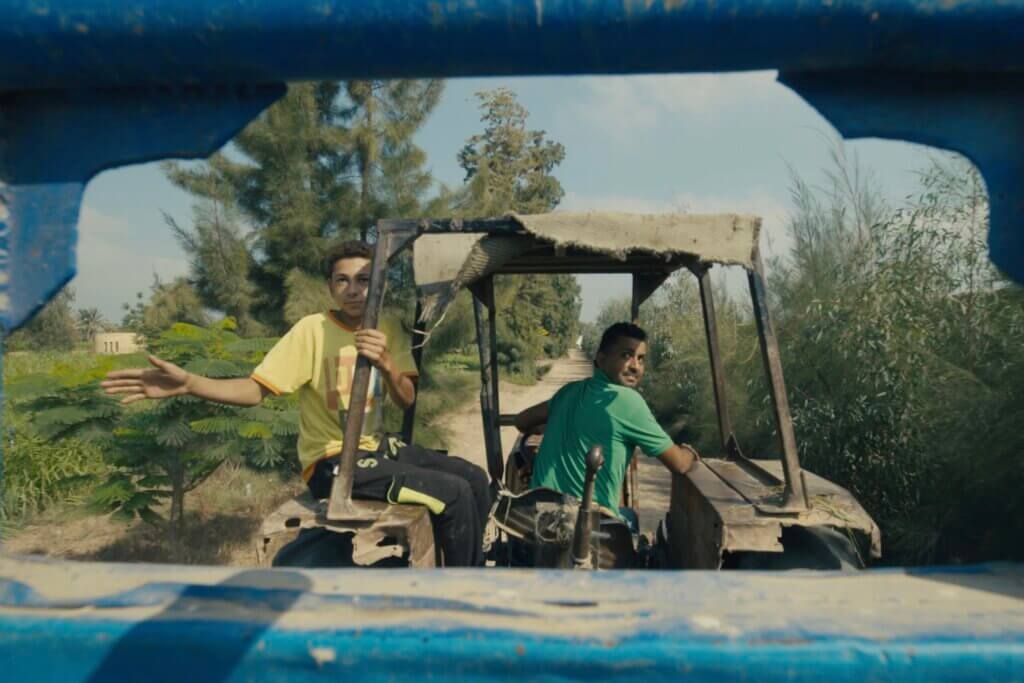
A scene from Groundswell. Photo courtesy of Amazon MGM Studios
Research has shown that environmentally conscious technologies, such as renewable energy sources, significantly reduce worldwide carbon emissions. Research published in Energy Strategy Reviews suggests that “For every one percent increase in renewable energy consumption, per-capita carbon emissions reduce by 0.280 percent.” Not to mention, policy intervention has had a measurable impact—the most impact to date—on reducing CO2 emissions. Implying otherwise is dangerously misinformative and self defeating.
Much of the film’s language invokes an appeal to nature that downplays what progress has been made in the environmentalist movement. An example also comes at the expense of Harrelson’s narration. Following the “where we tend to go wrong,” he suggests in voiceover, “Perhaps we need to begin with a solution that’s not based on human intellect.”
Implying that climate crisis solutions shouldn’t be “based on human intellect” is both anti-intellectual and at-odds with the broader message of the film. It’s ironic that the film immediately cuts from that quote to interviews with researchers working across a variety of scientific disciplines to provide context to the work being done by farmers to promote regenerative agriculture and address the climate crisis.
It’s blunders like these that ultimately undermine Groundswell. Were the film’s arguments better constructed or at least stripped of some of its dogmatics, this could be a worthwhile look at environmentally conscious farming efforts being practiced in non-Western countries that have historically received little media coverage but could have useful applications everywhere. Unfortunately, the film’s promising premise deteriorates into a thematic mess that reads more as agricultural propaganda rather than an informative look at the benefits and drawbacks of regenerative agriculture.
The film’s most confused rhetorical thread is its push against systemic change as a method of addressing the climate crisis. It’s average people, the film argues—individuals like your typical audience member—who can make the difference, adjusting their spending habits and spreading the eco-friendly word to reverse climate change and secure the Earth’s future. Spend more money to purchase products that are better for the environment, and things will get better.
There’s some truth to this, of course. Every action we take affects the planet in one way or another, and everyone on the planet can, theoretically, make adjustments to lessen their environmental impact. The film suggests that if we just change our personal habits, we can solve the problem without having to interface with broader societal systems like policy or, again, technological research. It suggests that climate change isn’t a large-scale, systemic problem that will require fundamental—even radical—systemic changes to how the world operates to fix. That’s simply not true.
Moments like these make Groundswell feel at war with itself, anti-intellectual and anti-populist despite focusing so heavily on grassroots efforts from people outside of formal public systems interfacing with researchers and policymakers to create a real difference in their communities, both locally and globally.
Still, Groundswell maintains a brighter tone than a lot of similar films. In spite of itself, it manages to deliver on its promise of showing how regenerative farming efforts have made some difference in the economies and ecologies of ecosystems around the world. Interviews, infographics, and drone footage illustrating the work of farmers and climate activists across nearly every continent provide an overview of regenerative farming through a lens rarely used when exploring the topic.
While the attention it brings to the subject is admirable, Groundswell runs aground too many times to give the regenerative-farming movement its proper due. Instead, its lazy rhetorical stances give naysayers too many opportunities to dismiss out of hand what should be an important weapon in the climate-change-fighting arsenal.
Help us sustain independent journalism...
Our team is working hard every day to bring you compelling, carefully-crafted pieces that shed light on the pressing issues of our time. We rely on caring supporters like you to help us sustain our mission. Your support ensures that we can continue to provide deeply-reported, independent, ad-free journalism without fear, favor or pandering. Support us today and make a lasting investment in the future.

RELATED STORIES


Award Winning




Today’s environmental and social justice challenges are unprecedented, and require an unprecedented collective effort.


Stay updated on our latest features, events and more. Subscribe to our Note From the Nest newsletter!
