Hydrogen Bombs

California, with nearly a third of its energy generated by wind and solar power, is proud of its reputation as a national and global leader in green regulations and “clean energy” investments to combat air pollution and human-caused climate change. Secured by a solidly progressive statewide voting bloc and a Democratic supermajority in Sacramento, the state’s ambitious environmental efforts are enshrined in its recently announced goal of reaching 100 percent renewable energy by 2045.
Yet, while California’s scientific and technological prowess is matched by its outsized political and economic capital (it’s the fifth largest economy after the U.S., China, Germany and Japan), the state’s green wave is about to crash into a formidable barrier: the incoming administration of President Donald J. Trump. He has deemed global warming a “Chinese hoax” and his looming second term is alarming environmentalists everywhere, and particularly in California, who are concerned about federal support for renewable energy projects from an administration that prefers to drill, baby, drill.
California could have a lot to lose. The state’s aggressive anti-pollution efforts have been bolstered by a substantial chunk of the $391 billion allocated for nationwide renewable energy hubs under President Biden’s 2022 Inflation Reduction Act, which was passed with bipartisan support in Congress. And while IRA-mandated projects also include nuclear and fossil fuel production in red states, thus guaranteeing strong local support by Republican officials for those projects, California’s ability to tackle climate change may face severe setbacks if Trump, as expected, attempts to reverse the Biden Administration’s investments in clean energy.
“Besides California, there is a [proposed clean-energy hub in Texas, one in West Virginia, two in Pennsylvania, and others in the Pacific Northwest and Midwest,” remarked Jack Brouwer, a Chancellor’s Fellow and professor at the University of California, Irvine, who is directly involved in California’s clean energy planning. “This has bipartisan political support and is in our national interest from both a national security, energy security and environmental sustainability perspective. So, it should be something that the Trump admin should support.”
Divining the actions of a second Trump presidency from any rational perspective is clearly a fool’s errand, but the president-elect has been busy nominating oil-friendly executives to head key administrative posts such as the Department of Energy, Environmental Protection Agency and the Department of the Interior. Meanwhile Project 2025 calls for scrubbing the phrase “climate change” from all governmental documents and communications. Then, there’s the proud American tradition of presidents undoing the work of their predecessors solely because of partisan pride.
More importantly, any attack on federal funding for California’s climate goals couldn’t come at a worse time. In Sept. 2022, Governor Gavin Newsom announced the California Climate Commitment, a $54 billion regulatory package to create four million jobs over the next 20 years, reduce the state’s oil use by 91 percent, cut air pollution by 60 percent, reduce oil drilling and accelerate the state’s transition to clean energy.
A critical component of California’s renewable energy strategy is the creation of hydrogen as a clean energy source. The Inflation Reduction Act mandated the creation of the Office of Clean Energy Demonstrations within the Department of Energy, which will support new hydrogen hubs across the country, by filling “a critical gap in the research, development, demonstration and deployment continuum for technology innovation,” according to its website.
In July 2023, California’s Alliance for Renewable Clean Hydrogen Energy Systems (ARCHES), a public-private partnership of dozens of government entities and industry players signed a landmark $12.6 billion agreement with the DOE to develop regional hydrogen hubs across the state. This project aims to produce renewable hydrogen for manufacturing, transportation and power generation, significantly reducing the state’s reliance on fossil fuels.
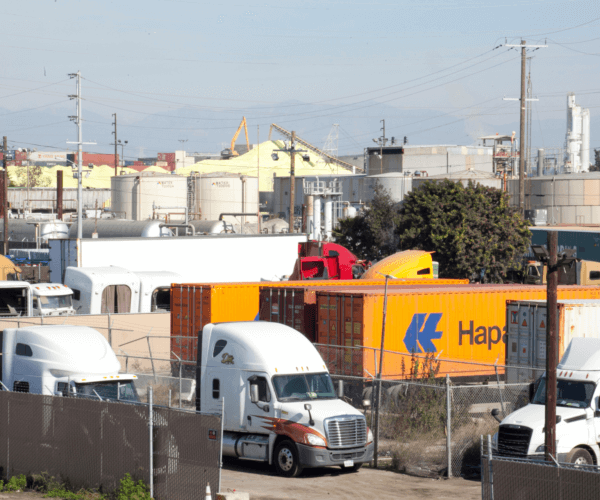
The ARCHES program is projected to generate approximately 220,000 new jobs and cut down on 2 million metric tons of carbon emissions annually. This staggering reduction is equivalent to the emissions produced by 445,000 gasoline-powered vehicles each year. The hubs will be created at the San Pedro Port Complex, the nation’s largest and most polluted port facility, as well as the Port of Oakland. At San Pedro, officials aim to achieve zero-emission cargo-handling operations by 2030 and fully electrify its truck fleet by 2035, a goal enthusiastically endorsed when the ARCHES project for San Pedro was first announced in October 2022 by then-Long Beach Mayor Robert Garcia. “Hydrogen power represents a tremendous opportunity—both for our state and for cities like Long Beach,” said Garcia, now a U.S. Congressman.
Note that not all local residents are as ecstatic about the proposed hydrogen hub, including Theral Golden, president of the West Long Beach Neighborhood Association. A frequent critic of port pollution, Theral expressed concern over the safety of locating the hub in such a densely populated urban area. “They said it is green, but just because you use a different adjective to describe it doesn’t mean it won’t hurt nobody,” Golden said. “It is a carbon-based fuel; it is highly flammable and explosive.”
While Brouwer concedes that hydrogen power remains something of a mystery to most of the American public, including elected officials, he insisted that the technology’s potential as a clean energy source is well-understood by scientists. The energy source’s projected nationwide health benefits, including $2.95 billion in decreased healthcare costs due to improved air quality, underscore the crucial role of these projects in enhancing public health, particularly in communities situated near freight corridors and ports, Brouwer argued.
“It will provide both greenhouse gas and criteria pollution emission reductions that will be dramatic in terms of national energy policy, but even more dramatic locally,” he said. “Freight corridors, marine shipping and port equipment is all diesel combustion-based, so you not only have massive greenhouse gases but tremendous health consequences for people living in the immediate area.”
***
In the few weeks since Trump’s reelection, the signs of a standoff between Sacramento and incoming Trump appointees have already begun to mount. On Nov. 7, Newsom called for an emergency legislative session to fund California’s legal defense against efforts “aimed at undermining California’s laws and policies.” Newsom also called for increased funding for the state’s Justice Department to help streamline legal challenges to Trump’s anticipated anti-green energy mandates. Whatever its ultimate legacy, California’s embryonic hydrogen plan is particularly vulnerable given the nation’s recent political turmoil and hydrogen’s relative novelty as an energy source. “We just received the DOE funding,” said Brouwer, one of the University of California’s chief academic representatives within ARCHES.
“Hydrogen will be super important for our national security, energy security and environmental sustainability,” Brouwer said. “We have already started building it in California, but if that federal funding goes away, it will take us twice as long. On the other hand,” he warned, “other places in the country will not do it at all. They don’t have the commitment from companies or the state, so it will be devastating to the hydrogen community nationally.”
Indeed, California’s unique strength in promoting renewable energy innovation comes from the state’s proven track record in adopting collaborative efforts among state and local governments, industries and academic institutions. It’s a track record that won’t disappear without a fight, one Newsom spokesman told Red Canary Magazine last week.
“Through our nation-leading anti-pollution efforts, close collaboration with other climate-leading states and long-standing subnational partnerships, California has been driving a job-creating clean air and water agenda that will only accelerate despite another Trump presidency,” the spokesman said. “The last time Trump was in office, California reduced pollution, passed a 100-percent clean energy law, formed global climate partnerships, protected Californians from fire, drought and heat, and expanded cap-and-trade to reduce emissions and protect public health — all while defending crucial environmental protections in court. Stay tuned for Act II.”
This article is the first in a series that will examine the politics and science behind California’s renewable energy plans.
Help us sustain independent journalism...
Our team is working hard every day to bring you compelling, carefully-crafted pieces that shed light on the pressing issues of our time. We rely on caring supporters like you to help us sustain our mission. Your support ensures that we can continue to provide deeply-reported, independent, ad-free journalism without fear, favor or pandering. Support us today and make a lasting investment in the future.

RELATED STORIES
Award Winning



Today’s environmental and social justice challenges are unprecedented, and require an unprecedented collective effort.


Stay updated on our latest features, events and more. Subscribe to our Note From the Nest newsletter!
