
A Post-Sackett Pivot?
This article was updated on August 16, 2023 to include information about a Montana ruling on August 14.
There’s a quote attributed to American poet and journalist Carl Sandburg that goes, “If the facts are against you, argue the law. If the law is against you, argue the facts… If the law and the facts are against you, pound the table and yell like hell.”
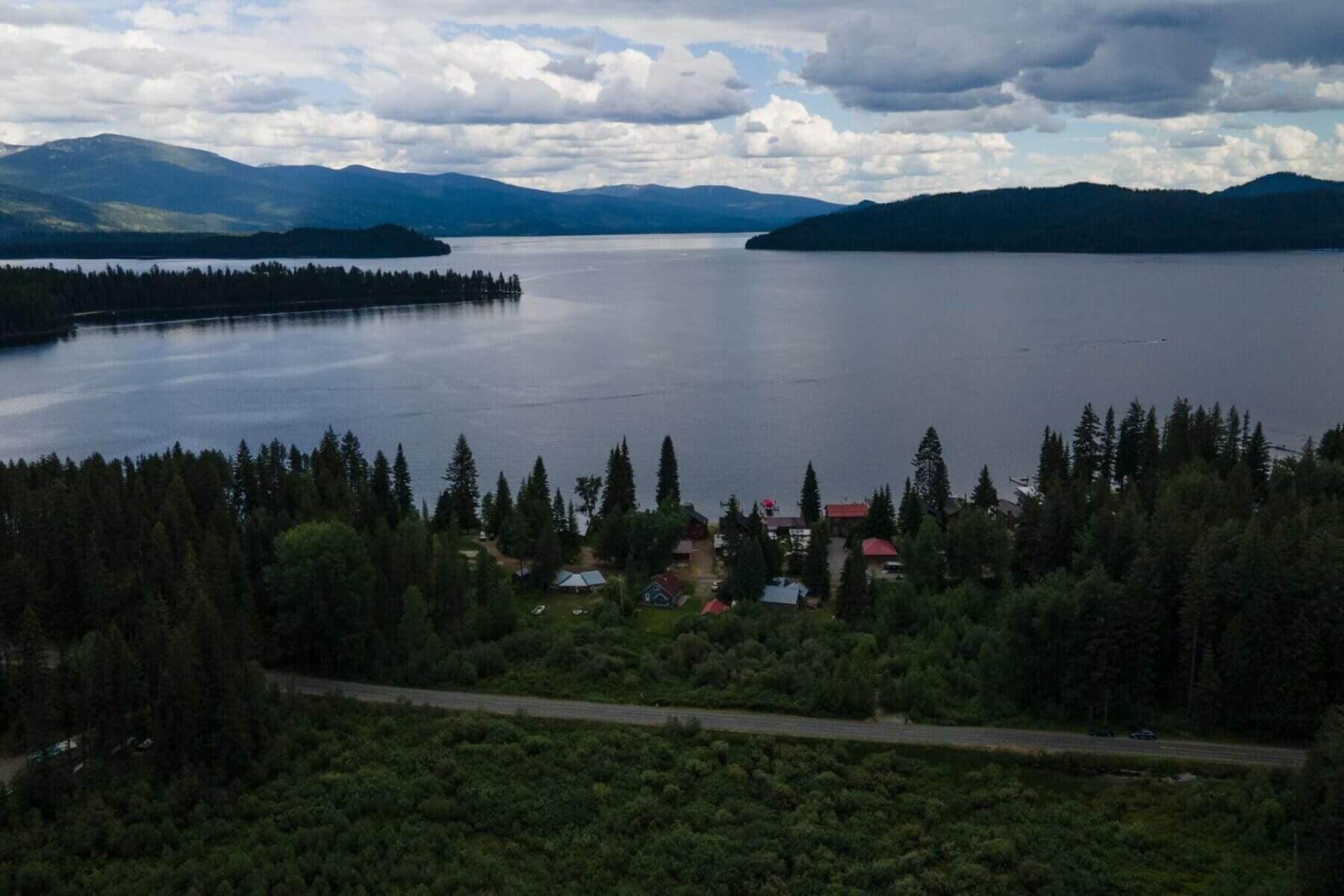
The Supreme Court animated this dilemma recently in Sackett v. The Environmental Protection Agency. The case involved an Idaho couple who purchased property that contained wetlands situated near a large lake in the northern panhandle of the state and began backfilling it with gravel and dirt to build a house.
Citing The Clean Water Act, the EPA ordered the couple to stop, and threatened them with fines, claiming the act prohibited the discharge of pollutants into “waters of the United States,” and that a ditch that fed into a creek which fed into the lake met that classification. The couple sued, alleging the wetlands on their property, regardless of what they drained into, did not constitute “waters of the United States,” and that the act did not apply to them.
After The District Court ruled in favor of the EPA, The Ninth Circuit Court of Appeals affirmed, holding that the act covers “wetlands with an ecologically significant nexus to traditional navigable waters,” and that the couple’s property met that standard.
Following precedent, that would typically be that, but on May 25, by a 5-4 majority (with arch-conservative Brett Kavanaugh siding with the liberal minority), the Supreme Court reversed the lower court decisions, ruling that “[The Clean Water Act] extends to only those wetlands with a continuous surface connection to bodies that are waters of the United States in their own right, so that they are indistinguishable from those waters.”
Such a connection, the Court said, would make it difficult “to determine where the ‘water’ ends and the ‘wetland’ begins.”
Environmentalist critics view the ruling as a severe blow to Clean Water Act protections, contending that by establishing a new test to determine which wetlands are covered by the act, the Court kneecapped the EPA in its authority to regulate activities that are polluting the nation’s waters, releasing greenhouse gasses into the atmosphere, and blocking efforts to address climate change.
“The Supreme Court ripped the heart out of the law we depend on to protect American waters and wetlands,” said Manish Bapna, president and CEO of the Natural Resources Defense Council. “The majority [of the court] chose to protect polluters at the expense of healthy wetlands and waterways. This decision will cause incalculable harm. Communities across the country will pay the price.”
But Sackett has an even more pernicious effect, legal experts say, and it points to an alarming trend of judicial activism: It is the latest case to upend the traditional role of the Court to apply facts to the law as if it were an umpire calling balls and strikes.
“The Supreme Court ripped the heart out of the law we depend on to protect American waters and wetlands.”
Furthermore, experts say, it provides a disincentive for advocacy groups to pursue regulatory compliance through the courts — a strategy the environmental movement has deployed for decades. Sackett is just the latest such setback; last year, a separate ruling by the conservative Court also limited the EPA’s power to regulate carbon emissions under The Clean Air Act.
Now, the question for advocates is whether to continue with a strategy of suing alleged violators over federal environmental protection laws, or to direct more energy towards direct political action and pressure on authorities to enforce regulatory compliance at the state levels?
In other words, are they ready to “pound the table and yell like hell,” and if so, what does that look like?
***
The contemporary environmental movement flourished in the 1960s during the John F. Kennedy and Lyndon B. Johnson administrations in the wake of Silent Spring — Rachel Carson’s groundbreaking expose of the deleterious effects of DDT and pesticides — and as a result of grassroots advocacy, comprehensive legislative reform, and aggressive statutory and regulatory enforcement.
Faced with the 1969 Santa Barbara oil spill and the burning of the Cuyahoga River in Cleveland, even Richard Nixon surrendered to the nascent green movement when he signed the National Environmental Policy Act, ushering in an era of demonstrations, protests, Earth Day teach-ins and, eventually, litigation to enforce bipartisan legislation that sought to rein in corporate polluters and industrial scofflaws.
An expansion of the Federal Water Pollution Control Act led to passage of The Clean Water Act in 1972, which spawned regulations that set quality standards for surface waters and controlled the discharge of pollutants into “navigable waters” through state and EPA permitting processes.
(Similarly, amendments to The Clean Air Act in 1977 expanded EPA authority over hazardous emissions and established a program that set air quality standards and required permits for major air pollution emissions.)
For decades, environmental lawyers could count on federal judges and even the Supreme Court to respect the authority of federal regulatory agencies to address the causes of climate change when interpreting bipartisan legislation such as The Clean Air Act, The Clean Water Act and The National Environmental Policy Act.
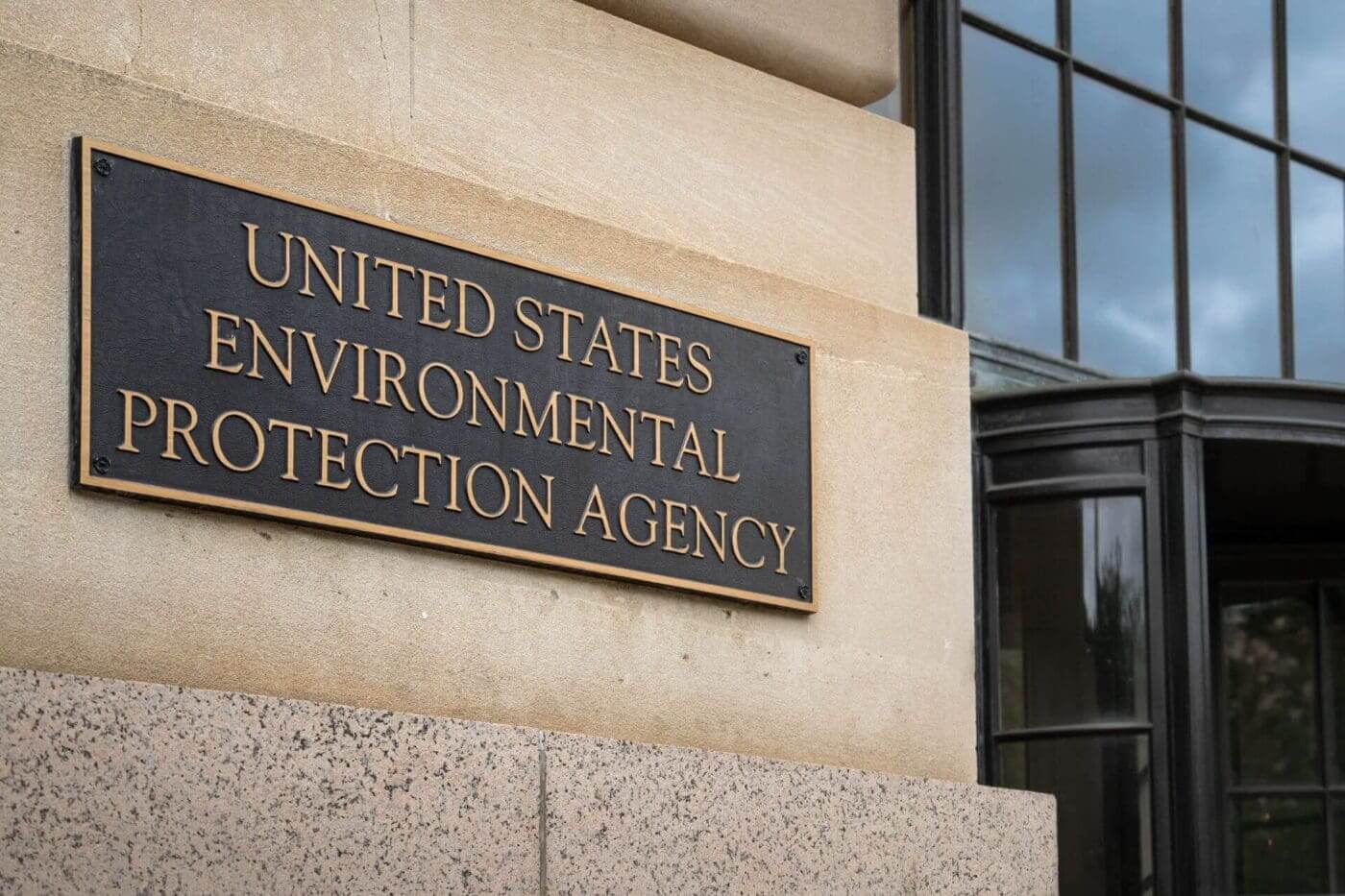
Plaque sign on the outside of the United State Environmental Protection Agency in Washington D.C. Courtesy of LD
Until recent years, and a rightward bent on the Court, environmentalists, stakeholders and the public at large did not have to worry that the Court would drift into rewriting statutes and redefining the powers Congress conferred on agencies such as the EPA.
Over the last decade, though, that’s what the Court has done, preventing the EPA from devising emissions caps consistent with its Clean Power Plan, determining whether cost is a factor in the appropriateness of regulating power plants, and treating greenhouse gas emissions as pollutants when defining emitting facilities that are subject to The Clean Air Act.
In short, as the Supreme Court has become increasingly politicized and judicial restraint has become unreliable, the courts are no longer a safe bet for environmental remediations. The Sackett case, critics say, is just the latest blow to the movement that spawned such protections and represents a new low for the judicial activism of the Court’s conservative majority.
According to the Sackett opinion written by Justice Samuel Alito, the petitioners Michael and Chantell Sackett bought property near Priest Lake, Idaho, and began backfilling it in preparation for new home construction.
But the EPA found that underground water from a nearby wetland area flowed through the Sackett’s property and into the lake, which The Clean Water Act classified as a “navigable, intrastate lake.”
Because the Act qualifies some wetlands as “waters of the United States,” and authorizes states to require permits for certain discharges except in the case of navigable waters, “including wetlands adjacent thereto,” the EPA demanded that the Sacketts restore the property to its previous condition.
The Sacketts sued and claimed their property did not qualify as containing “waters of the United States,” and that despite constituting adjacent wetlands with “an ecologically significant nexus to traditional navigable waters,” they did not flow contiguously with Priest Lake and therefore were not subject to the act.
All nine justices agreed that the wetlands on the Sacketts’ property are not covered by the Act and are not subject to permitting requirements. But writing for a 5-4 majority, Alito went even further, narrowing the definition of “adjacent” and chastising Congress for not doing so on its own.
“The EPA claims that Congress ratified the EPA’s regulatory definition of ‘adjacent’ when it amended the [Act] to include the reference to ‘adjacent’ wetlands…This argument fails for at least three reasons,” he wrote.
First, Alito said, a textual reading of the Act showed that “adjacent” cannot include wetlands “that are merely nearby covered waters.” Second, the EPA’s argument cannot be reconciled with the Court’s finding that the Act “does not conclusively determine” that its language could be applied to a relevant definition of “navigable waters.” And third, the agency failed to show “overwhelming evidence” of Congressional acquiescence in the face of its own failure to amend the Act.
Critics warn that such interpretations not only amount to judicial activism, but that they could mimic EPA rulemaking under the Trump administration that rolled back the federal government’s authority over streams, rivers and wetlands and allow the Court to weaken other environmental protections that Congress authorized the EPA to enforce.
***
Legal experts who spoke to Red Canary expressed cynicism over the notion that any federal litigation would be able to reverse the trend of Sackett and its predecessors of chipping away at the EPA’s authority.
“The environmental movement needs to do everything it can to stay out of the Supreme Court,” said Michael B. Gerrard, senior counsel with Arnold & Porter and Director of the Sabin Center for Climate Change Law at Columbia Law School. “That’s not news, but Sackett represents a new low point. It wipes out a half century of a universal understanding of the scope of the [Clean Water Act].”
Lawsuits need not be the first recourse, Gerrard said, though he also acknowledged that legislative efforts to restore the EPA’s powers could meet with a similar futility in an era of extreme partisanship.
That leaves but a small menu of options for the environmental movement to confront pollution and climate change where the law is concerned.
“I don’t know if Congress will get back to solid majorities so that it is not beholden to the likes of Joe Manchin,” he said, referring to the Democratic Senator from West Virginia who has direct business interests in the fossil fuel industry. “When young people ask me what they can do — and they often do ask — I tell them to get out and register voters in swing states” to elect candidates who take the environment seriously.
“Even in solidly blue states, such as New York and California, voters are able to put pressure on state legislators to enact strong protections, but it still takes solid majorities in both houses and a friendly Governor.”
Gerrard did offer one ray of hope: Despite the Supreme Court’s determination to gut federal regulation of matters such as land use and water protection, even the conservative justices have hesitated to tamper with state laws and environmental regulation, he added.
That could be good news in staunchly red Montana, where a group of 16 young people have filed a novel lawsuit based on a state constitution provision that calls for the government and its citizens to “maintain and improve a clean and healthful environment…for present and future generations.” Based on a claim that state support of the fossil fuel industry is causing them disproportionate harm, the group alleges that the government has violated its constitutional right to “a clean and healthful environment.” It is believed to be among the first climate change lawsuits in the country, and despite long odds, could be a harbinger of other state-level legal actions to come.
Just this week, a judge in Montana ruled in favor of environmental activists ranging in age from five to 22 years old who argued that state agencies were violating a state constitutional provision that protects the rights of Montanans to “a clean and healthful environment.” District Court Judge Kathy Seeley rejected as unconstitutional a state policy that prevents agencies from evaluating greenhouse gas emissions in the process of granting fossil fuel permits. Though the Republican-dominated state legislature is unlikely to take aggressive action to mute its fossil fuel policy, the group’s allegation that they have suffered disproportionate harm could be a harbinger of other actions around the country, where citizens concerned with climate change hope to find legal forums that do not rely on federal laws destined for Supreme Court review.
Yet electoral politics and state-level reforms are no panacea either, Gerrard cautioned. “Momentum bounces up and down, and these things take time, and by the time you are able to enact changes, you’re back to Square One.” State level reforms are important for another reason: According to the NRDC, conservative legislatures in 24 states have enacted so-called “preemption laws” that prohibit cities from banning natural gas hookups in new buildings. Meanwhile, a new Texas law seeks to block cities from adopting climate policies in their charters, and a Republican bill that passed this spring prevents municipalities from enacting stricter energy efficiency codes than the state does.
Allan Kanner, a veteran litigator, and prolific author, agreed that taking direct action in electoral politics and informing the public about how the Court is imposing its will are the best antidotes to the anti-environmental bent of conservatives in Congress and the Supreme Court.
“You have to elect people who appoint judges who will call balls and strikes, which is what Chief Justice John Roberts said he would do when he was sworn in — even though he hasn’t.”
Kanner, too, pointed to the need for a state-level focus. He quoted former Justice William Brennan, a liberal stalwart, who wrote an entire law review article advising that “we have to take states seriously.”
“Most climate change litigation is in state court,” Kanner said. “And most appellate courts have sent cases back to state trial courts; even the Supreme Court is respectful of state tort laws and has been hesitant to re-enact them,” he said.
If he were advising a client, Kanner said, he would suggest pursuing parallel tracks aimed at state-law remedies under public and private nuisance laws, and even trespass laws such as legislators have done in Vermont, Rhode Island, Maine, New Jersey, New York, and even in red states such as Pennsylvania, Louisiana, Mississippi and Florida.
“When young people ask me what they can do — and they often do ask — I tell them to get out and register voters in swing states.”
State attorneys general also can yield tremendous influence, he said, particularly under the “public trust doctrine,” which asserts that certain natural and cultural resources must be preserved for public use.
State court cases based on the doctrine could seek to restore properties to pre-pollution conditions, as opposed to remediation of bad behavior, said Kanner.
“Even Scalia said that the public trust doctrine [supersedes] legislation,” he said, recalling an Illinois railroad case regarding a purchase of beachfront property that the Supreme Court declared null and void. “Beaches and other waterfronts belong to the people, and the state has an obligation to protect the public trust.”
By invoking the public trust, the environmental movement could begin to take back parts of America that the right has sought to dominate, Kanner said. Citizens can also seek standing as private attorneys general to bring suits to force polluters to pay for cleanups for, say, farm runoff in the Chesapeake Bay, or mercury in fishing streams.
“Some people like to fish, and some people need to fish, and lots of waters are not fishable, swimmable or drinkable, which entitles attorneys general to enforce the public trust doctrine,” said Kanner.
Such principles can appeal to voters regardless of wealth status or political affiliation. “Cleaning up PCBs can require real dollars, create real jobs and provide real benefits to poor people and rich people.”
For now, it is arguable that the Sackett decision should be a call for direct action that does not rely on lawsuits, especially those destined for the Supreme Court.
“What’s important now is to repair the damage,” said the NRDC’s Bapna. “The government must enforce the remaining provisions of law that protect the clean water we all rely on for drinking, swimming, fishing, irrigation and more… States should quickly strengthen their own laws. Congress needs to act to restore protections for all our waters.”
If all else fails, Sandburg’s proclamation might be the simplest most effective recourse for advocates and citizens who are tired of seeing majority decisions that reach for facts in order to rewrite bipartisan environmental protection laws.
“We’ll stand with frontline communities, scientists, health professionals and others to press for the responsible clean water protections we need,” Bapna said.
Help us sustain independent journalism...
Our team is working hard every day to bring you compelling, carefully-crafted pieces that shed light on the pressing issues of our time. We rely on caring supporters like you to help us sustain our mission. Your support ensures that we can continue to provide deeply-reported, independent, ad-free journalism without fear, favor or pandering. Support us today and make a lasting investment in the future.

RELATED STORIES


Award Winning



Today’s environmental and social justice challenges are unprecedented, and require an unprecedented collective effort.


Stay updated on our latest features, events and more. Subscribe to our Note From the Nest newsletter!
