Hope Floats
- Shows how industry turned Brooklyn’s Gowanus Canal into one of America’s most polluted waterways and how a Superfund cleanup is digging it out
- Follows the volunteers, paddlers, and artists whose activism forced the cleanup and is shaping what comes next
- Asks who the canal’s comeback is really for, as billions in development arrive and the most polluted site on the shore is slated for affordable housing
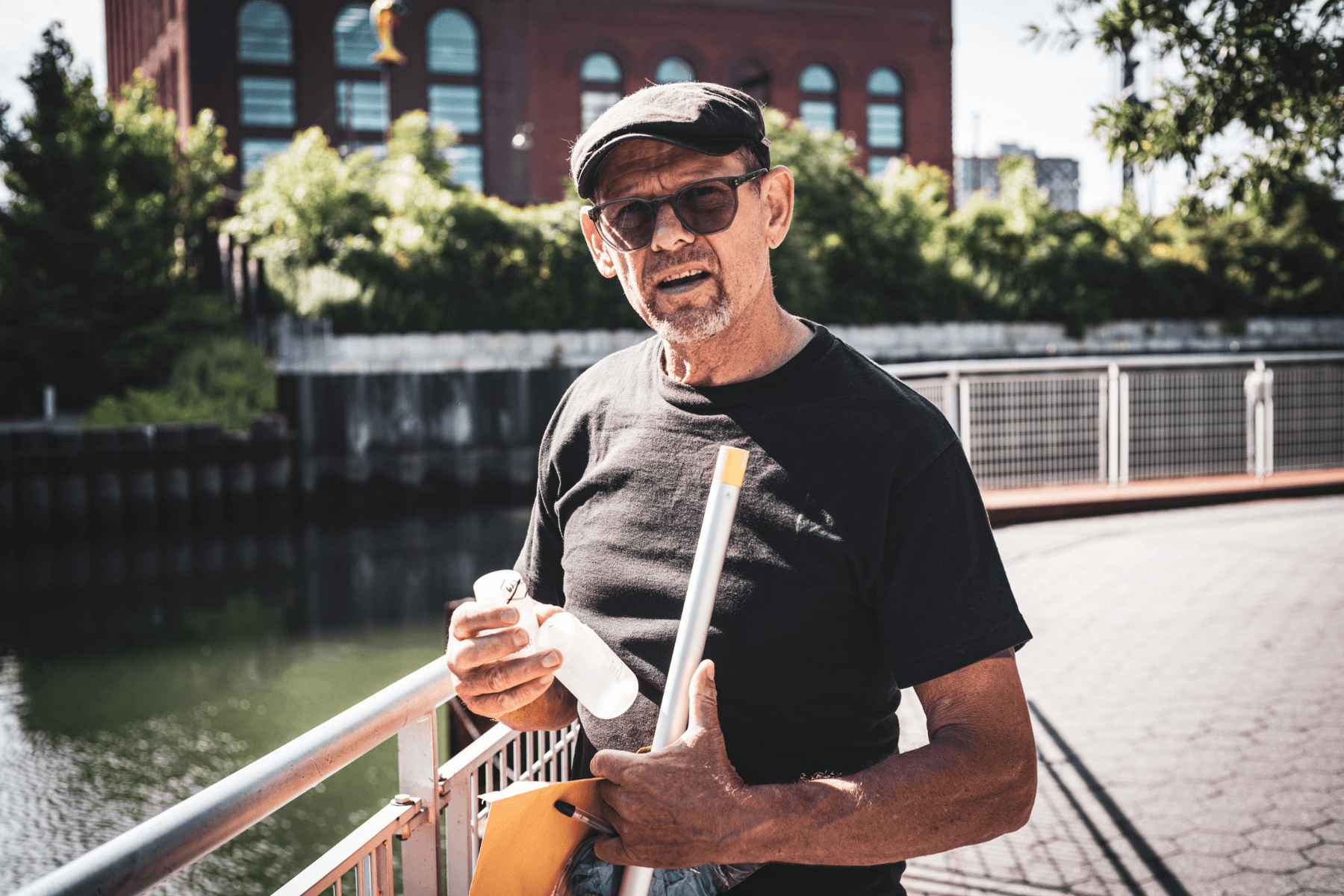
Gary Francis put on disposable gloves, leaned out over the most famously polluted waterway in America, and filled sample bottles with cloudy canal water. “Enterococcus,” he said with enthusiasm, “is bacteria found in mammals. It’s used as an indicator of sewage contamination.”
The water samples will be delivered to a lab close by in New York City and the data added to burgeoning spreadsheets. Francis is not a scientist, and the group he belongs to—the Gowanus Dredgers Canoe Club—is not a government agency. But the Dredgers’ activism has been one of the many levers that have transformed Brooklyn’s 1.8-mile-long Gowanus Canal, which the group is named after, from a notorious toxic sludge into what had increasingly become a multibillion-dollar development zone and a body of water that optimists hope people may be able to swim in sometime the next decade.
Back then, the canal was often pea-soup green, with bobbing organic lumps.
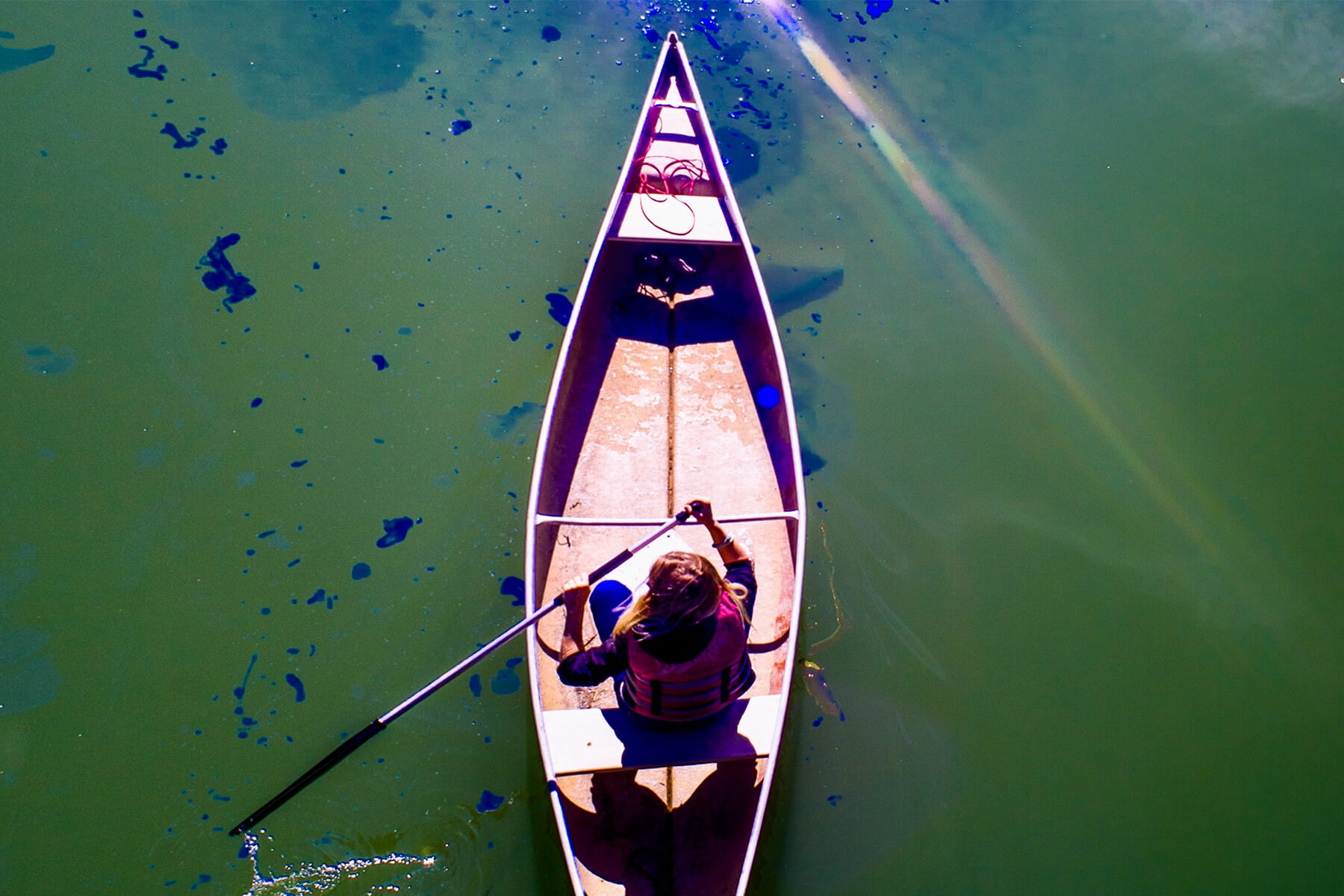
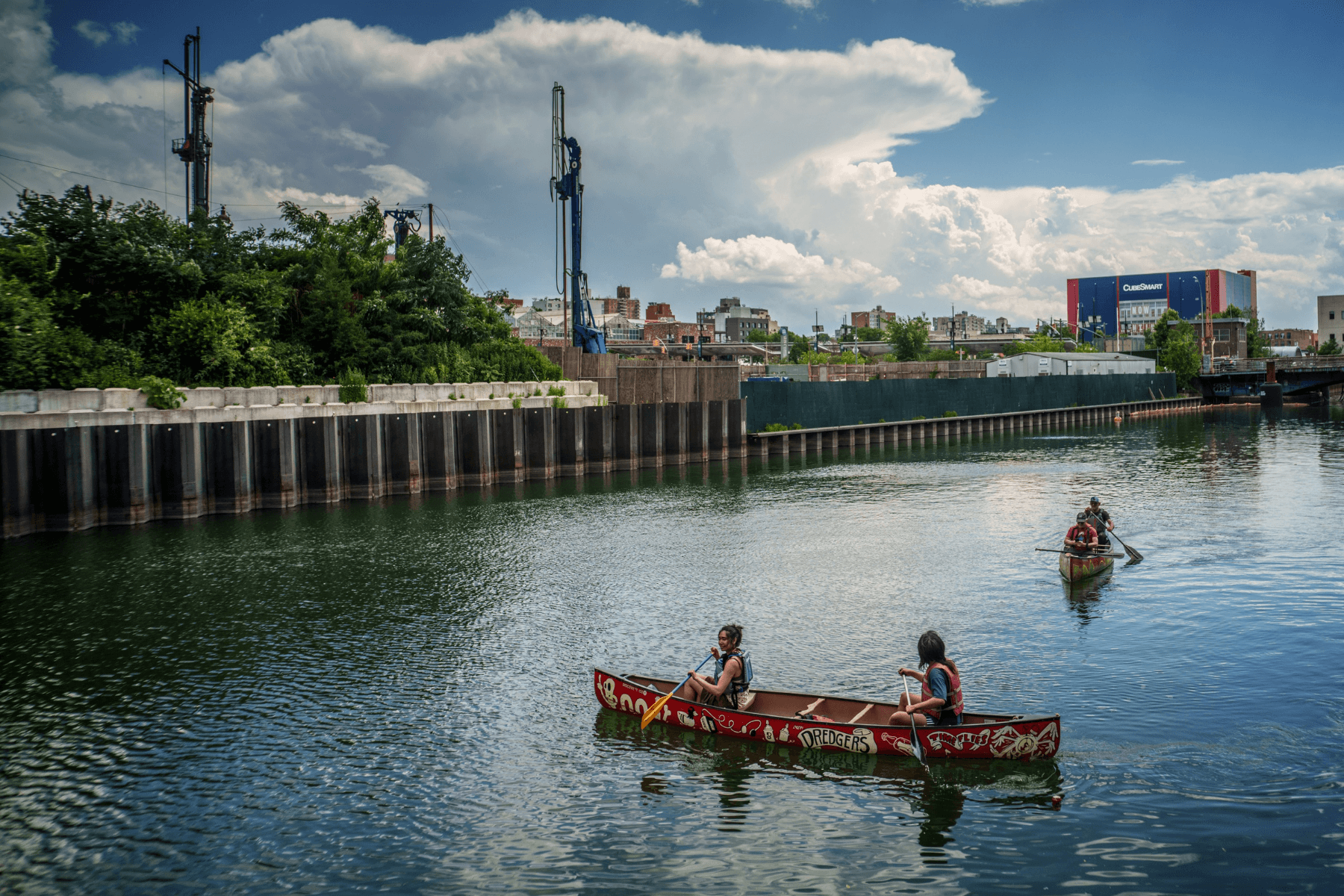
The Dredgers formed in 1999, with the stated goal of “empowering people to care for the Gowanus Canal.” The all-volunteer organization hosts theatrical productions on the water (the canal stood in for the River Styx in The Dreary Coast in 2014), canoe tours, parades, art projects, bobbing illuminated dusk art shows, and much more.
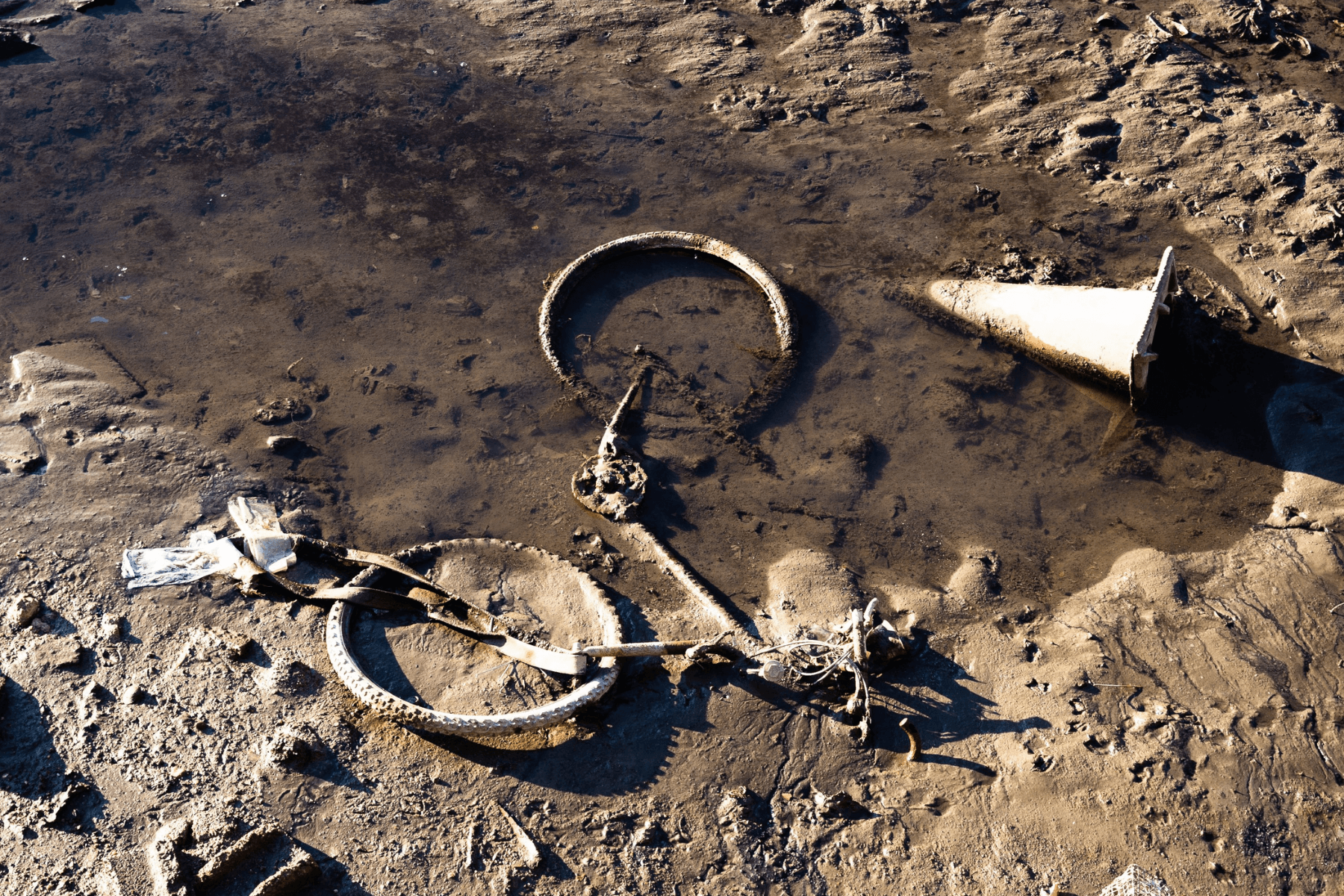
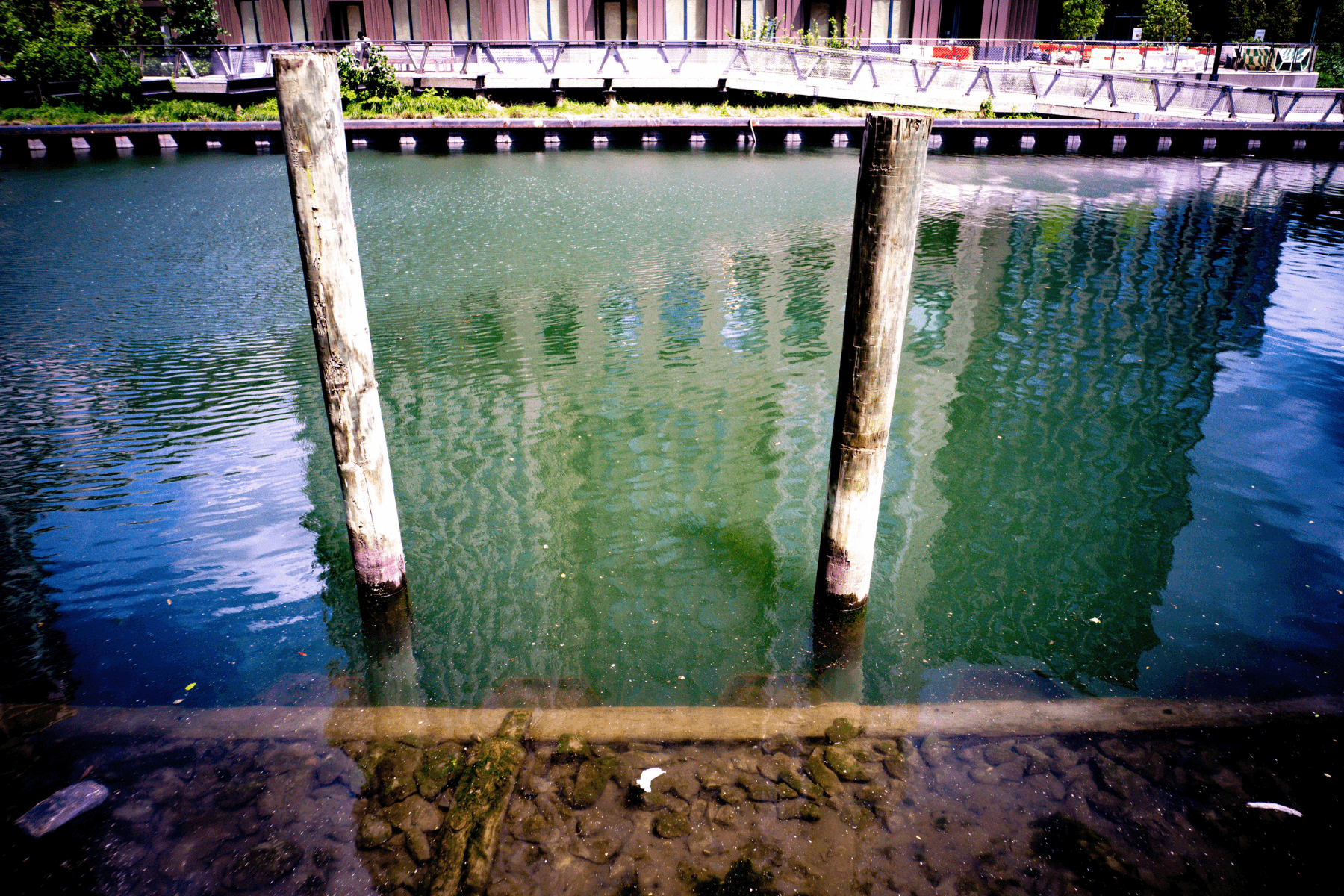
I first encountered the Dredgers—that part of their name stems from the original goal of having the then-filthy waterway dredged and cleaned up—two decades ago. Back then, the canal was often pea-soup green, with bobbing organic lumps. Blue crabs clung to wooden piles, feasting on the bounty. The surface coruscated with rainbow hues from leaking coal tar and erupted with bubbles from decaying organic material. At low tide, slime-coated tires, bicycles, and shopping carts were visible.
One day, a canoe passed under the bridge I was crossing, its prow slicing through the oily water. A passerby shouted down, “You’re crazy!”
I mentioned this memory to Francis, who regularly paddleboards on the canal. “People still do that,” he said with a grin. “But less now than in those days.”
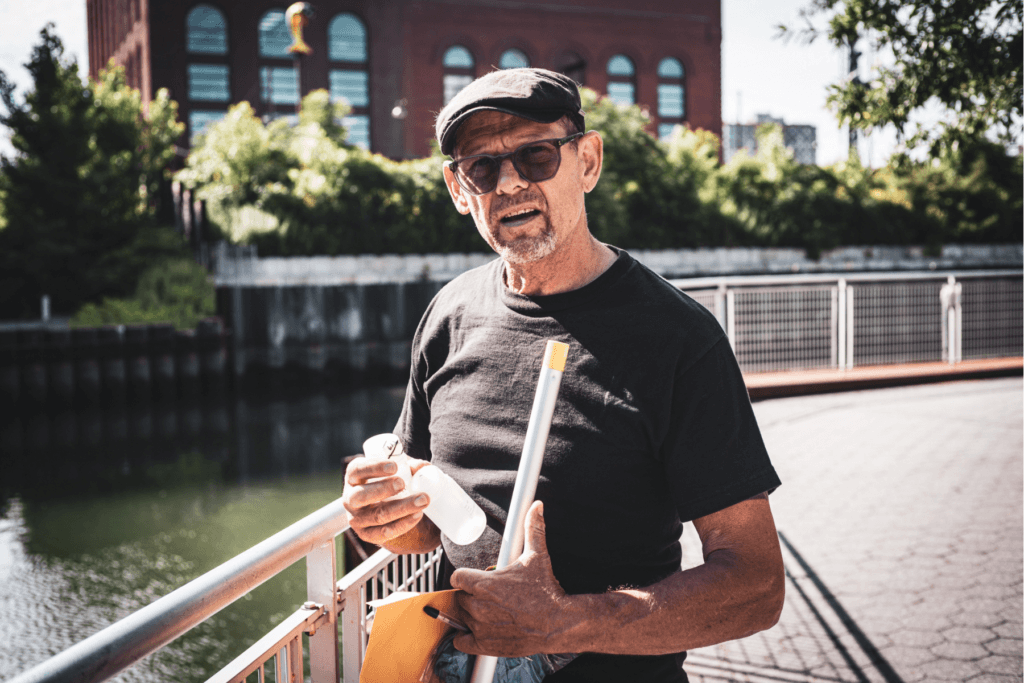
Gary Francis of the Gowanus Dredgers Canoe Club. Photo by David Gray. Click on the photo or here to access the full gallery.
Francis found incidental fame from his “poonami” Instagram videos, where his regular posts about the day-to-day state of the canal include clips of sluggish brown waves of raw sewage and trash washing downstream. They’re fascinating and not for the faint hearted.
I pointed out that on this summer morning, the canal doesn’t smell bad, but this is all relative: I moved into an apartment a block from the inland end of the canal, a decade ago. During my first sweltering summer night, I was woken by a smell so awful it defied description. Much later, I read Thomas Wolfe’s description of the canal in his 1940 novel, Of Time and the River: “There is in it not only the noisome stenches of a stagnant sewer, but also the smells of melted glue, burned rubber, and smoldering rags, the … deceased, decaying cats, old tomatoes, rotten cabbage and prehistoric eggs.”
Francis is more phlegmatic. “People assume that if something smells terrible it must also be dangerous,” he said. “Smell alone isn’t a measure of toxicity. The air was sampled constantly during the Superfund process. It never showed anything particularly alarming.”
The Superfund process refers to the Environmental Protection Agency’s 2010 designation of the canal as a Superfund cleanup site after years of community lobbying, despite the opposition of then-Mayor Michael Bloomberg, who thought the designation would dampen private investment in the area.
The water is another story, thanks in part to the canal’s geography. It’s a kinked 100-foot-wide ribbon that runs roughly north to south. A handful of short dead-end spurs branch off. The land bordering the canal rises up to meet the sleepy brownstones of Park Slope in the east and affluent Carroll Gardens in the west. The canal’s northern end lies in the shadow of towering housing projects and stops at a dead end in mostly gentrified Boerum Hill.
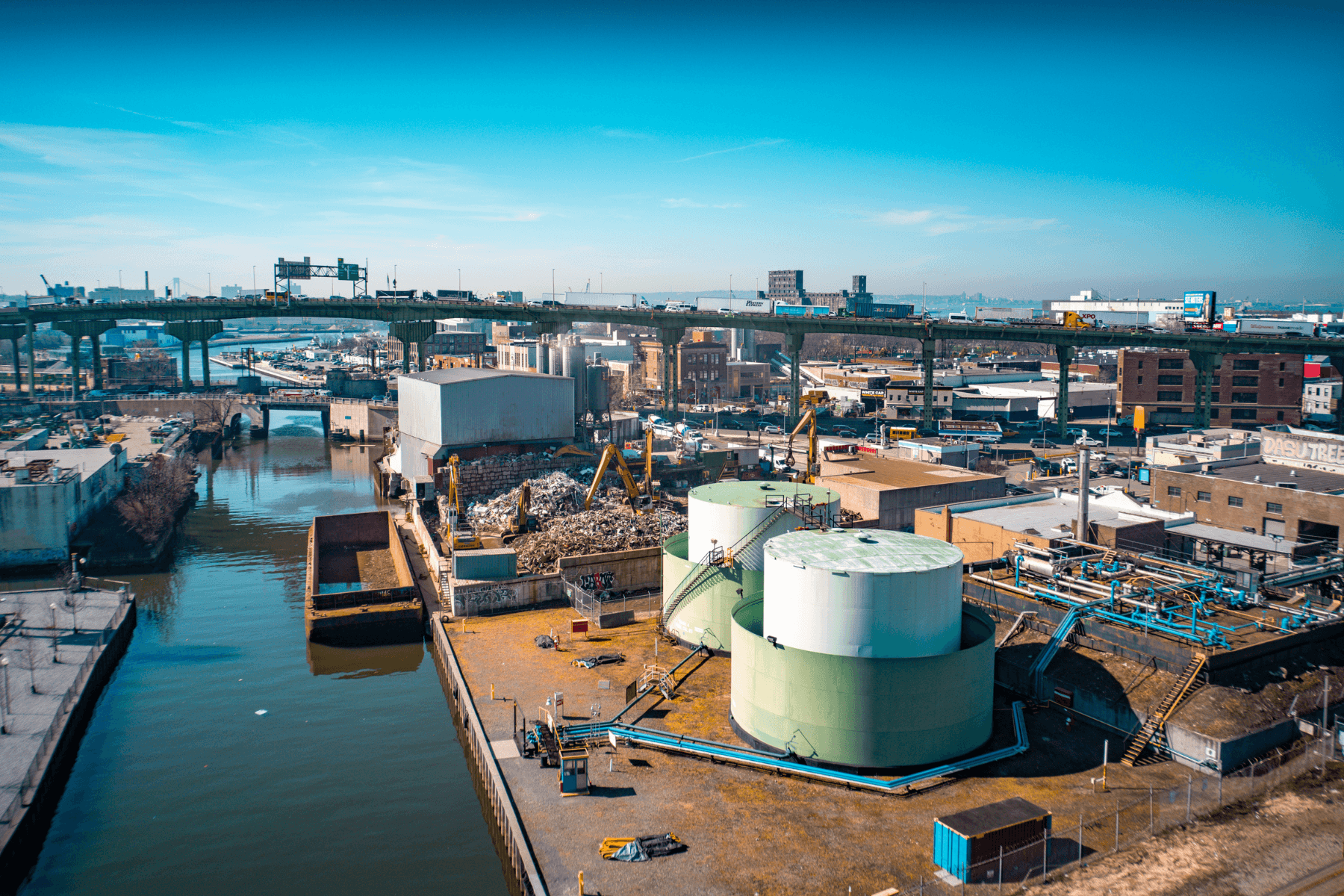
In the opposite direction, the Gowanus’ sluggish waters ooze by the massive iron barges of a scrap metal yard, pass under the elevated F subway line, then beneath the towering pillars of the Brooklyn-Queens Expressway before finally brushing past gritty Red Hook and into the New York Harbor.
A big part of the canal’s toxic sludge problem is that it has no natural flow, just a salty tide and a century-old flushing tunnel, which has spent various decades broken or undergoing repairs.
Occasionally the canal floods, and the water rises into the surrounding neighborhood, inundating low floors and according to a line of blue tape on the Dredgers’ boathouse wall, creeping up to 7 feet above ground level.
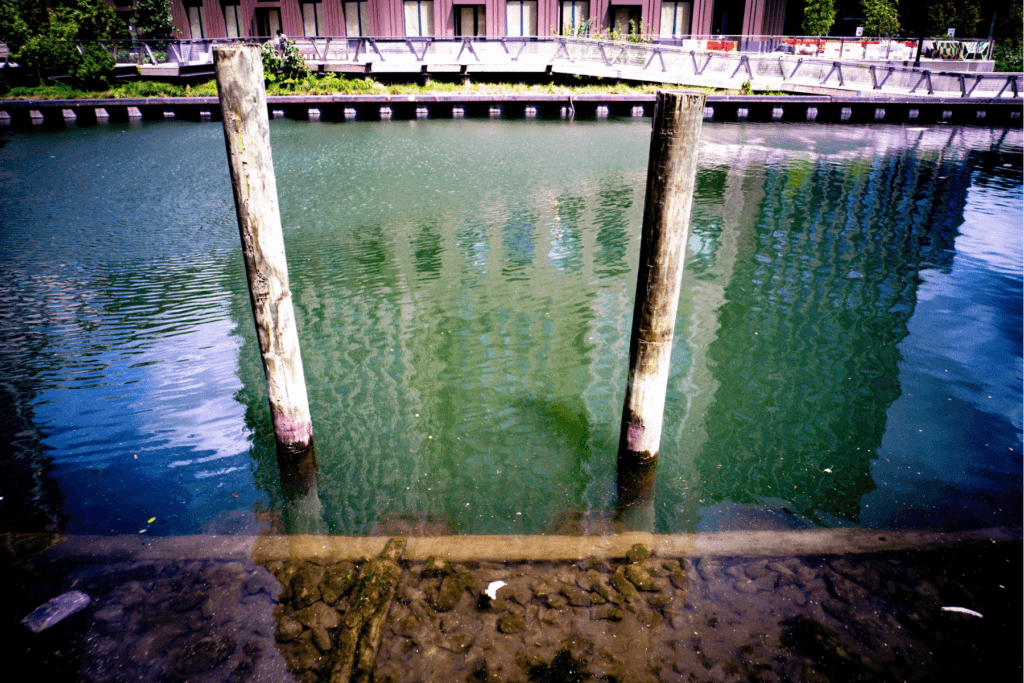
Old wooden piles in the Gowanus Canal. Photo by David Gray. Click on the photo or here to access the full gallery.
Worse, about 60 percent of NYC’s sewage system is based on combined sewer overflow (CSO), meaning the same pipes are used for human waste and runoff. To manage overflows during heavy rains or snowmelts, the city has almost 400 release points, or outfalls, which flush the water/sewage mix into local waterways. Eleven of these release points discharge directly into the Gowanus Canal. Combined, they account for more than 360 million gallons of mixed rainwater and untreated waste that pours into the canal annually.
“The biggest day-to-day problem is the sewage,” Francis said. “Each time we have a CSO, we get a fresh layer of organics. It rots, consumes oxygen, and creates the smell.”
Those oxygen levels are a constant worry: In 2023, people were horrified to see thousands of dead fish floating on the surface. Tests showed very high levels of fecal matter in the water and extremely low oxygen. The old flushing tunnel was not functioning at the time, so there was no clean water coming in.
The sewage, though, is not the reason the Gowanus Canal was the focus of the Superfund designation and a cleanup that has involved hundreds of thousands of cubic yards of highly toxic “black mayonnaise” being dredged from the water.
“The historic contaminants—the coal tar, the industrial chemicals—are a different issue,” said Francis. “Most of that material isn’t water soluble. It’s incredibly heavy, it’s buried in the sediment, and trapped within the banks.”
How those poisons got there is a tale of American industrial history.
The canal was conceived as a tool of industry. By the mid-1800s, Brooklyn was America’s third-largest city. In 1849, work started on transforming salt marshes and freshwater streams into a channel that would serve manufacturing businesses. The canal was finished twenty years later and the banks were soon lined with manufactured gas plants, coal yards, paint factories, refineries, foundries, tanneries, a slaughterhouse, and more. By the start of the 20th century, 6 million tons of cargo passed through annually.
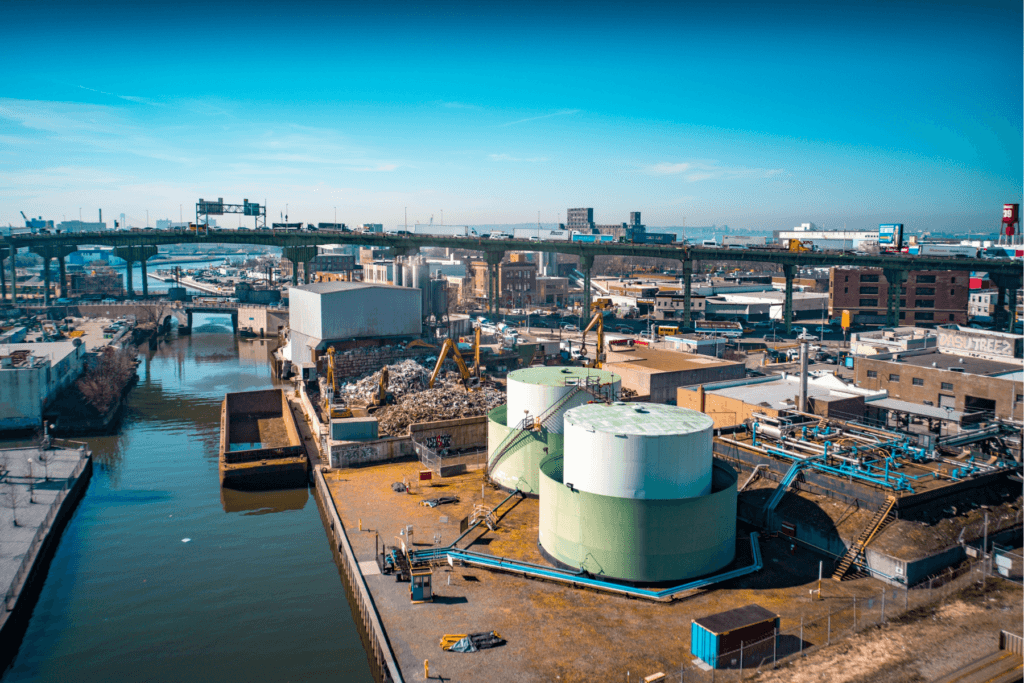
A downstream view of the canal, captured in 2025. Photo by David Gray. Click on the photo or here to access the full gallery.
Unfortunately, so did untreated industrial waste. Among confirmed contaminants were polychlorinated biphenyls (PCBs), coal tar byproducts, polycyclic aromatic hydrocarbons (PAHs), volatile organic compounds (VOCs), and metals including lead, mercury, and copper. The 10-foot-thick layer of those poisons accumulated on the bottom would come to be known as “black mayonnaise.”
The 10-foot-thick layer of those poisons accumulated on the bottom would come to be known as “black mayonnaise.”
In an effort to treat this, the mile-long flushing tunnel was completed in 1911. A propeller drove water from the canal’s top into Upper New York Bay. But after World War II, industries started to leave. By the 1960s, most were gone. Meanwhile, the flushing mechanism broke in 1960 and the canal was left to rot.
As they do, artists and musicians started filling in the void left by fleeing industry, attracted by cheap rents and plenty of space. By the 1990s, hundreds called Gowanus home.
Times were changing. Neighborhood groups such as the Dredgers galvanized politicians and New York State’s Department of Environmental Conservation (DEC) to push for a Superfund designation based on the 1980 Comprehensive Environmental Response, Compensation, and Liability Act, or CERCLA. In 2010, the EPA awarded it. It came with a cost of over $1.6 billion, with money coming from potentially responsible parties (PRPs): In this case, including National Grid, the City of New York, Con Edison, the Hess Corporation, and Honeywell International.
At the same time, bars, restaurants, gyms, music venues, and other businesses flocked to the area. After the Superfund designation, change was inevitable. Rezoning was approved in 2021 to convert 82 blocks from industrial to mixed use, allowing apartments to be built. Dredging began. Under EPA supervision, 300,000 cubic yards of contaminated sediment was to be removed from the top two sections, and another 280,000 cubic yards from the third.
Steel bulkheads were sunk along the canal banks, transforming the sloping, crumbling canal’s edge into a wall of iron. Where the polluted sediment was too deep to excavate, cement was pumped in. A multi-layer cap was placed on top of the newly dredged canal bed. The first layer of that cap is active clay to remove contamination from below. The second is granular carbon that acts as a sponge to remove dissolved chemicals. Then a layer of sand is added, and on top of that goes concrete matting. Finally, clean sand fills in the spaces.
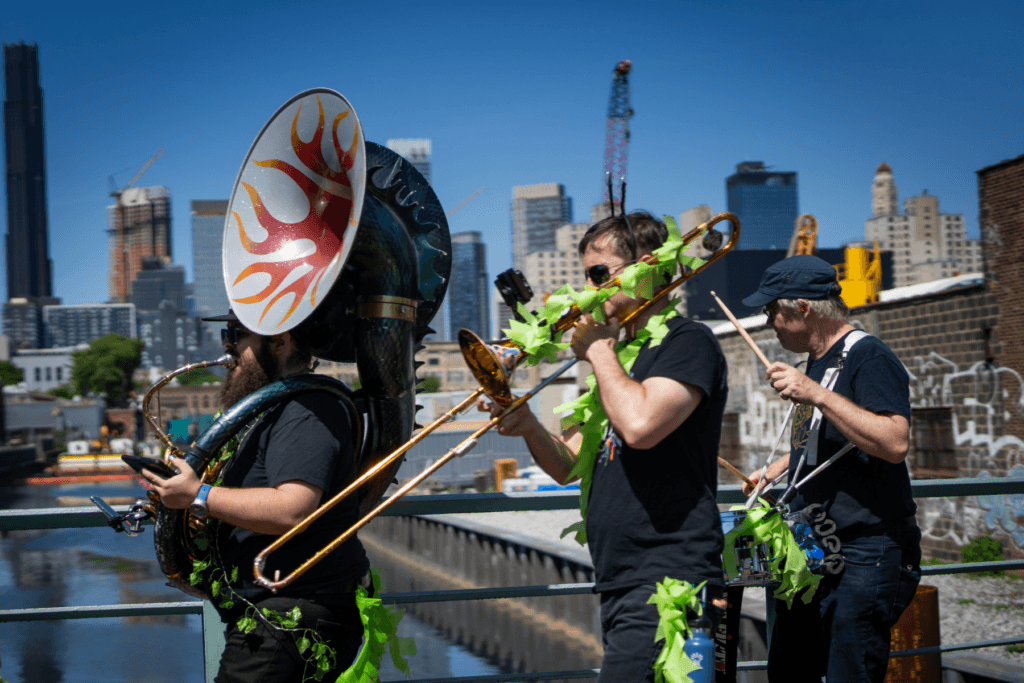
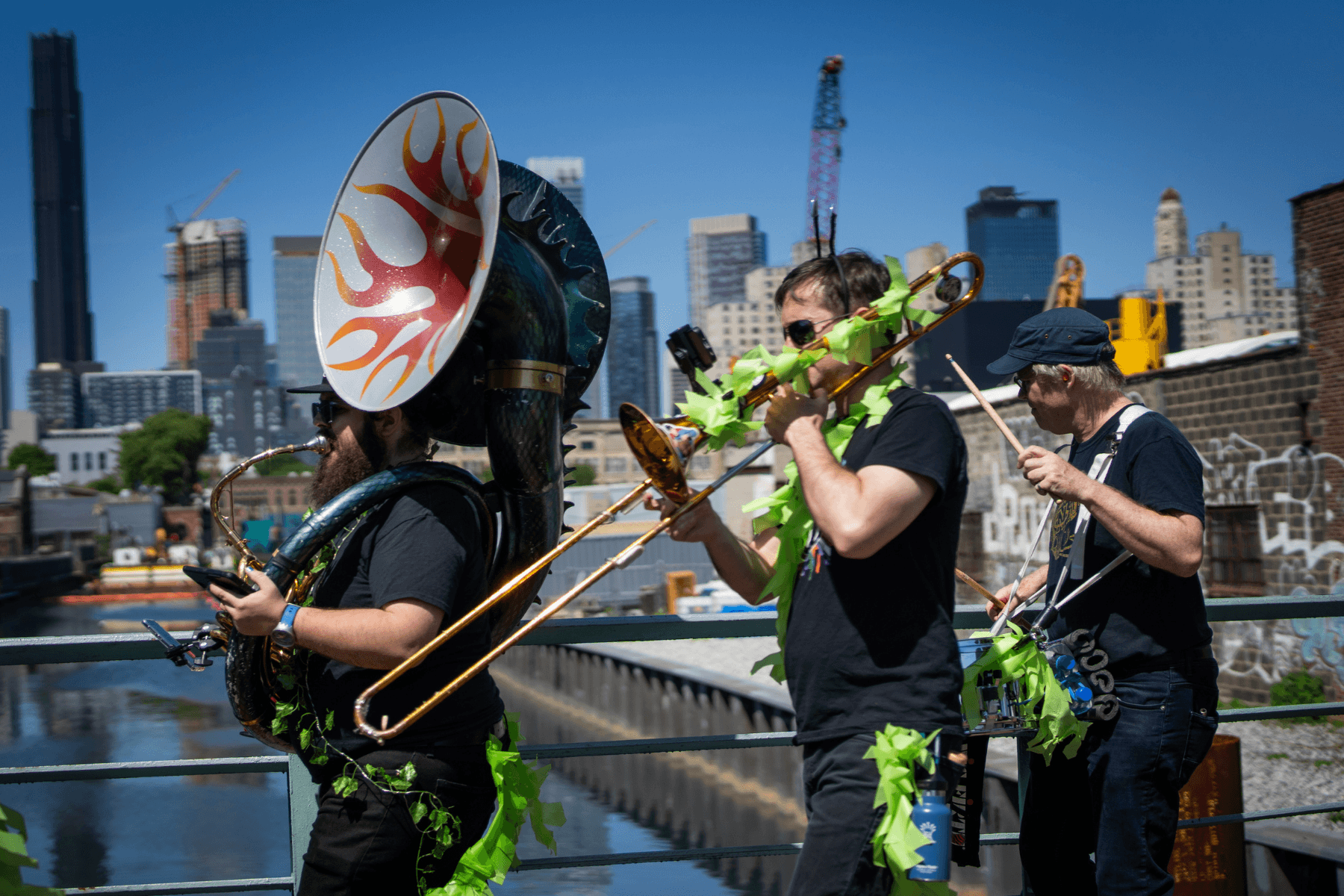
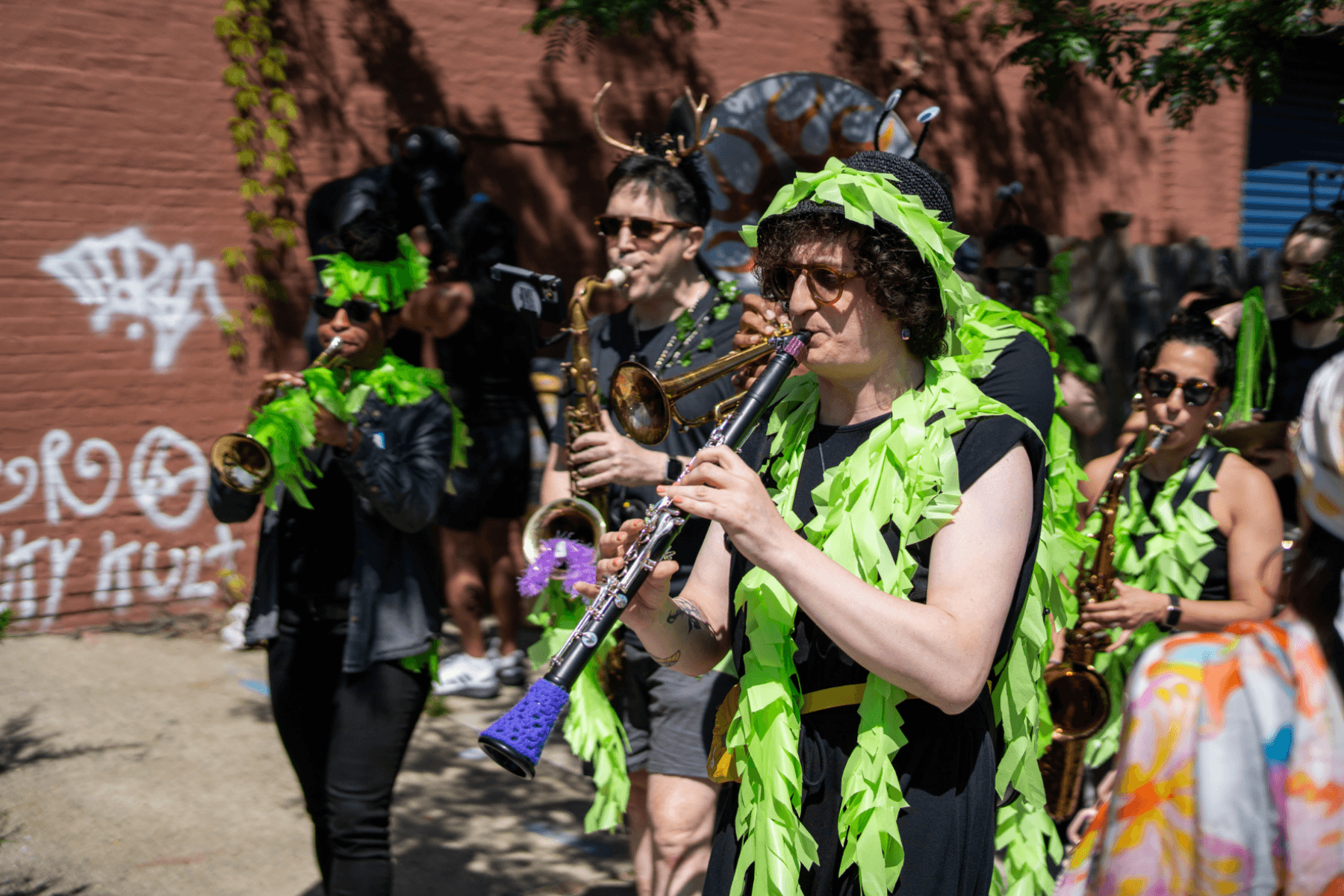
Musicians during the Creatures of the Canal art parade in 2024. Photo by David Gray. Click on the photo or here to access the full gallery.
Onshore, plans to build as many as 9,000 apartments on brownfield sites gained unstoppable momentum, despite concerns over remediation costs and scope.
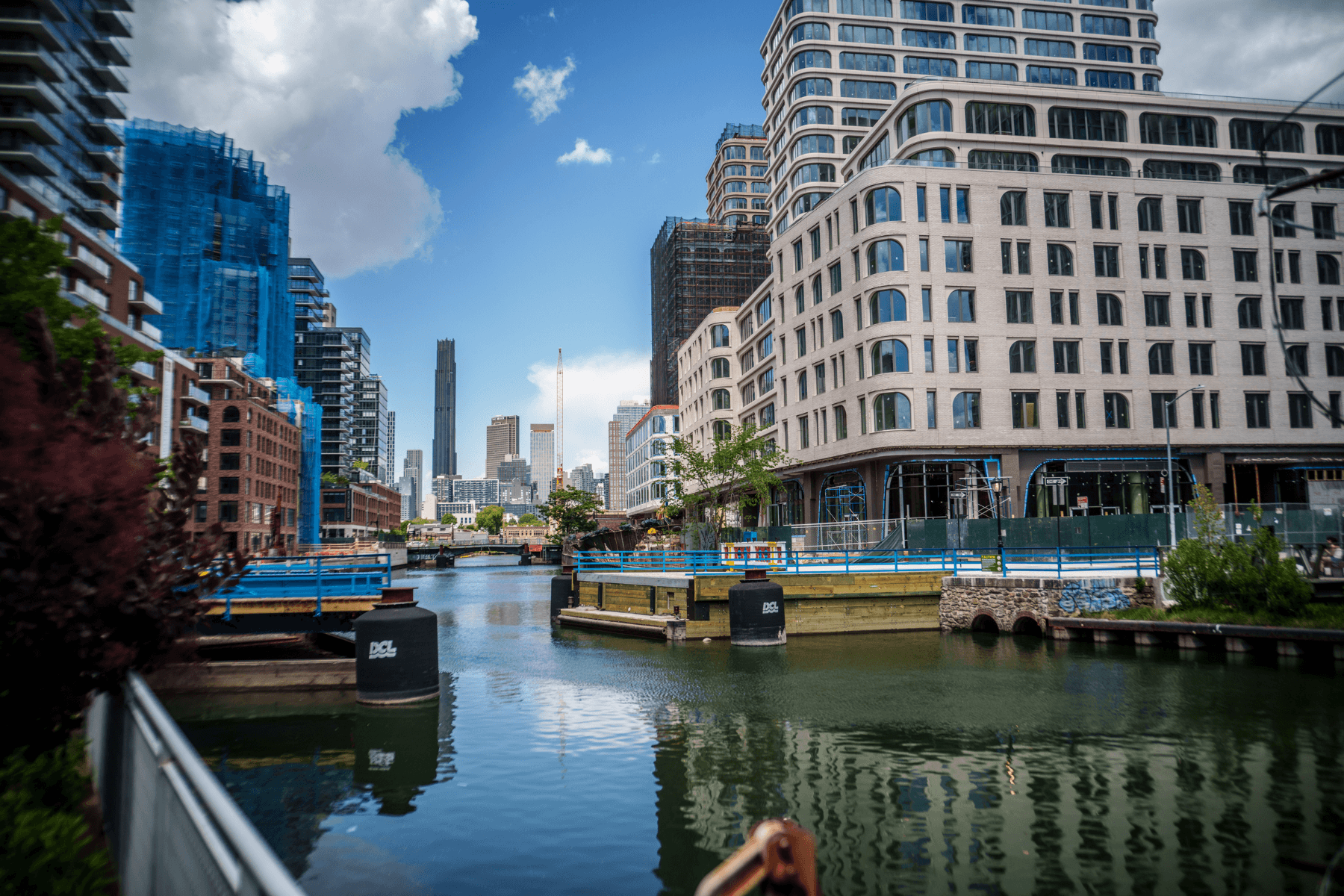
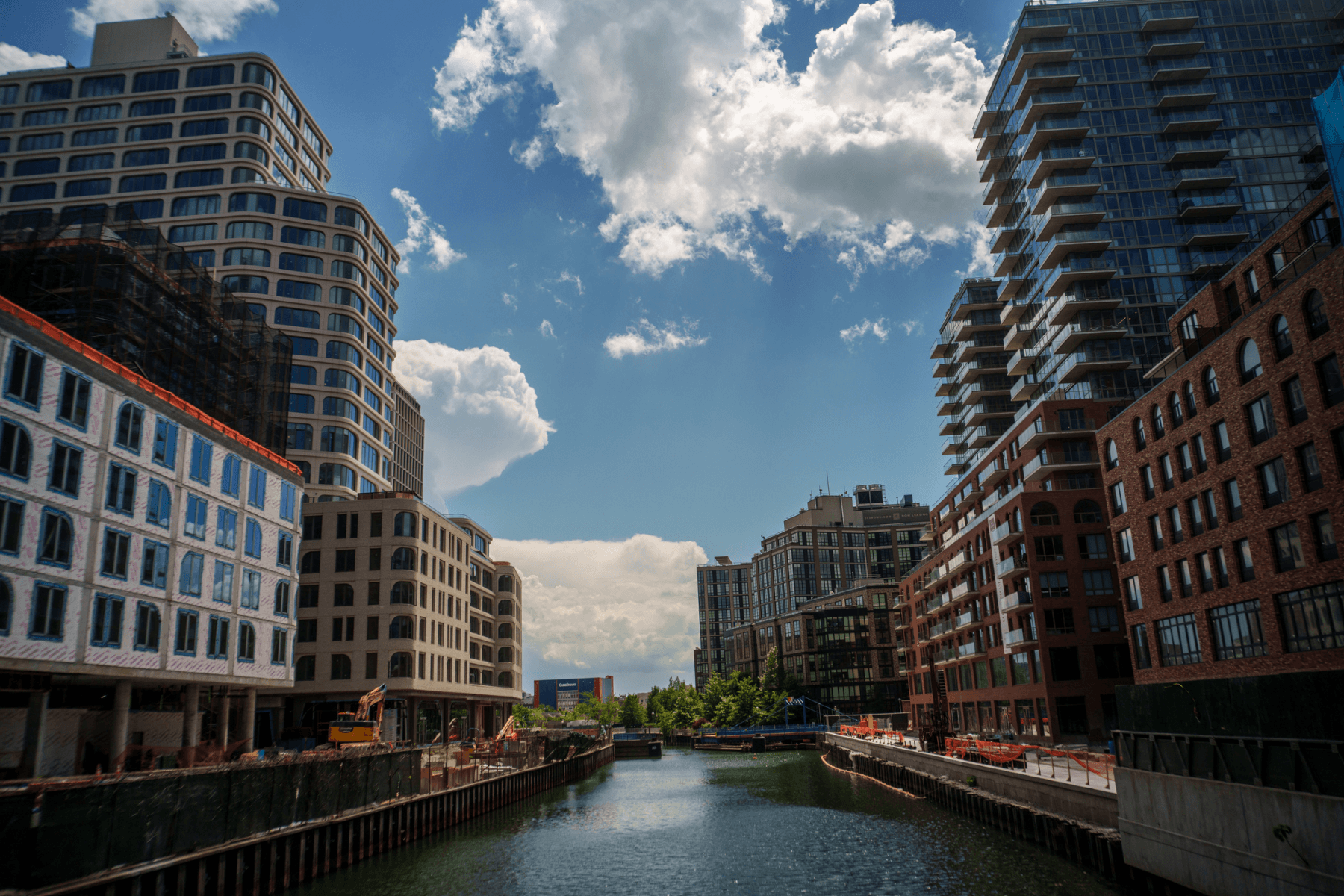
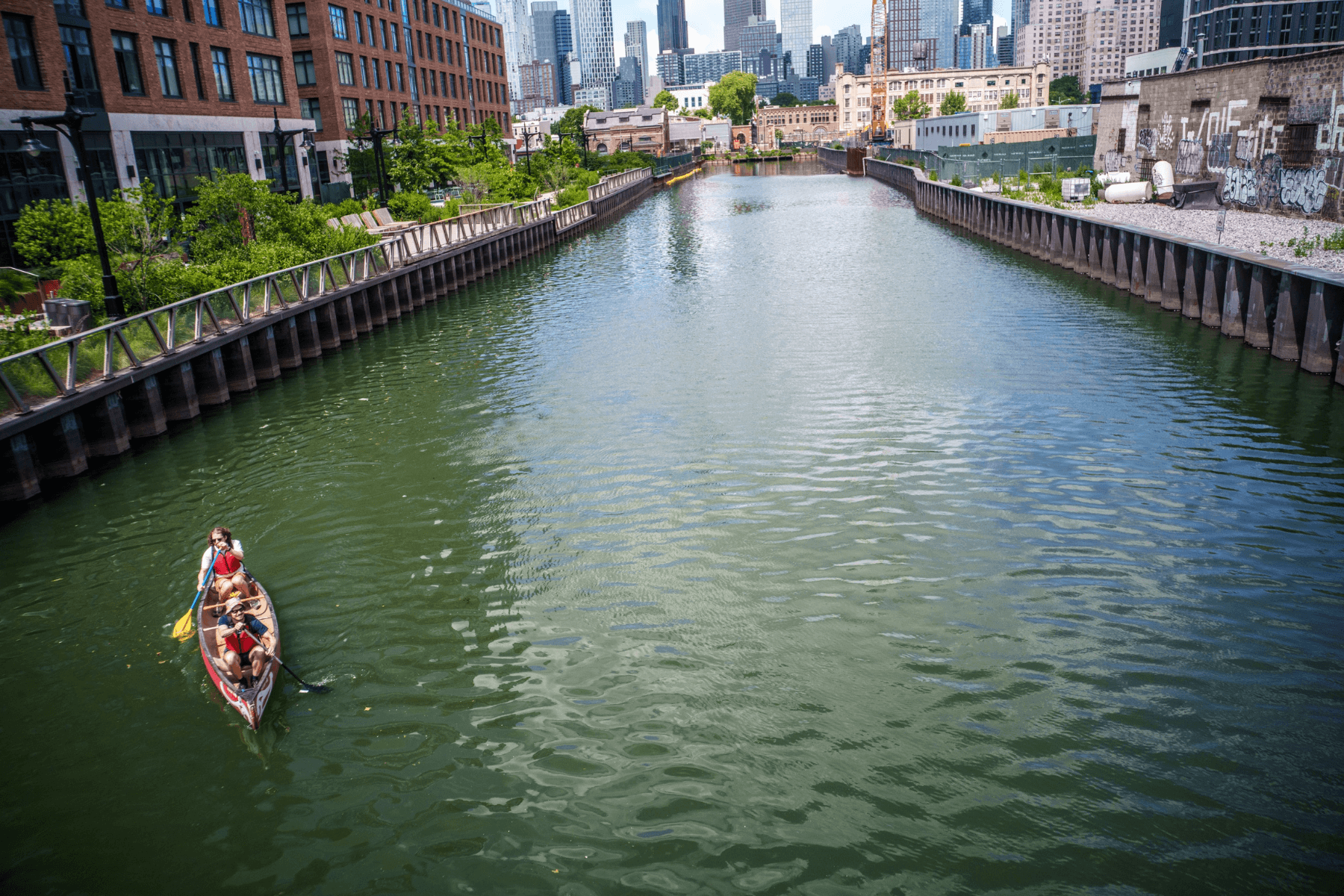
The northernmost section of the canal furthest from the ocean would be a shock to anyone who’d been away a decade. Both banks are lined with towering apartment blocks and esplanades where people stroll or sit. Most of the remaining empty sites bristle with the spines of pile drivers. A couple of graffiti-covered brick warehouses cling on.
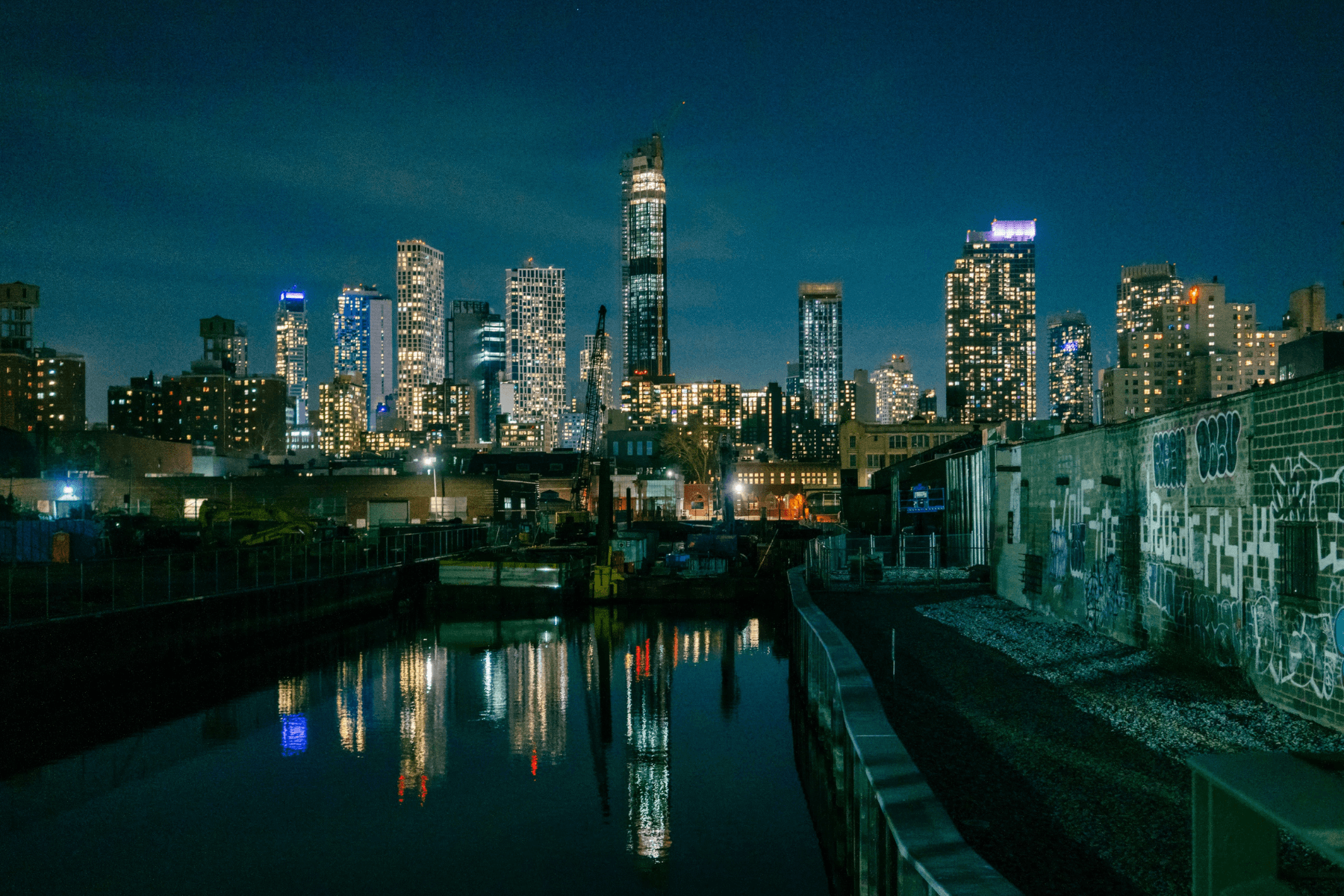
Looking north from here, your gaze is funneled through the concrete and glass canyon to the tallest symbol of Brooklyn’s recent change, the $750 million Brooklyn Tower.
Most of the new Gowanus apartments are rentals. A range of factors are behind this: tax breaks, mandatory percentages of affordable rentals, and the lure of a long-term lucrative income stream. Around 3,000 of those will be classed as affordable and be offered through NYC Housing Connect, the city’s housing lottery scheme. Demand for the lottery apartments is intense: One developer claimed that they’d had 94,000 applications for just 90 affordable units.
Some sites, though, are progressing more slowly than others: The most problematic—the land where the former Citizens Gas Works (CGW) used to sit—has been split into four main parcels of ground in a purported effort to untangle responsibility. Neighborhood coalition Voice of Gowanus is especially critical of this part of the overall development plan; they dubbed the CGW site “the most polluted site in New York state” and has been unrelenting in its quest for accountability in a site where contaminants have been detected as much as 150 feet underground. Some observers have noted that this most polluted segment of the shore also is the one slated for 100 percent affordable apartments.
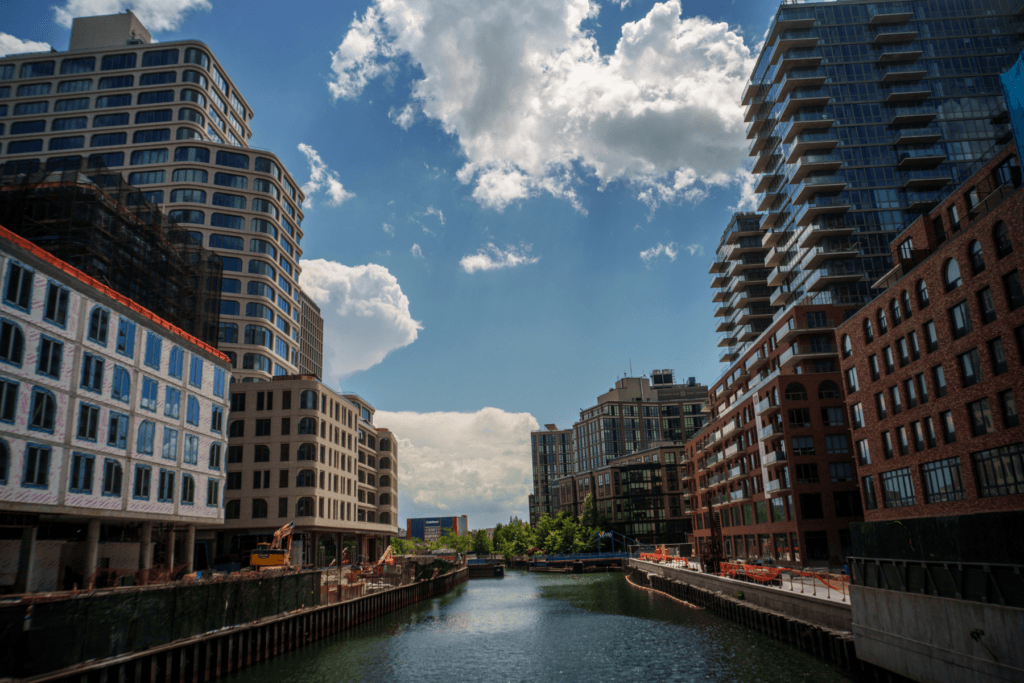
New apartment buildings line both sides of the canal downstream. Photo by David Gray. Click on the photo or here to access the full gallery.
A more insidious, invisible problem has plagued neighboring sites: air toxins that seep from the polluted ground. Voice of Gowanus partnered with an environmental database company to study it. In one building, toxins were reported to be 450 times the threshold recommended by the state health department. In 2021, tests showed high levels of trichloroethylene (TCE) at a Gowanus shuffleboard club. Remediation followed, in the shape of a ventilation system that sucks air from the building and pumps it out into the air above the roof, and the venue reopened.
Complicating the situation is the fact that this sort of air testing isn’t mandatory. The New York State Department of Environmental Conservation has been offering testing for property owners but signups have been slow; it’s thought that less than one in four properties have allowed access, and around one in 10 of those tested have required mitigation.
As for the life in the canal, the Dredgers are well placed to see it. On our walk, Francis pointed to mourning doves on the foreshore and a swift snatching insects from the air.
“People think of the Gowanus as dead but it’s astonishingly alive,” he said. “When the flushing tunnel came back online, nature came back within six months.”
According to a multi-agency study, two dozen species live in or visit the canal, from raccoons, bats, herons and ducks, through mackerel, mummichogs, bass and perch, to mussels, roundworms and shrimp. (New York State Department of Health guidance states, “Women under 50 years old and children under 15 years old should not eat any fish or crabs from these waters.”)
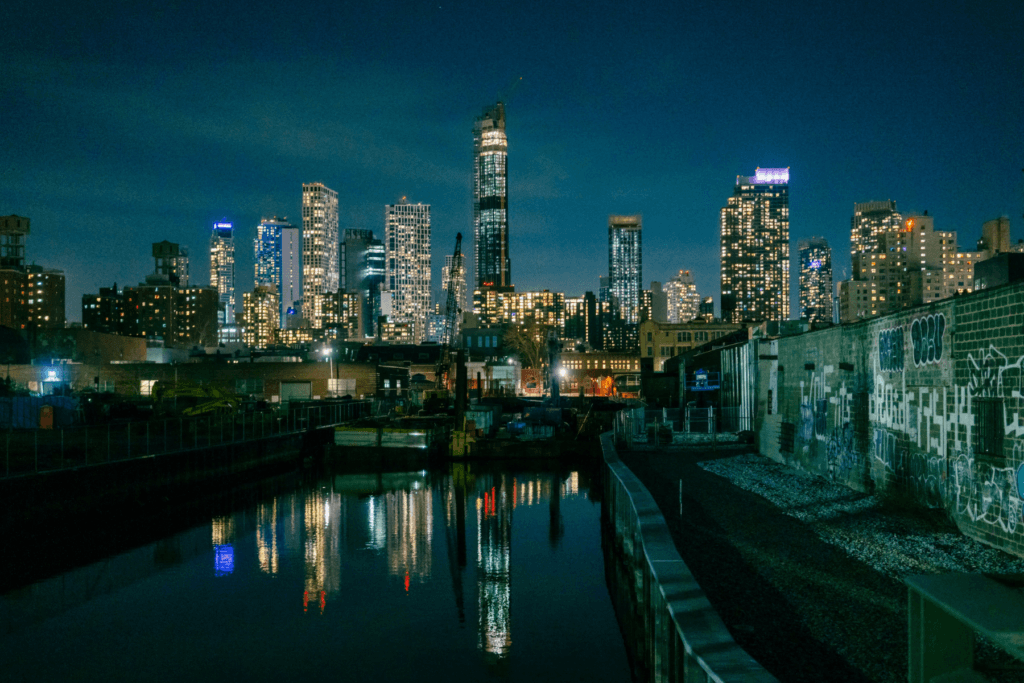
The canal in 2022, before the $750 million Brooklyn Tower was completed. Photo by David Gray. Click on the photo or here to access the full gallery.
Nature above the waterline is a focus of the Gowanus Canal Conservancy. Formed in 2006, its goal is to help develop a thriving, resilient ecosystem. Andrea Parker is the executive director.
“Our work has adapted: In early years, we focused on large-scale volunteer work and cleanups,” Parker told me when we met on the promenade in front of one of the new housing blocks the conservancy worked with. There was a wide, meandering rainwater garden behind us, and small planted spaces were dotted all around. “Now we’re responsible for the horticulture [of several new developments],” she continued. “The planting there is under contract with the property owners. The developers are required to build and maintain these new spaces. Here, the need is the public realm. We need to address flooding, care for street trees, maintain public spaces, and program those spaces. Waterfront maintenance will be a huge part of it.”
Another conservancy goal is the restoration of one of the old turning basins, currently an overgrown landfill. When the canal was built, several of these short spurs were constructed, offering a place for barges to change direction so they could head back down the canal again. This particular one was illegally filled in some time in the 1950s.
Parker said, “The First Street Turning Basin is going to be a salt marsh. The Superfund plan called for excavating but leaving it open water. We argued that it should be planted because we’ve lost so much habitat through the cleanup and the installation of bulkheads. Creating places with an intertidal zone is really important for supporting wildlife. There’ll be a sloping planted salt marsh and a boat launch.”
Thanks to the Unified Stormwater Rule passed in NYC in 2022, all of the new developments are responsible for runoff on their property.
“It requires new developments to manage storm water on-site,” explained Parker. “Waterfront developments generally have completely separate drainage systems, so they store storm water and release it directly into the canal under controlled conditions. Developments farther inland use retention tanks, green roofs, and similar systems to slow the release into the sewer network, reducing pressure on the system during storms.”
The key to all of the improvements—and the promise made to the thousands of people rushing to move into the new apartments—is the much-delayed completion of two colossal retention tanks: one at the canal’s top end and the other around a third of the way down. Combined, they will hold 12 million gallons of CSO.
According to Parker, “If there’s a moderate storm, they’ll collect overflow and then pump it back into the sewer system once there’s capacity. If there’s an exceptionally large storm and the tanks fill completely, the overflow is filtered so solids are removed before discharge. There’ll also be a headhouse where all the processing takes place. The headhouse is essential because it contains the odors.”
The tanks won’t eliminate the problem: 115 million gallons of CSO will be left unmanaged. But they will help. And the tops of the tanks will become 3.6 acres of waterfront space, including intertidal marshes and parks. About half the Superfund cleanup has been completed and forecasts call for the retention tanks to be done by 2029 or 2030.
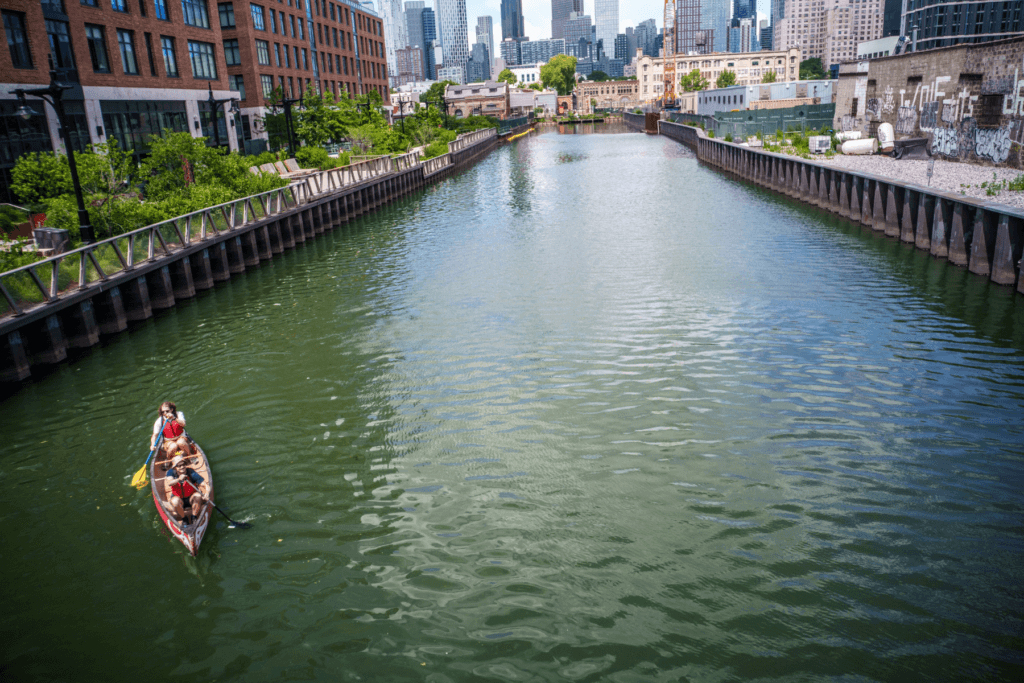
Dredgers in the canal, with old buildings on the right and new ones on the left. Photo by David Gray. Click on the photo or here to access the full gallery.
There are other kinds of activism at work. In 2024, Arts Gowanus organized a parade called Creatures of the Canal. Artists and residents turned up dressed as everything from jellyfish to a concrete-booted mob victim. At the end, a child pointed at something in the water.
“What’s that?”
“It’s a Gowanus football,” a parent replied. Gowanus footballs are rats that drown in CSOs, wash into the canal, and bob slowly downstream.
Johnny Thornton is Arts Gowanus’s executive director. He has overseen one of the biggest challenges: how to transform the neighborhood without losing its soul.
“One of our biggest achievements was negotiating studio space within many of the new residential developments,” he said. “Altogether that’s close to 30,000 square feet of permanently affordable studios—enough for 100 to 120 artists.”
“Gowanus has the best arts community I’ve ever experienced,” said Thornton. “It’s collaborative and community driven. When rezoning began, one of the big questions was how we could preserve that; how could we make sure artists remained a vital part of the neighborhood?
“One of our biggest achievements was negotiating studio space within many of the new residential developments,” he said. “Altogether that’s close to 30,000 square feet of permanently affordable studios—enough for 100 to 120 artists.”
When I cross the canal now, I wonder what it will look like in another 10 years. While writing this piece, another investment was announced: $785 million for a 27-story property with 1,100 residential units. It’s impossible to put a number to how much will be spent in total, but newspapers have tallied up more than $7.8 billion in private investment along the canal so far.
Parker says the conservancy is prepared: “We’ll be a land manager. We’re a conservancy that started without a park, and eventually we’ll be managing a very significant public landscape. I think the canal become one of the cleaner urban waterways in New York City. If you come back in 10 years, it won’t smell the way it does now. We can’t build structures on the canal bed because of the Superfund requirements, so our focus is on floating infrastructure: floating walkways, floating gardens, and habitat attached to the bulkheads.”
Francis is optimistic. “I hope people will stop thinking of it as a failed industrial landscape,” he said. “I hope they’ll see it as one of New York’s great urban waterways, a place where people paddle, children learn about ecology, birds nest, fish thrive, where people understand the history but aren’t trapped by it. The pollution is part of the story. It just isn’t the whole story anymore.”
- Volunteer with the Gowanus Canal Conservancy on to help with plant cultivation, care for street trees, among other activities
- Track the cleanup on the EPA’s Gowanus Canal Superfund site page
- Check to see if your city has a combined sewer system and their compliance with environmental regulations
-
Gary Francis of the Gowanus Dredgers Canoe Club. Photo by David Gray
-
In 2026, the Carroll Street bridge opened for first time in years. Photo by David Gray
-
Musicians during the Creatures of the Canal art parade in 2024. Photo by David Gray
-
New apartment buildings line both sides of the canal downstream. Photo by David Gray
-
The canal in 2022, before the $750 million Brooklyn Tower was completed. Photo by David Gray
-
Relics uncovered when the canal was drained in 2019. Photo by David Gray
-
Creatures of the Canal parade participants in 2024. Photo by David Gray
-
Dredgers in their canoes at an event earlier this year. Photo by David Gray
-
A downstream view of the canal, captured in 2025. Photo by David Gray
-
Old wooden piles in the Gowanus Canal. Photo by David Gray
-
Dredgers in the canal, with old buildings on the right and new ones on the left. Photo by David Gray
Help us sustain independent journalism...
Our team is working hard every day to bring you compelling, carefully-crafted pieces that shed light on the pressing issues of our time. We rely on caring supporters like you to help us sustain our mission. Your support ensures that we can continue to provide deeply-reported, independent, ad-free journalism without fear, favor or pandering. Support us today and make a lasting investment in the future.
RELATED STORIES


Award Winning



Today’s environmental and social justice challenges are unprecedented, and require an unprecedented collective effort.


Stay updated on our latest features, events and more. Subscribe to our Note From the Nest newsletter!
