
When the Mountain Comes to You
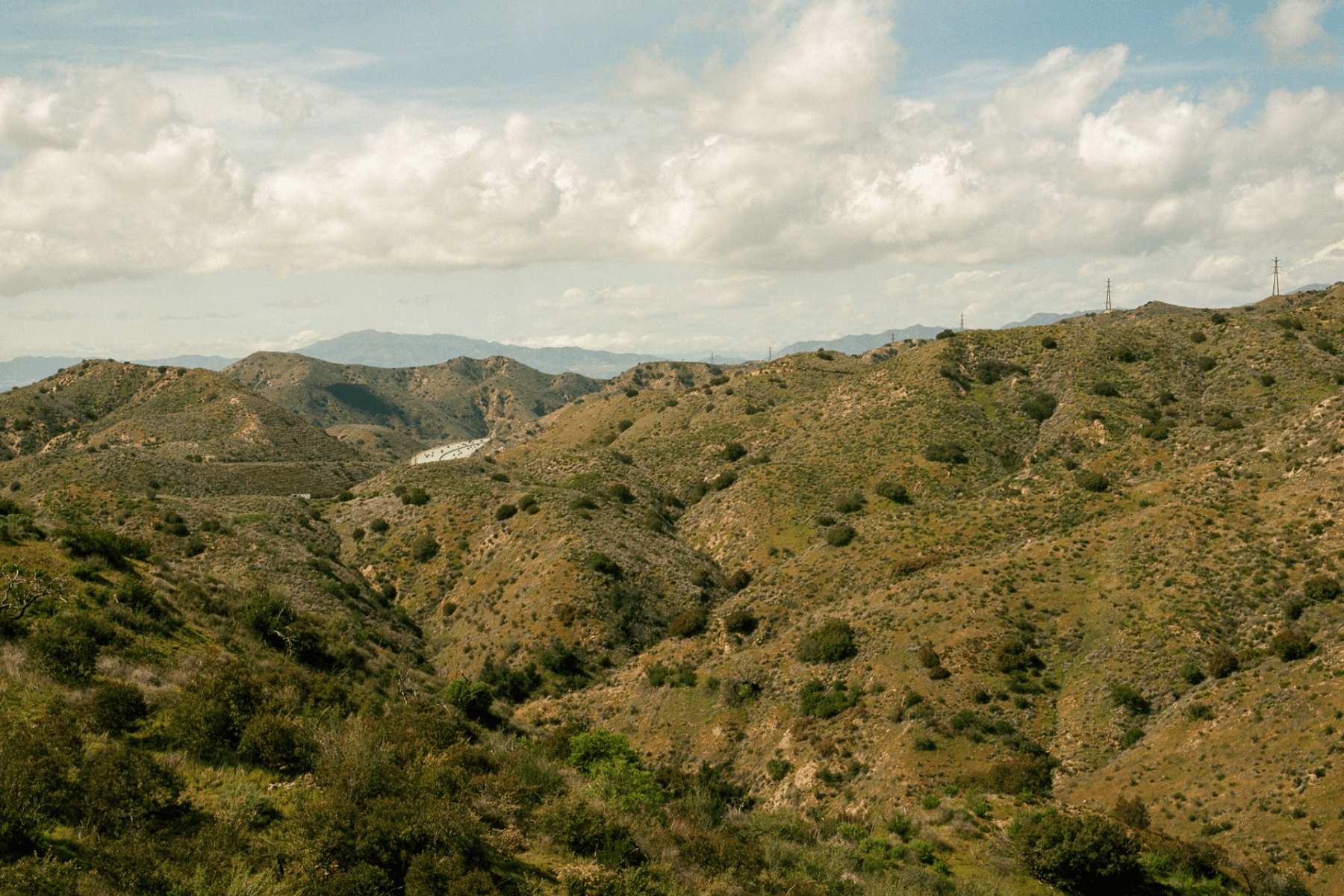
Spider Bite Gap—as locals call the fire road that leads to the proposed site of a large, luxury home development in Tujunga, at the northern edge of Los Angeles—isn’t a place you would stumble upon accidentally. Officially named Verdugo Crestline Drive, it originates on a residential street and winds through several blocks before the pavement stops and becomes a packed-earth trail that hugs the mountain for two miles.
Like other fire roads in foothills communities, it is a popular hiking spot; along the trail are white-tailed rabbits and people wearing visors and sweatpants, walking with their dogs and talking on their phones. There is no signage, and no maintenance, if the muddy ditches I navigated after recent rains were any indication. But a small historic monument reached via a side path—the Cross of San Ysidro, where sunrise Easter services and pagan ceremonies were held in the 1920s—is marked with a green hiker icon on Google Maps. Mostly, what you see are rolling waves of variegated green, textured with tufts of grass and scrub that become trees and bushes when you get closer to them. The Verdugo mountain range is bifurcated by the gray ribbon of the 210 freeway, but south of that are more verdant ridges: La Tuna Canyon Park and Verdugo Mountains Park, part of a patchwork of public lands and preserves that are among the last untouched green spaces in Los Angeles.
Around a couple of bends, a magnificent expanse of prickly pear cacti propagated by a former inhabitant who ran the Cactus Society of Los Angeles comes into view. Beyond that, a carport and a foundation are all that remain of three homes off this trail that were destroyed in the 2017 La Tuna Fire. A different, overgrown trail leads to the mountain ridges that would be flattened for the proposed Canyon Hills development. The City of Los Angeles approved the 221-home project back in 2005, before the La Tuna Fire, or the 2018 Woolsey Fire, or the 2025 Eaton Fire, to name a few of the more recent catastrophes that have hit urban-wild interfaces such as this. Had the development been completed, it would almost certainly have burned in the La Tuna Fire.
More recently, the grassroots coalition No Canyon Hills, a dedicated band of artists-turned-activists, formed to oppose the development. Now, with the land-use agreement set to expire in October, the project’s Nevada-based real estate developer, Whitebird, Inc., has filed for the grading permit that would enable it to blast and excavate 300 acres of mountain terrain into buildable lots. This process would dramatically increase the land’s dollar value (news reports have cited a market value between $10 and $25 million), but decimate the habitat. The grading would likely already have happened if not for No Canyon Hills’ multifront effort to thwart Whitebird Inc.’s plans at the civic, cultural and governmental levels.
Currently, the fate of the land is at a critical juncture, with Whitebird Inc. running out of time to take advantage of its two-decades-old permits and conditions. Once those expire, “the market value of the land is compromised, because it’s very unlikely that this project could move forward in 2026,” says No Canyon Hills co-founder Emma Kemp.
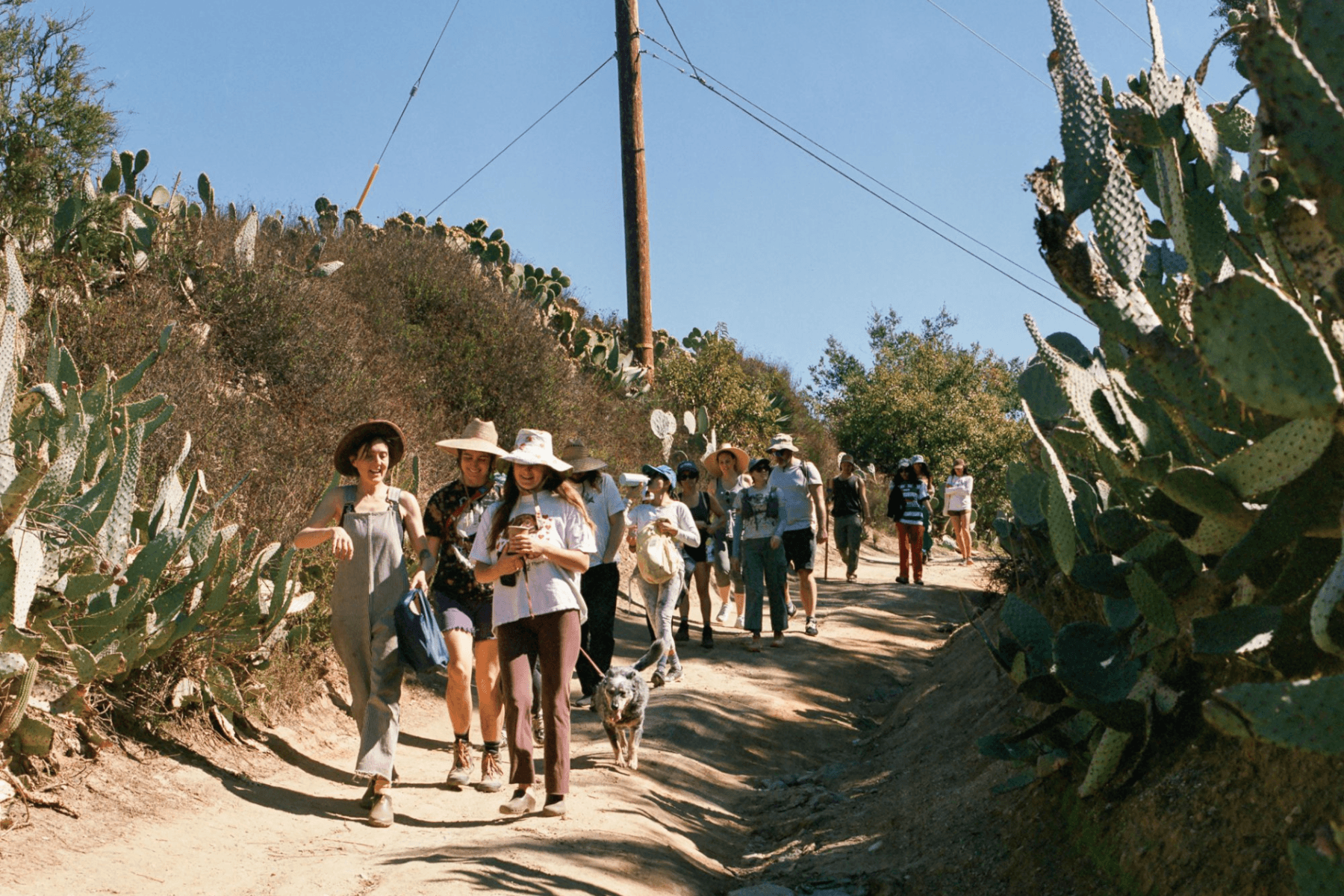
Group hike organized by Living Earth, nature enthusiasts walk the land at Spider Bite Gap. Photo by Rio Asch Phoenix
Even in 2004, when the City of LA certified the original environmental impact report (EIR) for Canyon Hills, it was in spite of fierce backlash and protest against the project’s failure to account for fire risk and potential harm to species and habitat. In 2026, in the aftermath of last year’s deadly Eaton and Palisades fires, to say nothing of the La Tuna Fire—which burned 7,000 acres and remains the largest ever within LA city limits—the liabilities of building in this severe fire hazard zone would seem difficult to justify.
In addition, last month the California Department of Fish and Wildlife (CDFW) designated California mountain lions (Puma concolor), known to inhabit the Verdugo Mountains, as a “threatened” species—one level of protection below “endangered.” Bizarrely, the agency approved a new EIR for Canyon Hills on the same day, leading some to wonder if interests other than public safety and wildlife protection were at work. And so, despite spending most of 2025 embroiled in a draining legal battle with the developer that was eventually dropped, No Canyon Hills is headed for another fight—this time, with the state of California.
***
East of Sunland, north of Burbank and sandwiched between the Verdugo and the San Gabriel mountains, Tujunga was the last unincorporated community to become part of LA. It was historically inhabited and farmed by the Fernandeño Tataviam and Gabrielino Tongva people, who gave it the name that translates as “place of the old woman,” meaning Mother Earth. In the early 20th century, the town was settled by members of the Little Landers movement, a utopian agricultural collective founded upon the idea of self-sufficiency.
Today, Tujunga still maintains some of that outsider ethos—skirting the edge of civilization and wilderness. There is a Starbucks and a Korean spa, but no hip coffee shops, natural wine bars or movie theaters. The Crow’s Nest—the one sports bar Kemp and her partner and co-founder, Mateo Altman, liked to frequent—recently burned down. What most residents do have is land, space and proximity to nature. In fact, the nearby mountains are so tied to the identity of this place that in 1998, the Verdugos were declared an “irreplaceable visual resource” by the LA City Council. Residents helped draft a Scenic Preservation Plan, but what they didn’t know was that two years earlier, in 1996, Whitebird, Inc. had acquired 1,000 acres in the Verdugos and was lobbying city officials to approve a sprawling gated community in the midst of this newly designated “visual resource.”
Canyon Hills would sit just north of the 210 off the La Tuna Canyon exit; getting to it would require constructing a new dedicated road. Meanwhile, a freeway underpass at La Tuna Canyon, where mountain lions and other large mammals have been documented moving safely within the Verdugos and from the San Gabriels, would be blocked. According to Kemp, the Canyon Hills site is “a missing puzzle piece in the attempt to preserve wildlife connectivity in the Verdugo-San Gabriel corridor.” Officials would seem to agree, as the Canyon Hills land is included in the Rim of the Valley unit map, a proposed 118,000-acre expansion of the Santa Monica Mountains National Recreation Area in Southern California.
Tujunga still maintains some of that outsider ethos—skirting the edge of civilization and wilderness . . . What most residents do have is land, space and proximity to nature.
The East London-born-and-raised Kemp and Texas-bred Altman never intended to become environmental activists or political organizers, but the mountain had other ideas. Altman works as a gardener. Kemp is a graphic design and media professor at Otis College of Art and Design, whose work spans writing, publishing and design (she also happens to be writing the first authorized biography of Conor Oberst of Bright Eyes). When she and Altman moved to Tujunga in 2022, they saw a notice in the local newspaper about a Sunland-Tujunga Neighborhood Council meeting. Canyon Hills was on the agenda, and they decided to attend. “It was very evident that no one was paying attention to this,” Kemp recalls. “All the original opposition had happened 20 years ago.”
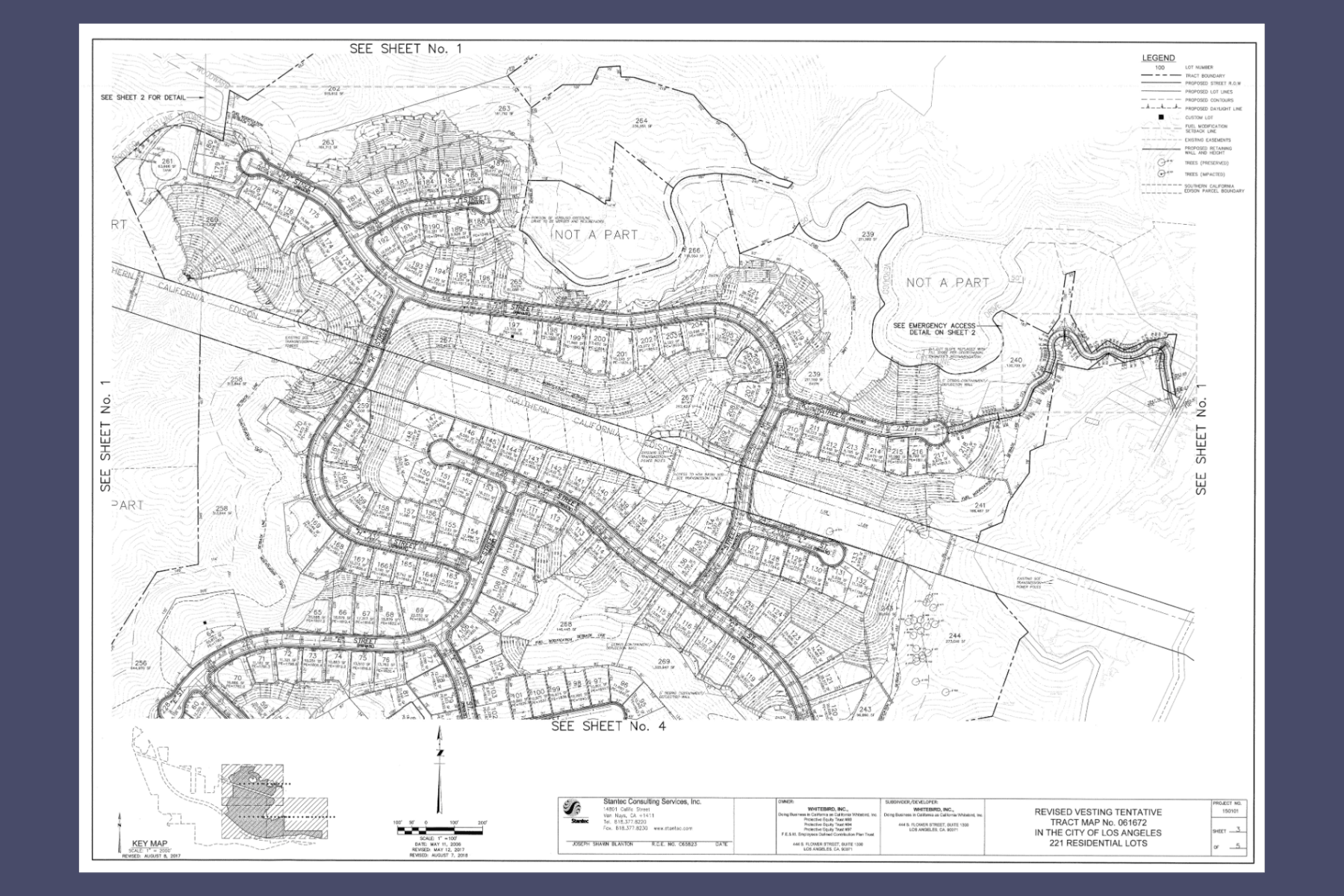
Map of the proposed development. Courtesy of Stantac Consulting Services, Inc.
Back then, local activists and conservation groups had been blindsided in 2005 when Canyon Hills got final approval from the three Los Angeles councilmembers on the Planning and Land Use Management Committee: Tony Cardenas, Ed Reyes and Jack Weiss. Councilwoman Wendy Greuel helped Whitebird, Inc. principal Rick Percell negotiate a deal with the city that involved reducing the number of homes in the development and donating 395 acres for conservation. City Attorney Rockard Delgadillo drafted the agreement. According to data on the Los Angeles City Ethics Commission website and research done at the time by the Friends of the Verdugos, all of the above received campaign donations, albeit relatively small, from Whitebird, Inc. and its associates.
Nonetheless, Canyon Hills sat dormant, and the resistance dissipated. This is where Kemp and Altman came in.
“This huge environmental catastrophe was being discussed, and there were maybe five people there,” Kemp says about that neighborhood council meeting she and Altman attended in 2022. “We were like, this seems like a big deal. How is no one in LA talking about this? How is there no awareness of this? And we just looked at each other and were like, well, we know how to use the internet.”
No Canyon Hills came into being, essentially, as an Instagram account, distilling the project’s potential ecological consequences and its complex history into digestible information. The group posed provocative and paradoxical questions, such as: What would it take to crowdfund tens of millions of dollars to buy a mountain? Who decides the value of native habitat, the man who owns it or the animal who roams it? And how can a man own a mountain, anyway?
Usually, Altman selects the images and Kemp writes the text; they treat it as a collaborative art project. The first No Canyon Hills post, on February 8, 2023, was a picture of the green ridge as it still looks today, above Whitebird Inc.’s rendering of the site covered in rows of homes across denuded earth. The text was minimal: “Protect the Verdugos: Gabrielino Tongva and Fernandeño Tataviam Land.”
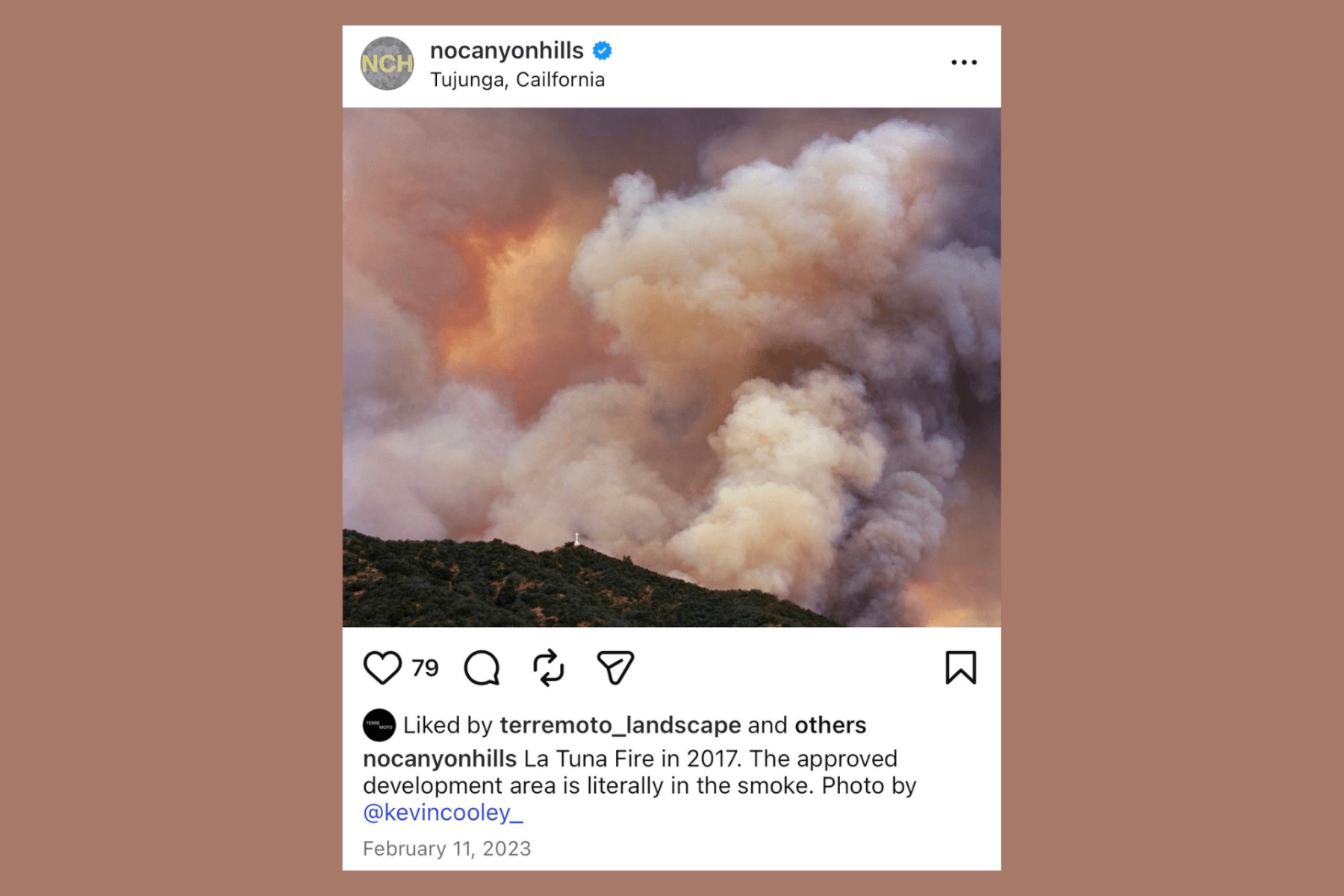
No Canyon Hills uses social media to share information and build community support. Here is one post that shows the catastrophic La Tuna Fire. Courtesy of No Canyon Hills
The next post was an archival poster from the Sierra Club, proclaiming its opposition to Canyon Hills in 2004. A few days after that, a photograph showed the mountains engulfed in thick, billowing gray smoke and raging flames, the Santa Ynez cross tiny against its magnitude: the 2017 La Tuna Fire. “The approved development area is literally in the smoke,” the caption read.
The following day, No Canyon Hills launched a change.org petition, announcing, “the botanists are mobilizing.” The petition described how the project would pave over a vital stream and rip out hundreds of Coast Live Oaks. It argued that a responsible plan “that meets today’s needs and anticipates those of the future would infill already urbanized areas, building communities that connect to public transport systems and utilize green building initiatives.” It got 500 signatures in its first 24 hours, and now has almost 180,000.
Others began documenting the habitat and some of the more than 350 plant and animal species that call the Verdugos home. Botanists shared field notes, introducing specimens such as a yellow Bush Poppy, the native fern Polypodium Californica, Giant Wild Rye grass, and tiny white floral droplets called Arctostaphylos Gladulosa Mollis, or “the Transverse Range Manzanita.” Each offering was presented with care and enthusiasm, and none more so than Johanna Turner’s (the cougar tracker who helped make P-22 a local icon) photographs of a striking young male mountain lion, whom they dubbed the La Tuna Puma. “This is HUGE,” read the post, dated February 22, 2023.
Anyone who has stood in the Verdugos at dusk knows the blueprint was drawn long before—in community, pawprints, pollinator routes, fungal networks, oak canopies, moisture channels after rain.
The Environmental Impact Report for the Canyon Hills project might not have acknowledged the presence of mountain lions in the Verdugos, but that doesn’t mean they weren’t there. A year after the La Tuna Puma post, the discovery of a female puma, promptly named Diva, generated even more fanfare. The presence of two lions indicated that this land was a habitat that could help mitigate fragmentation and possibly support mating. Part of the tragic poignancy of P-22’s story was his isolation: He made it across two dangerous freeways only to live for a decade in Griffith Park and the Hollywood Hills, alone. P-22 was euthanized in 2022 after being hit by a car, suffering from disease and rat poisoning. His plight helped inspire the Annenberg Wildlife Crossing—a structure that spans the 101 Freeway and links the Santa Monica Mountains to the Simi Hills and Santa Susana Mountains to the north.
Over the next two years, No Canyon Hills regularly shared photographs and infrared videos of Diva and the La Tuna Puma prowling through tall grasses and lapping at pools of water. One instantly iconic shot by Turner shows Diva posing regally on a ridge over Glendale, the downtown skyline rising in the background.
Altman tells me about a remote location in the Verdugos where puma field research has been done since 2010 (past Verdugo dwellers have included male and female pumas named Adonis and Nikita—a possible new resident was spotted this year). “It’s this fairly flat meadow where all the mountain lions go and lie down in the same spot,” he says, noting that this got him thinking about intergenerational spatial memory. “For how many hundreds or thousands of years have mountain lions done that?”
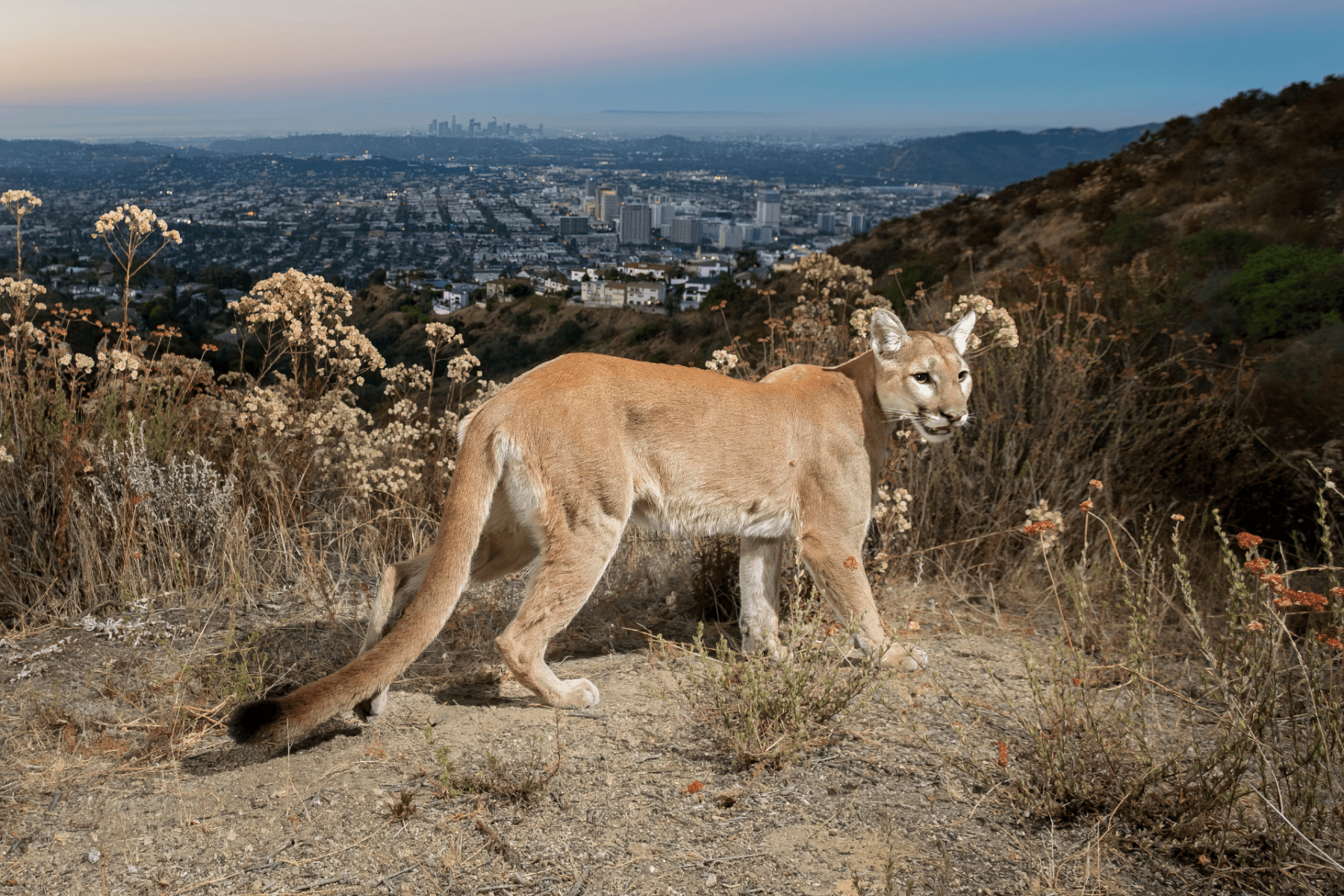
Diva Cat, one of two mountain lions known to currently inhabit the Verdugos, lives up to her name. Photo by J. Turner
No Canyon Hills worked to create a space for this sort of reflection, inviting its followers to consider their place in the web of coexistence. “It’s not just, ‘Write to your city council person,’” Kemp says—although it is that, too. “There’s something kind of poetic and metaphysical about [our message].”
For example, these words Kemp wrote, paired with a screen grab of a real estate listing for a .57-acre plot in Tujunga, priced at $38,000:
“‘Unimproved.’ ‘Vacant.’ How casually these words strip a mountain of its pulse. Realtors love to pretend a landscape is a blank slate awaiting a heroic developer’s build. But anyone who has stood in the Verdugos at dusk knows the blueprint was drawn long before—in community, pawprints, pollinator routes, fungal networks, oak canopies, moisture channels after rain. To call such a place ‘unimproved’ is to smuggle in a value system: improvement equals pavement, utility lines, ROI. It’s a semiotic sleight of hand we witness daily. ‘Vacant’ does similar violence, implying absence where there is only presence we’ve failed, or refused, to see.”
***
In June of 2023, No Canyon Hills organized its first in-person event, a town hall meeting at the Unitarian Universalist Church of the Verdugo Hills. “We are nature defending itself,” declared the invitation, and the house was packed. Friends made food and cakes, and speakers included Turner, Indigenous culture bearer Kevin Nuñez and botanist Devon Christian. At one point, attendees were invited to turn to one another and express a wish for the future of the land. Kemp describes the night as “one of the first times I felt No Canyon Hills had the potential to galvanize a significant cross section of people.”
Like trees talking to one another, fellow artists seemed to pick up the call. Designer friends PAL made T-shirts emblazoned with flashing cougar eyes that would be appropriate for a cool thrash-metal band; illustrators and printmakers created posters to promote the cause. Others made candles and ceramics and wine and herbal tinctures and bicycle helmets to help fund No Canyon Hills: gestures of creativity and solidarity that extend a hand, or a root.
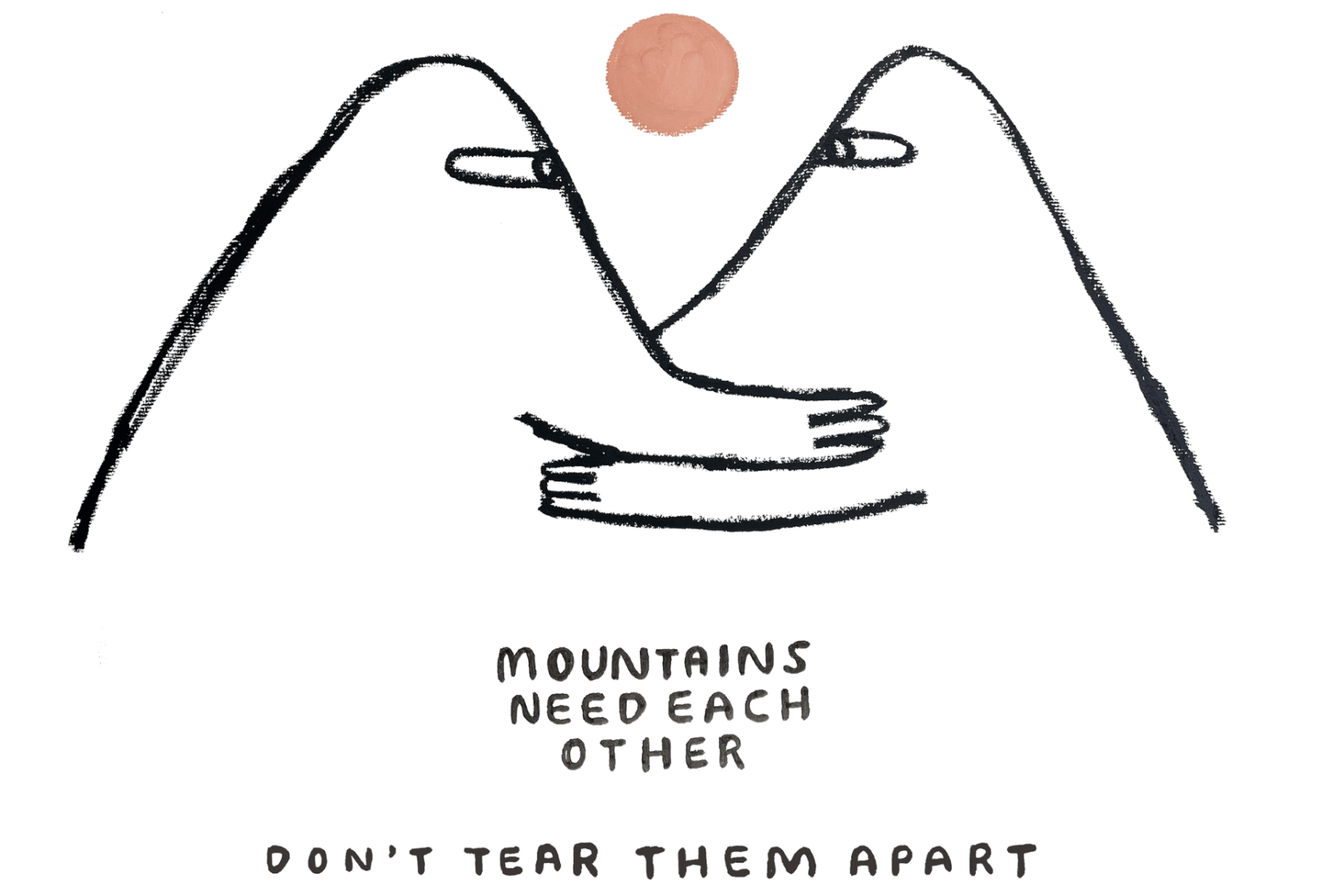
“Saving this piece of land makes a radical difference in the future of LA,” says Christian Kasperkovitz, one of many artists who has used their work in support of No Canyon Hills. Illustration by Elkpen
It was through an artist friend who lives in Tujunga that I learned about No Canyon Hills in the first place. A member of the board who sometimes hosts group meetings at her kitchen table, Christian Kasperkovitz creates work under the name Elkpen that is deeply connected to California’s ecology. In support of the effort, she painted a colorful portrait of Diva and made a series of simple line drawings, like one that shows two mountains embracing, eye to eye. “Mountains need each other,” reads the text. “Don’t tear them apart.”
A little over a year ago, I walked the land at Spider Bite Gap for the first time with Kasperkovitz, Kemp and Altman, the photographer Rio Asch Phoenix (who has created an entire body of medium-format work around the site), and a group of hiking enthusiasts convened by Noah Klein, the co-founder of the art and ecology collective Living Earth. For Klein—who grounds Living Earth’s gatherings in Indigenous philosophies of reciprocity—the interrelatedness of art, nature, community and advocacy is a given. “Art can be this adjacent way for us to understand and communicate and digest larger conversations,” Klein observes. “There’s a powerful phrase from bell hooks that says ‘the function of art is to do more than tell it like it is—it’s to imagine what is possible.’”
As we gathered together before our hike, Kemp addressed the group and told us that two months earlier, in December 2024, she, Altman and two of their botanist friends had been named in a lawsuit filed by Whitebird, Inc., accusing them of trespassing and conducting unauthorized surveillance—which referred to the wildlife cameras that had documented Diva and the La Tuna Puma. The suit was ongoing, Kemp explained, with unflagging cheerfulness, “So we will have to stop walking at a certain point, but you all can continue on!”
Given that there was not and had never been signage designating the Canyon Hills site as private property, and that the land had been open to and enjoyed by the public for at least a century, the suit could be seen as frivolous. It was also a surprise, as No Canyon Hills had previously communicated with Whitebird, Inc. and its principal, Rick Percell, about a potential conservation deal (provided he got the land’s market value), and tribal co-stewardship of the land. This sudden, aggressive legal action was a shocking turn and was potentially ruinous to Kemp and those named in the lawsuit, as they could be personally held liable for damages. However, it also appeared to be a play in a game Whitebird, Inc. expected to win. (It is worth noting that in March 2024, former City Attorney and Canyon Hills proponent Rockard Delgadillo joined Sheppard, Mullin, Richter & Hampton LLP, the firm representing Whitebird, Inc.)
Who decides the value of native habitat, the man who owns it or the animal who roams it? And how can a man own a mountain, anyway?
In February of 2025, No Canyon Hills countersued, claiming that Whitebird, Inc’s lawsuit was a textbook SLAPP (Strategic Lawsuit Against Public Participation), “meant to drain resources, spread fear and prevent folks from speaking out against injustice,” they wrote in a post. “This isn’t just a bully move. It’s part of a growing trend to quell environmental protections and weaponize the courts against free speech.”
The ensuing months saw more activations: a conversation at Printed Matter’s LA Art Book Fair between Kemp and attorney Beverly Grossman Palmer about the lawsuit; a listening event organized by the internet radio station dublab, with proceeds to benefit their legal fund; and an appearance at the 10th annual P-22 Day in Griffith Park, where attendees were invited to help make a drawing of the La Tuna Puma.
“We all look at that mountain every day . . . We may feel differently about other things, but we can agree about that.”
Momentum kept gathering. As their legal defense team worked behind the scenes, the No Canyon Hills activists garnered the support of environmental organizations such as the Center for Biological Diversity, the Endangered Habitats League, the Friends of Griffith Park, the Sierra Club, and the Santa Monica Mountains Conservancy.
Support appears to cross typical political divides. Kasperkovitz recalls making a poster that she intended to hang on a shared telephone pole at the end of her driveway. “I contacted the neighbors in front of us—both of whom were flying Trump flags—and I said, ‘Well, this is the poster I’m putting up, and it’s related to this piece of land, do you mind if I put it on our shared pole?’ And they both wrote back within five minutes, ‘Hell yeah!’ That’s really part of this community in Tujunga: we all look at that mountain every day. That was a nice meeting of minds; we may feel differently about other things, but we can agree about that.”
In November 2025, after almost a year of back-and-forth depositions, Whitebird, Inc. dropped the lawsuit. To celebrate, No Canyon Hills compatriots Terremoto, a landscape architecture design studio in Cypress Park, hosted a party and benefit silent auction. Between bands playing, Kemp spoke briefly in Terremoto’s gorgeously unruly garden. She thanked the crowd of “plant nerds and eco punks”—to use the words of Klein, a co-organizer of the event—for being part of this “attempt to collectively push back against a devastating, violent project against our natural resources, against our Indigenous lands, against our wildlife kin, and against the kind of Los Angeles I think everyone here wants to live in and with.”
***
Since 2019, Central Coast and Southern California mountain lions—which number approximately 1,449—have enjoyed temporary protections while the CDFW evaluated their risk of extinction. When the California Fish and Game Commission voted on February 12 to list six California mountain lion populations, including those in the Santa Monica and San Gabriel mountains, as “threatened” under the California Endangered Species Act, supporters celebrated a victory for biodiversity in general and Puma concolor in particular.
For No Canyon Hills, however, the victory was confusingly short-lived when the CDFW certified the supplemental EIR (SEIR) for Canyon Hills on the same day local mountain lion populations were listed as threatened. The SEIR acknowledges mountain lions inhabit the area, but since none were spotted during surveys, the development site was not designated critical habitat. The obvious should probably be stated here: spotting a mountain lion is extremely rare, period.
Two weeks later, on March 2nd, the CDFW certified an “incidental take permit” (ITP) for the development. An ITP, one of the final hurdles in a development’s approval process, considers species that will be casualties of the construction process. A grading permit is typically granted once the ITP is certified.
The Canyon Hills’ ITP acknowledged that a certain number of endangered Crotch’s bumble bees—a species that also inhabits the Verdugos—could be “taken” (i.e., killed), which they defended by saying that bees could theoretically fly away—but the puma was not mentioned.
Doug Carstens of Carstens, Black & Minteer, No Canyon Hills’ environmental counsel, calls this “a ridiculous situation.” According to him, the CDFW has both a duty and the ability to protect or at least analyze the impacts of the development on critical flora and fauna on the proposed site, including mountain lions, as well as the bees.
“It’s not conjecture or ‘maybe they’re there, maybe they’re not,’” he says of the mountain lions. “They’re there, and they use the site . . . But what [the CDFW] seems to be doing right now is saying that because the developer is not asking for or talking about the mountain lion, we’re not going to either.”
Meghan Hertel, the CDFW’s new director, was sworn in just a few days after Puma concolor was listed as threatened. Hertel had previously been a key figure in Governor Gavin Newsom’s 30×30 initiative focusing on wildlife protection and habitat connectivity. When asked about the ITP’s apparent incongruities, her office replied by email, stating: “The Applicant [Whitebird] has not applied for, and does not expect that implementation of the Project will result in, take of mountain lion under CESA [California Endangered Species Act]. Therefore, mountain lion does not fall within the scope of the Department’s CEQA [California Environmental Quality Act] review for this Permit.”
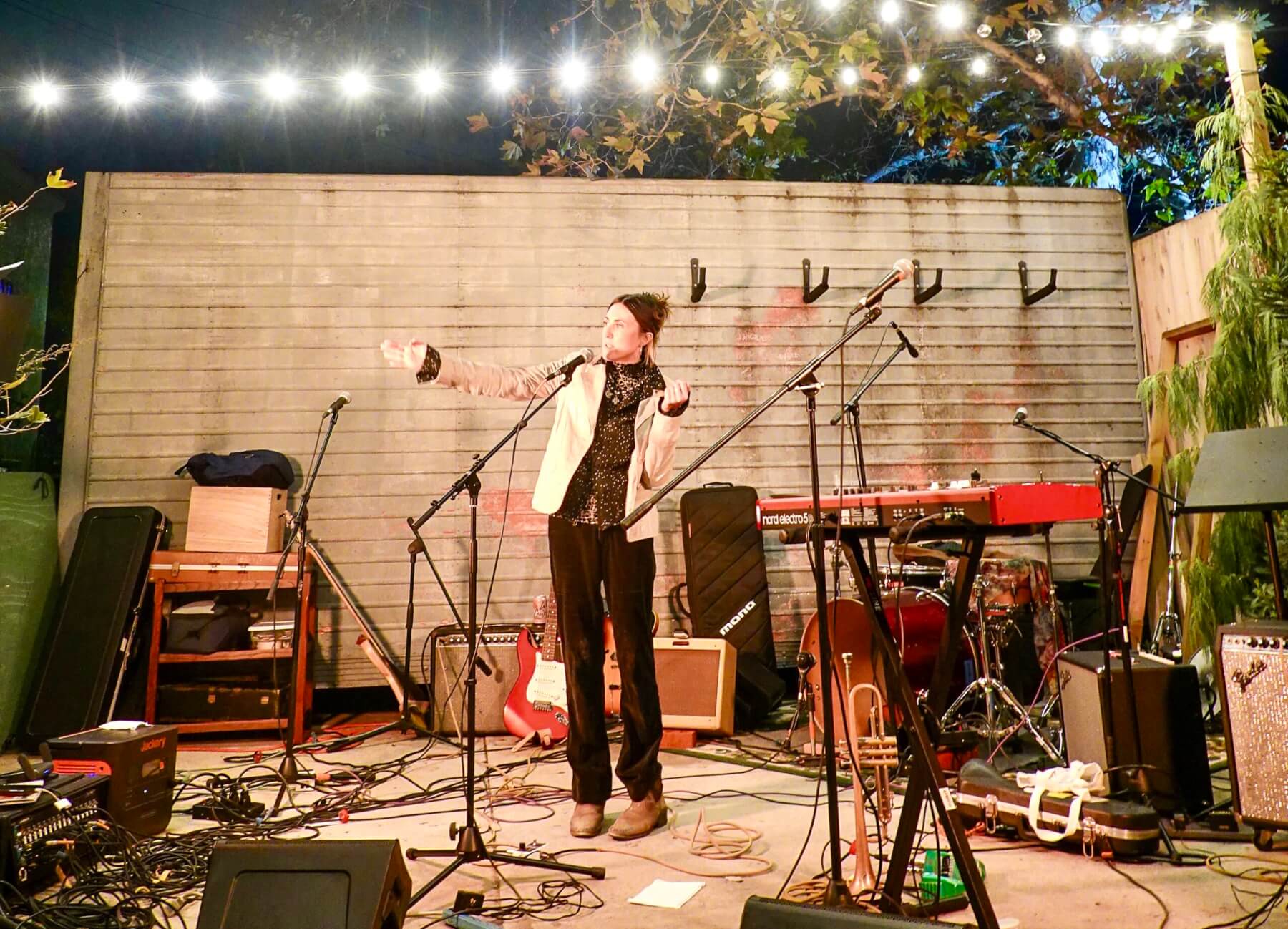
Emma Kemp addresses supporters gathered at Terremoto Landscape in November, 2025. Photograph by Noah Klein
No Canyon Hills disagrees. It filed a lawsuit against the CDFW in Los Angeles Superior Court on Wednesday, April 1, challenging its approval of the Incidental Take Permit and the Supplemental Environmental Impact Review on the grounds that both violate the California Environmental Quality Act (CEQA) and the California Endangered Species Act.
The core of No Canyon Hills’ argument is that the SEIR is outdated and inadequate under CEQA, as it fails to properly address the development’s impact on wildfire risk, vulnerable plants—including 200 or so native live oak trees—and habitat connectivity, underscored most starkly by the recent listing of area mountain lions as threatened. The recently granted ITP, the suit argues, also ignores a raft of new evidence related to fire risk and habitat connectivity.
The suit further contends CDFW failed to adopt legally required findings explaining why the project’s environmental harms were justified, and accepted conservation land already permanently protected as “mitigation” for habitat loss. The filing concludes with a “Prayer for Relief” (an antiquated legal term that seems fitting here), which claims that the CDFW both violated its duties and abused its discretion. It calls for an end to “any action to construct the Project.”
For many, the razing of a mountain to build McMansions for a select few is painful to contemplate: the dynamite, the bulldozers, the death. It only underscores how tenuous our human connection to nature and justice seems to be these days. But in the face of destruction, the No Canyon Hills community can remind us that creativity and hope are equally powerful forces, and that sometimes to see what is possible, we first have to recognize what is already here.
For now, Kemp is committed to amplifying the voices of those who comprise the Tujunga ecosystem. “We want to live here,” she says, “but we want to live here respectfully. We actually do care that the wildlife is able to continue to live here, and we do care about having our Indigenous tribal conservation groups receive the land back that is rightly theirs, and to use it in ways that are non-violent. I think that no matter what happens with this lawsuit, those conversations are helpful in our broader cultural reckoning.”
And if by chance or the stroke of a pen Percell does get his grading permit, Kemp believes they can handle that, too, as Earth defenders have done, long before the internet existed. “We get messages every day, saying, ‘If anyone brings a bulldozer there, we’re gonna chain ourselves to a tree,’” she says with a smile. “We’ve never had to do anything like that, but I think if it really came to that, if he was about to pull the bulldozers out, there are so many people that are down for that.”
Help us sustain independent journalism...
Our team is working hard every day to bring you compelling, carefully-crafted pieces that shed light on the pressing issues of our time. We rely on caring supporters like you to help us sustain our mission. Your support ensures that we can continue to provide deeply-reported, independent, ad-free journalism without fear, favor or pandering. Support us today and make a lasting investment in the future.

RELATED STORIES

Award Winning



Today’s environmental and social justice challenges are unprecedented, and require an unprecedented collective effort.


Stay updated on our latest features, events and more. Subscribe to our Note From the Nest newsletter!
