To Hyperscale or Not to Hyperscale
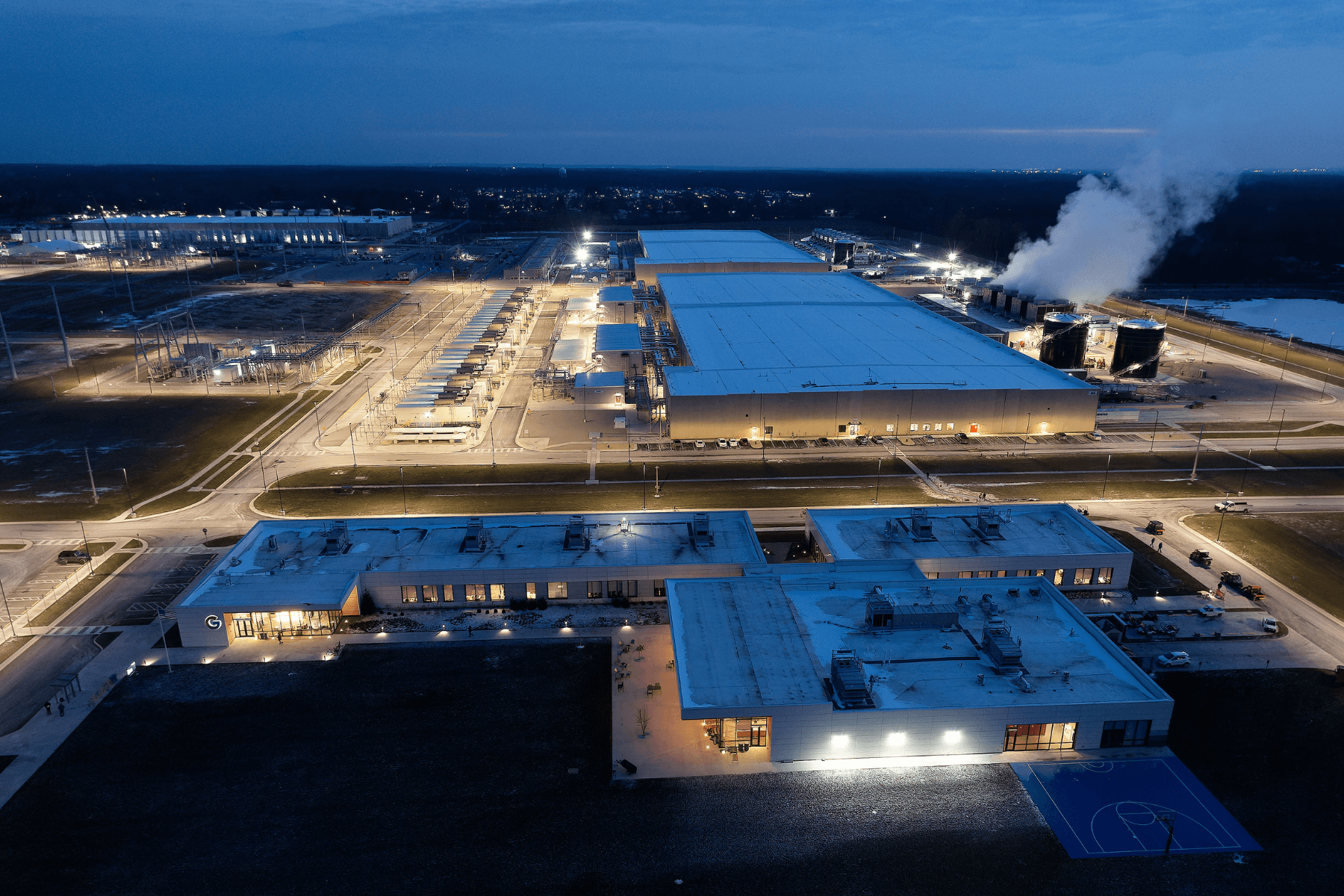
- Tracks heated local debate over a hyperscale data center in Pine Island, a small town 70 miles south of Minneapolis
- Introduces the players in the conflict and details their positions
- Discusses consumer concerns over potential rate hikes due to data center energy consumption
- Gives space to the project’s defenders
Aubree Derksen is both hopeful and exhausted.
The Pine Island resident has been at the forefront of citizen action protesting the development of a hyperscale data center not far from her house. In May, a Goodhue County judge issued a temporary injunction blocking the project pending a lawsuit challenging the environmental review process. Derksen said it was a significant win, but because Minnesota has a decentralized permitting process, and because different parts of the data center are listed under different shell companies and project names, the injunction hasn’t stopped some aspects of the project from moving forward. As a result, Derksen said she and other concerned citizens are left to do all the legwork, informing different agencies of the lawsuit.
“Because there’s no central permitting that kicks in between the regulatory bodies to say, ‘Hey, all of these pieces are clearly for one project,’” said Derksen.
The developer, Ryan Companies, said that Google has signed a lease agreement for a 250,000-square-foot data center and an accompanying office building. Ryan Companies Senior Vice President Peter Fitzgerald said at a recent public hearing that Ryan is “actively courting” Google and other businesses to lease an additional three data centers on the 482-acre site.
Derksen and many of her neighbors are worried about the environmental impacts of a hyperscale data center campus just a short distance from their homes. How much power will it consume? How much water will it use? How much noise will it make? She said she’s been overwhelmed trying to make sense of what’s at stake.
“From March to July, we got slammed with seven environmental reviews, all connected in some way, shape, or form to the data center,” said Derksen. “Each of those reviews was hundreds, if not in the thousands, of pages long. All of them requiring public commenting . . . and public comment windows are small. For the wastewater treatment facility, it was 30 days. For the wastewater permit, it was 60 days.”
A survey of residents of Pine Island and nearby townships found that more than 75 percent opposed the construction of a data center. That finding mirrors those reported elsewhere; a recent poll of Minnesotans found 63 percent of respondents were against a data center being built in their community. Nationally, a Gallup survey found seven in 10 Americans oppose constructing data centers for artificial intelligence in their area.
Public sentiment may be predominantly anti-data center development, but that doesn’t ease Derksen’s concerns that developers will make back-room deals with local governments or manage to conceal the real environmental impacts of their massive facilities from both regulatory agencies and the public eye until it’s too late.
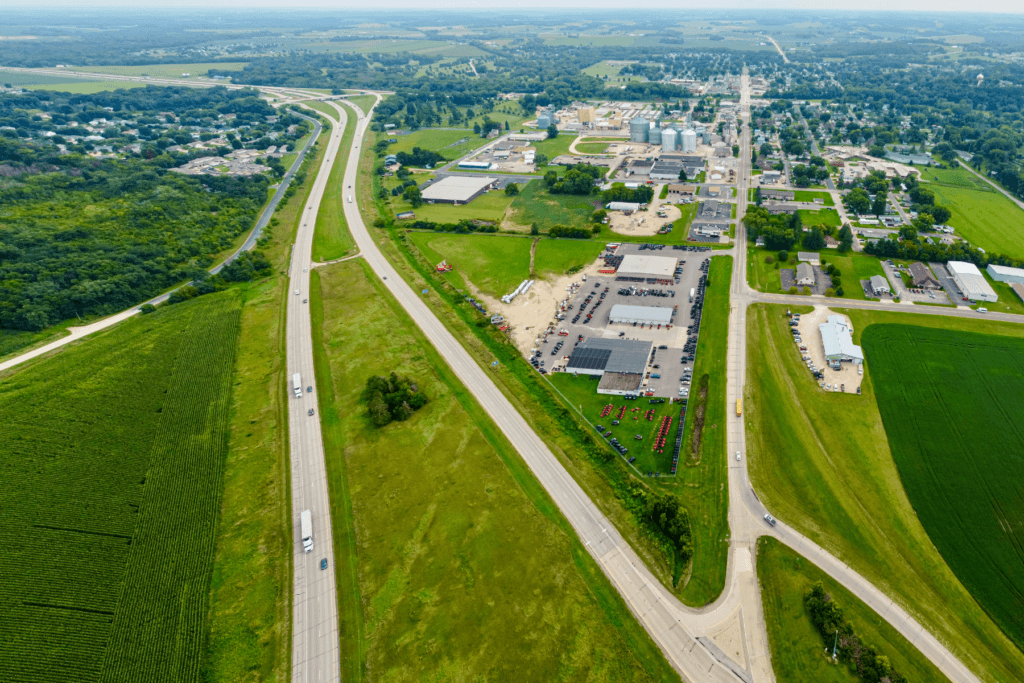
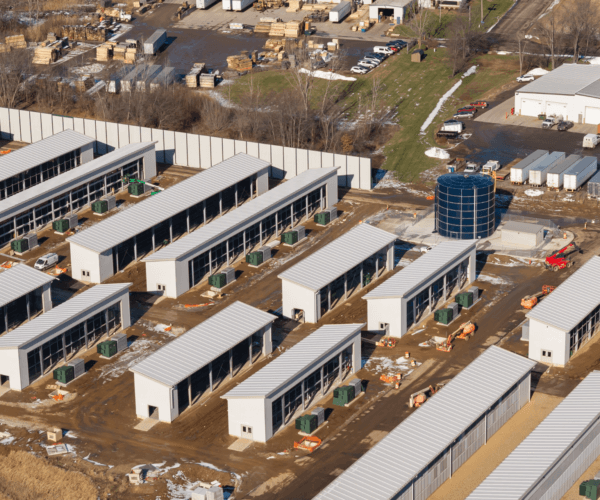
An overhead view of Pine Island, where residents are protesting the development of a hyperscale data center.
In addition to Pine Island, the Minnesota Court of Appeals ruled that the City of Faribault’s environmental review of a proposed hyperscale data center didn’t comply with state law and forced the city to go back and do a more thorough job. But while Minnesota courts have stalled individual data centers from moving forward, broader actions—including a one-year moratorium on all hyperscale data centers as well as bills pushing for mandatory environmental impact statements and a centralized state permitting system—failed to pass this year’s legislative session.
One of the moratorium’s vocal opponents was the Minnesota AFL-CIO. The union’s Secretary Treasurer Bethany Winkels said complaints that data centers only provide “temporary jobs” are dismissive of the construction industry, which represents approximately five percent of all jobs in the state. “Every construction job is a temporary job,” said Winkels.
Rather than refusing to participate, she said it’s best to get involved, get educated, and work to refine the process along the way.
For better or for worse, she said, the nation is in the midst of an AI boom. Rather than refusing to participate, she said it’s best to get involved, get educated, and work to refine the process along the way. To that end, the national AFL-CIO office recently put out a statement on data centers demanding not just good union jobs, but also greater transparency from developers and operators, as well as legislation and regulations that ensure data centers conserve energy and water.
Winkels points to legislation passed in Minnesota in 2025 that offers environmental and taxpayer protections that are far better than in neighboring states. She said a moratorium would simply send developers elsewhere.
“That would mean that the build-out of data centers that is happening right now would shift to places like North Dakota and South Dakota,” said Winkels, “which would mean massive investments in their much dirtier energy grids than what we have here in Minnesota, which could actually exacerbate environmental issues. So we can’t put our heads in the sand; we have to engage and be leaders.”
Caught in the middle of the data center debate are Minnesota utility companies, which are required by law to power all homes and businesses in their service areas. But they also stand to benefit from major infusions of cash. Xcel Energy declined requests for an interview but did offer a statement in which it said it has worked to ensure that data centers do not increase costs for existing customers.
It reads: “Our large-load tariff, approved by the Minnesota Public Utilities Commission, requires data centers to fully fund the infrastructure needed to serve them . . . The tariff also mitigates risks in the event that planned data centers do not materialize through minimum contract terms, credit requirements, early exit fees, and electricity demand forecasts.”
Xcel said that, despite the tariff, it continues to see interest from data center developers and believes the region will remain competitive both because of the climate and the availability of clean and reliable electricity. In regards to the Pine Island data center, Xcel said Google will fund the build-out of 1,900 megawatts of new clean energy resources that include new solar, wind, and battery storage installations, contributing significantly toward a carbon-free grid.
Minnesota Center for Environmental Advocacy Executive Director Kathryn Hoffman doesn’t think Xcel’s large-load tariff goes far enough to protect customers from potential future rate hikes. She said the promise of major investments is creating pressure on everyone to move quickly, at the risk of the state and communities’ ability to discern and manage potential environmental and financial risks.
“We need to give the time and space for jurisdictions to come up with some guardrails around transparency and environmental impacts. And if that’s at odds with what a company wants, then that’s the cost of investing in Minnesota.”
“We use this term ‘moratorium’; I prefer ‘pause’ because I think ‘moratorium’ makes people nervous,” said Hoffman. “We need to give the time and space for jurisdictions to come up with some guardrails around transparency and environmental impacts. And if that’s at odds with what a company wants, then that’s the cost of investing in Minnesota.”
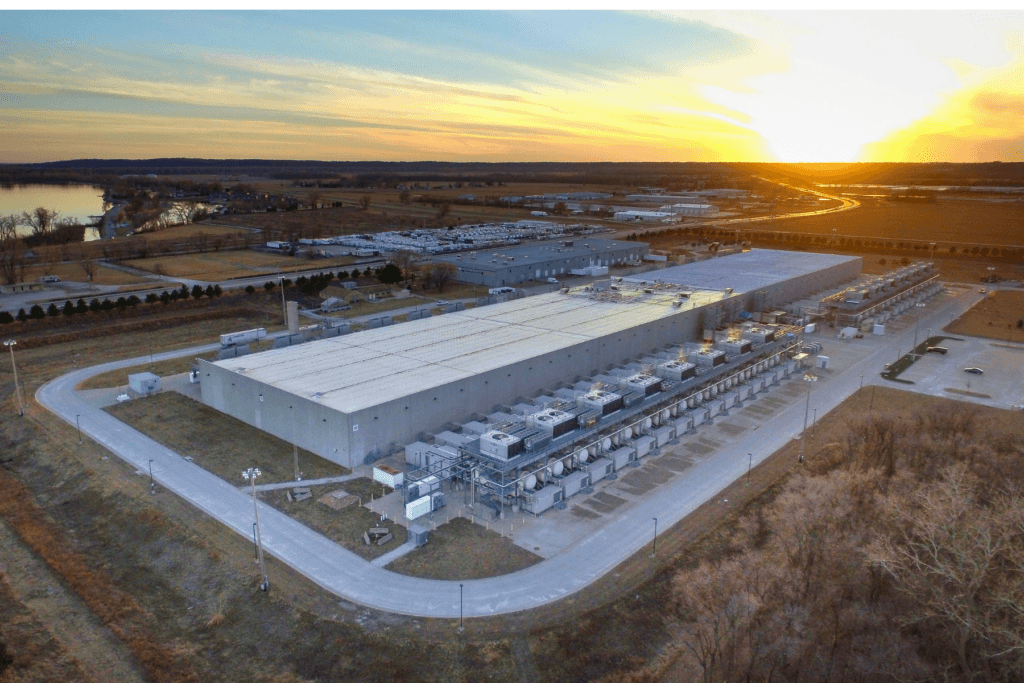
Google’s data center in Council Bluffs, Iowa. Photo by Chad Davis
Hoffman is optimistic the bills pushing for a data center moratorium and a centralized state permitting process will fare better in next year’s legislative session; she blames their failure on a particularly divisive legislature. While midterm elections could change things dramatically, Hoffman said, either way, data centers have become a bipartisan issue.
In the meantime, people in the data-center industry are doing their best to build support at the ground level. Tiffany Kovaleski is the president of the Minnesota chapter of AFCOM, a data center-focused professional association that describes itself as a neutral educational resource. Kovaleski said a large part of her work is helping people to understand just how integral data centers are to our daily lives.
“We are using hyperscale data centers for our emails and our communications—they just aren’t located in Minnesota,” said Kovaleski. “So we are consumers of them already, but we may not understand the magnitude if they’re not in our backyard.”
Kovaleski is currently recruiting residents, community leaders, and industry partners to help develop educational one-pagers on data centers and their potential impacts on the state, to be made available to the public later this year used as an educational tool at the next state legislative session.
From logging on to their child’s school portal to live-streaming their pet at doggy daycare, Kovaleski said Americans are increasingly consuming data. And she said data centers are “mission critical”—they power essential operations and are key to maintaining national security.
On top of that, the AI boom has generated a huge increase in needed capacity for what Kovaleski calls the “big girls”: Meta, Google and other major players in AI development. Welcoming their hyperscale data centers to Minnesota with appropriate regulations in place, she said, could provide economic growth and stability for years to come. And, Kovaleski said, it could be just what’s needed to help Minnesota update its power grid and make significant advances in clean energy, whether it’s wind, solar, or even nuclear powered.
“We have to become energy efficient for our future and for our future generations,” she said, “and in order to do that, we need major capital to invest in that. I believe that the ‘big girls’ are the ones that are going to bring that to the state of Minnesota and to the U.S.”
Hoffman is more circumspect about seeing big tech as allies in clean energy, especially given that the U.S. Environmental Protection Agency is repealing the Biden administration’s carbon emission limits on coal- and gas-fired power plants. While some tech companies have made promises to invest in clean energy, it’s still unclear as to whether it will be enough to meet their own facilities’ power use. According to Hoffman, the only way to ensure hyperscale data centers actually advance Minnesota’s climate goals is to require they are powered with 100 percent Minnesota-sourced clean energy.
Perhaps most importantly, she said, there needs to be greater transparency at all stages of development. She rebukes arguments suggesting that too much transparency can kill a project.
“What you’re actually saying is that if we told people what we’re building, they wouldn’t like it.”
“What you’re actually saying is that if we told people what we’re building, they wouldn’t like it,” said Hoffman. “But that is the price of democracy, and so if we’re not willing to pay that, then we can’t call it a democratic process anymore, and we might as well say we’re just disempowering local governments completely from the process.”
A ruling on the Pine Island data center’s environmental review process is expected by the end of the year. But Aubree Derksen worries developers will figure out a workaround to get shovels in the ground. “We need clearer answers first, and stronger promises . . . until then, the goal is delay. Let’s cause as [many] headaches and delays as we possibly can,” she said.
- With activists opposing the center
- Read the AFL-CIO’s statement on jobs, data centers, AI, affordable energy, and proposed guardrails
- Visit the Minnesota chapter of AFCOM, “the premier professional association dedicated exclusively to data center and IT infrastructure management”
Help us sustain independent journalism...
Our team is working hard every day to bring you compelling, carefully-crafted pieces that shed light on the pressing issues of our time. We rely on caring supporters like you to help us sustain our mission. Your support ensures that we can continue to provide deeply-reported, independent, ad-free journalism without fear, favor or pandering. Support us today and make a lasting investment in the future.

RELATED STORIES

Award Winning




Today’s environmental and social justice challenges are unprecedented, and require an unprecedented collective effort.


Stay updated on our latest features, events and more. Subscribe to our Note From the Nest newsletter!
