
Wendell Berry and the Agrarian Ethic
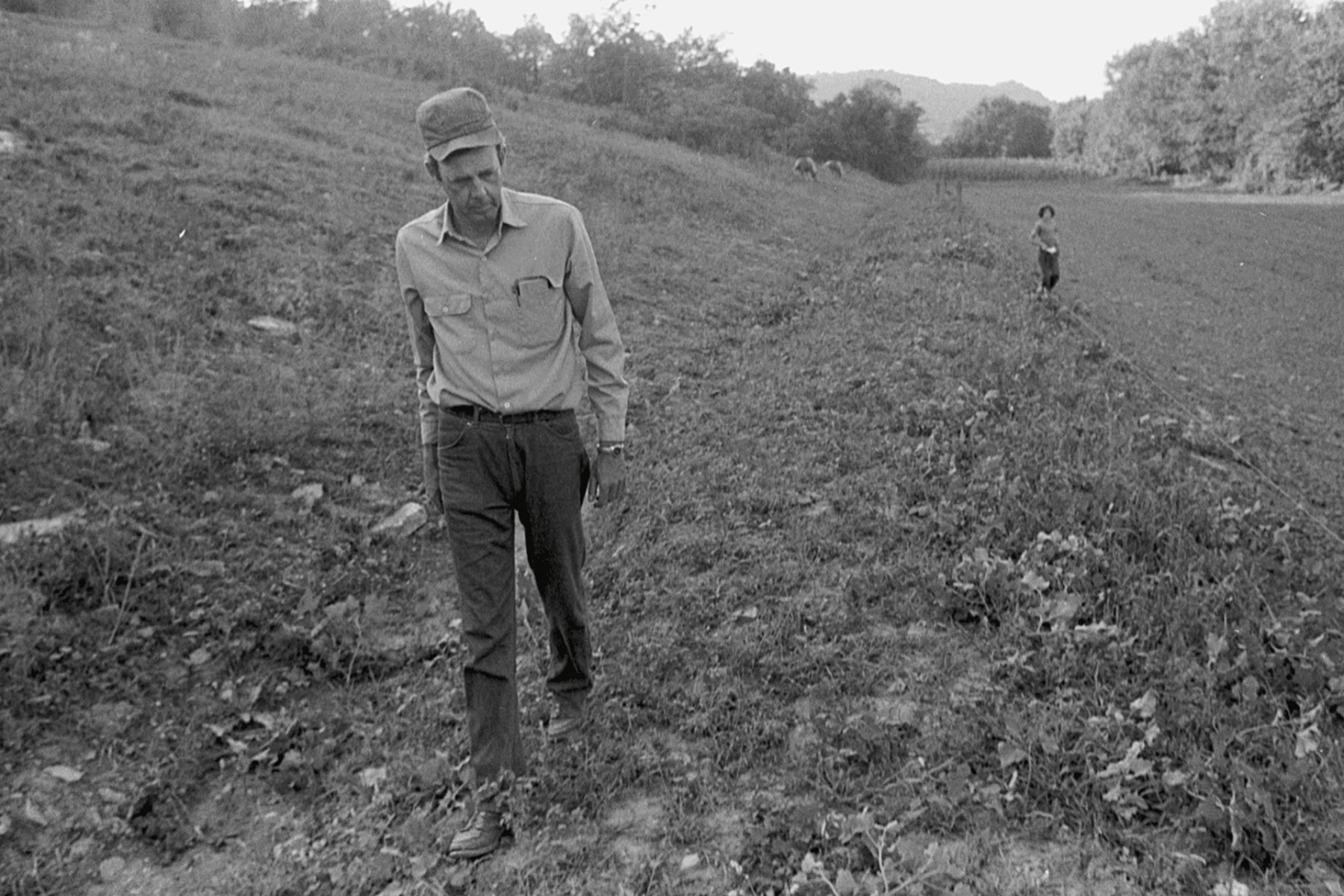
In the fall of 2013, I visited the poet and agrarian advocate Wendell Berry on his farm in Henry County, Kentucky. I was researching a memoir about my family, The Deer Camp, and we had traded letters about how caring for a place — in my case, laboriously restoring wildlife habitat — changes how we see the world. He invited me to his place so he could show me the effects in person.
There had been a cold rain the night before (“a Thomas Hardy night,” we agreed), and the wet breeze was thick with tobacco curing in old wooden barns up and down the Kentucky River. We spent a day together tending to his donkey, Dorothy, who had a bad leg, and talking in his pickup truck as he pointed out how plowing up grass pastures to plant corn and soybeans, the loss of crop diversity, depopulation and poor care for the soil has eroded rural America. That visit is instructive to me now, as the erosion in rural America that Berry lamented has, as he predicted, led to the whole country sliding into the river.
Just the year prior to my visit, Berry published “It All Turns On Affection,” an essay about this slow ruin that also speaks to our current moment. In it, he argues that our strongest economy, and the true expression of our character, would be driven by the exact opposite of the adolescent rage that apparently drives us now: it would be motivated by affection.
“Yes, affection,” Berry acknowledged in his gentle drawl as we drove, saying the word with a certain ferocity, gesturing at the farms around us. “Fascination. Just an irresistible attraction.”
An affection for what? An ideology? A charismatic leader? Some nostalgic idea of nationhood or greatness? No, he was talking about an affection for the very flesh and blood that defines us as a nation: for the land, the actual soil that is the heart of every American place and the community of beings that work and live on the land, including us, its working people.
Understanding that an economy could be driven by affection involves a searing critique of the one we have now. It has nothing to do with the last election, Left or Right, liberals or conservatives (at least, not in the weird contemporary usage of ‘conservative’), “homegrown” or immigrant. Rather, it has to do with place and the value we put on the quality of life in a place. We don’t think of an emotion like affection when we think of the word “economy,” but Berry explains that that’s because we’ve been purposely pulled away from this truth, and as a result, also distanced from our fellow Americans, for over 100 years now.
It’s worth looking at how this rupture is affecting us and how it might be mended.
Berry and I drove up to the fence of a farm he called “the home place,” that Berry’s grandfather had owned in the early 20th Century, and then (if I have the succession correct) Berry’s father, and then Wendell’s brother John. The farm was being worked at that time by Wendell’s son, Den. He pointed out a sloping spot in the field that his grandfather once plowed in desperation to plant corn and lost all his topsoil to erosion, and then spent years returning the soil to grass and to health.
“Why do they do it?” He leaned into me across the bench seat of the pickup. “Well, there’s one answer: love. And you see, you put it in that context [motions to the farm], it starts to have some force.”
His grandfather’s story illustrates how affection shapes an economy. He grew tobacco — a specialty crop requiring hand labor that was shared by all the neighbors — and did it well. They would work together during harvest time every year, moving from farm to farm and sharing meals, hardships and laughs. That shared work built the local community and its churches, stores, schools, dances — its social life. Sustaining his family was difficult, however, because of James B. Duke, head of the American Tobacco Co. (and founder of Duke University). Duke had gained a monopoly on tobacco, meaning he was the only buyer and his prices were below break-even. Subsequently, Berry’s grandfather worked for decades under crushing debt. If you took Duke’s price, you lost money. But your other choices were either not to grow tobacco and step away from that community, or to sell out to someone bigger who might use increasingly more efficient technology to grow corn or some other commodity crop.
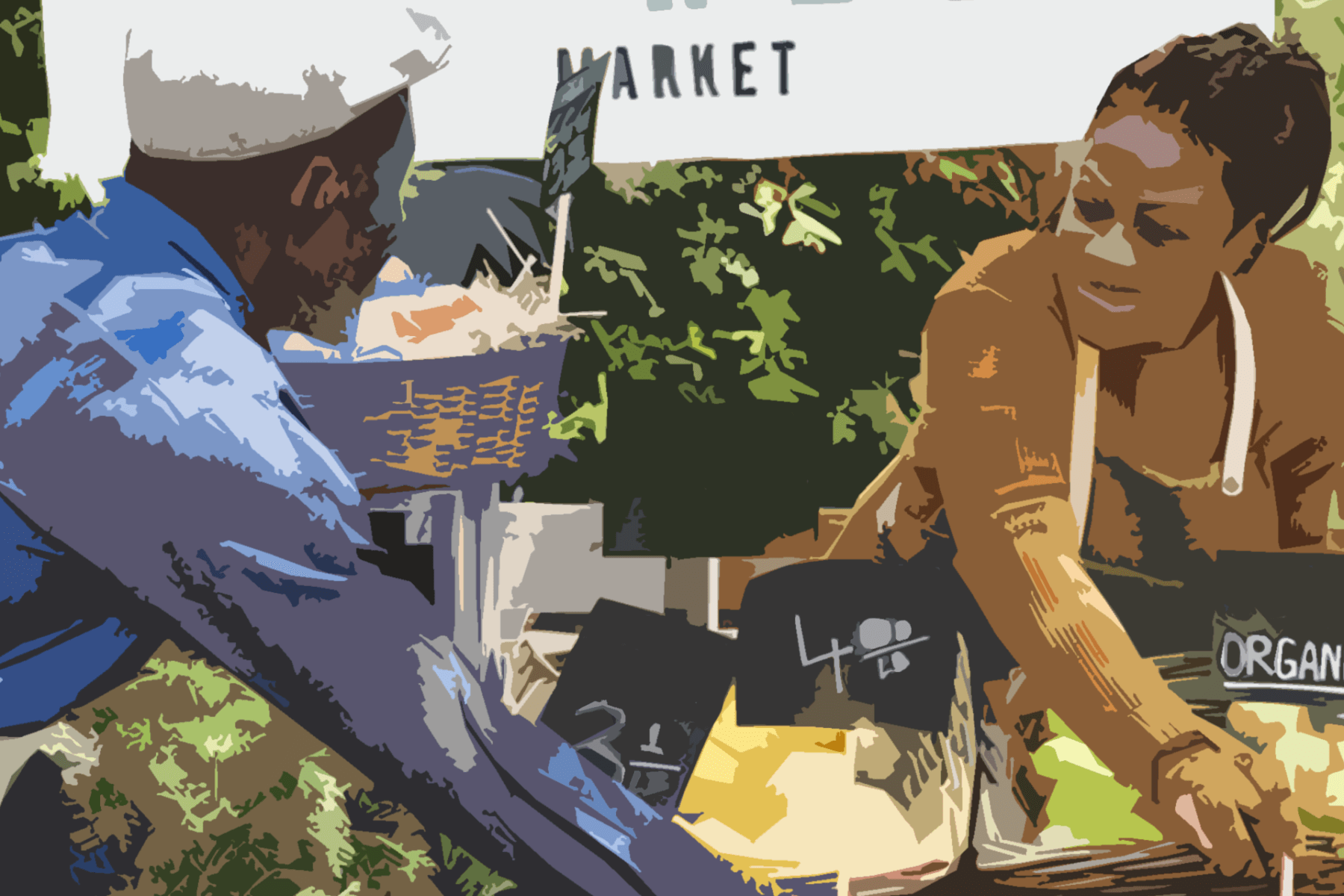
Illustration by Tori O’Campo
Wendell saw these two men as opposing elements in the American character. One knows their neighborhood and neighbors, and cares what happens to them. And the care itself shapes their work products. The other knows only exploitation, consolidating cheap inputs into expensive outputs and making bigger and bigger profits. Exploitative operations are mobile and belong to no place; they can be moved offshore.
Duke is an example of a statistical mindset, interested only in big numerical flows, and his American Tobacco Co. was about numbers. So are Facebook, Amazon, Starlink, most current applications of AI, and, in its own special category of numerical irrelevance, cryptocurrency. In all these cases, the cheap input is us and our attention.
“In the minds of the ‘captains of industry,’ then and now, the people of the land economies have been reduced to statistical numerals,” Berry wrote in his essay. “Power deals ‘efficiently’ with quantities that affection cannot recognize.”
Note that both are users of the land. We’re not talking about the maintenance of pristine wilderness. The difference, though, is that one practices what Berry called a “kindly use,” and the other a remote and therefore careless use, which is abuse.
The statistical mindset feels a constant lack. Whatever is already in hand is nothing compared to what’s still out there waiting to be grabbed.
Berry presents the gap between these two mindsets in the context of farming, and on our tour of Henry County, we were looking at how poor farming ruined topsoil, how inappropriate technology depopulated farm country, and how unsuitable crops dulled the agricultural act of eating. And, how good farming did the opposite. The gap that opened back in his grandfather’s day with the dawn of mechanized and chemical-based farming in the early 20th Century, has only widened with every passing year, and with every so-called innovation in technology, to gobble up vocations across all aspects of our national household — manufacturing, retail, communications and services. Berry writes that the separation of these two mindsets is our undoing: “between these two kinds there was a failure of imagination that was ruinous, that belongs indelibly to our history, and that has continued, growing worse, into our own time.”
Duke’s failure was a failure of imagination. He was indifferent to the farmers, “the indifference of a grinder to what it grinds.” It wasn’t because he was evil or intended to hurt them. His statistical mindset simply could not, or would not, imagine them or their lives or their home places.
Instead, in these numerical flows, the statistical mindset feels a constant lack. Whatever is already in hand is nothing compared to what’s still out there waiting to be grabbed. Having something will never be as good as the infinite everything. The goal is limitless growth, unfettered mobility and total aggregation. The imagination, then, senses a giant hole that cannot be filled.
To live in a place and be responsible to it, however, we must imagine what actually exists and why it’s important. “By imagination we see it illuminated by its own unique character and by our love for it,” Berry writes. “By imagination, we recognize with sympathy the fellow members, human and nonhuman, with whom we share our place. By that local experience, we see the need to grant a sort of preemptive sympathy to all the fellow members, the neighbors, with whom we share the world.”
***
We see this failure of imagination all too clearly now in our current government. The new administration insults us with it all day long. Even if we charitably assume that the current stewards of our economy are capable of imagining the real homes of the career civil servants they are firing, the people they deport without due process, the farmers broken by the stroke of a pen or the giddy heaping-up of tariffs, the scientific and medical expertise lost, the young patriots fired from national service organizations (such as Americorps), the landscapes targeted for extraction industries, or the climate left hotter and drier, they make a show of ignoring them. They are absolutely desperate to invalidate any motivation other than naked exploitation, and to convince one another of the rightness of this action.
What matters is big numbers! “Mass” deportations. Unlimited Tariffs. Budget cuts “like we’ve never seen before.”
Love, care, equity, community, even faith or tradition, and not to mention affection — those are out. Any administrator or staffer who knows even a vestige of feeling for the land community must pretend to hate it, because the new techno-tyrants consider indifference (at best) and abuse to be the “tough” or realist position.
The bizarre intrusion of the world’s richest man into government operations, deploying the adolescent tech minions of DOGE, perfectly illustrates how we have empowered the statistical mindset: problems don’t require innovative solutions or deep analysis or science or hard work to fix – they are just numbers to be chainsawed off and disappeared.
The embarrassing spectacle of the last three months, rank with desperation, is designed to sell you the idea that caring is for suckers, and working hard as the result of love is even worse. That the small farmer or independent shop that won’t sell out is obstructionist and a troublemaker. That if we don’t get those numbers up, by turning it all over to the Walmarts and McDonald’s, relegating everyone’s work to a means of input for an exportable brand, other countries are just going to go on taking advantage of us.
Problems don’t require innovative solutions or deep analysis or science or hard work to fix – they are just numbers to be chainsawed off and disappeared.
And if that’s all starting to make you feel sick, then your heart’s in the right place. Because, of course, most of us imagine giving our faith and sweat to something that is true. That sick feeling tells you that the pursuit of limitless numbers is not evidence of greatness. As Berry writes, “A principled dissatisfaction with whatever one has promises nothing or worse.”
Nothing or worse. Right now, that’s what we’re getting from our government and our economy, and it’s principled dissatisfaction. There will never be greatness in it.
But affection can put us back on the right path — for the kindly use of the land and the preservation of the rest; for the protection of biodiversity as a land community; for the pursuit of meaningful, innovative and hard work; for local cultures based on unique geographies and flavors and histories and languages and businesses; for love worth fighting for.
“We cannot know the whole truth, which belongs to God alone, but our task nevertheless is to seek to know what is true,” Berry writes. “And if we offend gravely enough against what we know to be true, as by failing badly enough to deal affectionately and responsibly with our land and our neighbors, truth will retaliate with ugliness, poverty and disease. The crisis of this line of thought is the realization that we are at once limited and unendingly responsible for what we know and do.”
Do we have to go over all the ways that truth will retaliate? We’ve seen enough of climate-fueled disasters, loneliness and pandemic to know by now. We’ve seen all we need of hell.
“If we offend gravely enough against what we know to be true, as by failing badly enough to deal affectionately and responsibly with our land and our neighbors, truth will retaliate with ugliness, poverty and disease.”
And just like that hell punishes urban and rural people alike, so this affection must be championed by all users of the land. More: The push to deal affectionately with land and neighbors must also be driven by urban people. It is we urbanites who demand big numbers — unlimited food, clothing and building materials, unlimited fuel, unlimited electricity and water, endlessly growing investments, ever-more-spectacular entertainments and diversions and a torrent of technologies and remedies from face cream to geo-engineering that will fix us when the limits start to show. We treat this flow of material as if it were disconnected from any source; it just arrives in trucks and trains to your suburban shopping center or doorstep. But it came from somewhere.
Over the years, Berry has pressed me on this. When we talked on the phone at the beginning of the COVID-19 pandemic about the breakdown of supply chains, for instance, he urged me to write about this disconnect, saying, “You’re an urban writer, and they might listen to you.” The implication being that we haven’t listened to him or other rural voices.
***
So, fellow urbanite, how can your affection restore us all to the truth? Start acknowledging the sources of all you use. Know a farmer; buy from them directly at a farmers’ market if you can and talk to them about what they grow and how to eat it. Grow food in your own yard if you can. It doesn’t take much room to grow more than you’d think. Cook at home. Support local chefs. Seek out local artisans for bread and beer, for artwork and clothes, and surfboards and buildings. Support the local mom-and-pop stores and encourage them to stock responsible stuff, from hardware to fabrics to groceries. Read books and a local newspaper. See live music, theater and movies, especially in small venues. Support local schools, from preschools to graduate programs, and their concerts and teams, from kickball to quiz bowl.
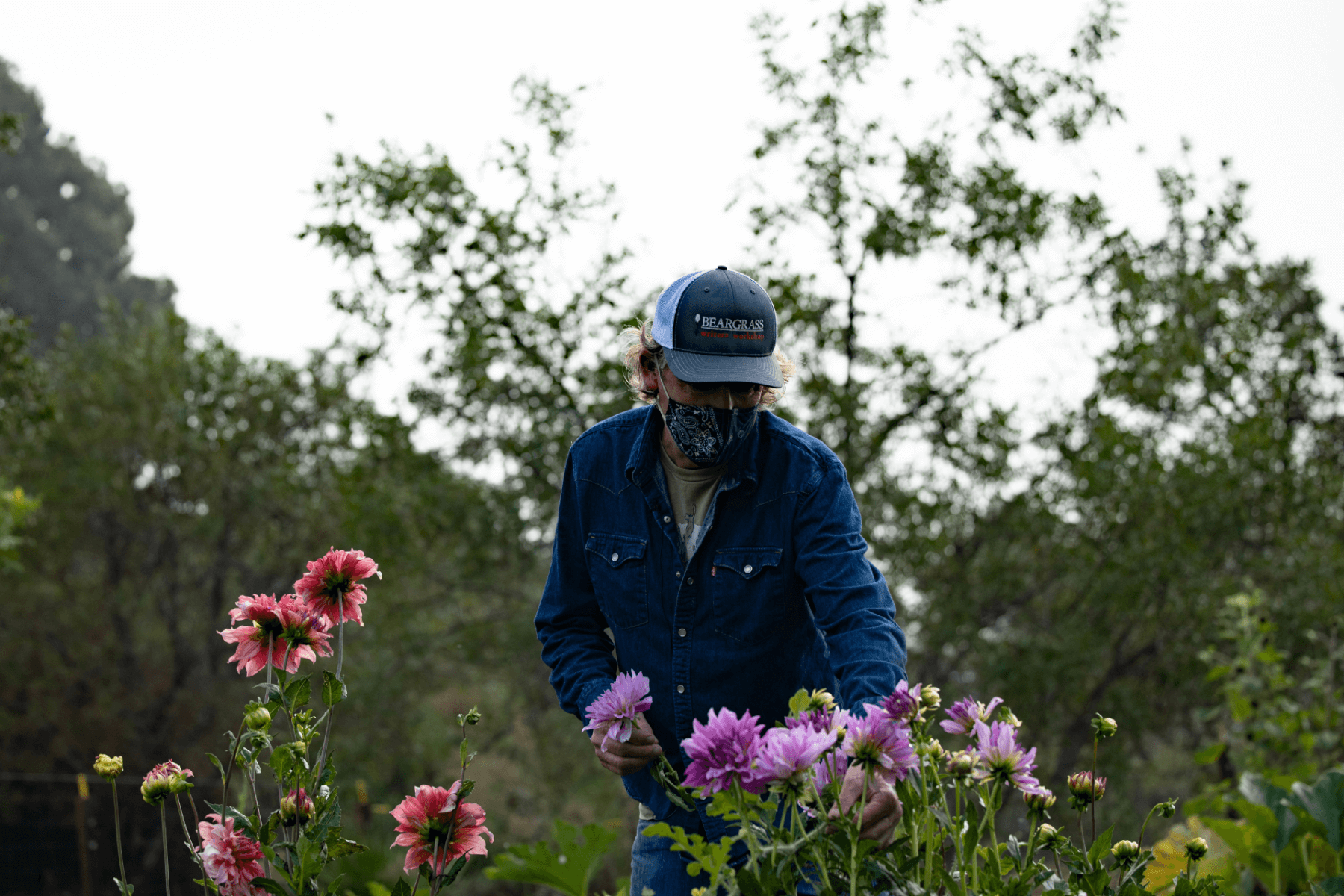
Dean working on the urban farm he shares with his wife in Los Angeles. Photo by Sam Slovick
You don’t have to live in the country to follow the agrarian model Berry promotes. My wife Lauri and I are fortunate to run a small grocery store in Los Angeles, buying directly from farmers and local makers, and to be involved in urban farming and gardening projects. Our loving customers have taught us so much.
For instance, after wildfires destroyed much of Altadena, where many of our customers live, we announced we would give free boxes of produce to those who needed them. On the first morning, the first customer through the door had lost her home and needed that food. The second customer in line behind her donated $100. Farmers surprised us with huge stacks of free produce and bags of rice. Chefs turned up with prepared foods, baked goods, and whole pre-made dinners. Others turned up with hand-made soaps and other necessities.
It went this way for months; this is affection for people they might never meet. Some of the recipients broke down and needed to be held. Some of them might be undocumented. Some of them probably disagree politically. But they belong to a place, and the place tells us what things are worth in the local economy.
A local store matters. A delivery app, as convenient as it may be, doesn’t hug you. Why would you separate yourself from the material world — from other minds, or from a friend or supporter or lover you haven’t met yet? They’re probably standing in our store right now.
All over your neighborhood, you can find this same dynamic. Real physical places, people, and things are begging for your attention. Give it to things that are true. Like the actual source of your drinking water — have you ever been there? Or a tree or a raven in your local park. Get to know them. Extend that protective affection to the guy washing dishes in the local restaurant, or your ornery neighbor, or the person living on the street who just needs a blanket.
Once you truly see that blanket and its value, you see the real economy.
On our pickup-truck tour, Berry lamented how the Kentucky River was empty of children who used to play in it — not only was it too poisoned and silted, but there just weren’t that many children around. “Kids used to have this river churned to a froth down here in the summertime,” he said. “You never see a kid down here swimming in it anymore.”
Finally, he stopped in front of a sloping pasture of gorgeous, thick blue-green grass. The grass had been restored so the place wouldn’t be lost to erosion.
“This shows you what pride can do,” he said, drawing himself up a little on the seat. “That’s thoroughly cared-for. And it’s very marginal land. But just a self-respecting person of great dignity, great ability, great intelligence, and it’s invested right there. And if you don’t have that invested right there, you don’t have anything.”
Imagine now the riches you have to invest: your attention, your dignity, your ability, your intelligence. Your affection.
Berry Curious? Try World-Ending Fire by Wendell Berry.
Help us sustain independent journalism...
Our team is working hard every day to bring you compelling, carefully-crafted pieces that shed light on the pressing issues of our time. We rely on caring supporters like you to help us sustain our mission. Your support ensures that we can continue to provide deeply-reported, independent, ad-free journalism without fear, favor or pandering. Support us today and make a lasting investment in the future.

RELATED STORIES
Award Winning



Today’s environmental and social justice challenges are unprecedented, and require an unprecedented collective effort.


Stay updated on our latest features, events and more. Subscribe to our Note From the Nest newsletter!

Does rural romanticism lead to a fear of the foreign cosmopolitan dark urban outsider ?