
The Trees Have It
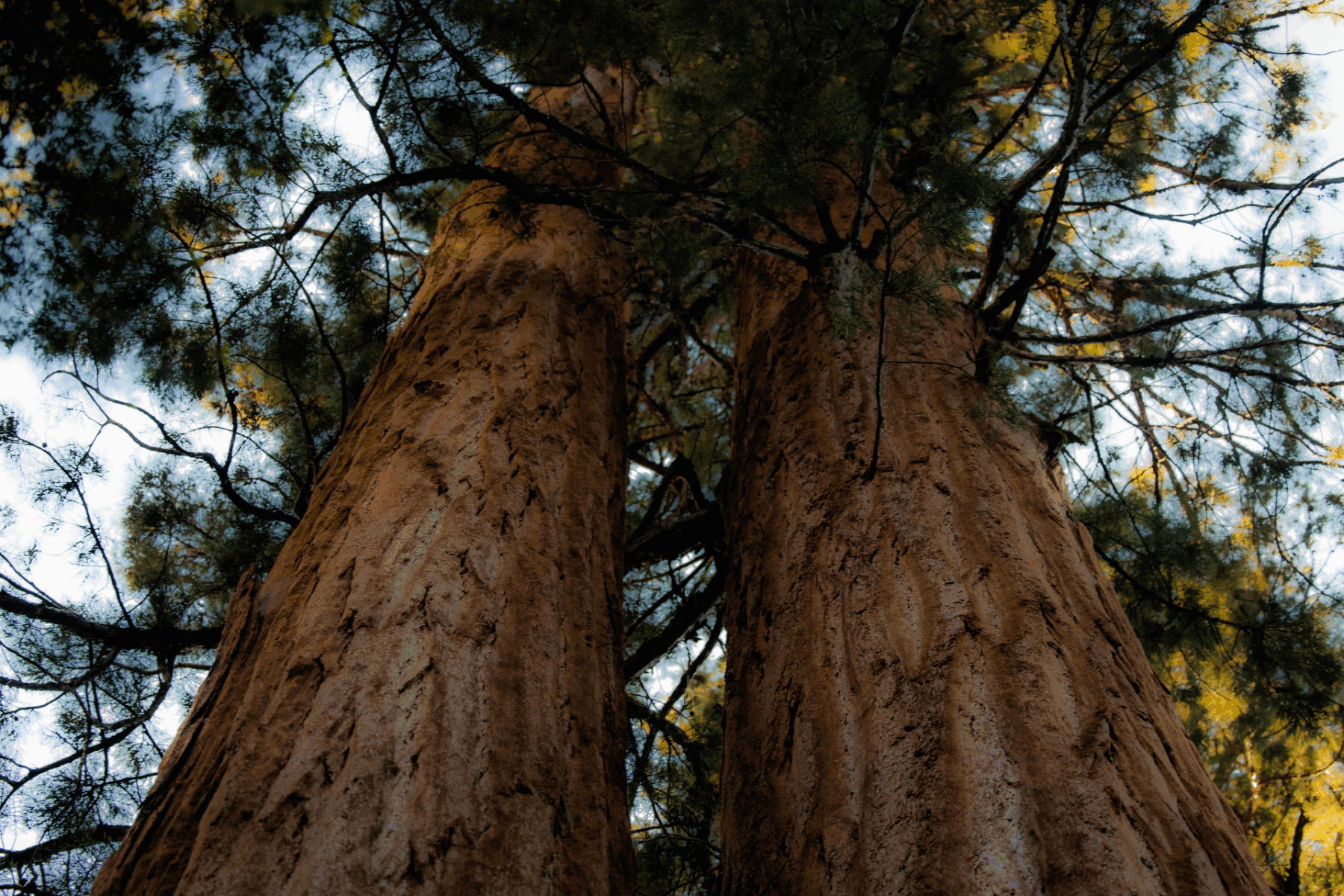
Arbor Day is one of those rare holidays, like Kwanzaa, or Mother’s Day, conceived by a single person — in this case, a fellow with the wonderfully 19th-century name of J. Sterling Morton, who in 1872 proposed dedicating one day a year to the planting of trees.
Born in upstate New York, Morton lived most of his life in Nebraska and knew just how valuable trees were in that landscape: keeping the rich soil in place; supplying reliable fuel, fruit, and building materials; providing shade during Great Plains summers and windbreaks in the remorseless winters. And so it came to pass that on April 10, 1872, on the first ever Arbor Day, Nebraskans planted thousands of trees across what was then a largely tree-starved state.
Today, Arbor Day is recognized nationally on the last Friday in April — and in other months in countries around the globe — when we “celebrate the role of trees in our lives” and “promote tree planting and care.” That’s it. Nothing about war, dead presidents, holy days or specific cultures or creeds. Just trees.
Unencumbered by politics, controversy or consumerist arm-twisting, Arbor Day is the best of all holidays because it celebrates strong, quiet, companionable beings many of us, rationally or not, consider our friends. In honor of a day that asks only that we get our hands dirty and help make the world a more beautiful and sustainable place, here are some books where pine, redwood, beech, oak, chestnut, ash — and so many others — play key roles.
Happy Arbor Day. Here’s to speaking for the trees.
***
Damnation Spring (2021) by Ash Davidson
Damnation Spring is a damn fine novel, with enough drama and tension to satisfy thriller fans and readers of “literary fiction” alike. Set in the late 1970s — in the same decade as the first Earth Day but just before the creation of probably the best-known of the monkey-wrenching environmental groups, Earth First! (“No compromise in defense of Mother Earth!”) — the book portrays a world of eco-warriors, timber companies, independent loggers and researchers, all inextricably connected by their love for, defense of or self-declared dominion over Northern California’s redwoods.
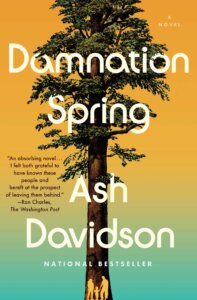
This is a “political” novel in the same sense that, say, Sometimes a Great Notion, White Noise or Middlemarch is political, i.e., the events of the era inform the family dynamics at the heart of the tale, but they don’t drive the narrative. Instead, the concerns of the wider world are like echoes of echoes of cannon fire, somewhere far over the horizon; discernible, even palpable, but hardly as intense or concerning as what’s happening down the road, or in the next room.
Davidson’s characters, meanwhile, are more than just mouthpieces for aspects of the redwood-adjacent culture they clearly represent. There’s Rich, a fourth-generation logger desperate to work a small piece of forest he’s purchased, and his wife and son, Colleen and Graham. There’s Colleen’s sister, Enid, and her tree-poaching husband. There’s Colleen’s ex-boyfriend, Daniel, whose research suggests that chemicals sprayed by timber companies might be responsible for the alarmingly high incidence of stillbirths in redwood country. The contradictory and frequently adversarial wants and needs of these and other characters provide Davidson with a canvas that feels at once vast and intimate.
That the book also deftly illustrates the terrifying reality of working with powerful tools, on steep slopes, with the intention of bringing down living things that can weigh up to a million and a half pounds, only adds to what is, in the end, a riveting family saga in the guise of an adventure novel. Or vice versa.
***
The Wood: The Life and Times of Cockshutt Wood (2018) by John Lewis-Stempel
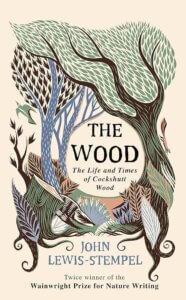
Earlier this century, British farmer and award-winning writer John Lewis-Stempel spent four years managing a small (3.5-acre) deciduous and coniferous woodland, Cockshutt Wood, in southwest England. The Wood is his journal of his final year there, and one gets the sense it’s the sort of book Christopher Robin might write if he returned to the Hundred Acre Wood as a grown man, with the soul of a poet, the tenacity of a homesteader and the eye of a naturalist.
With chapters arranged in order of the months of the year, from December through the following November, and featuring recipes as well as excerpts from poems by the likes of Robert Frost, Robert Herrick, and the beloved English writer Edward Thomas — who started writing poetry in 1914, at the age of 36, and died on the battlefield at Arras in 1917, at just 39 — The Wood does not offer a fairy tale view of nature. Instead, Lewis-Stempel takes pains to show us that, while small islands of forestland like Cockshutt Wood might seem like pristine oases that would be better left alone, the responsible management and working of the land by people who care for the land offers the best hope for keeping such places free from blight and exploitation.
Woods large and small (perhaps especially small) are “fortresses of nature against the tide of people and agribusiness,” he writes, and by the end of the book, one feels ready to defend those fortresses by any means necessary.
***
The Wild Trees: A Story of Passion and Daring (2007) by Richard Preston
Best known for his nonfiction bio-thrillers like The Hot Zone and The Demon in the Freezer, Richard Preston’s strong suit is chronicling extremes: extreme diseases, extreme places, extreme people.
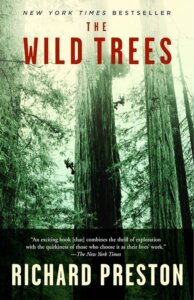
In The Wild Trees, he’s found subject matter tailor-made for his métier: California’s coastal redwoods and the fearless, driven men and women who climb them. Preston writes with clarity and a welcome lack of jargon about the technical aspects — and the dangers — of making it into the canopies of trees 300-plus feet tall, when the lowest branches can be five or six stories off the ground. How do they do it? By shooting an arrow, with fishing line attached, over a stout lower branch. They then tie a nylon rope to the fishing line and pull it until the rope is over the branch. Finally, with the rope tied off to another tree, they ratchet upward, using the sort of mechanical ascenders common with mountaineers. Easy.
He’s also respectful of the skill and dedication of the climbers, even as he shares with the reader just how nerdy and downright odd these folks are. One gets the sense that, if they could make their living up there, they’d never come down from those trees. Ever.
But what most readers will remember of the book, among its many striking scenes, is the wholly unexpected world the climbers encounter in the tree tops. There, hundreds of feet above the ground, a unique ecosystem thrives amid the redwoods’ latticework of enormous branches, where huckleberry bushes, mosses and critters like voles and salamanders live out their lives. Preston likens moving amid the tree’s branches to scuba diving into a coral reef, except that you’re moving upward, rather than downward. And like a scuba diver, the reader emerges from The Wild Trees with an uncanny desire to dive right back in. It’s a marvelous book.
***
The Hobbit (1937) and The Lord of the Rings (1954-1955) by J.R.R. Tolkien
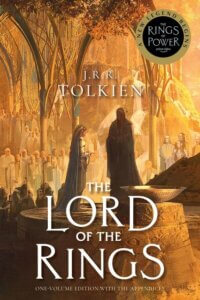
To write about books in which trees are central to the action and not mention Tolkien is like writing about debauchery and not mentioning Bukowski, or listing books about LA in the late ’60s and not mentioning Didion. Tolkien’s lifelong love of trees, along with his hatred of blind, greed-fueled industrialization, do more than inform his conception of Middle-earth. In a real sense, trees are pivotal figures in The Hobbit and in all three LOTR novels, whether they’re symbols, like Hobbiton’s welcoming Party Tree, or moving, speaking, multidimensional characters in their own right, like Treebeard and his fellow Ents (“shepherds of the forest”).
Tolkien’s genius was capacious enough that his trees encompass every sensibility seen in the book’s human, hobbit, elf and orc characters. Trees in Tolkien can be malevolent or generous, heroic or craven. They comfort, and they do battle. They suffer (as when Saruman unwisely orders the destruction of Fangorn Forest) and they offer hope (as when the White Tree of Gondor blooms). Tolkien’s trees are so critical to the reader’s appreciation of the complex, dangerous, beautiful, believable world he creates that it’s no exaggeration to say that Middle-earth would not exist without its trees.
Granted, fantasy is not everyone’s cup of tea. But if there is a series of books more revered, more closely and lingeringly examined, more influential, and more often re-read than The Hobbit and the Lord of the Rings novels, we’ve never heard of them — and like it or not, none of those books would be the books they are without their many trees.
Help us sustain independent journalism...
Our team is working hard every day to bring you compelling, carefully-crafted pieces that shed light on the pressing issues of our time. We rely on caring supporters like you to help us sustain our mission. Your support ensures that we can continue to provide deeply-reported, independent, ad-free journalism without fear, favor or pandering. Support us today and make a lasting investment in the future.

RELATED STORIES
Award Winning



Today’s environmental and social justice challenges are unprecedented, and require an unprecedented collective effort.


Stay updated on our latest features, events and more. Subscribe to our Note From the Nest newsletter!
