Are You Not Enviro-Entertained?

Here it is. Red Canary’s inaugural, far-from-exhaustive list of environmentally themed books, films and podcasts. Some are old. Some are new. All are highly recommended. In terms of the selection process, rest assured that, while rigorously unscientific, it was based on three solid criteria. Namely, each selection had to offer a unique view of humanity’s relationship to the environment; each had to feel, to one degree or another, relevant to our own time; each had to both entertain and engage, i.e., stir the imagination and provide food for thought.
Again, there are hundreds of options we might have featured. In light of that, consider this a conversation starter, and feel free to weigh in with your own favorites below – and reasons why you agree, or disagree, with our choices.
***
WATCH
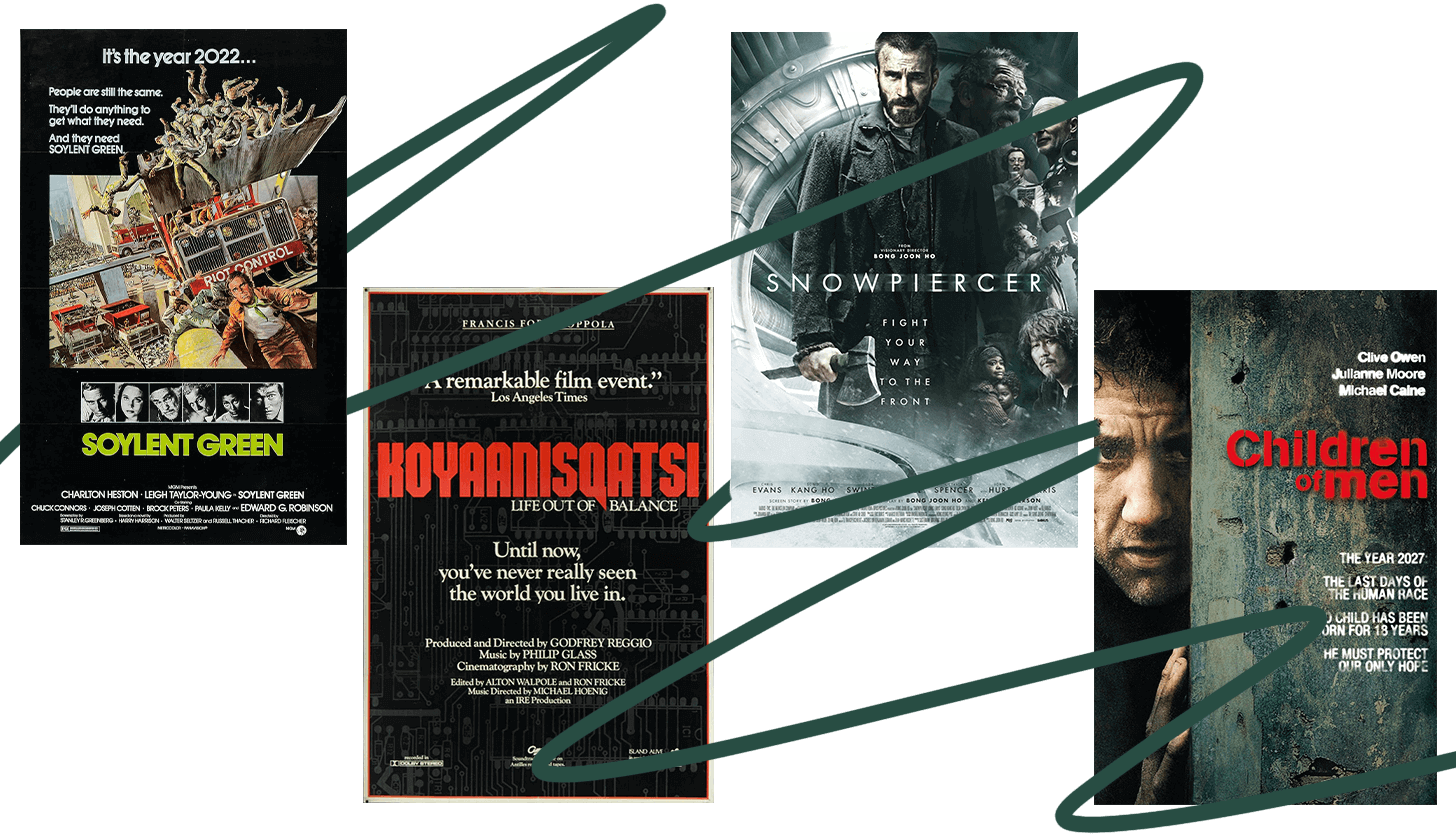
Soylent Green (1973) – A surprisingly effective sci-fi thriller set in an ecologically ravaged hellscape of 40 million people: 2022 New York City. The rest of the world is faring no better, as global warming, pollution, dead seas, dead soil and overpopulation have taken their toll on the planet generally, and humanity specifically. Charlton Heston plays a cop and the great Edward G. Robinson is his pal, a former college professor who unravels the mystery around a seemingly miraculous new manufactured food source, Soylent Green, that is keeping millions of people alive — people who would otherwise starve to death. Based on a 1966 novel, Make Room! Make Room! (is that a wonderful title or what?), Soylent Green features a final rant by Heston that is up there with “Oh, the humanity!” as a pop-culture touchstone: an authentic cri de coeur that has become a punchline.
Watch on Hulu with premium subscription.
Koyaanisqatsi (1982) – Director Godfrey Reggio’s documentary/tone poem/cautionary tale about modern civilization’s desecration of and disconnect from the natural world might be more powerful today than when it was released — and thrilled and confounded audiences and critics, alike — five decades ago. Featuring an atmospheric score by Philip Glass and no dialog, this movie should be screened for our alien overlords when they finally arrive, if only to give them an idea of how mind-bogglingly, heartrendingly creative and destructive humans truly are. Note: The film’s title is a Hopi word meaning “life out of balance,” and it is remarkable how Reggio captures the sense of the term in a film that is unsettling and harmonious, optimistic and shot through with dread.
Watch for free on Tubi.
Children of Men (2006) – Director Alfonso Cuarón’s dystopian masterpiece, set in 2027, paints an eerily convincing portrait of a world where not a single human baby has been born anywhere on Earth in two decades, and the signs of political, economic and environmental collapse are everywhere. With Clive Owen, Julianna Moore and Michael Caine, the movie features scenes of shocking violence and unexpected tenderness — sometimes both at once. The most sobering element of the film, though, is its timeliness: some of the scenes, especially those featuring the treatment of migrants to the UK — asylum seekers or climate refugees, or both, it hardly matters — were meant to appall viewers, but now feel like they might have been lifted from a documentary made in the past few years.
Watch on Amazon Prime.
Snowpiercer (2013) – Korean filmmaker Bong-Joon Ho’s English-language debut is a weird beast: a futuristic, absurdist adventure film that tackles weighty questions — about the nature of power, the moral quagmire of scarcity, our responsibility to the planet — and is still massively entertaining. The plot itself is bonkers. After scientists spectacularly fail in an attempt at climate engineering to counter global warming, what’s left of humanity boards an enormous train that races around the globe through a savagely harsh, endless winter — presumably forever. Much injustice, violence, class warfare (the front cars of the train serve as a luxe haven for social elites, and the sordid cars in the back are filled with everyone else), and occasional bits of dark hilarity ensue. The cast includes Chris Evans, Octavia Spencer, Tilda Swinton, Go Ah-sung, John Hurt and Ed Harris, who looks a thousand years old (without makeup) yet remains improbably sexy.
Watch for free on Tubi.
***
READ
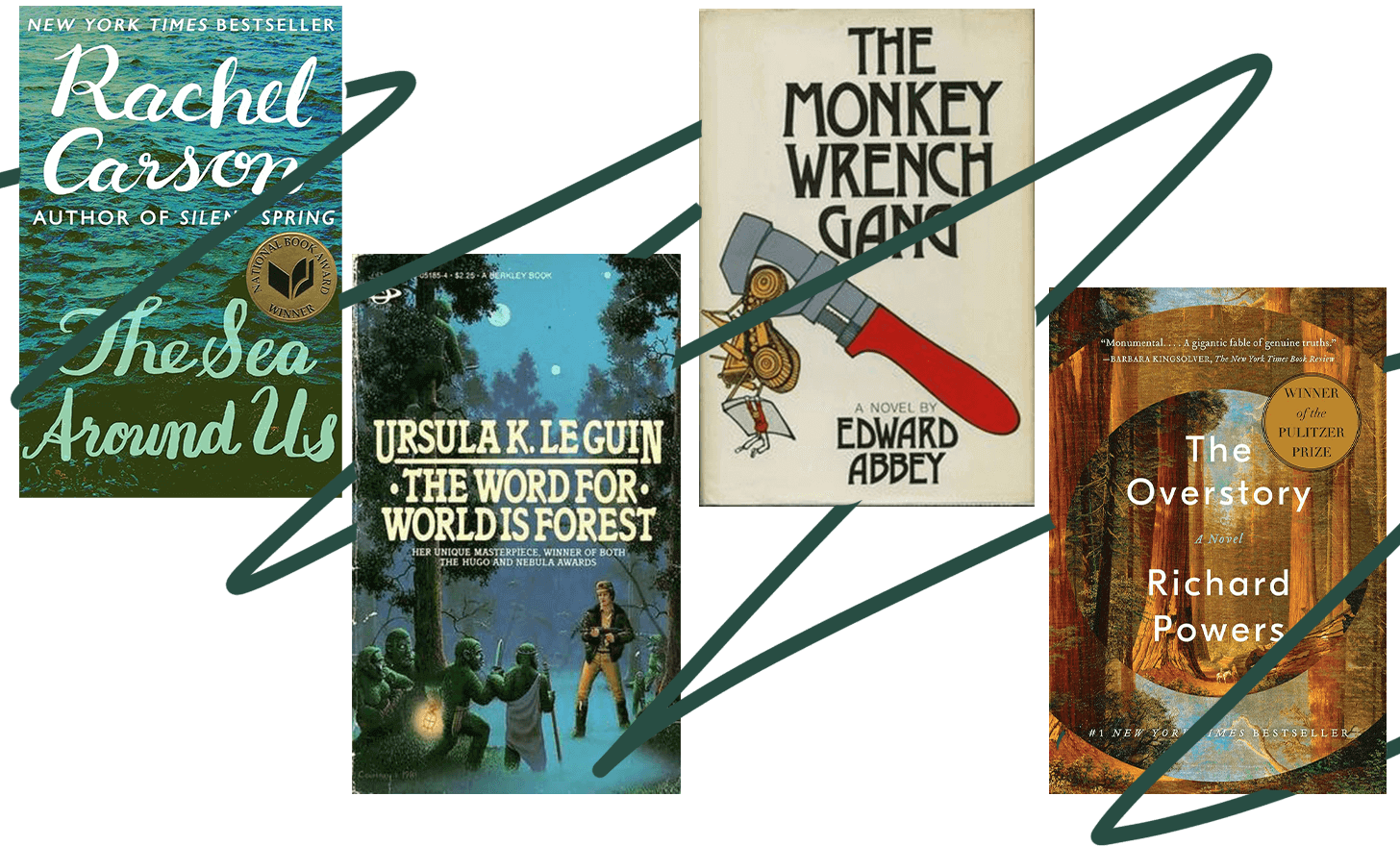
The Sea Around Us (1951) – A full decade before her groundbreaking Silent Spring effectively launched the modern environmental movement, Carson published The Sea Around Us, the second book in what came to be called her Sea Trilogy. While not as influential as Silent Spring, The Sea Around Us — along with its trilogy companions Under the Sea (1941) and The Edge of the Sea (1955) — marked the arrival of a singular, unmissable voice in the almost entirely white-male world of natural history and popular science. That Carson brought a poet’s sensibility and a marine biologist’s rigor to her work captured the imagination of millions, and who knows how many of those millions went on to do lasting work in science, conservation — or, for that matter, literature and the arts?
The Word for World Is Forest (1972) – Many have pointed out the uncanny similarities between Ursula K. Le Guin’s slender (fewer than 200 pages), powerful novel and James Cameron’s bloated and silly 2009 blockbuster, Avatar. Both feature humans exploiting another world for its resources while introducing unchecked bloodshed and militarism to a largely peaceful native population. But while Le Guin’s book treats this clash of cultures with nuance and a kind of somber fatalism, Avatar effectively celebrates mass violence as a solution to intractable problems — including how to resist heavily armed homo sapiens bent on destroying a natural paradise for profit.
The Monkey Wrench Gang (1975) – Edward Abbey’s funny, passionate, moving novel about a group of environmental activists (eco-terrorists to their foes) who sabotage self-described “developers” and polluters despoiling their beloved Southwest is one of those rare cultural artifacts: a work of art that inspired, and inspires, direct political action to this day. The book’s protagonist, Vietnam vet George Hayduke, is an angry, charismatic misfit — and a guy most readers will unapologetically cheer for.
The Overstory (2018) – Richard Powers’s 2018 Pulitzer Prize-winning novel is the best imaginative treatment of trees since The Lorax. (That might seem like faint praise until one recalls that The Lorax is a work of genius.) Following the stories of nine characters across several decades who, after disparate life experiences, come together to monkey-wrench logging equipment threatening the California redwoods — with terrible, unforeseen consequences — the book is a passionate defense of wildness and a hymn to the glory of the natural world. Clocking in at 600-plus pages, this is a hugely ambitious work, and the at-times strident moralizing about the loss of wild places around the world — what one reviewer characterized as “a sour sanctimony” — won’t be for everyone. That said, more than a few readers have described the book as life-changing. Take a look. You’ll know pretty quickly which camp you fall into.
***
LISTEN
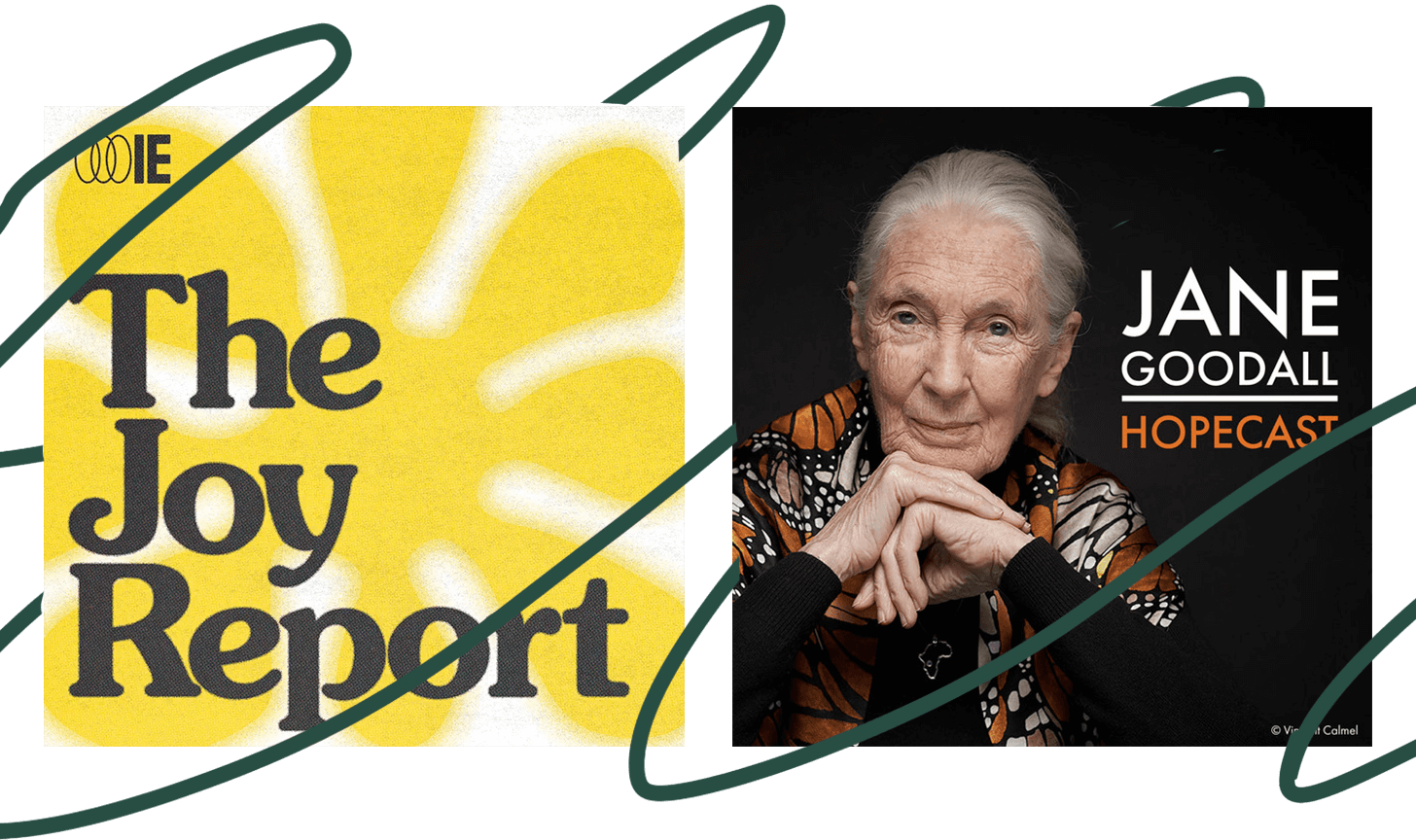
The Joy Report – One of many outreach efforts by the good folks at Intersectional Environmentalist, this podcast is “dedicated to sharing stories about climate solutions and environmental justice grounded in intersectionality and optimism.” That might sound like a mouthful – it is a mouthful – but happily, for listeners, each episode takes a hard look at critical issues without ever falling into cynicism or despair. Hosted by the engaging environmental justice advocate and attorney Arielle V. King, and covering themes like “Community, Culture + Craftsmanship: Reclaiming Conscious Consumerism” and “Nature is for Everyone: Equity in the Outdoors,” The Joy Report is a scrappy, thoughtful example of where the environmental movement is headed — or ought to be.
Jane Goodall’s Hopecast – Goodall, the primatologist and tireless defender of nature and wildlife, has spent a lifetime showing people of all ages what it means to be committed to an ideal. While her career has not been free from controversy — including evidence of plagiarism (which Goodall acknowledged, and apologized for) and criticisms of her research methodology — few figures have managed to remain relevant and admired by so many after seven decades in the public eye. Spending time with the 90-year-old Dame Goodall as she interviews prominent figures (such as Margaret Atwood and Cory Booker) and less-well-known scientists, artists and others about their environmentally focused work is a lesson in what curiosity, tenacity and a welcome, tough-minded optimism can do.
***
That’s it. Ten titles plucked — thoughtfully, we hope — from a sea of worthy candidates. What about An Inconvenient Truth? William Stoltzenberg’s Where the Wild Things Were? James Balog’s jaw-dropping 2012 documentary, Chasing Ice? Anything at all by Carolyn Finney (Black Faces, White Spaces, et al.)? Again, our list is meant as a conversation starter. What do you say?
Help us sustain independent journalism...
Our team is working hard every day to bring you compelling, carefully-crafted pieces that shed light on the pressing issues of our time. We rely on caring supporters like you to help us sustain our mission. Your support ensures that we can continue to provide deeply-reported, independent, ad-free journalism without fear, favor or pandering. Support us today and make a lasting investment in the future.
RELATED STORIES
Award Winning



Today’s environmental and social justice challenges are unprecedented, and require an unprecedented collective effort.


Stay updated on our latest features, events and more. Subscribe to our Note From the Nest newsletter!
