Will the Boundary Waters Get the Shaft?
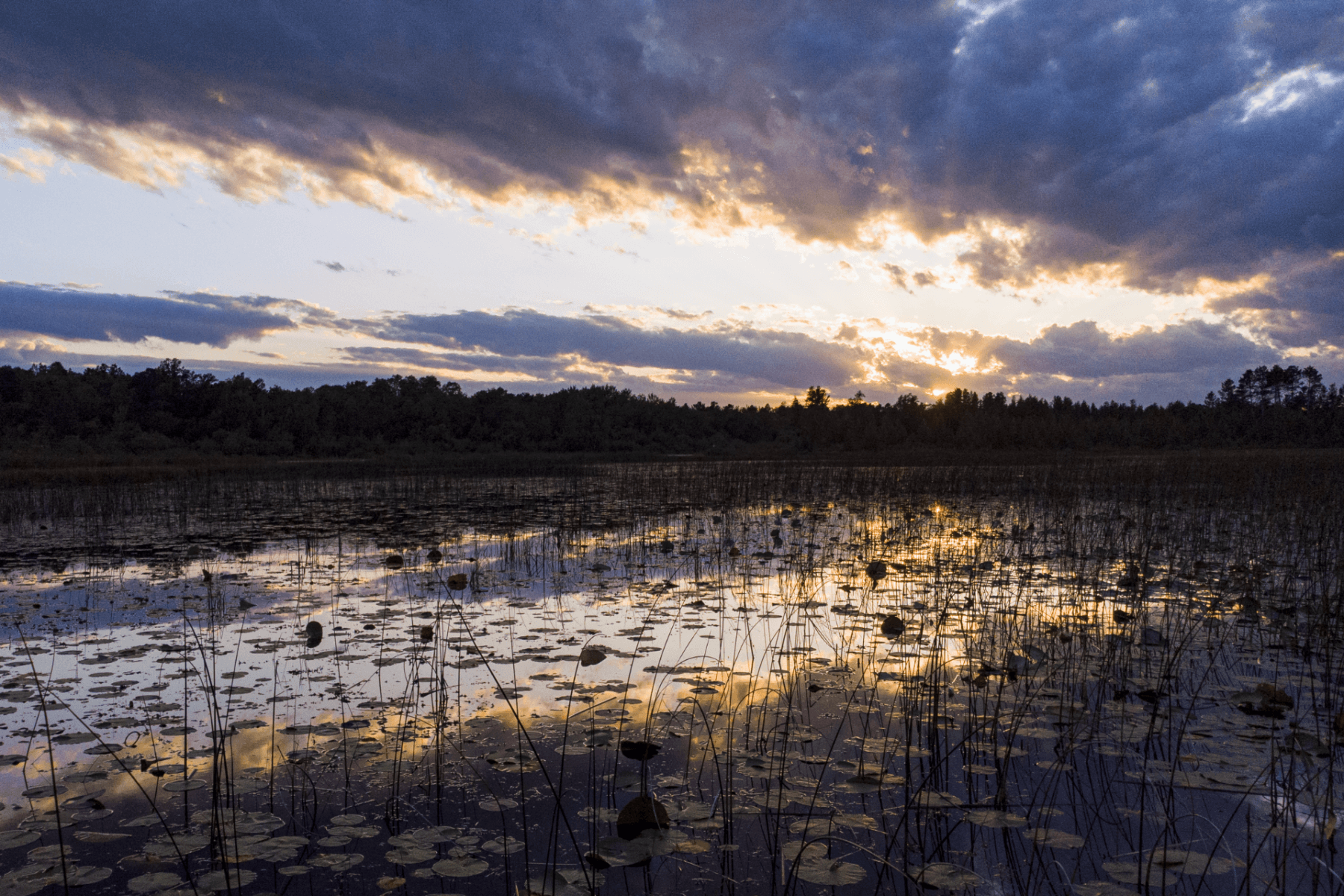
On Monday, April 27, 2026, President Trump signed into law HJR 140, a congressional resolution overturning a mining ban on federal land near the Boundary Waters Canoe Area Wilderness, a more-than-million-acre expanse of wilderness along Minnesota’s border with Canada. Previous President Joe Biden’s administration enacted the ban in 2023. It was supposed to last 20 years; it endured less than three.
Environmental advocates say overturning the ban is both an existential threat to the BWCA’s rich ecosystem and a danger sign for public lands nationwide. Mining supporters say the move simply returns protections to previously accepted levels, which includes no mining in the BWCA or in a 220,000-acre buffer zone surrounding the major entry points into the Boundary Waters.
The Biden administration’s mining ban had placed a moratorium on all mining within the same watershed as the BWCA, which covers a much larger area of Northern Minnesota than the buffer zone. The reasoning, based on an extensive study by the U.S. Forest Service, was that any polluted runoff from the mines could easily end up in the Boundary Waters’ vast network of interconnected lakes, wetlands, and streams.
Julie Lucas, executive director of the industry advocacy group Mining Minnesota, understands people are concerned by the vote to overturn the mining ban. She says she believes some people are more upset by this news than they would be if it happened under a different administration.
“Right now is a scary time for people,” said Lucas. “We are seeing changes in environmental regulations at a federal level, and people are justifiably concerned. If I had never worked in this industry, and in particular, had never worked on this project, I’d be feeling the exact same way other people are feeling.”
“We need to find a way to say ‘I’m terrified about the Boundary Waters, but I need to learn more, because the U.S. only has so many minerals, and I’m demanding them.’”
Lucas insists mining has changed significantly over the past several decades. It’s safer, she says, and cleaner. Lucas points out that mining plays an essential role in the transition to green energy, providing the rare earth minerals needed for rechargeable batteries, electric vehicles, and solar panels. She frames the ban as a sort of national NIMBYism, pointing out the U.S. is the primary consumer of these metals, but relies heavily on other countries to supply them.
“And I feel like that’s made us lazy as consumers. I feel like it’s made us guilty of just a lot of colonialism. We have no problem getting stuff from Africa and Indonesia and all of those places,” said Lucas. “We need to find a way to say ‘I’m terrified about the Boundary Waters, but I need to learn more, because the U.S. only has so many minerals, and I’m demanding them.’”
Minnesota Center for Environmental Advocacy’s Executive Director Kathryn Hoffman says while the overturn of the federal ban is troubling, she’s more concerned by how it happened.
It began with Congressman Pete Stauber (R-MN) introducing a Congressional Review Act resolution in the House of Representatives in January. The Congressional Review Act (CRA) was put in place to prevent lame duck presidents from abusing their authority in the final weeks before leaving office, and allows Congress to overturn executive decisions within 60 days of when they were made, with a simple majority.
“Biden’s decision to withdraw the mineral leases was obviously more than 60 days ago,” said Hoffman. “It was more like three years ago.”
Stauber reasoned that the executive decision was never formally presented to Congress, and therefore the 60-day clock was not yet running. Hoffman expects this interpretation of the CRA will be challenged, because it sets a dangerous precedent in which Congress could overturn any executive branch land-management decision whenever it wants. Similarly, because land management decisions are not typically included in the Congressional Record, presidents would now be free to present any previous land-management orders they didn’t like–from anytime–to Congress for potential overturning.
***
First in line to benefit from the Senate vote is Twin Metals, a subsidiary of the Chilean mining corporation Antofagasta. Twin Metals has been taking exploratory ore samples in the region for years, and is proposing to build an underground mine for copper and nickel and several precious minerals (cobalt, platinum and palladium) that would use the latest technology to minimize pollution and waste.
While copper is prevalent in the U.S. (the nation is the second largest producer of copper in the world, behind Chile), demand outstrips supply, as it’s needed for electric wiring, plumbing, and industrial machinery, as well as for burgeoning data centers, solar panels and electric vehicles. Lucas says it’s the presence of the rare earth minerals that make the ore in Minnesota’s Arrowhead region particularly valuable; platinum and palladium are used in everything from catalytic converters to cancer treatments.
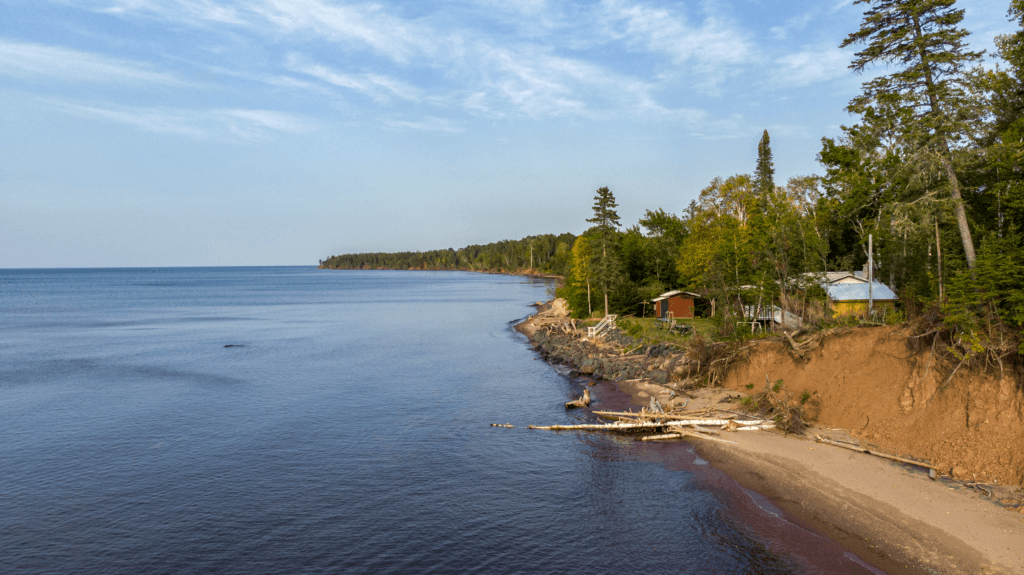
Trump’s overturning of the mining ban endangers watersheds and the ecosystems they support, such as Lake Superior.
Photo by Steven Gute
If approved, the mining would take place hundreds of feet below the edge of Birch Lake reservoir and operate for 25 years. Lucas says the underground footprint of the mine would be approximately 2.5 miles long and one mile wide.
While federal law may be changing, Lucas says there are still very strict state regulations in place – as well as a mandatory extensive environmental review – and the Minnesota Department of Natural Resources will have the final say on issuing any mining permits. Environmentalists counter that even exploratory actions by mining companies can cause disruption and harm to the environment.
The Boundary Waters are part of a boreal forest biome that sits in the northern third of the Superior National Forest. This area has been home to the Anishinaabe people for centuries – the land is part of the 1854 Ojibwe Land Cession Treaty. It’s interconnected lakes, rivers and streams served as highways for transportation across more than a thousand miles.The Grand Portage and Bois Forte Bands still use the land to hunt, fish and harvest wild rice. It’s also home to several endangered species, including the Canada lynx and the gray wolf.
Federal protection of the land dates back to the early 1900s, removing more than a million acres of territory from potential settlement. In 1964 President Lyndon B. Johnson signed the Wilderness Act into law, naming the Boundary Waters as part of the original nine million acres of federal public lands in the National Wilderness Preservation System. In 1978 President Jimmy Carter signed the Boundary Waters Canoe Area Wilderness Act, which banned mining in and immediately around the BWCA, ended logging and snowmobiling, limited motor boats to approximately 25 percent of the lakes, and added 50,000 acres to the protected area.
In the early 2000s, proposals by PolyMet Mining and Twin Metals to open new mines near the Boundary Waters sparked a campaign to ban mining in the entire BWCA watershed. President Obama’s administration began looking into a federal ban shortly before he left office, which President Trump quickly put a stop to in his first term. President Biden restarted the process, ultimately approving the ban.
“People have this notion that the Democratic Party – the Democratic-Farmer-LABOR party – supports protection of the Boundary Waters, and it supports protection of clean water, and that’s simply just not true.”
Chris Knopf, Executive Director of the Friends of the Boundary Waters Wilderness, sees the overturn of the federal ban as the latest attack by President Trump’s administration on Minnesota. Trump’s family also appears to have a cozy relationship with Chilean billionaire Andronico Luksic, whose family controls Antofagasta. The Wall Street Journal recently reported that Ivanka Trump and her husband Jared Kushner rent a home in Washington from Luksic.
Knopf gives credit to the Republicans for their ability to organize around an issue with very little dissent.
“[Minnesota Congresswoman] Betty McCollum had some legislation to protect the Boundary Waters that she’s been advancing for a very long time, and Nancy Pelosi shut that down,” said Knopf. “And so it may reflect some more profound issues with the Democratic Party nationally. Hats off to the Republicans. They had this, and they stuck together, and [Rep] Pete Stauber got it done, whereas Betty McCollum could not even get a vote on it.”
Knopf says getting political support for the Boundary Waters is complicated even at the local level, because it pits environmentalists and labor unions – two mainstays of the state’s democratic party – against one another. Environmental tourism has a short season in Northern Minnesota, while mining provides solid, year-round employment.
“People have this notion that the Democratic Party – the Democratic-Farmer-LABOR party – supports protection of the Boundary Waters, and it supports protection of clean water, and that’s simply just not true.”
Knopf says because it’s such a sensitive topic, politicians have avoided even having a hearing on the issue since 2009. And so for the past three years Friends of the Boundary Waters Wilderness has hosted its own hearings at the State Capitol, providing environmental advocates an opportunity to testify.
One of the people who testified at this year’s hearing was Bob Tammen. After serving in the Vietnam War, Tammen came home to Northern Minnesota and got his electrician’s license. He was hired by U.S. Steel in 1969, and from there worked on several mines across the Iron Range through the ‘70s. In his spare time, he and his wife Pat would visit the Boundary Waters.
“I guess that’s what made me sensitive to water quality,” said Tammen, who’s become a citizen scientist in retirement, taking water samples downstream of existing mines and attending groundwater conferences. “People don’t realize how much the mines are leaking… It’s not like you can see it.”
Minnesota has a long history of iron ore mining, dating back to the late 1800s. When the high-grade ore was gone, companies switched to mining low-grade iron ore, called taconite. At its peak there were more than 200 iron mines operating; now there are just six. They collect their tailings waste in six large basins. According to data collected by the Minnesota Pollution Control Agency (MPCA) and the EPA, they all leak sulfate. For decades, the MPCA failed to enforce regulations limiting how much sulfate a mine can release. After a federal mine visit In 2022, the EPA ordered the MPCA to enforce the regulations. According to U.S. Steel, there is no feasible way to stop the sulfate from leaking.
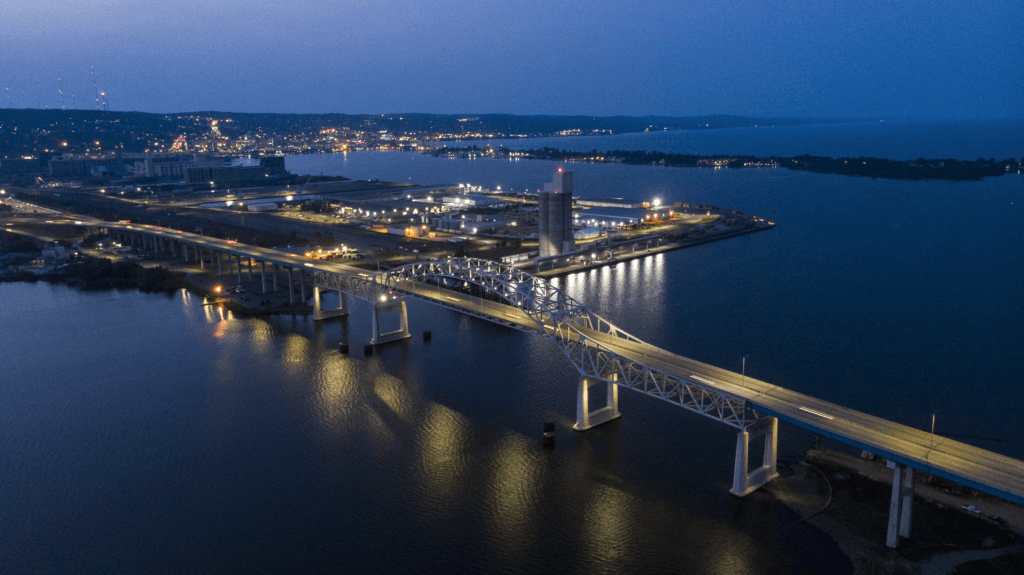
The Duluth Complex stretches for thousands of miles, with much of it abutting major waterways, despite precious metals taking up less than one percent of that space. Photo by Steven Gute
For decades, tailings from the Dunka taconite mine, which closed in 1994, have leaked sulfates into nearby Birch Lake – the same lake by which Twin Metals now hopes to mine. Sulfates stimulate the production of methylated mercury, or methylmercury, a compound that’s highly toxic to fish, mammals and birds. Pregnant women who consume fish contaminated with mercury are more likely to give birth to babies with a range of developmental issues.
Years ago Bob and Pat bought a piece of land along the South Kawishiwi River, which winds from Birch Lake into the Boundary Waters. Recently the conservation group American Rivers named it as one of the top three threatened rivers in the country.
Tammen says before Minnesota’s DNR considers permits for new copper-nickel mines, it should take care of the ongoing pollution from the state’s iron mines.
“Pat passed away a couple of years ago, and I scattered her ashes on the South Kawishiwi River,” Tammen recalled. “I don’t want the mining industry to use that river for a drainage ditch, and that’s what they’re doing.”
Environmentalists point to numerous instances around the country in which metal mines have become toxic waste sites, leaching what’s called “acid rock drainage” into nearby waterways. Mining supporters in turn point to Eagle Mine in Michigan’s Upper Peninsula, the only operating nickel mine in the U.S. Similar to the Twin Metals design concept, it’s an underground mine that President Biden touted as proof that mining can be done in the U.S. in a way that’s both environmentally sound and financially profitable.
“Pat passed away a couple of years ago, and I scattered her ashes on the South Kawishiwi River,” Tammen recalled. “I don’t want the mining industry to use that river for a drainage ditch, and that’s what they’re doing.”
Tammen believes companies like Twin Metals are over-selling the ore quality of the Duluth Complex, the geologic formation they’re seeking to mine. Sure, he says, there may be a lot of ore in the ground, but the complex itself is massive – covering more than 2,000 square miles. Precious minerals are believed to make up less than one percent of the formation.
That means “we will have 99 percent waste in a water rich environment,” said Tammen.
When it comes to job creation, Tammen is also highly skeptical. Over the decades, mines have used larger and larger equipment – trucks as big as two-story houses – that could do the work of several men. Now many are switching to automated trucks, that can work 24-7 without a driver.
If given the green light, Twin Metals says, once constructed, its mine would employ 750 people, in a regional industry that currently employs approximately 4,000 people. That’s down from a peak of 12-14,000 in the late 1970s.
But for some communities, every job matters.
Joe Baltich is a third-generation owner of NorthWind Lodge in the small town of Ely, the most popular entry point for campers heading into the BWCA. He’s also a wildlife painter, a school bus driver and a county commissioner. He says most everyone he knows has at least two jobs in order to make ends meet; it’s just not possible for the community to survive off of three months of tourism each year.
“I’m watching my area croak,” said Baltich, citing the local hospital which lost $1.3 million in 2025. “I want to have an ambulance when I dial 911, and I want a doctor in the hospital. How long do you think a small rural hospital can survive losing $1.3 million every year?”
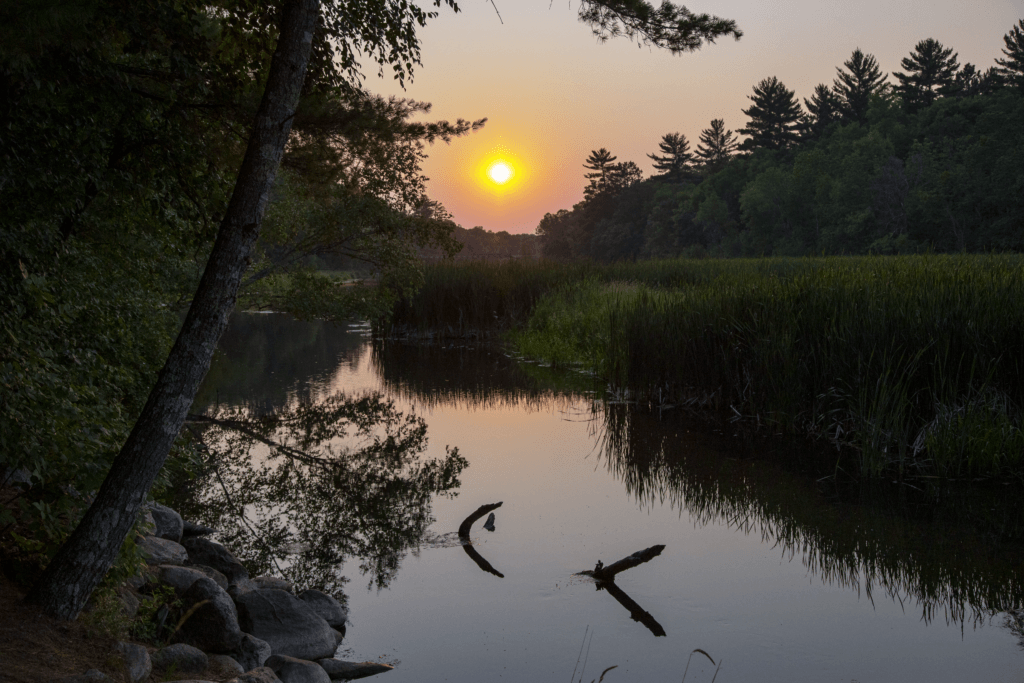
The reputation of mining as a danger to both workers and the natural environment is tempered against its value as an economic boon to the communities that support its practice. Photo by Steven Gute
Baltich believes mining is the best option for new and better jobs in the region. There’s already rail and shipping infrastructure in place for exporting ore thanks to the nearby Iron Range, he says, and mining takes advantage of a local resource, which is much more efficient than shipping raw materials in from elsewhere to be worked on.
In 2017 Baltich organized people to “Twitter-bomb” President Trump to support copper-nickel mining in Minnesota, and it worked. He was invited to the capital to talk with politicians and lobbyists. He’s thrilled the federal ban has been overturned.
“As far as I’m concerned, we need better jobs here. And if you pay attention to successful rural towns around Minnesota and other states, you always see the town and then there’s an industry on the outside of it,” Baltich explained. “If you go to Baudette, you’ve got Marvin windows, and they’re building windows. And then you’ll go to other areas where they’ll have some sort of an industry where half the town works, and they get paid a good wage to work there, and it’s all year. It’s not part time.”
Baltich says over his lifetime he’s watched as Boundary Waters tourism has declined. In 1969 the average age of a visitor to the BWCA was 26 – now it’s in the mid 50s. Aside from a spike in visits during COVID, Baltich says younger generations don’t seem as interested in spending days in the wild, unplugged. He believes environmental restrictions that limit park permits or that prevent motorized vehicles are actually doing more harm than good, because fewer people can experience the wilderness as a result. He believes that will lead to fewer advocates for the BWCA in the years to come.
Chris Knopf with Friends of the Boundary Waters counters that more motorboats does not result in more advocates – they just diminish the quality of everyone’s experience. And organizations like his are working to expand access and inspire advocacy with education programs like “No Boundaries to the Boundary Waters” and “The Boundary Waters Is Our Backyard.”
While President Trump has overturned the ban on mining on federal lands, the Minnesota State Legislature may have its own say in the matter. A new bill prohibiting copper mining on state-owned land in the headwaters of the BWCA is pending in the House. Whether or not the bill passes, the competing pressures for jobs, sustainable energy and a clean environment are not going away anytime soon.
Help us sustain independent journalism...
Our team is working hard every day to bring you compelling, carefully-crafted pieces that shed light on the pressing issues of our time. We rely on caring supporters like you to help us sustain our mission. Your support ensures that we can continue to provide deeply-reported, independent, ad-free journalism without fear, favor or pandering. Support us today and make a lasting investment in the future.

RELATED STORIES

Award Winning



Today’s environmental and social justice challenges are unprecedented, and require an unprecedented collective effort.


Stay updated on our latest features, events and more. Subscribe to our Note From the Nest newsletter!