
The Silencing of Silent Spring

- Revisits Aldo Leopold and Wendell Berry for a different model after Rachel Carson’s take: environmentalism rooted in love of land and community
- Explores the case for escalation, from Edward Abbey’s The Monkey Wrench Gang to Andreas Malm’s How to Blow Up a Pipeline
- Looks at what’s working locally, from grassroots efforts abroad to those closer to home stateside
Imagine an alternate timeline, one where the U.S. recognized the threats posed by the climate crisis and reacted accordingly. Something along the lines of appropriating nearly $12 billion to support funding of clean-energy infrastructure while allocating $5 billion to a loan program to reduce greenhouse gases in current infrastructure with a ceiling of $250 billion. And sure, since we’re dreaming, let’s offer a few more billion in advanced transportation loans to modernize medium- and heavy-duty vehicles, trains, and ships. What kind of magical world would that be?
Well, how about the one we live in—or at least did briefly in 2022 when the Biden Administration passed the Inflation Reduction Act? Back then, the bill’s environmental provisions marked the largest investment America had ever made in clean energy, and its ambitious scope may have been the last gasp of a legislative strategy built on the lessons of Rachel Carson’s epochal Silent Spring. Now? Well, the current president just threatened Canada with tariffs because the country’s wildfire smoke (along with massive wildfires in Northern Minnesota) is poisoning American skies. As the fires rage on and multiply, such insanity at least recognizes that failing to protect the environment has consequences.
With that in mind, let’s consider our track record: This year, the Environmental Protection Agency (EPA), such as it is, rolled back restrictions on power plant emissions as well as PFAS (forever chemicals) limits for public drinking water. It has allowed more than 180 of the biggest polluting industrial and energy plants to sidestep Clean Air Act pollution limits. Our newest national monuments, Bears Ears and Grand Staircase-Escalante, have been slashed by almost 3 million acres, and the interior department has loosened drilling regulations on public lands with plans to limit windows for public comment or protest. And these are just a few of a staggering list of losses that should require a prescription for antidepressants to fully assess.
With such protections established, the legal system could then be relied on to hold polluters accountable to the law. Sixty-four years later, this playbook is in tatters.
Forcing the government to consider the environment over business has long been a struggle, but it wasn’t always this one-sided. Silent Spring cleared the path for landmark achievements that included founding the EPA as well as legislation such as the Endangered Species Act (ESA) and the Clean Water Act. With such protections established, the legal system could then be relied on to hold polluters accountable to the law. Sixty-four years later, this playbook is in tatters.
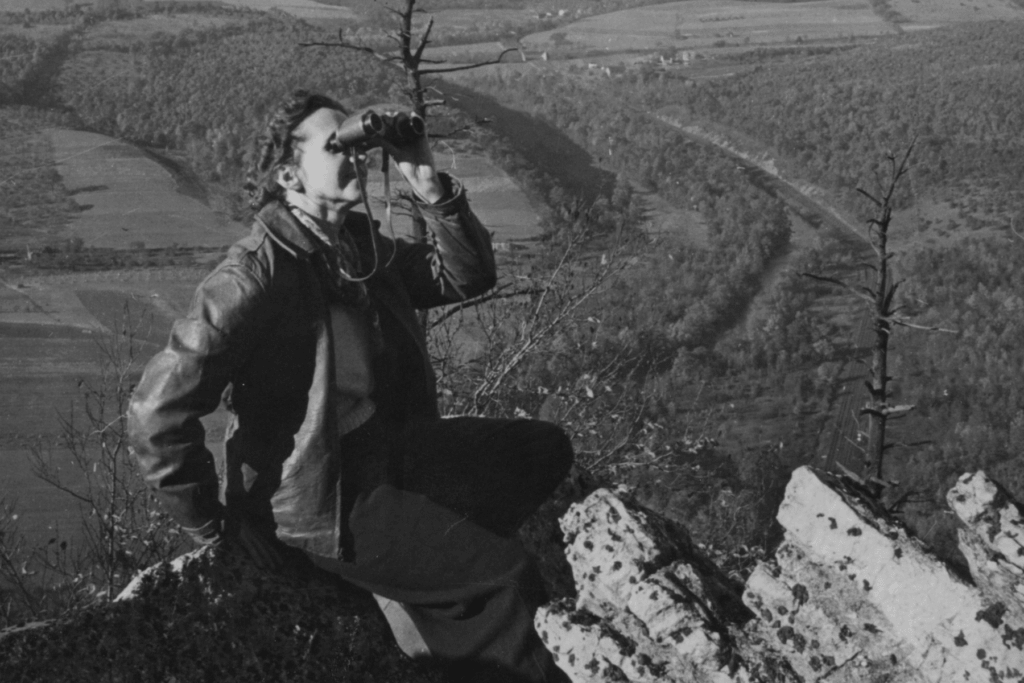
Rachel Carson. Photo courtesy of the U.S. Fish and Wildlife Service (USFWS)
The public still has an appetite for resistance, as demonstrated by the bipartisan outcry against the pollution and higher energy costs associated with data centers, which spurred protests across 37 states in July alone. But with a Republican Congress less interested in creating policy to address public demand than demonstrating fealty toward their president, the necessary federal intervention strategies for environmental regulation have vanished. Moreover, while the environmental movement is successfully challenging these rollbacks at the state level and in courts, recent rulings by a compliant Supreme Court to override lower court judgments have thrown those tactics into question.
Meanwhile, sea levels continue to rise. Glaciers are still melting. This summer has been marked by persistent heatwaves and an already devastating fire season sweeping across multiple continents. Spain and France are battling wildfires in the likes of which have not been seen before while contending with a historic heatwave. Once again, events have shown the long-promised catastrophes of our climate crisis are already here. Anyone interested in protecting the environment we all rely on for survival can no longer wait for a less hostile government. So where do we go from here?
The Imperfect Security of the Carson Effect
In Silent Spring, Rachel Carson used the metaphor of a spring morning without the sound of birds singing to illustrate the hazards of indiscriminate and widespread pesticide use, which she further compared to the radioactive fallout from nuclear bomb testing that was working its way into our ecosystems, food, and bodies. Carson’s impact on U.S. environmental policy can’t be overstated. The same EPA that’s devolved into undoing its own protections was established on the heels of Silent Spring in 1970, as was the ESA, which Congress passed by a near-unanimous vote that sounds unthinkable today. The lessons from Silent Spring were galvanizing, but its successes were best viewed as promising first steps than a transformative shift in national priorities. The fight never stopped.
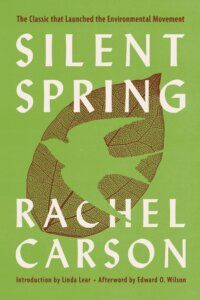
Writer Edward O. Wilson offered a sobering assessment in the afterword of a 50th anniversary reissue of Silent Spring in 2002, a time that seems idyllic compared to our current avalanche of outrages. Carson’s work led to the U.S. banning DDT in 1972, but we continued to export the pesticide worldwide until 1985. And though the ESA prevented an estimated 291 extinctions since 1973, it remains a constant lightning rod for partisan debate and funding battles for any threatened species. Wilson saw the danger nearly 25 years ago: “Nature is dying the torture-death of a thousand cuts.” Those cuts have now drawn closer to the bone.
Environmental policy has long been politicized, especially as it impacts “job creators.” But our current administration has done away with offering any pretense of economic justifications to support its actions. Alternative energy sources are no longer a priority not because of the threats they pose to some nebulous way of life. The funding vanished because the government said so. Who cares if such investment would insulate our economy against upheaval triggered by events such as the Iran War, a reality that’s brought solar power to Pakistan, Vietnam, and Thailand? Market volatility and its associated price gouging are part of the brand.
Worse yet, the path to reshaping environmental policy in response to public outcry appears broken beyond repair. Following the Silent Spring model, the public demands action and elected officials respond. Even if the U.S. had a functional representative government, what happens when established laws no longer offer the same bedrock security? The past few years have demonstrated that any policy the government once established can be easily taken away.
At the time of its publication, Carson’s work provided a path forward that worked for several decades, but we need to look in new directions.
Fostering Community with Love: The Lessons of Aldo Leopold and Wendell Berry
Building a groundswell of support for an environmental cause may be a slow process, but any policy change will still only be possible through grassroots engagement. Given the many ways digital culture fosters isolation and self-interest, the surest way to build community is through a shared understanding of what’s at stake through a strong connection both to the land and our neighbors who share it.
Published in 1949, 13 years before Silent Spring, Aldo Leopold’s A Sand County Almanac offers a timeless guide to protecting our natural world by nurturing a big-hearted affection for nature. With most of its pages focused on Leopold’s account of the subtle rejuvenation over a year of the land at his farm in southwestern Wisconsin, the book makes a case for developing a “land ethic” toward our environment. Soils, waters, plants, and animals aren’t mere resources; they’re key elements of our community. In Leopold’s view, witnessing the connections between the dwellers of Sand County inevitably inspires a drive to protect what we value and ultimately need.
 In introducing the 2020 edition, Barbara Kingsolver saw Leopold as someone who could bridge the culture-war gap between urban progressives typically relied upon to advocate for the environment and rural conservatives connected to the land through hunting, fishing, and farming. In praising Leopold’s plain-spoken text, Kingsolver even describes him as “a guy you could have a beer with,” as if establishing his credentials for a gubernatorial run.
No doubt, the environmental movement must build a coalition that includes everyone who is invested in nature and its ongoing health. A deer hunter recognizes what’s lost in a ruined habitat just as vividly as a Subaru-driving day hiker. But Leopold sees a different way forward than highlighting our shared recreational interests, which leads to crafting protections through a “necromancy of laws, appropriations, regional plans . . . or some other form of mass-wishing.”
Instead, Leopold calls for on-the-ground experience to develop a land ethic guiding anyone who understands nature to extend the ethical sequence of family and community to the land and environment. Such a deep relationship to the environment is only possible through getting your hands dirty while building the love for nature and how it works in our backyards, which in turn further strengthens community among neighbors. In short, Leopold hopes for nothing less than an on-the-ground social revolution.
These ideals require hard work, and Leopold’s vision may be impossible to realize in a world that’s more developed and distractible than he could have imagined. But his argument goes on in Wendell Berry’s landmark 1977 book The Unsettling of America. Written as a paean to “hand work”—the instinct to put down roots, and the gains made possible through care for the land—Berry doesn’t offer an immediate solution to environmental exploitation. But he still provides a timeless argument for resisting an economy that has created “probably the most unhappy average citizen in the history of the world.” (A 50th anniversary reissue is out this month.)
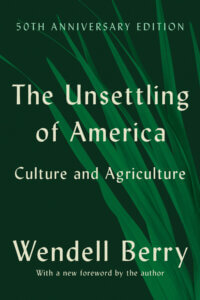 In warm prose, Berry offers guidance toward transforming how we live into ways that are more responsible and above-all intentional. These actions can be as simple as preparing our own meals at home and adopting an “economy of necessities” rather than one based on the many fears and fantasies preyed upon by marketers. Even in 1977, Berry saw the ills of technology in factory farming and beyond, and he recommends nothing less than a divorce from these forces.
As persuasive as it sounds to run for the hills toward an unplugged and simple life, even Berry recognized such a clean break is not realistic. Even in 1977, rejecting the many ways modernity crept into our lives was “not yet thinkable,” and any efforts to reverse the ecological impact of big business would require generations of work. However, for all its limitations, The Unsettling of America continues to offer inspiration. Our individual capacity to live in a more conscious and attentive way is even more precious as we sit at an inflection point that’s only grown more dramatic since Berry documented what he saw 50 years ago. He offers us all a simple challenge: “We can go on as before, recognizing our dishonesty and living with it the best we can, or we can begin the effort to change the way we think and live.”
Talking About a Revolution: Reconsidering the Radical Way Forward
Berry and Leopold see engaged environmental advocacy as an inevitable result of a more focused and communal way of thinking. Both of their works were published at either side of Silent Spring, but neither found much optimism in looking for a benevolent government to hold off the steady creep of industry. If we can’t find change after looking within ourselves and toward each other, where else can we turn? And, when all else fails, what real action can we take to stop the relentless destruction of the natural world?
The environmental movement will likely always require a willingness to protest. Well-intended but mannered demonstrations such as the No Kings marches offer global assurance that millions of Americans are repulsed by our current government and its policies. But beyond offering a chance to find fellowship and recognize we are not alone in this fight, it’s hard to point to any real results from the many marches and meme-ready signs. No wonder some have started advocating for more active resistance. Or, to use a now-official law enforcement term, eco-terrorism.
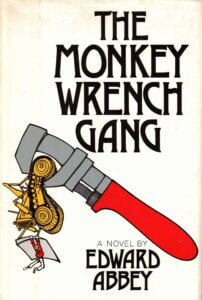 Edward Abbey’s best-selling The Monkey Wrench Gang introduced “monkeywrenching” to the activist lexicon in 1975 with a story of vandalism, sabotage, and targeted destruction as a means to fight those responsible for environmental destruction. Along with fueling the rise of organizations such as Earth First! and Earth Liberation Front (ELF), the book also inspired a practical handbook in Ecodefense: A Field Guide to Monkeywrenching by David Foreman. Published in 1985, the guide offers hands-on advice for destroying the industrial property—not the people—threatening our resources as a sort of Anarchist Cookbook for environmentalists.
Difficult to find in print but still readily available in virtual formats, Ecodefense covers tactics such as tree spiking as well as spike boards to flatten tires of heavy equipment. For the curious, the book also addresses moral dilemmas by examining “The Pros and Cons of Burning Machinery.” (Yes, the book warns, such actions are dangerous, unpopular, and may ultimately spark a wildfire—something even less popular with the public.)
Years ago, these extreme wings of the eco-movement found some success deploying these tactics to protect old-growth forests of the Pacific Northwest. However, after being targeted in the early 2000s with the same federal law-enforcement tactics as those used against Al Qaeda, these approaches ran aground and the movement eventually splintered into betrayal and disillusionment. Meanwhile, the environmental crisis only grew. Apart from a smattering of actions around the world, the most recent example of the environmental movement applying such aggressive tactics were those imagined for Paul Thomas Anderson’s Oscar-winning One Battle After Another.
“The reason that people contemplate escalation is that there are no risk-free options left.”
However, journalist and academic Andreas Malm is among those calling for that to change. His 2021 book How to Blow Up a Pipeline advocated for the destruction of industrial property as the last remaining defensive response to the climate crisis. As he told the New York Times when asked about condoning political violence, “The reason that people contemplate escalation is that there are no risk-free options left.” Looking at recent years, Malm makes a point. It’s a testament to our current moment that the book bubbled into the mainstream, including a fictionalized film adaptation in 2022.
Malm’s most recent book, co-written with Wim Carton, The Long Heat: Climate Politics When It’s Too Late takes a similar tack while addressing a few possible remedies for the environmental crisis. Examining advanced tactics that include human adaptation (building sea walls and the like), carbon dioxide removal, and geoengineering negative emission technologies to reverse the damage, Malm concludes that these measures are too slow and ineffective now that we’ve reached a point of no return. Put another way, the pipeline isn’t going to blow itself up.
Malm sees building blocks for resistance as the public further recognizes the threats we face and our institutional inability to respond. He cites the potential in recent actions, like when 50,000 people demonstrated in Valencia, Spain, against the government’s mishandling of the area’s catastrophic 2024 floods. “Find the proper tools for intervening in the moments of crisis, then reroute its energies onto the ultimate source of the problem,” he suggests.
If you listen closely, you can hear echoes of the same public discontent in the gaps in city services during the devastating Eaton Fire in Altadena, California. From there, as we better understand the forces behind our crisis, Malm sees our appetite for change moving into meaningful directions: “No one knows how quickly the business of fossil fuels could then come undone. It bears repeating: No one knows.”
As Malm sees it, any proposed solution is doomed without “revolutionary mitigation” measures. Regenerating forests, shutting down animal agriculture, and phasing out fossil fuels are just a few steps he sees before any strategy could help reverse our crisis. As bleak as the book may be in considering our future, Malm finds hope in “the utopian current of ecosocialism,” which could move toward public control of energy companies.
The odds may be long, but Malm takes heart in Mara van der Lugt’s Hopeful Pessimism, another work offering guidance for our climate crisis. “As long as there is uncertainty about the outcome,” she writes, “there is reason to hold onto the belief that action may make a difference.”
Come Together: What Lies Beyond Late-Stage Capitalism?
As far back as Leopold’s time, those who cared about the environment recognized the systemic forces working toward its destruction. Whether you prefer his term “economic self-interest” as the cause or Berry’s “corporate totalitarianism,” capitalism and the fossil fuel industry are the immovable objects in the path of the irresistible forces of our climate emergency.
German sociologist Jens Beckert assesses our inability to create meaningful change in How We Sold Our Future: The Failure to Fight Climate Change. In his view, Western economic exploitation is to blame. Emission standards can continue to be proposed at global conferences. But without widespread enforcement, inaction goes on—as do the environmental disasters.
“One day a museum dedicated to the history of capitalism will be built . . .”
Beckert’s book offers an enchanting vision of capitalism for those mired in this dark moment. The “late-stage” qualifier so often used these days to describe the system’s destructive impulses implies an ending, regardless of how entrenched our economic systems may seem. Capitalism, like anything else, is mortal: “One day a museum dedicated to the history of capitalism will be built,” he writes, “which visitors will walk through with a similar look of disbelief as we have today at an exhibition on Ancient Rome.”
Of course, capitalism cannot die on its own. But if only a revolution can fully reset our environmental priorities, we’re left again to imagine how to best blow up a pipeline. Before reaching that point, Beckert argues for exploring a first step that dates as far back as Silent Spring: local engagement led by families, friends, and communities.
Beckert cites the value of local actions such as a successful grassroots rejection of coal investment in South Africa, where a high court overruled government plans for new power plants. Just as promisingly, Germany’s Ahr Valley also faced catastrophic flooding in 2021 but, in contrast with Spain, its government rebuilt with a focus on sustainability and waterway restoration. Climate change is no less a global crisis. But the real revolution begins at home.
The clearest example of a shift toward this kind of collective thinking in U.S. politics is found in the ascent of Democratic Socialists of America (DSA). Since gaining traction in mainstream politics with Bernie Sanders’ 2016 presidential bid, DSA has grown from 8,000 dues-paying members to over 100,000 as of early 2026. A small crowd by national politics standards, but still near a historic high in this country.
Less of a formal third party than a nonprofit organizing force, DSA’s flagship success is represented by the buzzy election of Zohran Mamdani as mayor of New York City, which is home to 10 percent of DSA membership. However, what’s most instructive for the environmental movement is how the organization advocated for climate justice years before Mamdani’s election.
In Organize or Burn: How New York Socialists Fight for Climate Survival, Fabian Holt embedded with a DSA candidate for a 2022 New York state senate campaign. The run was unsuccessful, but the primary challenge pressed the Democratic incumbent to support the Build Public Renewables Act (BPRA), which stands as the first major success of what was then called “the Green New Deal.” Passed in 2023, the bill mandates the state’s public power authority to implement renewable energy projects that will transform the New York state energy landscape by generating 70 percent renewable electricity by 2030 and zero-emission electric power by 2040.
The bill was the result of a six-year strategy that combined replacing incumbents with DSA-backed candidates, pressuring elected officials, and organizing disruptive public events. Holt sees BPRA as the product of DSA’s capacity for organization that would have otherwise been impossible through the Democratic party establishment. But can the New York model be applied to other states?
Recent elections have shown voters are hungry for real opposition to reality-defying and destructive federal policies as opposed to business-as-usual responses of party leadership. DSA-endorsed candidates succeeded in more than 30 Democratic primaries, including L.A. mayoral challenger Nithya Raman. Whether DSA-backed candidates can start a groundswell that one day delivers a Green New Deal remains in question—but the answer may be coming soon.
The Way Forward
The environmental movement is not for the easily discouraged. This was the case before Silent Spring and it remained so after each legal protection it delivered, and it’s just as true now. When established levers for change fail and our institutions are revealed as either too cowardly or too compromised to intervene, despair is natural. But it is not a viable option, not as each year brings more extreme heat, fires, flooding, and other disasters to our doorstep.
Can we pursue change by using the same proven methods? Or are we better served by escalating the fight to impact the forces who are threatening our safety? Circumstances will dictate the answer in the years ahead, but the central issue is still best expressed by Berry decades ago: “Are we, or are we not, going to take proper care of our land, our country?”
In 1977, and every year since, the answer has been no. But hope must endure.
Our ideological differences teach us to judge our neighbor based on a preference for pickups over Priuses (and vice versa). But Berry recognized the true nature of our problem in the afterward of the 1995 reissue of The Unsettling of America. The only two sides of this issue are the exploiters and the nurturers. One prizes efficiency, a word repeated with the rise of AI and its hunger for scarce resources. The other wants to protect the health of ourselves, our land, and our families. Where do we stand? And how can we stand together in a way that truly makes a difference?
The common thread is looking to our community. We can abandon our systems, our faith in institutions, and the technologies separating us from what really matters at this moment. But we can’t abandon each other.
- Watch a documentary about Rachel Carson and how she changed the way we relate to nature
- Volunteer with a land trust or habitat restoration group
- Submit public comments on proposed federal rules
Help us sustain independent journalism...
Our team is working hard every day to bring you compelling, carefully-crafted pieces that shed light on the pressing issues of our time. We rely on caring supporters like you to help us sustain our mission. Your support ensures that we can continue to provide deeply-reported, independent, ad-free journalism without fear, favor or pandering. Support us today and make a lasting investment in the future.

RELATED STORIES


Award Winning



Today’s environmental and social justice challenges are unprecedented, and require an unprecedented collective effort.


Stay updated on our latest features, events and more. Subscribe to our Note From the Nest newsletter!
