The EPA’s Silent Spring
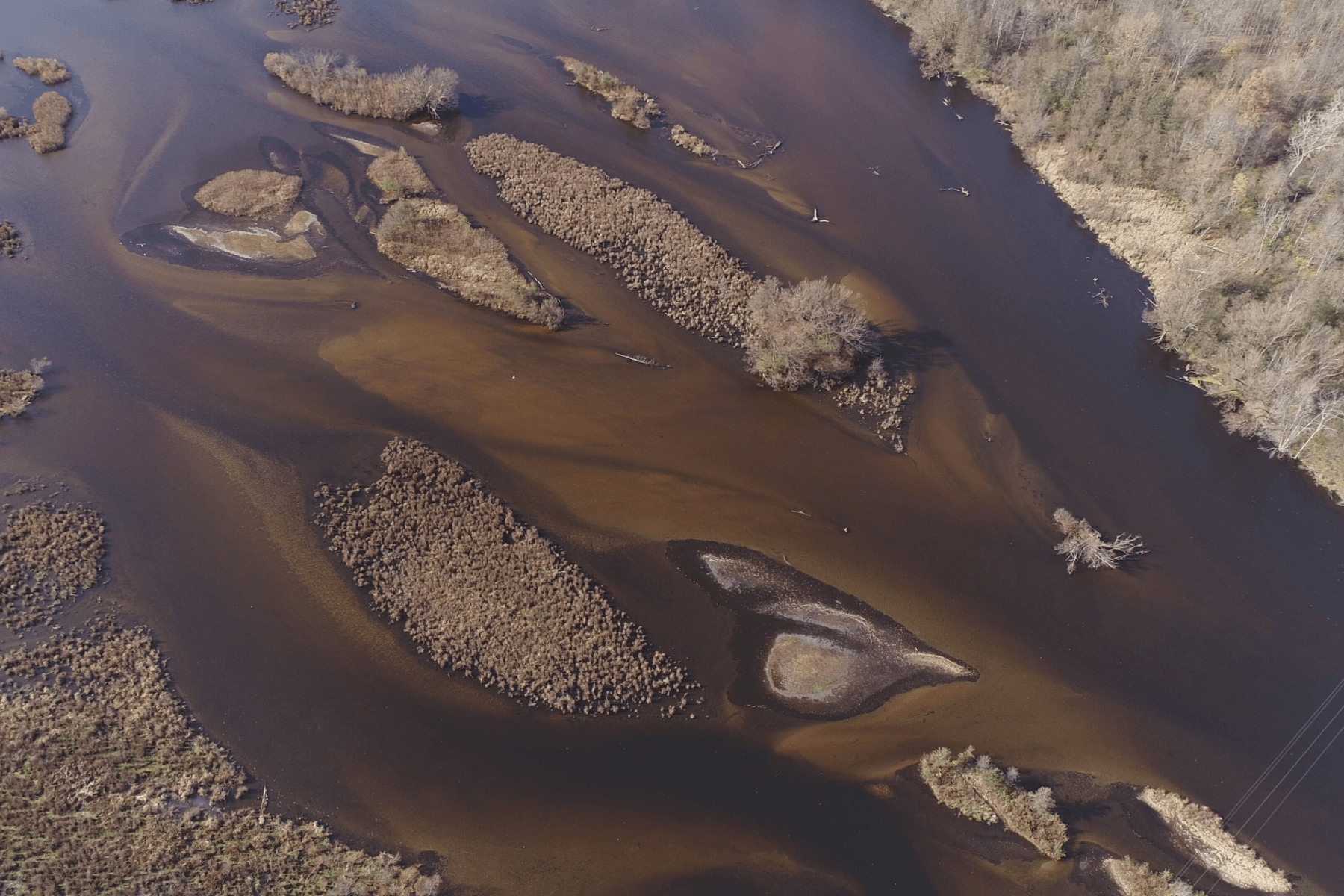
In the spring of 2024, toward the end of the Biden administration, the U.S. Environmental Protection Agency announced a new rule to at long last fix the problem of coal ash. A byproduct of coal burning, coal ash is a neurotoxic and carcinogenic cocktail of arsenic, lead and mercury — along with other heavy metals and radioactive compounds. There is scientific proof that it finds its way into the bodies of children, with the concentration of heavy metals found in nail samples from children testing 10 to 20 times higher than those of children living in other areas.
Grown-ups suffer, too. The EPA’s own research has found that people near coal-ash impoundments who rely on groundwater for their drinking water have as much as a one in 50 chance of getting cancer in their lifetimes. (The national average for cancer risk is roughly 4.5 in 1,000.)
A few months into Trump’s second term, however, newly appointed EPA administrator Lee Zeldin announced the EPA would give industry more time to address the coal-ash problem, extending the already lenient deadline for compliance from 2029 to 2032. The EPA cited the change as necessary for “electric grid reliability” and “energy dominance” as a result of the rising energy demands of data centers and artificial intelligence. Zeldin has now given those companies three more years to contaminate local groundwater with effluent from leaky storage ponds, poison the air with coal-ash dust, and imperil the health and life expectancies of both children and adults.
Zeldin’s regulatory recklessness doesn’t end there. The agency under his leadership has proposed lifting limits on DNA-damaging formaldehyde, cardiotoxic soot and climate-wrecking methane, which leaks from poorly maintained and monitored oil and gas sites. It is erasing Biden-era restrictions on mercury releases from coal plants, allowing the potent neurotoxin known to inhibit fetal brain development to proliferate in our water and air. So much for making America healthy again.
Zeldin has even proposed repealing health standards for the notorious per- and polyfluoroalkyl substances — the “forever chemicals” grouped under the acronym PFAS. After years of lobbying by environmental groups, the EPA in 2024 finalized regulations on the chemicals, which are known to cause cancer, developmental disorders and fetal anomalies. Two PFAS, PFOS and PFOA, were found to have no safe limit.
An agency whose job it has been to protect public health by enforcing decades-old environmental laws will no longer write its rules with public health in mind.
Public health advocates had hoped that Zeldin would hold firm on the PFAS rule when he took over the agency. Certain counties in New York state had seen clusters of kidney and breast cancer linked to PFOS from local plastics manufacturing, and Zeldin, as a Republican representing the state’s first district until 2023, had voted twice for legislation that would limit the substances in drinking water and force polluters to pay for cleanup. Instead, while the EPA affirmed regulations for the two worst PFAS, it gave polluters two more years, until 2031, to comply. Industry lawyer-turned-senior EPA official Steven Cook has proposed shifting the estimated billions of dollars in annual cleanup costs from industry to taxpayers.
Most recently, and most prominently, Zeldin, in a February 13 news conference with Trump, capped one of the three hottest years on record (right behind the two years that came before) by announcing that the EPA would revoke the “endangerment finding” — a 2009 decision to regulate greenhouse gases under the Clean Air Act.
The decision to consider climate-warming emissions a danger to public health had been prompted by a 2007 U.S. Supreme Court ruling on Mass v. EPA, in which several states, with Massachusetts at the helm, sued the agency to put carbon dioxide and its analogs on the list of air pollutants subject to regulation. The scientific finding had put vehicle emissions, coal plant closures and methane leaks from oil and gas operations under the agency’s legal purview, driving policy decisions not just for immediate air-quality benefits but for the long-term health of the planet. It led to the first-ever federal rule for limiting heat-trapping emissions from cars and trucks.
The recession was not unexpected. Fossil-fuel interests had been dragging the EPA to court over the finding throughout the Obama administration and lost every time, including at the U.S. Supreme Court. Zeldin had put the finding on the ropes back in March of 2025 as part of a plan for the EPA he calls “Powering the Great American Comeback,” as if the U.S. economy was suffering some sort of collapse due to excessive regulation.
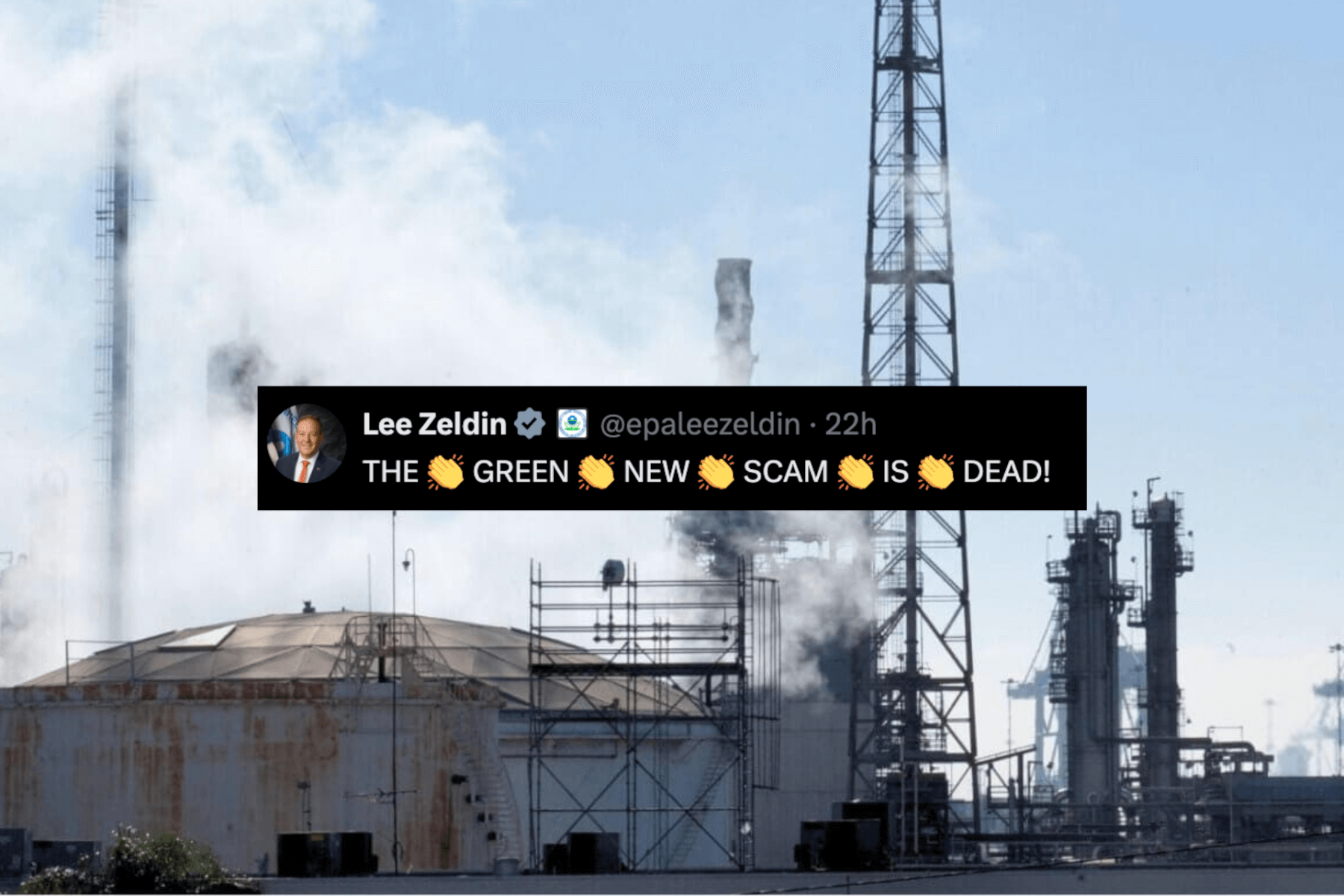
Zeldin often takes to his X (formerly Twitter) page to express his support of President Trump’s policy changes outside of the scope of the EPA. Photo by Gregory Bojorquez
In fact, despite the shortages of the COVID years and supply-chain problems owing to global unrest, the supposedly regulation-burdened Biden economy was thriving. Employers were adding a whopping 400,000 jobs a month from 2021 to 2024; consumer spending was up and the nation’s real gross domestic product — a measure of the output of goods and services adjusted for inflation — held steady at around three to four percent. In the third quarter of 2023, real GDP topped 4.7 percent, setting a record high. Inflation hit nine percent in 2022 — largely because of the Russian invasion of Ukraine — but subsequently fell to 2.7 percent by late 2024. This wasn’t in spite of greenhouse gas regulations; it was, at least in part, because of the economic stimulus that came with prodding U.S. manufacturers to invest in domestic battery production, solar and wind technology and electric cars.
The $1 trillion worth of regulatory burdens Zeldin now says will be avoided by rescinding the finding is a fiction. It only means that polluters can go back to whatever they did before, reviving old coal plants and letting unburned methane leak into the atmosphere. And yet, the pamphlets the current administration circulated to justify wiping out nearly two decades of climate laws fail to address how much it will cost to recover from the climate-induced disasters already ravaging the country.
It will no longer attach a dollar figure to early death caused by a contaminated environment […] They have reduced the value of human life to zero.
By EPA’s own analysis, regulating greenhouse gases would “deliver $99 billion in net benefits by 2055,” as Rachel Sakata of the Oregon Department of Environmental Quality pointed out at a public hearing on the proposed rollback. Those savings included avoided emergency-room visits for respiratory ailments, hospital stays and heat-related deaths.
The documents that ballyhoo Zeldin’s achievements also fail to discuss the consequences of freeing polluting industries to discharge their poisons into our air and water. The analyses only debate the cost polluters face when installing technology to control their pollution, not the benefits to asthma sufferers of not having to breathe ground-level ozone, nor the cancer cases avoided by eliminating PFAS from drinking water, nor the emergency room visits that didn’t happen because dirty air wasn’t giving people heart attacks. No one writing the agency’s documents these days will calculate the cost to society of developmental disorders in children exposed to coal ash since birth.
On this, Zeldin has been explicit: An agency whose job it has been to protect public health by enforcing decades-old environmental laws will no longer write its rules with public health in mind. It will no longer attach a dollar figure to early death caused by a contaminated environment. A method of persuading both industry leaders and residents that the rules were necessary, which has prevailed since the Reagan administration, will no longer factor into the decisions of environmental regulators. They have reduced the value of human life to zero.
***
This is not just a political shift, or even a policy one. It is the reversal of more than 60 years of progress toward a cleaner environment, of efforts to protect lives from deadly substances introduced into the world before their risks have been assessed. In 1962, Rachel Carson, in her landmark treatise Silent Spring, heretically took the postwar miracle-compound of pesticides to task by informing the world that life on earth had been imperiled by “a contamination of our environment with substances with incredible potential for harm”— substances that can both kill us outright and “shatter or alter the very material of heredity” upon which our futures depend. In the decades since, global policy, pushed by the environmental movement Carson helped usher in, has been a slow, painful crawl toward cleaning up our shared air and water.
Along the way, there have been setbacks, slow-walking and violations overlooked. Like every regulatory agency that might seek to rein in corporate excess, the EPA, in its nearly six decades, has almost always been at the mercy of political shifts. Reagan’s first-term administrator, Anne Gorsuch Buford (mother of U.S. Supreme Court Justice Neil Gorsuch), tried her best to trample on legal ethics to the benefit of polluters. Then, just as Oklahoma oil baron Scott Pruitt, who served as Trump’s first EPA administrator, she was forced to resign in disgrace after just two years.
Christine Todd Whitman, who served as New Jersey’s governor before heading up the EPA in the first Bush-Cheney term, wrongly told first responders at Ground Zero on 9/11 that they didn’t need respirators, but at least she never denied the threat to the planet posed by greenhouse gases.
Once those laws and the agency that enforced them are gone, it’s hard to imagine how we ever get them back.
What Zeldin is doing at Trump’s EPA is something entirely different, something that reduces previous administrations’ hostility to environmental law to mendacity and short-sightedness. He is reversing the course Carson set us on when they warned of our impending collision with extinction. Zeldin is sending the whole regulatory vessel back out to sea.
The consequences are not abstract. In short, people — children, especially — will die, whether from cancers triggered by PFAS, from asthma and lung cancer and heart disease caused by a lifetime of breathing soot and other air contaminants, or from the floods and droughts and supercharged hurricanes that are the consequences of the ever-warming earth.
***
Soon — if the oil, gas and chemical industries get their way — the U.S. Environmental Protection Agency, born of the ecological disasters that terrified the nation in the late 1960s, may simply cease to exist. Zeldin has already begun the dismemberment. In mid-January of this year, he announced a plan to cut the agency’s workforce by 65 percent, and the overall budget by even more. This means oil will ruin our beaches, carcinogens will turn up more densely in our drinking water and rivers, clogged with industrial waste, may once again burst into flames. And more than half a century of laws to prevent and slow such disasters will disappear.
As we have all learned too well over the past year, laws without enforcement mean nothing. The laws that undergird U.S. environmental regulation and its enforcement were hard won over the last half-century and only came into being as the public witnessed oil spills on pristine beaches and rivers bursting into flames. Once those laws and the agency that enforced them are gone, it’s hard to imagine how we ever get them back.
An environmental movement that has long relied on challenges to polluters based on what seemed like bedrock clean air and water laws that followed in Carson’s wake is going to have to get creative. Meanwhile, it might do us all well to revisit Silent Spring.
Help us sustain independent journalism...
Our team is working hard every day to bring you compelling, carefully-crafted pieces that shed light on the pressing issues of our time. We rely on caring supporters like you to help us sustain our mission. Your support ensures that we can continue to provide deeply-reported, independent, ad-free journalism without fear, favor or pandering. Support us today and make a lasting investment in the future.

RELATED STORIES

Award Winning



Today’s environmental and social justice challenges are unprecedented, and require an unprecedented collective effort.


Stay updated on our latest features, events and more. Subscribe to our Note From the Nest newsletter!
