
Austin City Limits
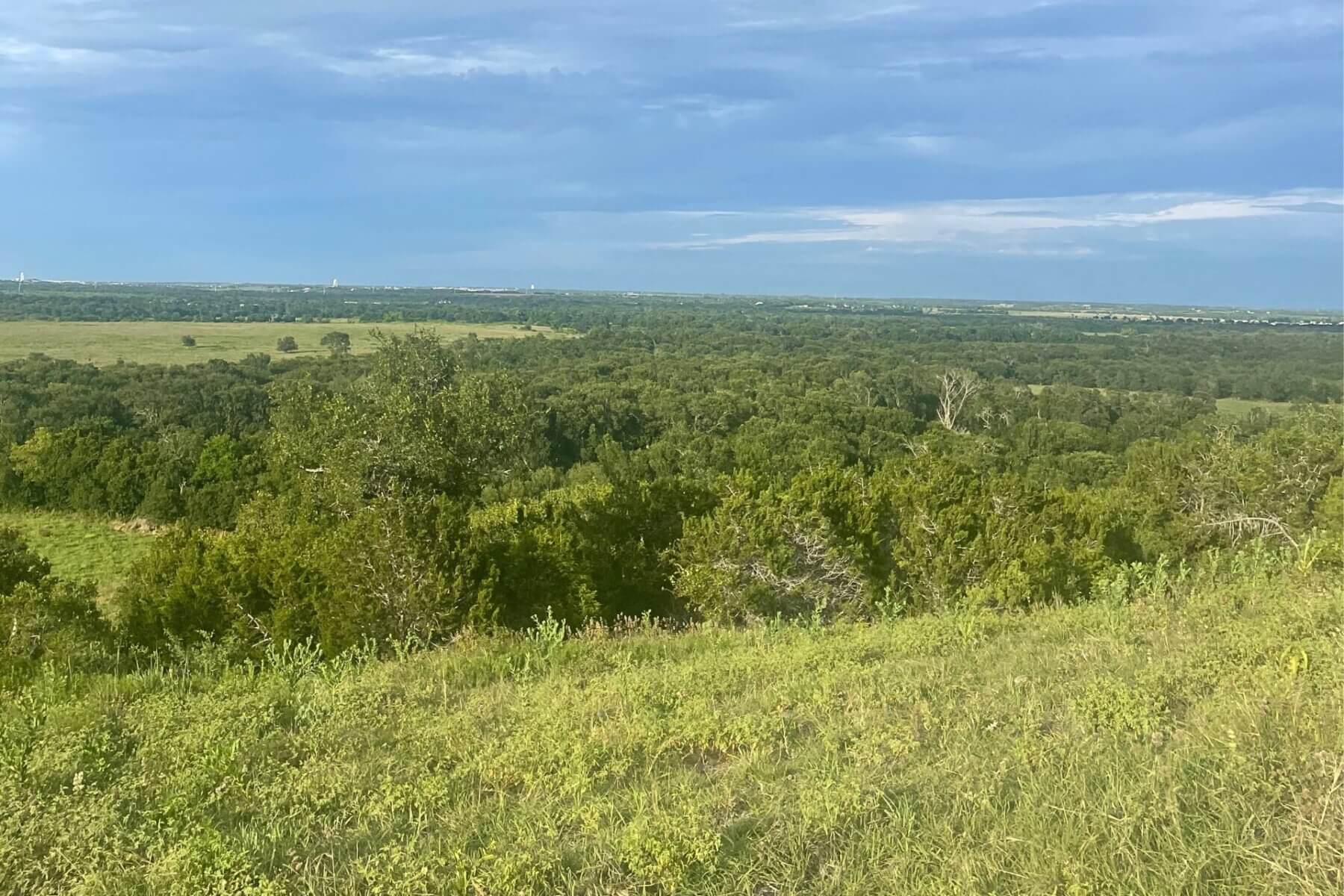
Good food, good people and good music are quintessentially Austin, Texas.
The allure of free-spirited cowboys, tacos galore and lush, green hills continues to draw more people to the Texas Hill Country. In 2023, the greater Austin metropolitan area gained 50,000 residents and ranked the 7th fastest-growing metropolis in the nation by the U.S. Census Bureau. Travis County, one of five counties that make up this metropolis, saw 18 percent growth over the past 10 years.
As exciting as this growth may sound, it means more mouths to feed. From rising grocery costs to loss of farmland (primarily due to development), the state of the food system in Travis County is changing. The 2022 Travis County State of the Food System Report designated 14.4 percent of county residents (roughly 193,300 people) as food insecure. Though, this food insecurity does not affect all communities equally; at the start of the COVID-19 pandemic, 60 percent of Austin’s Hispanic/Latinx population reported being food insecure, compared to 24 percent of the white population. Almost 85 percent of all Travis County residents do not meet the daily food and vegetable intake recommendations.
Environmental degradation and our changing climate heavily impact the food system and contribute to this insecurity. In Austin, 3.5 million tons of greenhouse gas (GHG) emissions are attributed to food consumption, equivalent to powering 681,011 homes annually. A further 1.8 million tons of GHGs are attributed to food waste in the region. GHG emissions are known to trap heat in the atmosphere and contribute to rising temperatures. In 70 years, “Texas is likely to have three or four times as many days per year above 100°F as it has today,” according to a 2016 Environmental Protection Agency report.
The National Weather Service classifies the Austin metropolitan area as a Humid Subtropical Climate, “characterized by long, hot summers and short, mild winters, with warm spring and fall transitional periods.” Average temperatures in Austin reach highs of 90 degrees from May 26th to September 23rd. Warm winds from the Gulf of Mexico increase humidity in Austin, creating excruciatingly high temperatures. While “June is now the third wettest month of the year,” the following months “tend to be relatively dry.”
Because extreme heat causes water to evaporate rapidly, rising temperatures across Texas exacerbate drought and complicate food production. According to Austin Water Drought Response, Austin is currently in Stage 2 water restrictions, and the Highland Lakes, from which the city draws its water, have been depleted to 900,000 acre-feet. Soil depletion, desert expansion, and air pollution are other major concerns for food producers that the EPA has linked to rising temperatures. “Heat is probably our biggest threat when it comes to climate change,” noted Joanna Arendt, the Environmental Resiliency Project Manager for Travis County.
While summers in Austin are heating up, winters are heading toward extreme temperatures. In February 2021, winter storm Uri sent every county in Texas into a winter storm warning, with statewide rolling blackouts and record-low temperatures. Austin’s data reporting system found that the city reached 6 degrees Fahrenheit and received 6.4 inches of snow for the first time. $195 billion in damages were recorded statewide. Over the following two winters, in 2022 and 2023, Austin experienced similar, yet not as extreme, freezing temperatures and lack of preparation, specifically concerning food and resources.
With an eye on developing a robust local food system that balances population growth with the ever-present threat of climate change to improve life for civilians, Austin and Travis County developed its first comprehensive food plan. The plan’s end goal is described as, “a just, accessible and culturally diverse food system, built by undoing inequities, that supports and sustains inclusive, thriving communities, healthy ecosystems, and solutions to climate change where everyone can reach their full potential now and for generations to come.” After winter storm Uri, “there was renewed interest in making sure our food system is resilient,” according to Arendt.
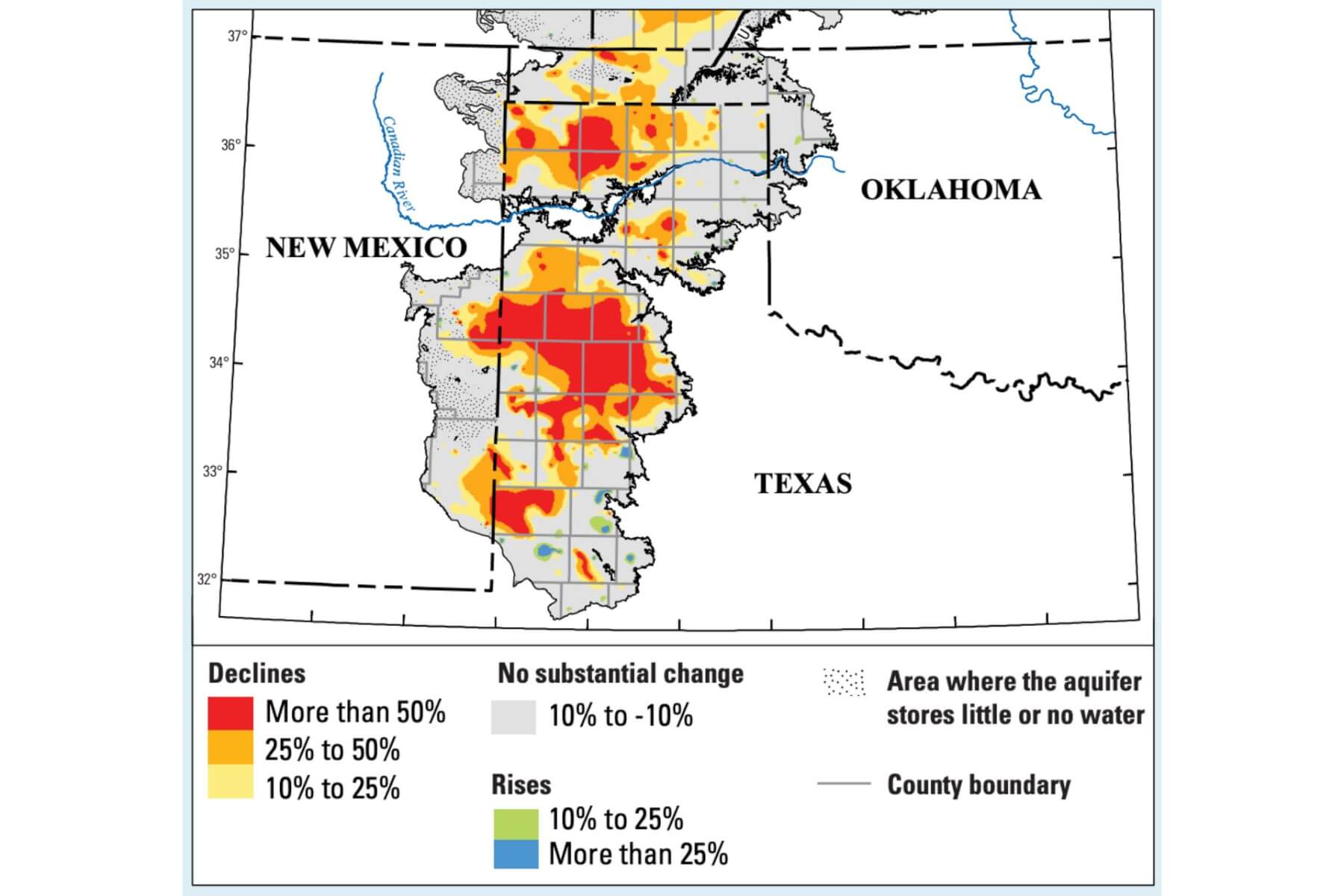
Percent depletion of ground water in the High Plains Aquifer, 1950–2013. Approximately 14 percent of the farmland in Texas is irrigated; in the Panhandle and the plains to the south, most irrigation water is ground water from the High Plain. Courtesy of United States Geological Survey
“Food production in Central Texas is a complicated story,” noted Edwin Marty, the first Food Policy Manager for the city of Austin, “and we’re losing farmland at an unprecedented rate.” To be more precise, the Food System Report reported 16.8 acres of farmland lost every day in Travis County, and only 0.06 percent of food consumed in the county is produced locally.
Preserving green spaces and sustainably (both economically and environmentally) increasing local production would benefit the food system and the vision set forth by the food plan.
The 2022 Travis County State of the Food System Report accounted for over 1,000 farms, 53 community gardens, 218 school gardens and three food forests in Travis County, each with its unique challenges and approach to agriculture. To better understand the mindset of local food producers, I spent the summer volunteering at multiple farms and interviewing farmers around Texas. In doing so, I sought to learn more about the best paths forward for sustainable agriculture in an increasingly unsustainable climate. The following is an analysis of the farms I traveled to and the strategies unfolding in Travis County.
Green Growth at St. Edward’s
St. Edward’s University, a private, liberal arts college in Austin, has made strides in recent years to become more climate-conscious and was named a notably sustainable campus in The Princeton Review Guide to Green Colleges 2024. Roy Johnson, campus arborist and sustainability coordinator, is at the heart of keeping the school green. With help from an environmental science professor and two (now former) students, Johnson began planting a food forest across from the baseball fields at St. Edward’s in November 2022.
Johnson described a food forest as a type of “agriculturally productive ecosystem” and a “stacked system” where “every component has more than one purpose.” The plants in a food forest protect and nurture one another. For instance, onions act as pest repellent, trees provide shade to smaller crops, and beans supply nitrogen to the soil. The food forest is available for “anyone at all” to harvest. “I’d like to get more students out here,” Johnson said. “College students deal with their own food issues.” One of the forest’s goals is to “provide free food and show [students] how to cook dishes with it.”
In partnership with Cherokee Township, corn, squash, and beans — referred to as, “The Three Sisters” in Indigenous cultures due to their symbiotic properties — grow together in one row of the forest. “Someone from Cherokee Township…was collecting the silk from the corn. She’s going to share them with the doulas in the Township, because [the silk] is used as a blood purifier,” Johnson explained. “Western civilizations have assumed that they can improve on nature, and now we’re paying the results of that.” Reverting to traditional farming practices, honoring native traditions, and working with a landscape rather than changing it are all ways to preserve land while growing necessary resources.
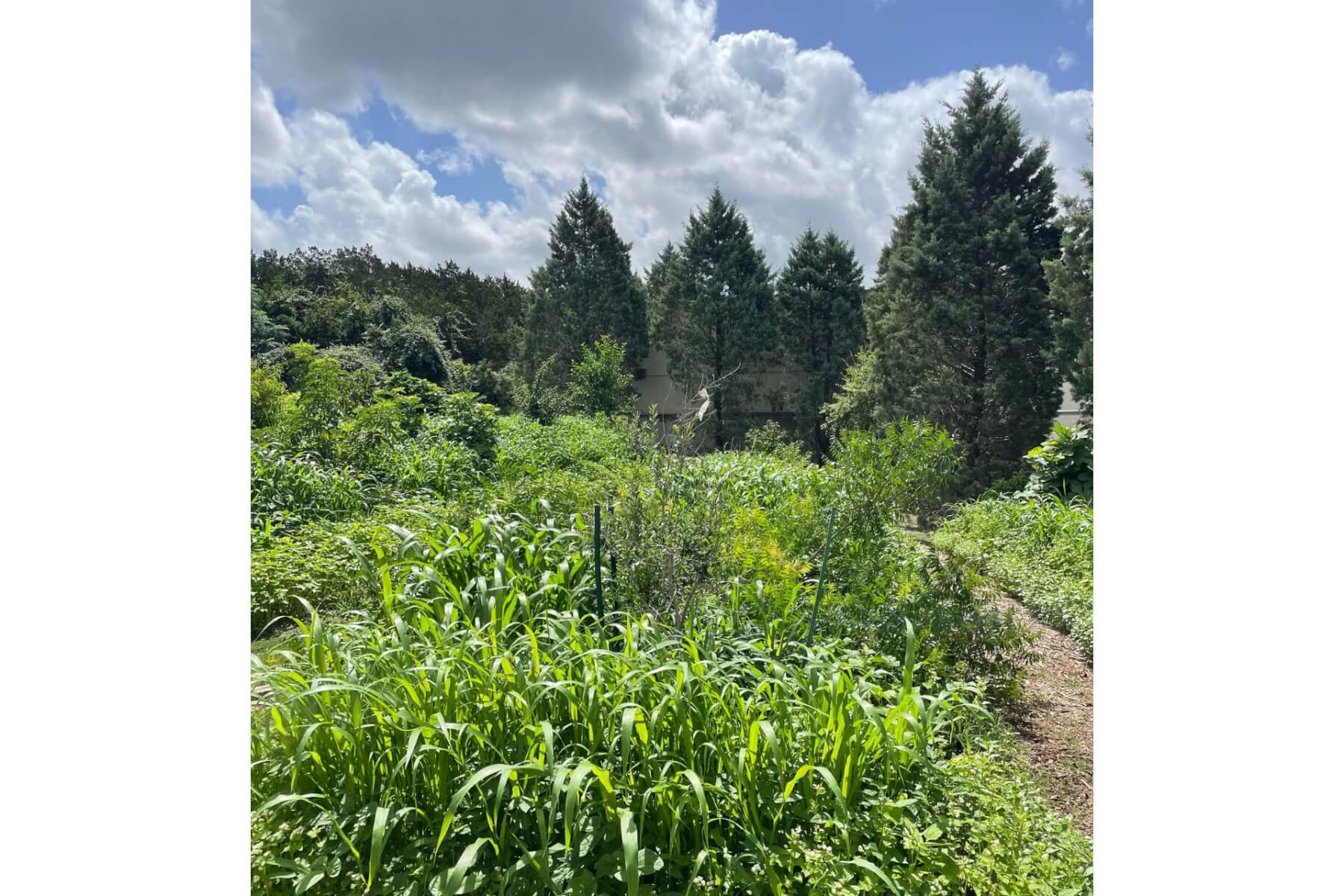
A single row of native grasses in the St. Edward’s Food Forest will help support an ecosystem that retains water and and improves biodiversity. Photo by Piper Guinn
To ensure the forest can thrive, Johnson installed an irrigation system that he “regulates based on the conditions,” watering more heavily in the summers, while maintaining a water-conscious mindset. He would “like to try dryland farming, which is big in West Texas,” to conserve water, a major concern among Central Texas farmers due to the ongoing regional drought. While it has been a wet year for Travis County, keeping crops alive during hot, dry summers is a major obstacle for Texas farmers.
St. Edwards University also hosts a community garden in the same area as the food forest, where students can rent a plot of land to plant crops. The garden and food forest are fully organic; pesticide use is prohibited. Similar urban gardens are growing in popularity across local institutions. For instance, the University of Texas at Austin established a Microfarm in 2012 that practices organic and regenerative agriculture. Morgan Heard and Hillary Xu, both students at UT, currently lead the team. “We currently have 27 team members,” Heard said. “We average 30 to 60 volunteers every Sunday [during the school year].”
A Day at the Beach
College campuses are not the only community in need of fresh produce for the food insecure, made more relevant in Austin due to the city’s history of resource sanctioning. In 1928, city planners enforced residential segregation via a housing plan that “forced Black residents in Austin” into a six-mile stretch in East Austin, with East Avenue as the dividing line. This sort of policy, known as redlining, was commonplace in America at the time. As a result, families of color in Austin lived primarily to the east of 1-35 for generations, where resources are harder to come by.
The lush canopies of Festival Beach Food Forest (FBFF) are tucked away on this side of 1-35, a rare spot of green in Austin’s industrial district, where pollutants from power plants degrade the air and water. Deliberately established near a high-rise apartment building for low-income seniors known as the RBJ Center, FBFF is a source of free, fresh produce for the food insecure. Anyone is welcome to roam the dense rows of foliage to find what they need or just connect with nature.
The first 100 trees at FBFF were rooted in 2015 on the two-thirds of an acre allotted by the city of Austin. The East Feast Coalition initiated this project by “drawing on Indigenous practices of caring for the land and people” to design a food forest with seven layers and a permaculture design, as stated on the FBFF webpage. Each layer of the forest contains different crops, with low-lying medicinal herbs on the bottom and large fruit trees coming out on top. Similar to St. Edward’s Food Forest, every plant plays a role in a self-sustaining environment, with no need for fertilizers or excessive tilling, disrupting the soil.
Water conservation is crucial for maintaining a healthy ecosystem, so FBFF designed a system of berms and swales to distribute water. Shallow trenches, or swales, lock moisture in the soil, while the mounds, or berms, provide a “high and dry planting area.” While artificially designed, this system draws inspiration from natural riparian and wetland ecosystems. In addition to conserving water, berms and swales contribute to soil health by fostering beneficial bacteria. “There’s a big difference between healthy soil and unhealthy soil,” explained Aly Tharp, a regular FBFF volunteer. “Unhealthy soil — soil that’s dry and low in nutrients — excretes carbon and methane into the atmosphere.” To further promote soil health, FBFF plants mushroom blocks, which “locks carbon into the Earth,” according to Tharp. “High mushroom content is good, because it helps with decomposition and delivers nutrients to plants.”
The city of Austin authorized FBFF to expand this fall, adding two and a third acres to the existing property. Expanding the property is a good sign for sustainable agriculture, but may be controversial in other ways. Because “green spaces and tree canopies are so desirable,” FBFF attracts wealthy people to seek residency nearby, in a process Tharp described as “green gentrification.” She elaborated, “It’s kind of a catch-22” to develop green spaces in low-income communities without increasing the cost of living, but “gentrification goes beyond our control.” Looking to the future, Tharp would like to see more “support for green jobs” from the city. Additional resources could combat green gentrification and ensure that nature conservation benefits all communities and honors Indigenous cultures that came before.
Is Irrigation Old News?
To embrace sustainable solutions in agriculture and benefit the community, food producers need to break away from stereotypical land and water use practices. Luckily, Tim Miller isn’t your stereotypical farmer. In his words, “I’ve never been on a tractor in my life. I don’t wear boots. I don’t have a hat. And I don’t drive a truck.” But it’s not the uniform that makes the farmer, it’s the practice. Miller has honed his practice on his property in Kyle, called Millberg Farm — a 35-year certified organic farm. Millberg Farm is “the first and oldest continuously operating Community Supported Agriculture in Texas,” according to Miller, and uses only saved rainwater. This method, known as dry farming, eliminates excess water usage.
In 1989, Miller began to grow vegetables without irrigation on a 14-acre plot in East Austin, hand-watering crops instead. He acquired the Kyle property in 1991, which became the sole location for Millberg farm in 1996. Around his property, Miller has set up buckets, barrels, and whatever else he can find to collect rainwater. “I just dip watering cans in and water the rows,” Miller said. Scrap metals, set up at an incline, also divert water into vegetable plots during a rainstorm. In addition to saving water, Miller uses materials from salvage yards rather than buying new — saving money and resources. When people ask him, “How can low-income people farm sustainably?” Miller responds, “You salvage materials.”
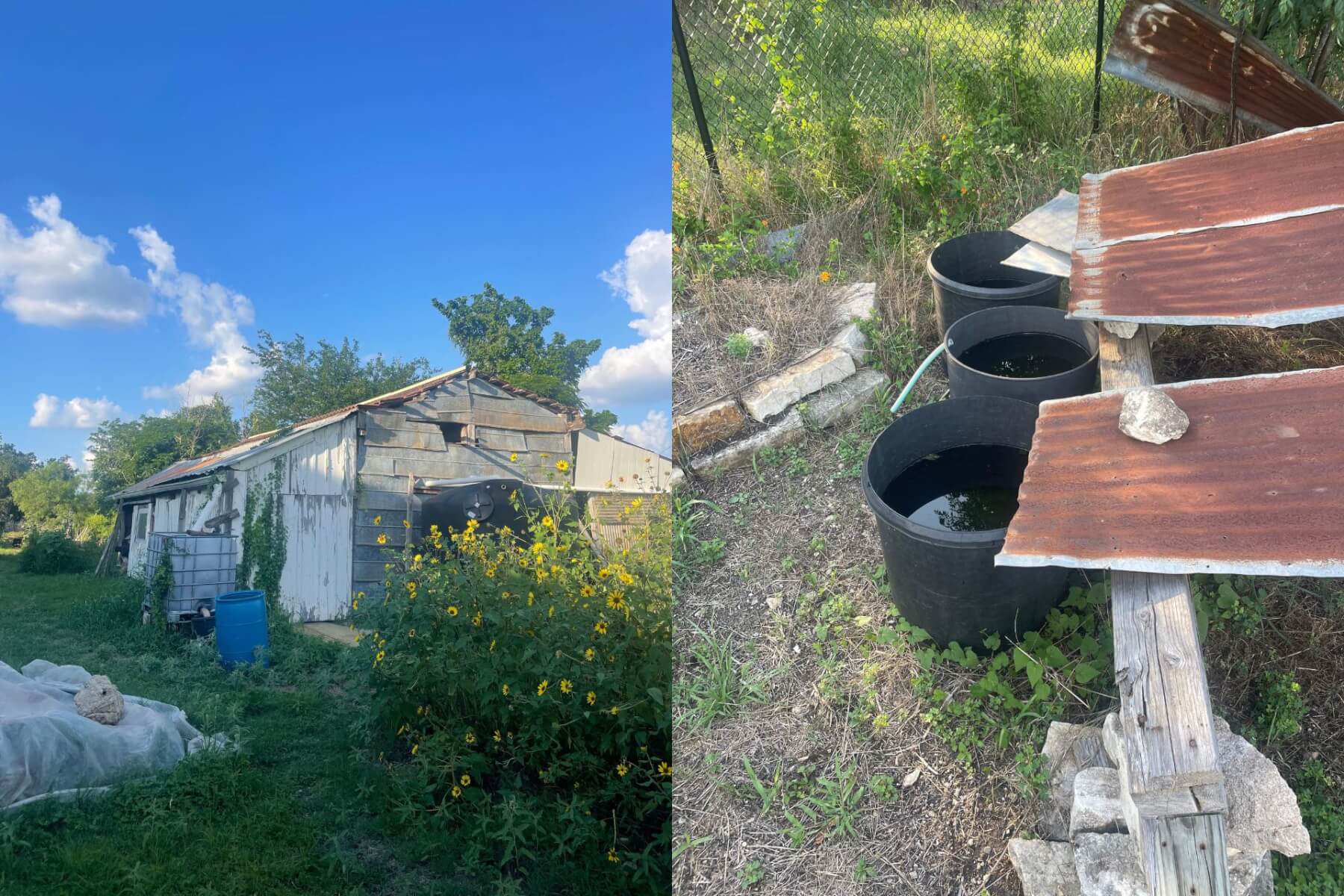
Getting resourceful: Miller build a shed out of salvaged materials (left) and captures rainwater through his DIY system (right). Photos by Piper Guinn
Depending on the season and how much it has rained recently, Miller rotates the vegetables he grows in each plot, which helps keep the soil healthy by providing it a variety of nutrients. “With the way our weather has gone this year,” Miller should “have enough rainwater to grow carrots,” which require additional watering due to their shallow roots. Because rain patterns can change at the drop of a hat, Kyle “could still dry out pretty nicely,” and Miller would need to rethink his planting. These unpredictable weather patterns are a drawback to relying solely on rainwater for farming. To retain moisture, Miller added blacktop clay to his soil and dug furrow dikes — shallow dams between crop rows — to reduce runoff.
Miller’s dry farming system isn’t seen often, likely due to the commitment and setup required to function. “Most farmers are trained to use water from aquifers,” Miller explained, “and they’re too ingrained with that mentality.” In 2015, the USDA Economic Research Service found that 42 percent of total freshwater withdrawals in the US were used for irrigation, and in 2017 found that Texas accounted for 7.5 percent of US irrigated cropland (this is not surprising due to its size). Resources for dry farming in Texas are scarce, but with our changing climate, water is becoming scarce, too. By reducing agricultural water use via dry farming, that water could be conserved and redirected.
Like many small farmers in a growing metropolis, Miller is locked in a battle for land with the city of Kyle. City planners want to expand infrastructure and tear down Millberg farm to build a highway through it, but Miller has prevented this. Miller doesn’t plan to sell anytime soon and signed a development agreement to ward the city off for seven more years. His passion for sustainably growing organic produce for the community lives on, offering fruit and vegetables at a lower price to “knock down everyone’s food bill.” However, his skirmish with the city is part of a larger issue.
Conservation in the Hill Country
Building farming programs and developing resourceful ways to farm is one battle; protecting farmland and greenspaces is another. To address this, Travis County launched a conservation easement program, working alongside landowners to “retain ownership of their property while ensuring that it will remain undeveloped in perpetuity.” The program relies on “voter-approved bond funds.” In 2011, $8.3 million was approved for easements, and an additional $16.6 million was approved in 2017. The National Resources Conservation Service (NRCS) has a similar program, using USDA funding to pay ranchers and farmers to give up the developmental rights of their land to be conserved. The USDA requires a local match to help fund each easement, and Travis County has stepped up in the past to provide that match.
In 2008, Anne Brockenbrough contacted NRCS’ easement program to conserve her 530-acre cattle ranch in Manor, on the northeast side of Austin. Her ranch borders Wilbarger Creek, one of the targeted conservation corridors for Travis County. With financial support from the County and a handful of local organizations, a $2 million easement was settled for Brockenbrough’s land in 2011. The conservation easement “prevents any buildings whatsoever,” according to Brockenbrough.
“I didn’t want anything to happen to my land,” the rancher says, “and I didn’t want it to happen to my neighbors, either.” Without ownership of their land, many people around Manor would lose their source of income. “On the east side of town, we’re farmers and ranchers. Most of my neighbors, they’re just getting by,” Brockenbrough added. To help her community, Brockenbrough started the Wilbarger Creek Conservation Alliance (WCCA) with her neighbor Jon Beall. The WCCA is a registered 501c3 non-profit and works with Travis County and the NRCS to develop land easements. Together, these organizations have conserved not just Brokenbrough Ranch, but the following as well: Comanche Crossing Ranch, Kelinske Ranch, 3 Creeks Farm and Cottonwood Creek Mitigation Bank.
Because of her commitment to land preservation, Brockenbrough is conscious of how she manages her ranch. Cattle ranching has received heavy criticism in conversations of climate change due to the GHG emissions and intensive resource depletion associated, but Brockenbrough sees herself as a sustainable rancher. “I don’t let the cattle overgraze. If it’s really dry, I move the cattle off,” she says. Plus, “cattle can add natural fertilizer into the soil,” so rotating her animals helps with plant growth.
In addition to rearing cattle, Brockenbrough cuts and bales hay. “I make choices to cut hay sustainably and preserve Indian grass,” she says. “I’m careful about the times of year I cut. I encourage native plants to grow and manage my land for diversity.” When it comes time to sell the hay, the rancher “makes a point of going to her neighbors first” to give them the best price. Keeping it local lowers the environmental footprint associated with her business.
The rancher also runs a pet rescue operation on her land, furthering her dedication to all living things. Since beginning her journey of land conservation, Brockenbrough has rescued 200 animals, preserved 2,000 acres of land and planted 200,000 trees, with no intention of stopping. Thanks to Brockenbrough’s work, ranchers and farmers in Travis County are secure in their business, which alleviates financial stress. This work also aligns with the County’s aim to protect & expand green spaces.
Beefing with Animal Agriculture
Although not all animal agriculture operations are environmentally disastrous, the impact of the meat and dairy industry on climate change is undeniable. Animal agriculture alone is responsible for 14.5 percent of annual GHG emissions worldwide, and livestock consumes 72,650 billion gallons of water per year in the US. In addition to environmental impacts, many big corporations in animal agriculture impose strict regulations that take a toll on contract farmers.
Six years ago, brothers Sam and Bo Halley, who ran a poultry farm in northeast Texas, grew tired of being “slaves to a corporation” and started looking for a way out, according to their niece Morgan Deany. “My uncles couldn’t handle the mental and physical toll,” Deany added. In partnership with Transfarmation, an offshoot of MercyForAnimals, the Halley family turned their poultry farm into a successful hemp operation. They stopped farming poultry in 2018 and stopped ranching cattle in 2021.
“The working conditions [on the farm] were horrible,” Deany explained. “My uncles were breathing all kinds of chemicals, which can cause sleep disruptions.” The Halleys’ contract required them to pack large barns wall-to-wall with chickens and pump them full of chemicals. They were also required to spray weed killer outside the barns, causing long-term damage to the soil and wild grasses. “Killing off beneficial plants…that damages the entire ecosystem,” Morgan lamented.
The hemp now grown using Transfarmation’s initial grant is undergoing the process of becoming CBD, and no new hemp has been planted. Deany and her family “wish [they] could do more with the land we have” and plant crops again in the future. Unfortunately, the process has been difficult due to the damage previously caused by fertilizers and chemicals. Deany received a grant from Transfarmation to begin a flower garden, but that project has not yet begun. She’d like to “grow mushrooms or something” as well. “We’d rather give back to the earth than do anything that causes harm. Hemp rejuvenates the soil, and mushrooms have benefits, too.”
Halley Farm’s current focus is on animal rescue, for which they were granted a 501c in 2017. They primarily rescue dogs and have 60 in rotation at their kennels at a time and 50-60 involved in a foster network. “We mostly take in special needs and abused pets,” Deany said, adding, “Overcrowded shelters are a huge issue in this area.” Halley Farm also received 100 donkeys from Peaceful Valley Donkey Rescue that would have been “sent down to Mexico to become food or glue.” Instead, their manure benefits the grass on Halley Farm.
While Halley Farm made the switch to give back to the Earth, many farmers and ranchers in Texas are stuck, implementing unsustainable practices that benefit neither the planet nor their wallets. “People don’t realize they have other opportunities. If you’ve grown up in this area, it’s all you know,” Deany said. She advised fellow farmers looking to follow a similar path to “be open-minded and start by looking into what grows well in your vicinity. Reaching out to a stable company like MercyForAnimals can provide mental and emotional support, and equip farmers for a successful future.”
***
Austin’s growth mirrors many burgeoning metropolises in the Southwest and an ongoing partnership between elected officials and food producers in Austin is critical to cultivating a local food system that maximizes output while minimizing environmental and economic costs. Development with these goals in mind can help Austinites and Travis County residents put dinner on the table and be prepared for whatever Texas’ climate throws their way.
For public servants such as Joanna Arendt and Edwin Marty, bolstering resilience for local Texans is a top priority. “People who are more vulnerable in general are more vulnerable to climate change, whether that’s due to age or health or several factors,” says Arendt. For this reason, the Environmental Resiliency Project focuses on marginalized groups, similar to how many producers I met with were keen to assist those who have difficulty providing for themselves. Going forward, Arendt and her team hope to “incentivize climate-friendly practices” and increase “access to green space” without “taking land from farmers.”
“People who are more vulnerable in general are more vulnerable to climate change, whether that’s due to age or health or several factors.”
Regarding food production, the Austin Food Policy Board is most concerned by drought and infertile soil. “Water resources are vital in Central Texas,” Marty emphasized. But due to rising temperatures, Travis County must get creative with these resources. According to Marty, the city of Austin is looking into “desalination plants at the coast” and “purple pipe programs” that recycle water from a community’s sewage system to conserve resources. For small-scale farms like Tim Miller’s dry farming via recycled rainwater is a useful measure to save money and water.
While these measures are viable solutions, Marty noted that Central Texas soil is not designed for agriculture. “There was very little agriculture in Central Texas pre-colonization,” he explained. Rather than working against nature to grow crops locally, Marty pondered whether importing more food might lower food costs. A cost-benefit analysis of excessive water consumption versus excessive food transportation is necessary to determine which option is the lesser evil. This sort of analysis is “something we’re considering,” said Marty, but not enough research has been done. Regardless, protecting food producers and providing them the tools necessary to thrive remains vital to the local food system.
Small farms, community gardens, and food forests in and around Travis County will continue to demonstrate the environmental and economic benefits of sustainable agriculture and land conservation. Thanks to committed farmers, ranchers, and government officials, the path toward a more robust food system is illuminated and elucidated in the Austin-Travis County food plan.
Help us sustain independent journalism...
Our team is working hard every day to bring you compelling, carefully-crafted pieces that shed light on the pressing issues of our time. We rely on caring supporters like you to help us sustain our mission. Your support ensures that we can continue to provide deeply-reported, independent, ad-free journalism without fear, favor or pandering. Support us today and make a lasting investment in the future.

RELATED STORIES
Award Winning



Today’s environmental and social justice challenges are unprecedented, and require an unprecedented collective effort.


Stay updated on our latest features, events and more. Subscribe to our Note From the Nest newsletter!
