
Biden Time
I have been a Democrat my whole life, even before I cast my first vote at age 18 for Jimmy Carter in the 1980 presidential election. Ever since I first became aware of politics, which started early for me in my activist household, the Democratic party has stood for justice — not justice as a fait accompli, or as a shining ideal of the American experiment that, no matter how often we fall short of that ideal, defines us.
I mean justice as a daily-working-towards-something-that-doesn’t-even-exist-yet. Justice that people like my father, an activist, tried to bring into being with meetings, programs, panels and pressure. These heroics were in contrast to the working-against-justice that the Republican Party has stood for in one way or another since it abandoned its abolitionist and Reconstruction roots to become the party of the Gilded Age in the late 1880s.
For me and all the Black people I grew up with, there was no choice, but I don’t mean that in a lesser-evil kind of way. I was proud to be a Democrat, proud to be in the club that had all the moral authority on its side — not to mention it was undeniably hipper. It was our party, our political home. Of course, the house was not all in order, not by a long shot. The justice it stood for was more aspirational than actual, and lots of white people within the party were not wholly or even halfway on board with it. Still, Black people had a special claim on the Democratic party that made our relationship with it intimate. White Democrats and Republicans had been pretty equally racist throughout history, but by the early ‘60s and the full flowering of the civil rights movement during Lyndon B. Johnson’s Great Society, when I was a toddler, there began to be a distinct difference between the two parties that got wider and wider over time. For me, there was never any question about which side I was on.
Just because the differences got wider and wider did not mean that the Democrats got stronger and stronger. They should have, of course. With LBJ’s decision to turn toward civil rights, we should have been permanently on the path of becoming that more perfect union we supposedly aspire to — that’s certainly what I grew up believing would happen. But the current dominance of Trumpism makes clear that a critical mass of Americans believes that pre-‘60s America was perfectly fine. To these Americans, the racism and marginalization of gay people, immigrants, women and others was who we were, and it is who we should continue to be. To them, the 60s and its quest for a more just America was an attack on an identity they hold to be self-evident. To them, that attack needs to be beaten back and buried.
This is who the GOP is now — brazenly white, anti-justice, an avid destroyer of the very idea of a unified American “people” that is not stratified by race, power, and money. Trump did not create this identity, but he unleashed it and has become its avatar as a ruddy-faced composite of hatefulness, self-righteousness and fecklessness. Too many GOP voters (and elected officials) see themselves in him, and he sees himself in them. That constant mutual reinforcement is at the core of the party’s power.
Many analysts and pundits say this is complicated, that the cult the party has become is not simply about embedded racism, but about economic, cultural and other grievances long simmering in the white working class that found full expression in Trumpism. But that sort of compartmentalizing feels like truth-dodging. If followers can ignore or minimize the blatant racism and anti-democratic ambitions that make Trumpism so dangerous, they are tacitly endorsing racism and anti-democracy.
The important thing to Trump supporters, whatever their grievances, is the fact they identify as aggrieved Americans who are entitled to disrupt the system whenever and however they see fit. In the thrall of this identification, they have become impervious to everything else. Our democratic experiment can crumble, and Trump can rot in prison, but that very likely wouldn’t shake their certainty that they are in the right, the true inheritors of the American project who must dictate its future. Everyone else is an impostor or traitor who also needs to be buried, metaphorically (but, maybe actually, too).
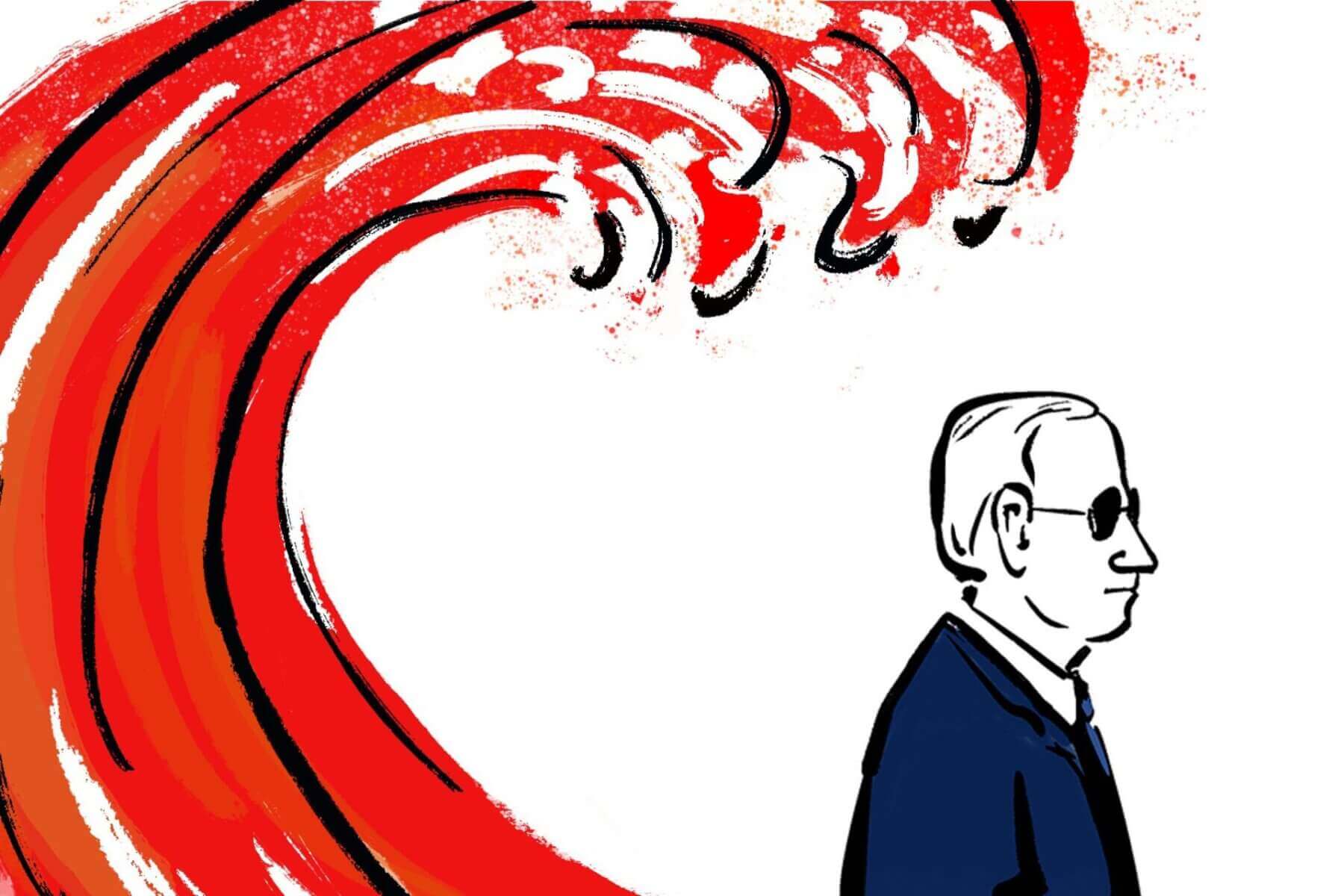
This massive wall of anti-justice and entitlement is what Joe Biden, the Democratic president running for re-election, is up against. Biden should have a distinct edge over whatever Republican he runs against, including Trump. He is the incumbent, for one, and for another, he has gotten a lot done in three years, against the greatest of odds. He signed three huge bills into law — the $1.9 trillion COVID-19 relief package, the roughly $1 trillion bipartisan infrastructure bill, and the Inflation Reduction Act. The Atlantic calls Biden’s first two years among the most productive of any president in the past 50 years.
The Inflation Reduction Act, the largest climate bill in U.S. history, also allows Medicare to negotiate the prices of certain prescription drugs for the first time. It all amounts to a tectonic shift back toward government supporting the public good, after decades of relentless conservative efforts to quash the idea and practice of the belief that government can or should do such a thing. What Biden has managed to do, especially amid the GOP’s increasing nihilism, is astonishing.
And yet the president has struggled with public perception and poll numbers. The most chatter about him centers around his age (he will turn 81 in November). His popularity ratings remain well below 50 percent and are roughly equal to Trump’s. That’s not surprising, given the Teflon status Trump enjoys as cult leader and avatar of an aggrieved America that thrives on feeling ever more aggrieved. On the other hand, consider that just this year Trump has been found liable for sexual abuse in a civil case and criminally indicted four times. He is the first former president in history to take a mugshot. This should be no contest.
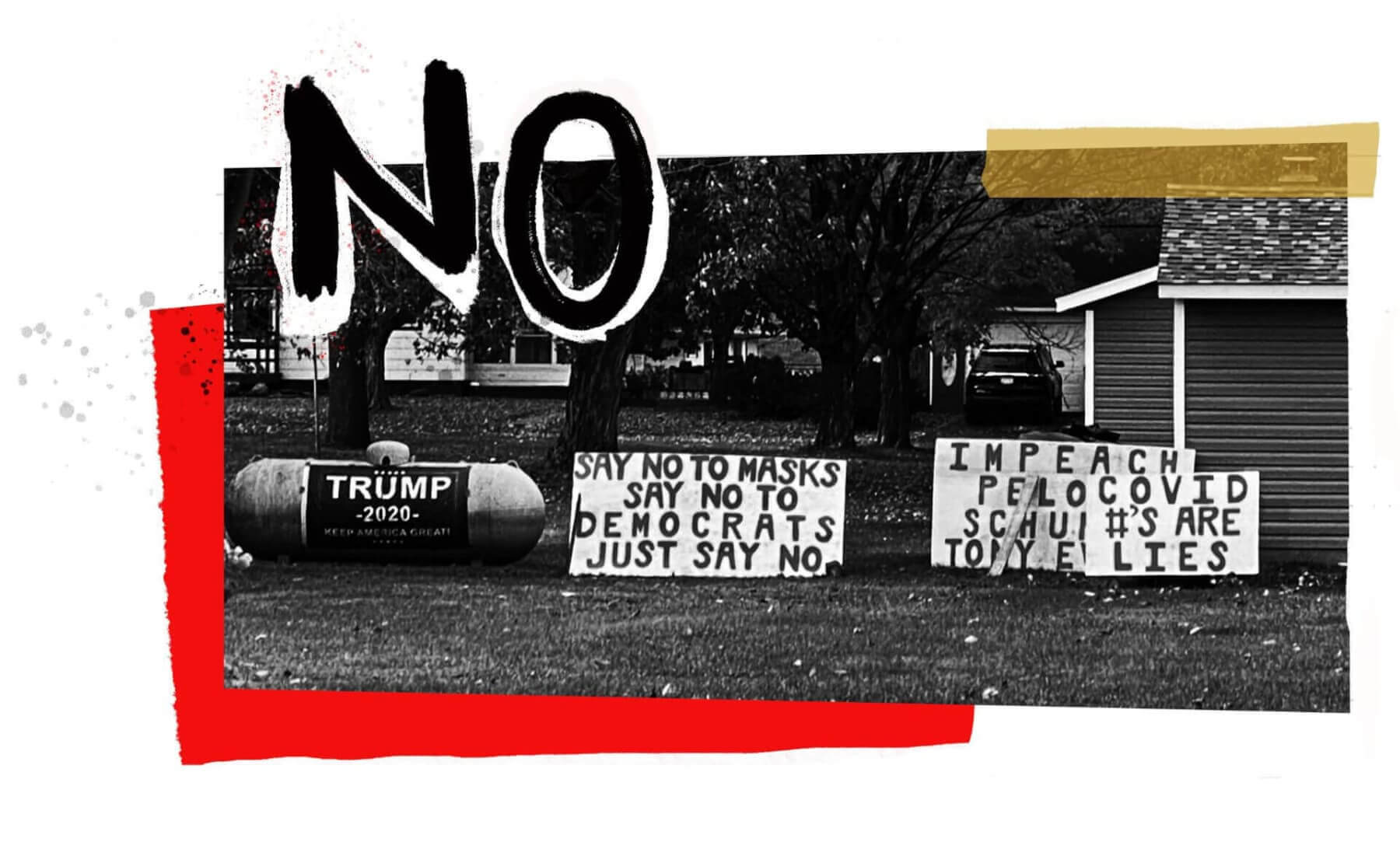
Illustration by Nancy Hope
Yet it is, because we are living at an unprecedented political moment in which it is far more enticing to be than to do. To the far right, that critical mass that supports Trump’s vision of the country, policies are passé. Accomplishments and good government will never move them, just like facts in this era of dissembling and fabrication do not move them. None of that matters because their fight has become entirely existential. Comparisons have been made between this moment and the run-up to the Civil War, when the country was roughly divided between those who supported slavery and those who did not. In the 1860s, though, it was understood that a common future for the country and democracy around the world was at stake. In an 1862 address to Congress, with the war over that future raging, Lincoln rallied Americans to be “the last best hope on earth.” Today’s GOP is utterly unconcerned with such lofty ideals, let alone engagement, compromise, or a shared future. Its identity as the most authentic Americans solely entitled to dictate the future of America is their entire project.
I have heard many people (including, most recently, Nikole Hannah-Jones, who spearheaded the equally celebrated and demonized New York Times’ “1619 Project”) say that Americans must choose who they are. But that challenge feels late. Close to half the country and its elected leadership made that choice seven years ago, and they are not changing their minds, not even after the January 6, 2021, assault on democracy. Indeed, that was exactly the moment that confirmed who they are. To varying degrees that are nonetheless unifying, they are Trump and Trump is them.
***
That has left Joe Biden with the job of articulating the Democrats’ choice of who they are, to the Democrats. It is a cliche the party has always done a terrible job of selling itself. But the problem now goes well beyond poor branding. The party’s lack of clear and convincing self-image is the problem, and it could be the undoing of the whole country. Of course, Democrats have not had a coherent identity since the New Deal and its subsequent social-justice corollary, the Civil Rights Movement. The combination made it the de facto party of color, especially the slow embrace of the multiracial power-sharing implied by the “all men are created equal” ideals enshrined in our founding documents.
Even LBJ was not exactly enthusiastic about clarifying the new identity. But he felt he had no choice. As a white Southerner, he knew he needed to finally separate tolerant White America from the segregationists and haters who were permanently invested in keeping Negroes down. Biden needs to do this too. He has to separate the good white folks from the haters, not just in the country but in Congress, where the GOP is almost reflexively stoking racial division, such as banning books and curricula that illuminate our racist history, or Alabama Senator Tommy Tuberville going viral with comments affirming white nationalists as Americans in good standing, nodding assent when Trump says immigrants are “poisoning the blood of our country.”
But mostly, they stoke division by remaining silent. They say nothing about all that their avatar Trump spews about Black people — which lately has been charges of racism and incompetence (and threats of violence) against the Black prosecutors in New York and Georgia who have dared to bring charges against him — or the judges overseeing the cases. In letting it all fester, Republicans are sanctioning not only racism, but the kind of DIY fascism that happens when a weak but power-obsessed, aspiring strongman keeps betting that he can put himself beyond the reach of decorum or law, and putative leaders in his party keep letting him.
Even so, Biden is reluctant to call out the enablers; this is the heart of the problem. President Biden is a typical big-tent Democrat who seeks to be “inclusive”— rhetoric that stems from that ‘60s shift. That is as it should be. But what that rhetoric always left out was the problem of white supremacy that made the shift necessary. When the table was set to be more inclusive, it was just assumed that white people were at the head of it, and everyone else was seated at their pleasure.
But white Americans have always been a group divided, internally — often invisibly — by views on race. That division has become starkly visible in the Trump era. More disturbing, it has become acceptable. Biden has started to address this cleavage and how it threatens our institutions and ideals. During his presidency, he’s forcefully decried white supremacy and rejected the hardline “MAGA Republican extremists.” He is trying to cordon off the good white folks from the bad without saying so. But at this point, that’s not possible. He needs to name the bigger problem of white tribalism that damns the whole nation. Leaving the big-tent door open is admirable, and politically necessary, but its powers of persuasion are too subtle. Plus, it’s not working. Nobody is walking through it. And we do not have time to wait.
Author Sarah Kendzior says (as the title of her 2022 release has it) They Knew that red and blue has always been a political invention, a convenient binary that cannot describe how so many Americans feel about the current state of affairs — bewildered, frustrated, bereft and heartbroken. “Disgust Isn’t a Strong Enough Word,” runs the headline of a recent New York Times article describing the current attitude toward politics in the wake of the House Republicans’ latest episode of created chaos. And it holds true across race, gender and geography.
Part of the problem is that these disgusted folks cannot seem to decipher clear-cut choices among the parties, despite the barrage of objective evidence that there is a difference. For example: the latest jobs report doubled expectations, wages are outpacing inflation, autoworkers are winning a historical battle for a livable-wage future, wealth is being distributed more evenly than in decades (although far from evenly enough), and racially gerrymandered voting districts in the South are being successfully challenged in courts, including the rabidly conservative Supreme Court. None of that appears to be cutting through the alienation or, more critically, the tribal identification.
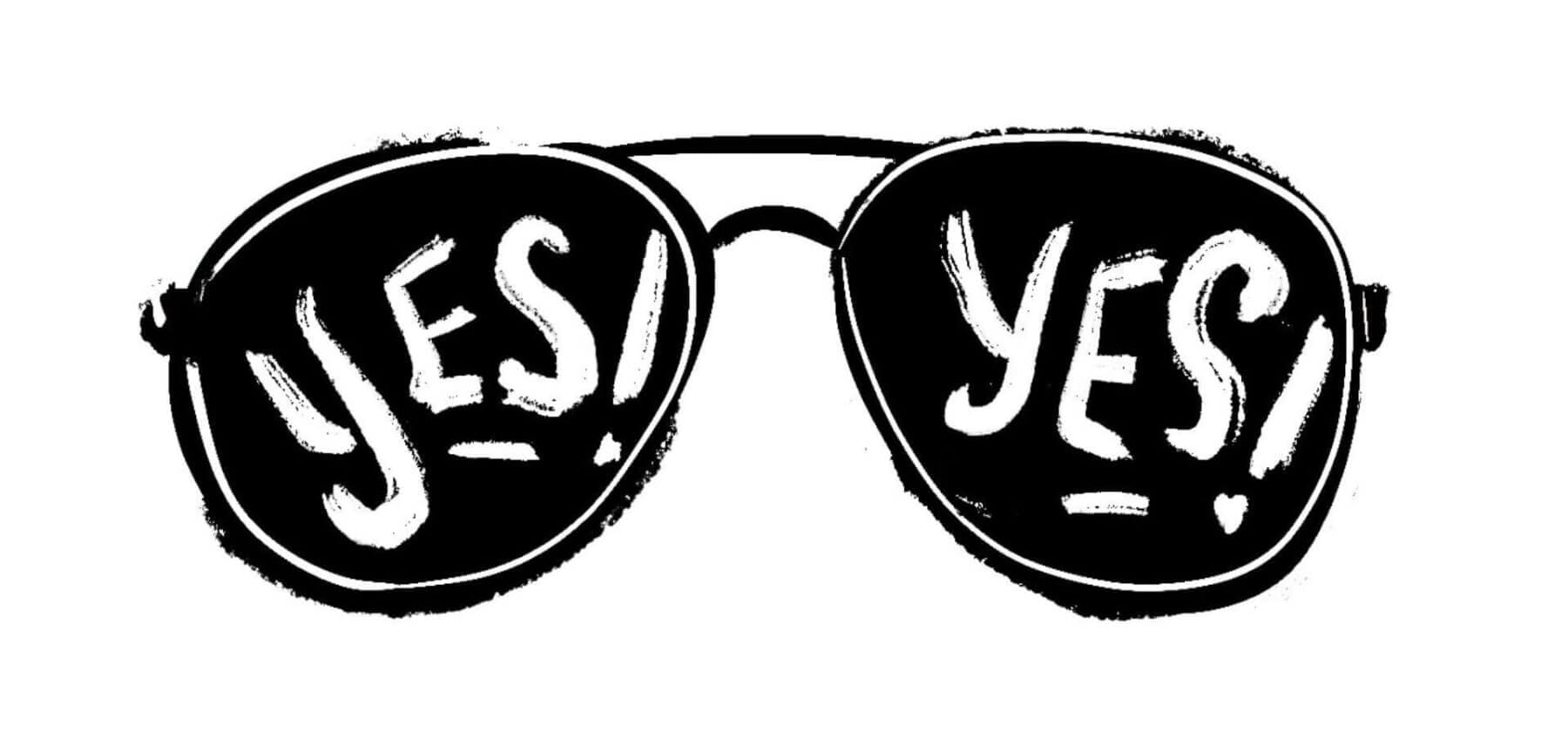
Illustration by Nancy Hope
In The Persuaders, Anand Giridharadas’ exploration of how to best disrupt Trumpism, progressive political message-meister Anat Shenker-Osorio says Democrats, in lieu of a persuasive identity, have always overfocused on process — on doing things. They love identifying problems and crises and offering solutions. Good governance should win people over, but it does not. The GOP succeeds because it’s tapped into the imagination of its base, albeit an imagination that is corrosive and fundamentally anti-democratic. But at the very least —and this is a lot — MAGA GOP knows who they are as a group, evidenced yet again in their recent unapologetic crippling of the House of Representatives.
For those opposed to the crippling, not just of the House but of the American project, trying to lure Trumpers into the big tent is inadequate. People need something more, something inspirational and aspirational. They need an avatar in the form of a leader to represent who they are and want to be; what they can be together. Biden, if he wants to win what he rightly called the “battle for the soul of the nation” during the past midterms, has to be that group leader, that avatar. Then, after he tells us who we are — Soul Savers? Union Perfecters? Justice Leaguers? — he can revel in all that he’s done. We can all own it. We can celebrate ourselves and finally adopt a righteously proud-to-be-us offense that is the best defense against the entropy of the GOP.
The point is that imagination is a more powerful connector than problems, programs and solutions. Imagination motivates. It grows confidence and optimism. Defining and then firing up the Democratic imagination regularly is the best way, perhaps the only way, to weaken the grip of the tribalism that has almost entirely squeezed reason and decency out of the GOP. If Biden can do this, we can win.
***
I grew up assuming that my fellow white Americans wanted less tribalism and more inclusion if they wanted the country to be great. I had no illusions about racism, but my assumption just made political common sense: you could not go on claiming to be a beacon of freedom if you were against equality. Otherwise, America would lose its shine, its brand. Surely even the most moribund Republicans understood this.
I was proud of what I saw as Black people’s role in making everybody understand this, making other Americans see that it was actually they who had to be more like us. As eternal strivers toward freedom and the pursuits of happiness in the most bountiful country in the world, we were America at its most essential, and always had been. The fact that we had less power, money and equality than everybody else did not change that fact at all. That fact still has not changed, but the generous view I once had of many of my fellow Americans who are white has. The Republicans and other self-described cultural conservatives I once thought of as moribund but reachable are so wedded to authoritarianism and other-isms that it’s hard to see them as fellow Americans at all.
Another problem for Biden is that in 2023, decades into the information age, we all know too much. We all know now that America very often isn’t wholly democratic, and that justice for everybody happens rarely. The crippling wealth gap has been facilitated by both parties over time. Both parties have been bought or controlled by big corporate donors and consented to needless wars that are exercises in power and profit-making. Since the Reagan era, rarely have the more conscientious politicians mustered enough influence to break a status quo that benefits the elite. That leaves people on their own. It leaves disaffected whites falling in with Trump, who at least bashes the elite (even if he is one), and Black people sustaining enormous betrayal, both from the overt racism that’s returned to political fashion and from the Democrats’ lack of a clear and commensurate response to it all.
And yet Black people continue to be the Democratic party, the living soul of the fateful pact the party made when it began to bend toward justice in the ‘60s. This is true even though recent polls show that the longstanding, overwhelming Black support of Democrats has eroded somewhat recently. Young people, especially, have grown impatient, after a decade of Black Lives Matter made the urgency of justice fierce again. Others are sick of their ideals being given mostly lip service and their votes taken for granted. Still others have simply lost faith in the democratic, and Democratic, promise altogether.
I completely understand this. I have gone there myself. But two things can be true at once: Our votes can be taken for granted even as the Democratic party remains a project, our cause to fulfill. It’s personal. Joe Biden is in some ways beside the point. Making the house whole is a commitment to ourselves that we are not inclined to break after 60 years, especially at such a perilous moment. For me, it was never that Black people had no choice but to be Democrats. Rather, it was that committing to ourselves via a critical presence in a major party is a choice we gladly made, and still make.
Ironically, for all its malevolent power, the GOP identity is hollow at the core. That’s because the identity is less about who they are than about all they do not want the rest of us to be — critical thinkers who accept history, science, humanity, equality. Republicans are negative space, the cult of no. Biden has to sharply define and promote a culture of yes, the vast positive space that already exists and that he’s significantly helped to expand. He has to stop looking over his shoulder at the white Trumpists he wants to win over with his resume; they do not want to be won. He needs to stop looking, period, because a bad future might be gaining on us.
In the past two years, the cult of no has moved way beyond Trump, seeping into the entire GOP institutional framework, from think tanks to state governments to school boards. Project 2025, unveiled this past summer, is a detailed plan by mainstream outfits like the Heritage Foundation to take over the country after next year’s elections in the event of a Republican victory. The goal is to remake the country into a radically conservative operation that greatly empowers the executive branch, politicizes tens of thousands of federal workers and turns agencies like the Justice Department into party apparatus. “What we’re trying to do is identify the pockets of independence and seize them,” Russell T. Vought told the New York Times with a straight face.
Vought is a former Trump administration official who now runs something called the Center for Renewing America. More than a talking points generator, this is an attempted coup of democracy being advanced right in front of our eyes. The project does not even need Trump; the plotters of the coup are fine with whichever Republican wins in 2024 because they are all facets of the same identity, standing for the same thing. This great cultural remaking is the one thing that the party is doing, relentlessly. Making policy — governing — is unimportant by comparison.
2020 was said to be the inflection year, the election Democrats had to win, or it was game over for all of us. But it’s clear that 2024 is that year. Biden has been building towards meeting that moment, and he needs to keep going. I, for one, will meet it. There truly is no other choice.
Help us sustain independent journalism...
Our team is working hard every day to bring you compelling, carefully-crafted pieces that shed light on the pressing issues of our time. We rely on caring supporters like you to help us sustain our mission. Your support ensures that we can continue to provide deeply-reported, independent, ad-free journalism without fear, favor or pandering. Support us today and make a lasting investment in the future.

RELATED STORIES


Award Winning



Today’s environmental and social justice challenges are unprecedented, and require an unprecedented collective effort.


Stay updated on our latest features, events and more. Subscribe to our Note From the Nest newsletter!
