
Living on the Edge
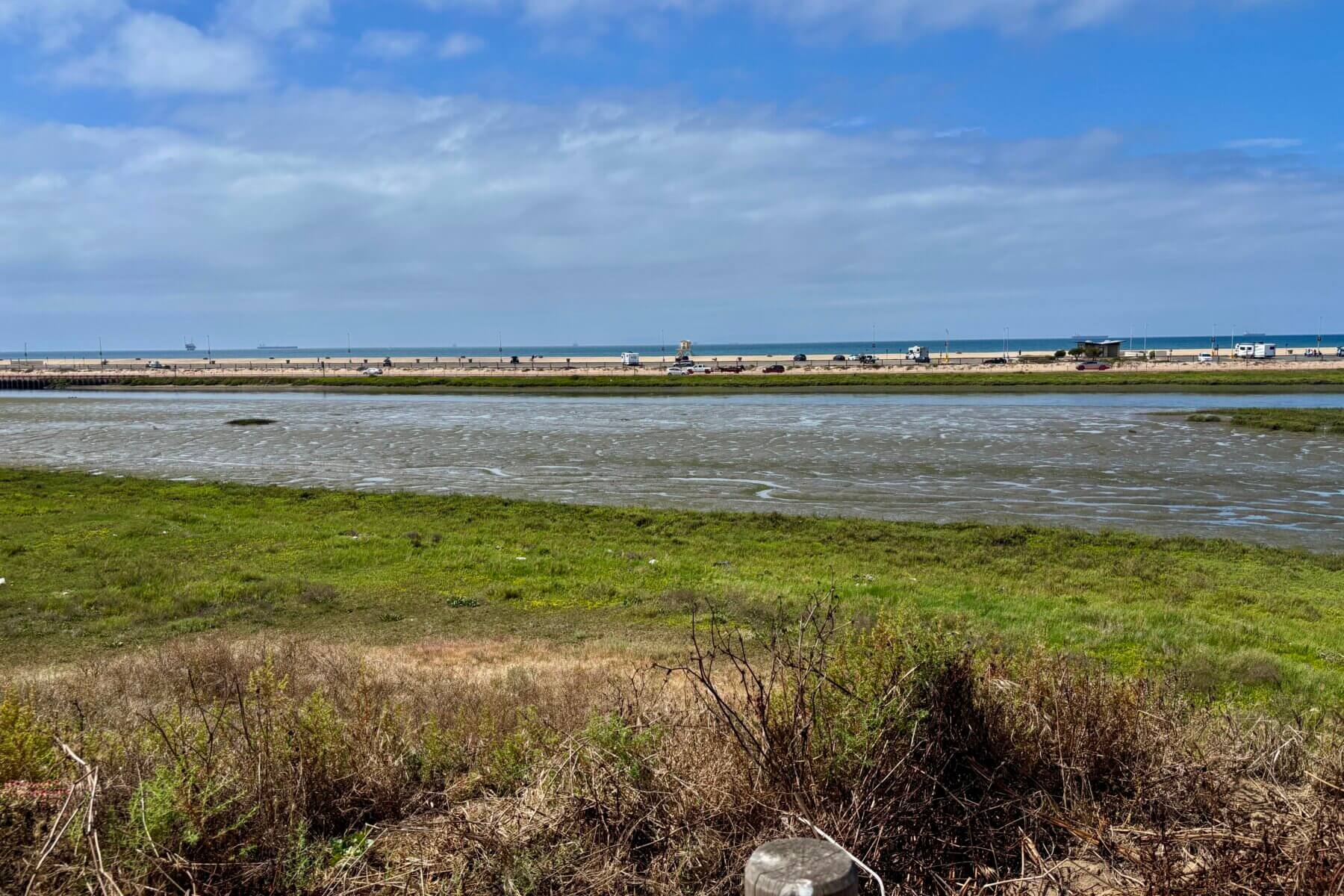
A cool breeze drifts in from the ocean, brushing past dry, brittle plants along the Mesa Trail at the Bolsa Chica Ecological Reserve. In the distance, birds call out over the wetlands, and a flock of geese quickly cut across the cloudy sky. The morning air feels heavier than expected. Water creeps farther inland than it used to, swallowing patches of marsh where birds once nested undisturbed.
At first glance, the ecosystem feels alive, steady—even resilient. If you take a closer look, though, the damage begins to reveal itself. When I visited the 1,300 acres of wetlands just north of Huntington Beach, California, on a recent spring morning, I couldn’t help but wonder about the future of one of the few remaining intact coastal wetlands in California.
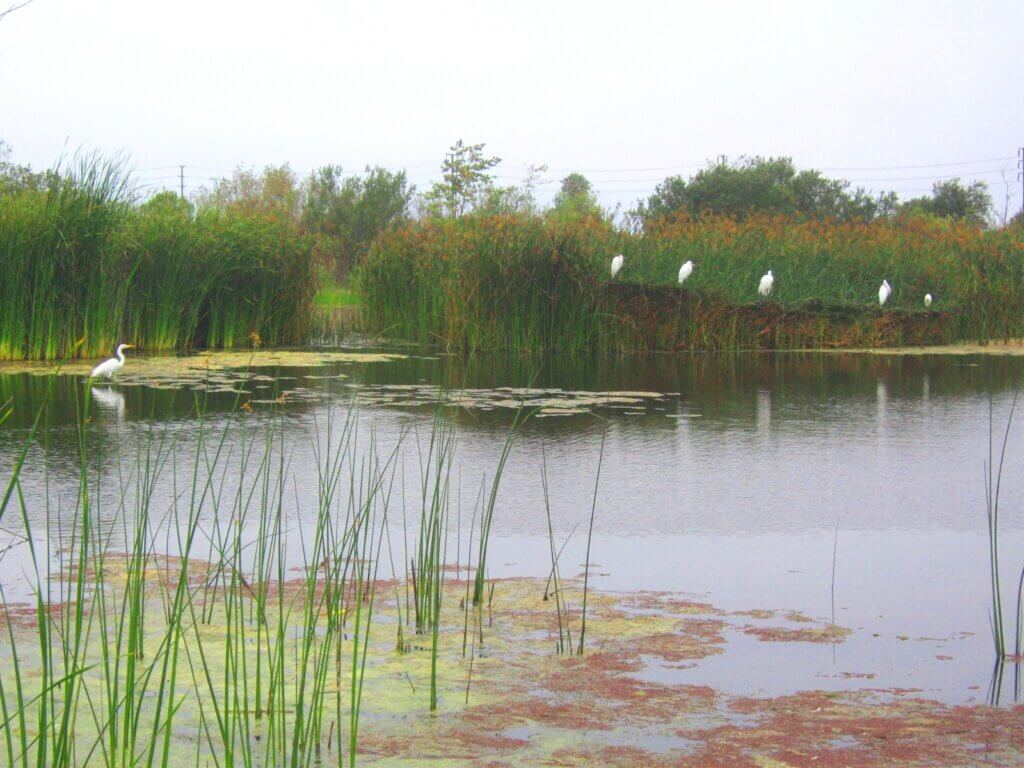
Wetlands help control flooding, are home to a biodiversity of animals and animals, and protect coastlines. Photo from the Southern California Wetlands Recovery Project
Along the dirt path, faint waterlines mark where tides have crept farther inland than in years past and patches of vegetation appear dried out in places where native plants once thrived, with invasive species now competing for space.
“Water levels have definitely risen—you can see it in the marks the water has left behind,” explained the Bolsa Chica Conservancy’s education program coordinator, Emma Walker, as we walk along the trail beside the estuary at low tide. We watch as snowy egrets ply the mudflats with their long, narrow beaks in hopes of finding snails for breakfast.
Wetlands are unique and essential ecosystems that exist between land and water, constantly shifting with changing tides and conditions. They provide critical nursery habitats for fish, birds, and other animals, while also playing a key role in maintaining biodiversity across ecosystems, and serve as a crucial filter for pollutants draining into the ocean from inland water systems. They also buffer flooding and protect shorelines. Damage from catastrophic hurricanes such as 2005’s Hurricane Katrina were amplified by the massive loss of protective wetlands.
Wetlands are transitional environments between the bodies of water and land that are shaped by fluctuating water levels. According to the Southern California Coastal Water Research Project, since 1850, the organization reports, the Southern California coast (Los Angeles to San Diego) has diminished by three-quarters, mostly from urban development.
A 2026 study published in Nature Conservation found that coastal wetlands play an important role in maintaining biodiversity but are becoming increasingly threatened from the pressures of climate change. The study noted that rising sea levels, temperature shifts, and habitat fragmentation are among the leading threats to coastal wetland biodiversity. The U.S. Fish and Wildlife Service identified the rate at which wetlands have been lost in the U.S. as having increased by 50 percent since 2009. More tangibly, between 2009 and 2019, roughly 670,000 acres of wetlands have been lost, primarily in the Carolinas, Florida, Louisiana, and Texas.
For those who work in these wetlands every day, climate change isn’t a matter of theory or controversy but rather a constant challenge in the effort to provide a stable habitat for all sorts of species. “The first sign of climate change impacting our wetlands would be the amount of sightings of sea turtles—they’re normally never seen here. But with rising water temperatures, we have begun to see them more often,” Ken Perez, a program manager at the Bolsa Chica Conservancy, told me as two massive blue herons circled overhead.
The pursuit of cooler beaches (sand temperature affects the sex ratios of hatchlings) and dodging prey animals pushed to new waters by changing currents are the primary causes for the turtles’ appearance.
It’s this disruption of long-established biological cycles that defines how climate change is affecting ecosystems like Bolsa Chica. “Rattlesnakes usually begin mating around April and May, but with rising temperatures, they’re coming out earlier—yet their mating season lasts the same amount of time,” Perez explained, adding some context to the spree of rattlesnake bites in local news.
Rising temperatures can confuse the seasonal timing that plants and animals depend on. According to Jennifer Karberg, PhD, a coastal wetland ecologist and the director of research and partnerships at the Nantucket Conservation Foundation, these disruptions can affect flowering cycles, breeding patterns, and food availability, which can have a detrimental effect on an ecosystem’s food web. “Plants and animals rely on specific season cues, and when temperatures shift, it can confuse those cycles—which sometimes leads to flowering happening too early, or even no flowering at all,” said Karberg, who spoke with me via Zoom from her home in Michigan.
These changes have a ripple effect on the ecosystem if vegetation grows out of its typical seasonal patterns or doesn’t grow at all, insect populations fall, which reduces a foundational food source for the area’s birds. Fewer birds mean fewer seeds are spread around the ecosystem, which means less vegetation, and so on. Nearly 40 percent of all plant and animal species live or breed in wetlands, and nearly half of all species listed in the Endangered Species Act depend on wetlands to some degree.
Climate change is an amplifying challenge for plants, as well as animals. During wetter seasons, nonnative species such as radish and mustard spread aggressively, outcompeting native vegetation. When conditions turn dry, these plants activate their dormant state and become fuel for wildfires. In July 2020, a 62-acre brush fire swept through parts of the wetlands, accelerated by these invasive plant species.
Restoration teams now work continuously to remove these plants and reintroduce native species such as buckwheat, carefully marking newly planted areas along the trail with blue tags.
“We’re constantly balancing removal and restoration,” Walker told me as we stopped near a patch of fluttering blue tags.
Wetlands have long served as protectors of ecosystems by absorbing floodwaters, filtering pollution, and supporting biodiversity. These functions are becoming less reliable as climate change increasingly stresses what few wetlands remain. “Coastal wetlands can adapt to rising sea levels to some degree, but there’s a tipping point where they can’t simply keep up with the rising sea level, which leads to the vegetation drowning,” said Karberg.
As sea levels rise, vegetation pushes inland. But in heavily developed areas, that movement is often blocked by urbanization. If plants can’t migrate fast enough, then they will drown out, and once you begin to lose vegetation, you start to lose the entire food web.

Teams in charge of restoration have been working to bring back native plant species to the area. Photo by Kevin Bravo Salto
At Bolsa Chica, that interconnected system is already showing signs of strain. Birds such as willets, snowy egrets, and killdeer rely on mudflats and shallow waters for feeding and nesting. These mudflats also play a critical role in filtering water and supporting smaller organisms, such as horn snails, which form a foundational part of the ecosystem’s food chain. As vegetation shifts and habitats change, the fate of these species grows more uncertain.
“When you lose plants, you lose insects and other smaller animals. That is the connection between climate change and how it’s impacting birds and larger predators,” said Karberg.
Even migratory species have been affected to some degree, with some birds struggling to find enough food to complete their journeys, while others may stop visiting the wetlands altogether if they aren’t able to get the resources they need.
With only a fraction of California’s original wetlands remaining, protecting places like Bolsa Chica is pivotal to the fight against climate change. Through ongoing restoration efforts from the Bolsa Chica Conservancy and its partnership with agencies such as the state Department of Fish and Wildlife, crews of volunteers and staff work to remove invasive plants, reintroduce native species, and monitor the distinct wildlife populations.
These restoration efforts face external challenges themselves, with increasing temperatures limiting how long staff can safely work outdoors. Fieldwork often comes to a halt due to safety protocol when temperatures exceed 85 degrees, once a rare occasion here.
Other nearby wetlands are experiencing similar struggles. Los Angeles’ Ballona Wetlands, an ecological reserve bordered by Marina del Rey and Playa Vista, is L.A. County’s largest remaining coastal wetlands. In 2004, the California State Coastal Conservancy estimated the area’s restoration plans would take three years to complete and cost around $2 million. Twenty years and $15 million later, little work has been done to restore the area. Yellow mustard grass inundates and out-competes native flora, despite the removal effort of local nonprofits such as Friends of Ballona Wetlands.
The monetary costs of climate change–induced flooding in wetland areas isn’t confined to environmental restoration efforts. Rising sea levels are placing coastal cities such as the Bay Area’s San Rafael at risk of flooding, pushing past the area’s wetlands and damaging homes, roads, and other infrastructure that are not only costly to repair but likely to be damaged again should preventative measures not be taken. Kate Hagemann, a climate adaptation and resilience planner for the city of San Rafael, told Telemundo 48 that solutions would take “20 to 40 years” and that $600 million “would be the cheapest” estimate to mitigate the issue, with $2 billion being “on the high end.”
While $15 million in planning over a period of 20 years at Ballona Creek may be a drop in the bucket compared to hundreds of millions over the course of decades, the longer these problems fester, the greater the costs will be as damage worsens and solutions take longer to implement.
***
“There’s a mismatch. Climate change is moving faster than our ability to respond,” said Karberg.“We need stronger protection and faster action, because once wetlands are lost, they are incredibly difficult to restore,”
Despite these challenges, there is hope. If restoration efforts succeed, Bolsa Chica Conservancy’s Perez believes the wetlands could stabilize and allow endangered species to recover, which would bring back balance to the ecosystem. On the other hand, if they fail, the consequences would be severe. Some scientists warn that wetlands could reach a tipping point within the next few decades if conditions continue to worsen.
The good news is that environmental revitalization efforts across California are making progress, such as Newport Beach’s Big Canyon Park restoration, near Newport Back Bay—a 1,000-acre coastal wetland and nature reserve roughly 10 miles south of Bolsa Chica. Plans to fill a manmade pond dating back to the 1980s with dirt from what will become a six-acre lagoon are scheduled to start in September and will aid the wetland area in the wax-wane of filling and draining with changing tidal currents. Invasive plants will be removed, native wetland plants will be seeded in, and native bird populations will flourish in the revitalized ecosystem—if all goes according to plan.
Back on the Bolsa Chica trail, the breeze continues to roll in from the ocean, carrying the songs of birds overhead and the loud rock music scoring a nearby surf competition. For now, the wetlands are still doing their job: filtering water, supporting wildlife, and providing a space where people can connect with nature. However, the warning signs are becoming harder to ignore.
Help us sustain independent journalism...
Our team is working hard every day to bring you compelling, carefully-crafted pieces that shed light on the pressing issues of our time. We rely on caring supporters like you to help us sustain our mission. Your support ensures that we can continue to provide deeply-reported, independent, ad-free journalism without fear, favor or pandering. Support us today and make a lasting investment in the future.


RELATED STORIES

Award Winning



Today’s environmental and social justice challenges are unprecedented, and require an unprecedented collective effort.


Stay updated on our latest features, events and more. Subscribe to our Note From the Nest newsletter!
